When we paint in cold weather, we’re risking serious structural failures that’ll cost us down the road. Below 50°F, latex paint can’t form proper molecular bonds with the substrate, leading to poor adhesion, extended curing times, and surface defects like peeling and cracking. Oil-based paints tolerate slightly lower temperatures around 40°F, but they’re not immune to cold-weather problems. We’ll face issues with viscosity, moisture contamination, and incomplete film formation that compromise our paint’s protective qualities. Understanding these temperature-dependent chemical reactions helps us avoid costly mistakes.
Key Takeaways
- Cold temperatures increase paint viscosity, preventing proper penetration into surfaces and causing poor adhesion and inconsistent coverage.
- Paint drying time extends from hours to multiple days, leaving uncured surfaces vulnerable to dirt, debris, and moisture contamination.
- Most paints require minimum temperatures: standard latex needs 50°F, oil-based tolerates 40°F, and low-temperature latex works to 35°F.
- Moisture condensation and freeze-thaw cycles interfere with chemical bonding, causing the paint film to sit on top rather than bond.
- Cold weather application leads to peeling, cracking, and bubbling defects that allow water intrusion and expensive substrate damage.
How Cold Temperatures Affect Paint Performance
Cold temperatures fundamentally alter paint’s molecular structure, creating a cascade of performance failures that compromise both application quality and long-term durability. When we paint below 50°F, increased viscosity prevents proper substrate penetration—the paint sits on top like a film rather than bonding effectively. We’ll see drag, patchy coverage, and visible brush marks as the material resists spreading.
The slowed chemical reactions extend drying times for days, leaving surfaces vulnerable to environmental degradation from dirt and debris. Moisture condensation interferes with adhesion, while freeze-thaw cycles create structural failures including spiderweb cracking and bubbling. We’re also risking pigment defects like color fading and whitening. Dark pigments particularly suffer from cold leaching, turning white over time and compromising our project’s longevity.
Understanding the Temperature Requirements for Different Paint Types
While cold weather presents universal challenges to paint application, each paint formulation responds differently to temperature variations based on its chemical composition and curing mechanisms. We’ll need to understand these distinctions for successful project outcomes.
Standard latex paints require 50°F to 85°F, while oil-based formulations tolerate a broader 40°F to 90°F range. Specialty low-temperature latex paints extend our working window down to 35°F through coalescing agents that enhance cold-weather curing.
Application timing considerations demand we evaluate both daytime highs and nighttime lows. Temperature monitoring requirements include maintaining surface temperatures at least 5°F above the dew point and ensuring two consecutive days of stable conditions. We can’t ignore nighttime drops exceeding 10-15 degrees from daytime peaks, as these fluctuations compromise the curing process and long-term durability.
Adhesion Problems and Film Formation Issues in Cold Weather
When we paint in cold conditions, the paint can’t penetrate surface pores effectively—instead, it sits on top and forms a weak bond that will fail prematurely. This poor penetration directly causes two visible defects we’ll need to identify: inconsistent sheen patterns where the finish appears flat in some areas and glossy in others, and uneven coverage that reveals substrate show-through.
We must understand these failure mechanisms to prevent costly rework and guarantee the painted surface meets durability standards.
Poor Surface Penetration Problems
One of the most critical failures in cold-weather painting occurs when the coating can’t properly penetrate the substrate. We’ve observed that cold temperatures drastically increase paint viscosity, transforming the material into a thick film that sits atop surfaces rather than bonding within the substrate’s pores. This viscous consistency prevents proper “bite” into wood grain, stucco texture, or siding materials—a fundamental requirement for durable adhesion.
The problem intensifies with inadequate substrate cleanliness and insufficient surface warming. When we apply paint to cold surfaces, the thickened coating can’t flow into microscopic surface irregularities where mechanical bonding occurs. Instead, it forms a superficial layer prone to premature peeling and delamination. Cold-stored paint compounds this issue, reducing penetration capacity and creating a weak interface between coating and substrate that fails under normal weathering stresses.
Uneven Sheen and Coverage
Beyond penetration failures, cold weather creates a cascade of surface-level defects that compromise the visual quality and protective capabilities of the painted finish. When temperatures drop below 50°F, increased viscosity prevents smooth spreading, yielding uneven gloss and texture across our work surfaces.
We’ll notice inconsistent paint absorption as thicker application creates visible brush marks and patchy coverage. The slow drying process delays subsequent coats, resulting in sheen variations that professionals find unacceptable.
Cold conditions stiffen our tools, causing irregular coverage patterns. Without proper evaporation, surfactants migrate to the surface and become trapped by humidity, creating discoloration issues. This leads to uneven color development that’s particularly problematic on exterior surfaces.
These defects aren’t merely cosmetic—they signal compromised film formation that reduces our paint’s long-term protective performance and durability.
Extended Drying and Curing Times When Painting in Winter
Cold temperatures fundamentally alter paint chemistry, transforming what’s normally a hours-long drying process into a multi-day ordeal that demands careful monitoring. We’re looking at delayed surface drying that extends from typical 4–6 hours to multiple days when temperatures drop below manufacturer thresholds. Latex paints require surfaces above 50°F, while oil-based formulations need 40°F minimum—and these temperatures must hold steady for 8–12 hours post-application.
The cure time extension presents our biggest challenge. While latex normally cures in 30 days indoors, exterior winter applications take considerably longer. Oil-based paints stretch beyond their standard 7-day cure period. During this extended vulnerability window, uncured paint attracts dirt, debris, and moisture contamination. Overnight lows below threshold temperatures completely halt the curing process, leaving our finish exposed to environmental damage.
Surface Damage and Defects Caused by Low Temperatures
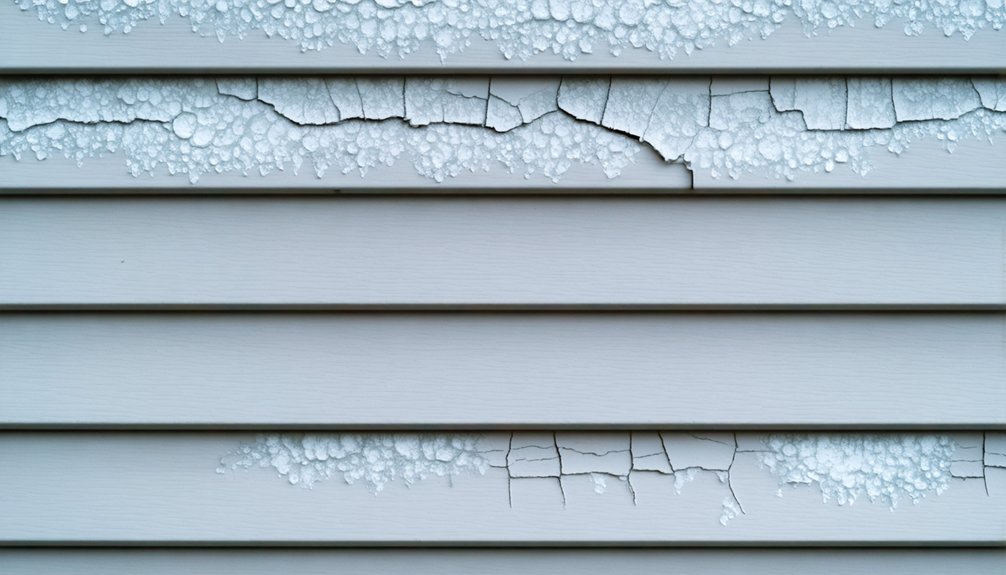
Paint that hasn’t cured properly becomes vulnerable to immediate physical damage, but the structural problems compound considerably when temperatures drop during application. We’re seeing systematic failures across multiple surface areas when low-temperature painting occurs.
Low-temperature application creates compounding structural failures that extend far beyond surface-level aesthetic concerns across all painted areas.
Freeze thaw stresses create the most destructive conditions we encounter:
- Peeling near seams and trim where moisture infiltrates and lifts paint layers during freeze-thaw cycles
- Deep cracking around window sills as temperature fluctuations force expansion and contraction beyond the paint film’s tolerance
- Bubbling on soffits and fascia from ice expansion beneath inadequately bonded coatings
These defects don’t just compromise appearance—they expose substrate materials to accelerated deterioration. The adhesion failures we’re addressing allow water intrusion that damages underlying wood and creates mold conditions. Understanding these failure patterns helps us avoid costly remediation work.
Choosing the Right Paint for Cold Weather Applications
We must select paints specifically engineered for low-temperature coalescence when working below 50°F. Modern acrylic latex formulations now perform reliably down to 35°F, while traditional oil-based paints require different application protocols and safety considerations.
Understanding the performance characteristics of each paint type guarantees proper film formation and prevents adhesion failures in cold conditions.
Low-Temperature Paint Formulations
When temperatures drop below the traditional 50°F application threshold, we’ll need specialized low-temperature paint formulations engineered with advanced coalescent technology. These formulations use coalescing agents that soften latex particles, enabling proper film formation down to 35°F—a significant advancement from older paints limited to 50-55°F minimums.
- Ethylene glycol additives prevent freezing below 32°F while maintaining paint integrity
- Specialized solvents enable latex particles to merge into flexible, durable films
- Advanced acrylics accommodate substrate temperature drops during the critical curing phase
Products like Benjamin Moore’s Element Guard™, Sherwin-Williams Emerald Exterior, and Behr Ultra Exterior all support 35°F application. We must guarantee surfaces remain above freezing for 48 hours post-application, allowing proper coalescence and preventing adhesion failure.
Oil-Based Versus Latex
Understanding the fundamental curing mechanisms between oil-based and latex paints determines success in cold weather applications. We’ll find oil-based formulations cure through oxidation rather than evaporation, allowing reliable application down to 40°F—even into the 20s°F range with linseed oil variants. Their paint durability stems from dense film formation that withstands freeze-thaw cycles.
Conversely, latex paints depend on water evaporation, which slows dramatically below 50°F and increases moisture sensitivity. We must use specially formulated 35°F-rated acrylics like Sherwin-Williams Emerald for cold applications, ensuring surfaces remain above freezing for 24-48 hours post-application. Oil-based options forgive temperature fluctuations better, though we’ll face extended cure times. Surface temperature matters more than ambient air for both paint types in our winter projects.
Best Practices to Minimize Cold Weather Painting Risks
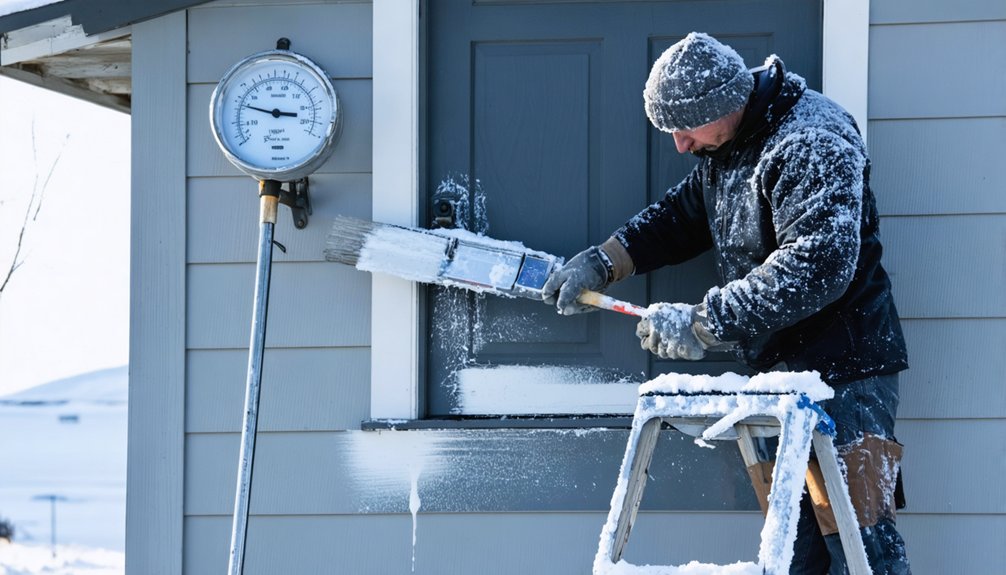
Although cold weather presents substantial challenges for painting projects, following proven protocols greatly diminishes failure rates and assures long-term coating performance. We’ll protect our investment by selecting the right applicator for thin, even coats that cure properly despite temperature constraints. Coordinating project timing with the warmest daylight hours guarantees surfaces stay above 50°F throughout application and initial cure periods.
Our thorough approach includes:
- Testing substrate temperatures with infrared thermometers before opening paint cans
- Staging materials indoors overnight to prevent thickening and flow problems
- Monitoring 48-hour forecasts to avoid precipitation or sudden temperature drops
We must use cold-rated formulations specifically engineered for extended cure times. By controlling environmental variables and adhering to manufacturer specifications, we’ll achieve professional results that withstand freeze-thaw cycles throughout winter.
Frequently Asked Questions
Can I Paint the Interior of My House During Winter Months?
Yes, we can successfully paint interiors during winter by ensuring proper surface preparation and maintaining humidity levels between 30-50%. We’ll achieve ideal adhesion when keeping rooms at 50-85°F and following manufacturer-specified environmental guidelines together.
What Temperature Should I Store Paint to Prevent Freezing Damage?
Like guardians protecting vulnerable supplies, we’ll maintain paint storage temperature above 50°F to prevent freezing damage. This safeguards against proper paint thickening issues and separation. We’re keeping our materials between 10-30°C for ideal preservation together.
How Do I Remove Paint That Failed Due to Cold Weather?
We’ll remove cold-weather paint failure by scraping loose sections, sanding feathered edges, and applying proper primer. For extensive damage, we recommend you hire professional paint strippers or explore alternative siding options to guarantee lasting protection.
Does Cold Weather Painting Void Manufacturer Warranties on Paint Products?
Like a weld that never fuses metal properly, yes—we’ll void warranties when painting below manufacturer minimums. Paint curing issues and exterior temperature limitations are deal-breakers. We must follow specified temperature ranges, or we’re on our own for failures.
Can Space Heaters or Heat Lamps Safely Warm Surfaces Before Painting?
We can safely use space heaters and heat lamps to warm surfaces before painting, addressing drying time concerns and ambient temperature impacts. However, we must guarantee proper ventilation and maintain safe distances from volatile paint fumes throughout our process.