We recommend staining bathroom cabinets if you’re working with premium hardwoods like oak or walnut—the natural grain creates timeless depth while touch-up markers seamlessly camouflage scratches. Choose paint when you’re seeking modern uniformity or transforming MDF foundations, though you’ll face more visible wear over time. Your decision hinges on three factors: material quality, maintenance commitment, and aesthetic vision. Below, we’ll walk you through moisture resistance comparisons, long-term durability data, and cost-benefit analyses that reveal which finish truly serves high-humidity environments.
Key Takeaways
- Paint offers versatile color options and a modern look but reveals scratches easily and requires frequent touch-ups.
- Stain showcases natural wood grain with minimal maintenance, as touch-up markers blend seamlessly into existing finishes.
- MDF works well for painted cabinets at lower cost, while premium hardwoods justify higher investment for stained finishes.
- Painted surfaces show wear prominently over time, while stained cabinets effectively hide minor imperfections and maintain appearance.
- Choose based on balancing your budget, desired aesthetic, and willingness to perform ongoing maintenance and touch-ups.
Understanding the Core Differences Between Paint and Stain
When we approach bathroom cabinet transformations, the fundamental distinction between paint and stain extends far beyond surface-level aesthetics—it begins at the molecular level.
Paint creates a protective film that rests atop wood surfaces, demanding meticulous preparation through sanding and priming before building coverage in multiple layers. This opaque barrier delivers extensive color variation options, from vibrant hues to custom-mixed shades that completely mask the wood beneath.
Stain operates differently—it penetrates wood pores, bonding within the cellular structure rather than coating externally. We’re working with stain transparency effects that celebrate grain patterns and natural texture while requiring minimal preparation. This absorption process allows wood to expand and contract with humidity fluctuations, particularly essential in moisture-rich bathroom environments.
Where paint conceals, stain reveals—each approach serves distinct design philosophies we’ll help you navigate.
Durability Showdown: Which Finish Lasts Longer in Bathrooms
We’ve observed painted bathroom cabinets maintaining their protective barrier for 10-15 years in Ontario’s humid climate, while stained finishes typically surrender to moisture damage within 5-8 years.
The difference becomes visible when we track refinishing cycles—paint requires minor touch-ups every 3-5 years, whereas stain demands complete reapplication at shorter intervals.
In high-moisture environments like bathrooms, paint’s sealed surface shields the wood substrate from steam and splashes that penetrate stain’s more porous finish.
Moisture Resistance Over Time
Bathroom cabinets endure a relentless assault from steam, splashes, and humidity that can transform a pristine finish into a weathered surface within months. When we examine moisture longevity factors, stained wood with oil-based polyurethane topcoats creates remarkable protection against these conditions. The stain penetrates deeply while the topcoat seals everything beneath, maintaining wood integrity even when steam accumulates daily.
Paint forms a thicker surface barrier that effectively covers grains and knots, yet this same characteristic makes it vulnerable to moisture barrier degradation. We’ve observed how high humidity accelerates paint chipping, particularly around sink areas where water exposure concentrates. Stained finishes prove less prone to these moisture-induced failures because they work with the wood’s natural movement rather than against it, making them our recommended choice for steam-heavy environments.
Refinishing Frequency Comparison
Over a decade of exposure separates the champion from the contender in bathroom cabinet longevity. When we examine finish lifespan comparison data, painted cabinets deliver 10-15 years of performance in humid environments, while stained finishes require refinishing every 5-8 years. This reapplication timeline directly impacts your long-term investment.
We’ve observed how painted surfaces resist moisture penetration with premium acrylic enamel formulations, backed by 6-year warranties that reflect industry confidence. Stained cabinets, though beautiful, face accelerated color fade within 5-7 years under bathroom lighting exposure.
The maintenance story tells a compelling narrative: touch-ups every 3-5 years for paint versus complete refinishing cycles for stain. Professional application with high-end equipment extends painted finishes substantially, making them the practical choice for homeowners seeking enduring bathroom aesthetics without frequent intervention.
Moisture and Water Resistance: A Critical Bathroom Consideration
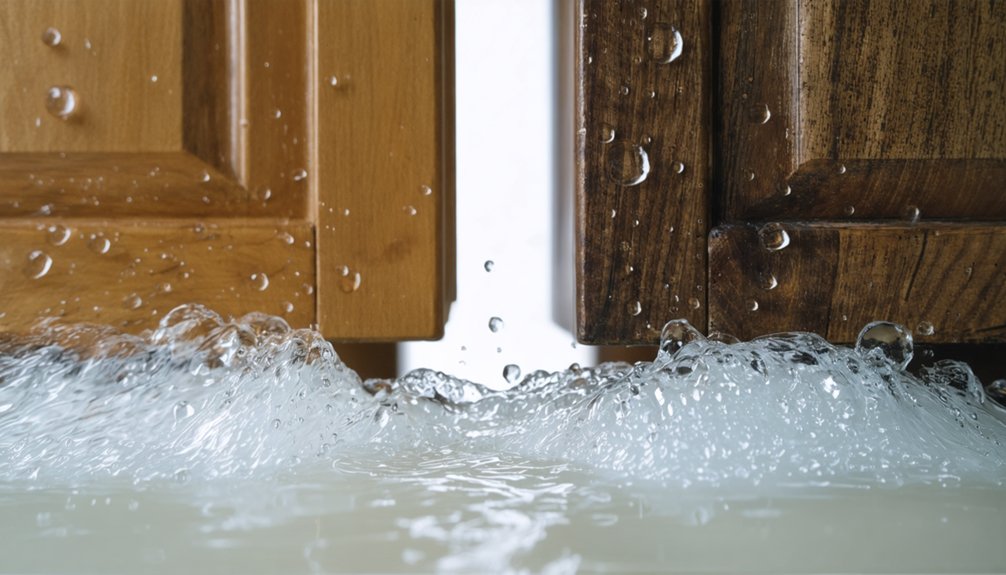
Bathrooms present a unique challenge where water splashes, steam clouds, and humidity fluctuations assault cabinet surfaces daily. We’re examining two fundamentally different approaches to moisture defense: penetrating stains that work *with* the wood’s natural structure versus paint formulations that create an impermeable *barrier* over it.
Each strategy offers distinct advantages when facing the relentless exposure that transforms your bathroom into a testing ground for finish performance.
Stain’s Natural Moisture Protection
This penetration creates stain’s breathability—allowing natural expansion and contraction as humidity fluctuates. When we apply oil-based stains mixed with mineral spirits and polyurethane, we’re embracing centuries-old waterproofing techniques.
Dark-grained woods like walnut and mahogany particularly excel with oil-rub finishes, maintaining their rich character without yellowing.
However, stain alone won’t withstand bathroom steam. Moisture absorption rates demand we layer protective topcoats—polyurethane varnish or catalyzed conversion varnish—over stained surfaces. Without proper sealing at joints and edges, water seeps through, causing swelling and potential mold growth in poorly ventilated spaces.
Paint’s Waterproof Formula Options
While stain demands additional protective layers, paint arrives as a self-contained moisture barrier—engineered specifically to repel bathroom humidity at the molecular level. We’re witnessing remarkable advances in waterproof formulas that bond permanently to wood, drywall, and existing finishes. These specialized coatings withstand up to 10 psi hydrostatic pressure while resisting wind-driven rain at 98 MPH—performance metrics that translate directly to your vanity’s longevity.
The real transformation lies in built-in anti mold properties. Antimicrobial agents actively prevent fungal colonization for seven to ten years, keeping your cabinetry pristine without constant maintenance. Many manufacturers now back their products with a lifetime waterproof guarantee, reflecting confidence in flexible polymer technology that moves with your cabinets rather than cracking under thermal expansion. It’s protection that performs invisibly.
Maintenance Requirements for Painted vs. Stained Cabinets
How do painted and stained bathroom cabinets differ in their maintenance demands? We’ll find both finishes require daily wipe-downs with damp cloths and mild soap solutions, but painted surfaces show wear patterns differently than stained wood. Painted cabinets need touch-ups where chips expose bare wood, while stained finishes require annual wax applications to maintain their lustrous depth.
The cabinet maintenance complexity increases with moisture exposure—we must seal edges near sinks regularly and monitor for bubbling or peeling on painted surfaces. Stained cabinets benefit from periodic oil soap treatments that preserve wood’s natural texture.
When considering DIY installation factors, remember that painted finishes conceal imperfections more effectively, though both demand identical humidity control measures. We’re protecting our investment through consistent care routines, ensuring our chosen finish maintains its beauty throughout daily bathroom use.
Cost Comparison: Initial Investment and Long-Term Value
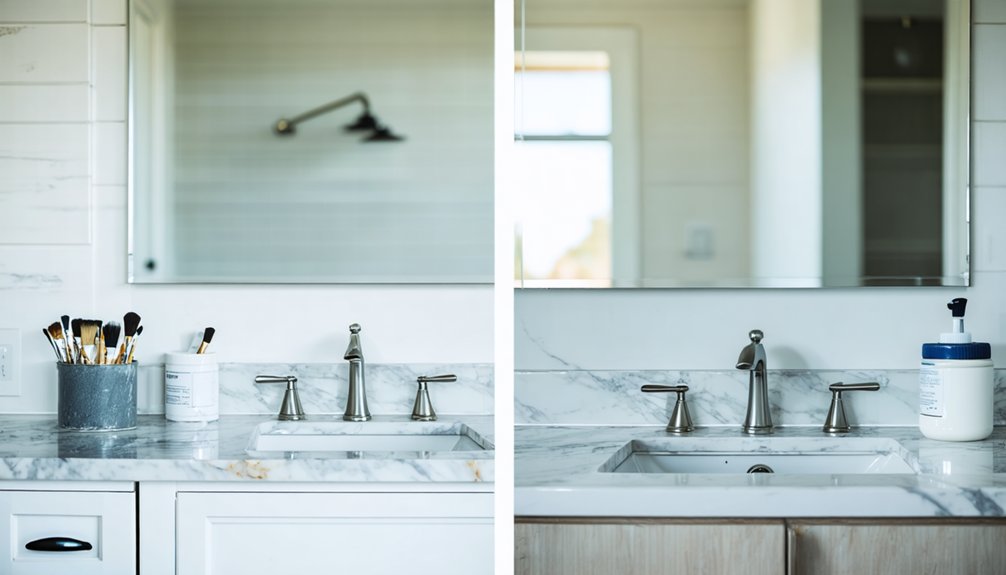
When we evaluate the true cost of painted versus stained bathroom cabinets, we’re looking beyond the price tag to understand value across years of daily use. Painted finishes demand 10-20% more upfront investment through additional materials and labor, yet that premium tells only part of the story.
We’ll examine how initial expenditures, ongoing maintenance demands, and replacement timelines create distinct financial trajectories that shape your cabinetry decision.
Upfront Material and Labor Costs
Understanding the financial landscape of cabinet finishes requires looking beyond surface-level price tags to examine the intricate relationship between materials, labor, and application methods.
We’ll find that painted cabinets typically command 10-15% higher finish pricing than stained options, with custom colorways pushing that premium to 20%. This differential reflects painting’s demanding 8-step process—requiring two primer coats, two paint applications, and a protective top coat—compared to staining’s streamlined approach of two stain coats finished with polyurethane.
However, material selection dramatically influences total investment. While painting demands intensive surface preparation and specialized equipment, MDF provides an affordable, smooth foundation. Conversely, stained cabinets require premium hardwoods like oak or walnut, where superior grain patterns justify elevated material costs that often eclipse finish expenses.
Maintenance and Refinishing Expenses
Beyond the initial investment lies a divergent cost trajectory—one where painted cabinets accumulate incremental expenses through demanding upkeep cycles, while stained finishes deliver enduring performance with minimal intervention.
Staining’s Long-Term Durability Advantages:
- Touch-up accessibility through wood repair pens or furniture stain simplifies maintenance without full refinishing
- Color penetration conceals scratches naturally, eliminating the visible chips that plague painted surfaces
- Resealing at lower frequencies protects against bathroom moisture without extensive labor
Painted cabinets demand repeated interventions—chips around handles, visible wear from impacts, and spot repairs that rarely blend seamlessly. Their 8-step refinishing process consumes materials and time, while stained surfaces need fewer applications and no primer.
In high-humidity bathrooms where you’re investing in your sanctuary, staining reduces the frequency of costly overhauls. The choice becomes clear: embrace a finish that works with you, not against you.
Lifespan and Replacement Timing
Two distinct trajectories emerge when we examine cabinet longevity: painted surfaces withstand bathroom conditions for 10-15 years, while stained finishes demand refinishing every 5-8 years—a temporal divide that reshapes the total cost equation.
Paint’s protective shell excels at moisture damage prevention, forming a barrier against bathroom humidity that stained wood can’t replicate. While we’ll encounter gradual color fading with stain under sunlight exposure within 5-7 years, painted cabinets maintain their appearance considerably longer with proper topcoats.
The refinishing frequency tells our value story: stain requires complete reapplication twice during paint’s single lifecycle. Premium acrylic enamel warranties extend to six years, reflecting superior durability. We’re choosing between simple touch-ups every 3-5 years or full refinishing cycles—a distinction that compounds dramatically over decades of bathroom use.
Aesthetic Appeal and Design Flexibility
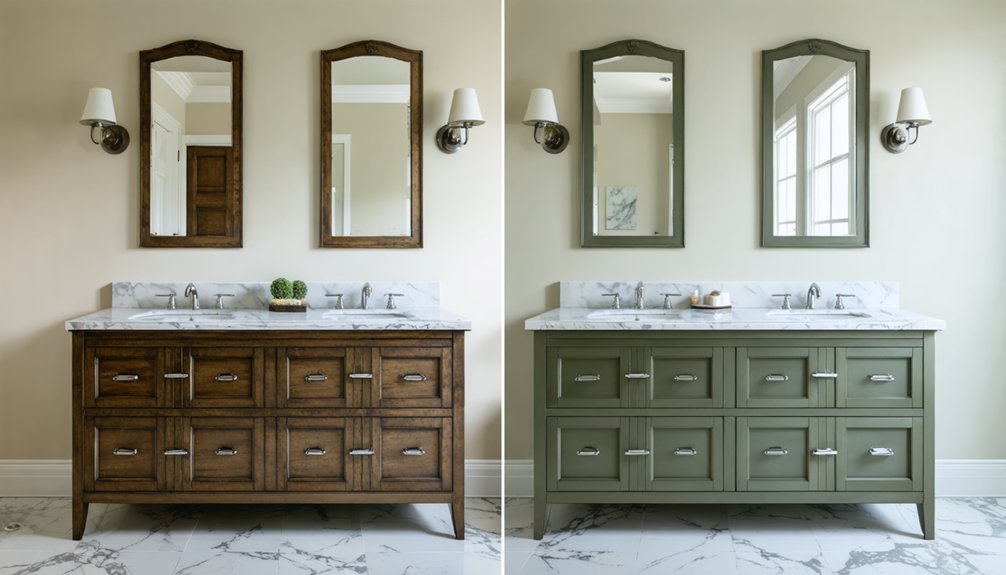
When we’re selecting a finish for bathroom cabinets, the aesthetic impact shapes the entire space’s character. Painted cabinets deliver exceptional color versatility—we can achieve anything from crisp whites to deep navy tones that define contemporary bathrooms. Their smooth, opaque surface creates that flawless, modern aesthetic we’re seeing dominate 2026 design trends.
Painted bathroom cabinets offer unmatched color flexibility and that sleek, contemporary finish defining modern design aesthetics.
Stained cabinets offer distinct textural appeal through exposed grain patterns and natural wood variations. We’re witnessing their resurgence in luxury markets, particularly with white oak and walnut species.
Key aesthetic advantages by finish type:
- Paint conceals wood imperfections completely while enabling bold, saturated colors
- Stain showcases organic beauty and develops a naturally worn patina over time
- Paint adapts seamlessly across modern, fluid, and contemporary styles
Both finishes transform bathroom spaces—the choice depends on whether we prioritize design flexibility or timeless craftsmanship.
Managing Scratches, Chips, and Daily Wear
Daily interactions with bathroom cabinetry reveal fundamental differences in how painted and stained finishes withstand the inevitable impacts of real-world use. We’ve observed that stained surfaces naturally camouflage minor dings within the wood grain, while painted cabinets—particularly in white or light tones—expose every fingerprint and smudge. Scratch visibility becomes pronounced when paint chips away, revealing underlying wood in high-traffic zones near handles and edges.
The moisture sensitivity of painted finishes creates additional vulnerability. As bathroom humidity causes wood to expand and contract, paint fractures at stile-rail joints, developing hairline cracks that stain prevents by moving with the wood. We’ll need frequent touch-ups on painted surfaces, whereas stained cabinets age gracefully, hiding wear within their natural patterns while maintaining structural integrity for decades.
Current Trends in Bathroom Cabinet Finishes for 2026
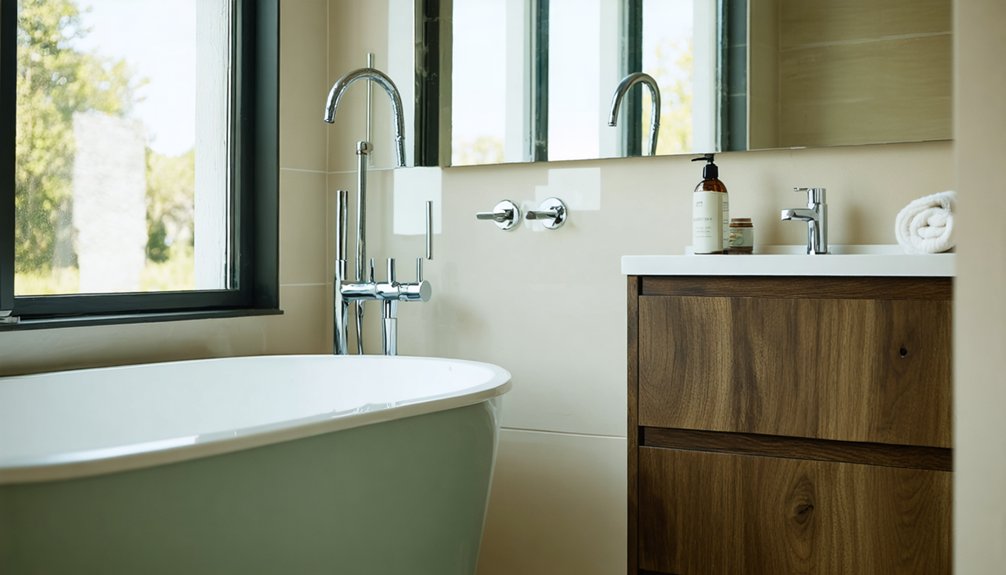
Several transformative movements are reshaping bathroom cabinet aesthetics as we move into 2026, with stained wood emerging as the definitive counterpoint to the painted-white dominance of previous years. We’re witnessing a collective shift toward finishes that celebrate authenticity and natural beauty through open grain wood textures that showcase material integrity.
Three defining trends you’ll want to embrace:
- Warm Neutral Foundations – Curated color palettes featuring terracotta, clay, and creamy ivory replace cold grays
- Matte Surface Dominance – Low-sheen finishes and subtle textures create livable, glare-free environments
- Polished Nickel Accents – Silver-toned fixtures signal the return to classic, enduring metal finishes
Transitional vanities blend modern minimalism with organic warmth, while forest green and navy provide depth alongside earth-based neutrals. These movements prioritize timeless versatility over fleeting trends.
Best Cabinet Materials for Paint vs. Stain Application
Understanding which cabinet materials align with your chosen finish determines both the visual outcome and long-term durability of your bathroom transformation.
Solid wood thrives with stain, where material properties allow deep penetration that moves with natural expansion, delivering 20-30 years of performance. Paint creates a stunning but shorter-lived finish at about 10 years due to cracking from humidity changes.
MDF and artificial boards demand paint—their non-porous surfaces reject stain absorption while accepting smooth, sealed paint coats that protect against moisture intrusion.
Plywood and wood veneer offer versatility in finishing considerations. Stain showcases their grain affordably with minimal prep, while paint requires extensive sanding and priming for proper adhesion.
We’ve found that matching your material to the right finish eliminates future headaches, creating bathroom cabinets that perform beautifully for decades.
Making Your Decision: Key Factors to Consider
When you stand before your bathroom cabinets, the choice between paint and stain reshapes not just their appearance but their performance for decades to come. Let’s consider the priorities that guide your decision:
- Design Durability Timeline: Stain delivers 20-30 years of protection by moving with wood’s natural expansion, while paint’s rigid finish texture typically requires refinishing after 10 years.
- Moisture Environment: Your bathroom’s humidity levels favor stain’s penetrating moisture resistance, though waterproof paint formulations compete effectively in steam-heavy spaces.
- Maintenance Reality: Stained cabinets demand minimal upkeep with touch-up markers blending seamlessly into wood grain, whereas painted surfaces reveal every scratch beneath their color layer.
We’ve found that weighing these factors against your aesthetic vision and budget creates clarity in this transformative choice.
Frequently Asked Questions
Can I Apply Stain Over Previously Painted Bathroom Cabinets?
Verily, we can transform your painted cabinets! Proper surface preparation through thorough cleaning and sanding, paired with compatible primer selection like Real Wood Primer, enables stunning stain absorption. We’ll achieve that rich, wood-like finish you’re envisioning together.
How Long Does Each Finish Take to Cure in Humid Bathrooms?
We’ll see paint cure in 14–30 days and stain in 7–14 days in humid bathrooms, though cure time’s affected by humidity levels. Proper ventilation’s vital—we recommend maintaining 40–55% relative humidity with steady airflow for ideal results.
Do Stained Cabinets Work With Modern Farmhouse Bathroom Styles?
Stained cabinets absolutely thrive in modern farmhouse bathrooms—over 70% of designers now specify them. We’ll help you layer rich wood tones with industrial design accents, creating that coveted rustic-meets-refined aesthetic where you’ll feel instantly at home.
Should I Match Cabinet Finish to Vanity Top Material?
We recommend considering vanity material coordination, but perfect matching isn’t essential. Strategic cabinet top material contrast creates visual depth and dimension. Complementary finishes—like warm stained wood against cool marble—often deliver more sophisticated, layered design than identical tones.
Can I Mix Painted and Stained Cabinets in One Bathroom?
We absolutely encourage mixing painted and stained cabinets in your bathroom. When you select compatible finishes and coordinating color schemes, you’ll create stunning visual contrast that elevates your space while honoring both traditional craftsmanship and contemporary design sensibilities.