We’ve found that preparing Hagerman homes for painting requires specialized protocols adapted to Idaho’s high desert climate—start by pressure washing to remove mineral-laden dust using adjustable PSI settings, then inspect for freeze-thaw damage and address cracks with weather-resistant sealants before they compromise your substrate. You’ll need to select low-humidity formulations like Benjamin Moore Aura that cure properly in our dry conditions, and time your application for 50-85°F windows between late spring and early fall when temperature stability supports proper cross-linking. Our thorough approach below covers ideal painting hours, UV protection strategies, and weather monitoring techniques that extend coating longevity from five years to fifteen.
Key Takeaways
- Schedule painting during late spring through early fall when temperatures remain between 50-85°F for optimal paint curing and performance.
- Pressure wash surfaces to remove mineral-laden dust deposits, then inspect immediately before residue compromises adhesion in dry conditions.
- Repair freeze-thaw damage by sealing cracks and restoring mortar joints to eliminate moisture pathways before applying paint.
- Select UV-resistant, low-VOC paints like Benjamin Moore Aura formulated for low-humidity conditions and accelerated evaporation rates.
- Choose matte or eggshell finishes in lighter shades to resist UV degradation and provide superior coverage in Hagerman’s climate.
Understanding Hagerman’s Unique Climate Challenges for Exterior Painting
When planning exterior painting projects in Hagerman, Idaho, we must account for the region’s distinctive high desert climate that directly impacts paint performance and longevity. Our community faces significant temperature variations throughout the day, demanding weather-resistant formulations that maintain adhesion across the ideal 50°F to 85°F range. These fluctuations require careful timing—temperatures below 35°F prevent proper curing, while excessive heat above 85°F causes rapid drying and brush marks.
We’re fortunate that Hagerman’s dry conditions minimize humidity concerns compared to northern Idaho regions. However, moisture adaptation remains critical when residual dampness exists. Our high desert environment also subjects exterior surfaces to intense UV exposure, accelerating color degradation. Together, we’ll select UV-resistant paints and lighter shades that withstand our challenging sunlight levels while ensuring suitable application conditions.
Timing Your Paint Project: Best Seasons in Hagerman
Understanding Hagerman’s climate challenges naturally leads us to strategic scheduling decisions that maximize paint adhesion and longevity. We’ve found that seasonal start times considerably impact project outcomes in our region. Optimum painting conditions require temperatures between 50-85°F with humidity below 70%, parameters that dictate our scheduling approach.
Late spring through early fall typically provides the most favorable windows for exterior applications. We monitor temperature stability, ensuring overnight lows don’t compromise curing processes. Morning dew patterns and afternoon wind conditions also factor into our planning matrix.
Winter projects remain feasible for interior work when climate-controlled environments maintain consistent conditions. We coordinate with local weather patterns, understanding that Hagerman’s microclimate demands flexibility. Strategic timing isn’t just convenience—it’s essential for achieving mil thickness specifications and ensuring proper cross-linking during the curing phase.
Surface Cleaning in a Semi-Arid Desert Environment
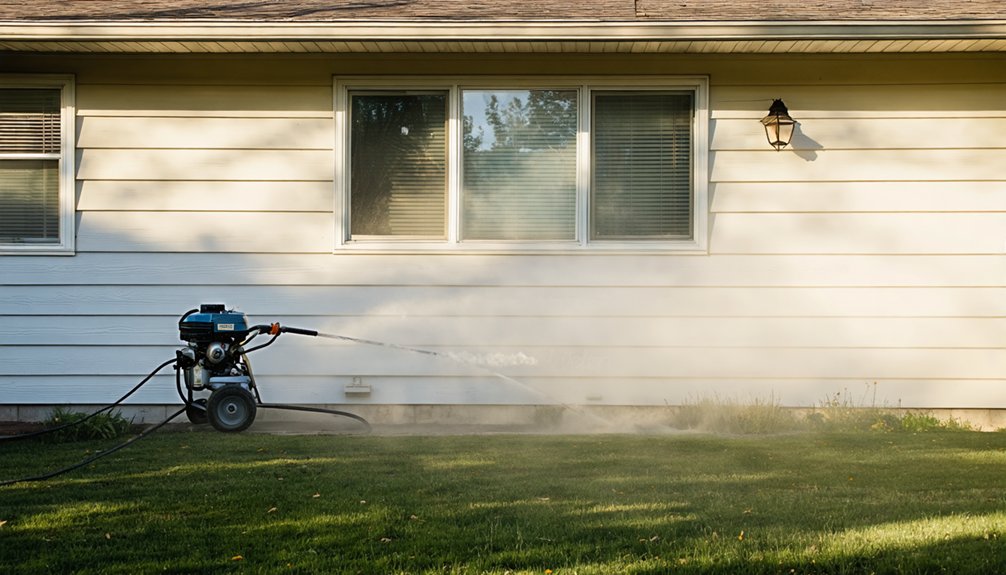
Because Hagerman’s semi-arid climate deposits mineral-laden dust at accelerated rates, we’ve developed specialized surface preparation protocols that account for substrate dehydration and particulate infiltration. Our pressure washing systems utilize adjustable PSI settings to remove baked-on contaminants without compromising delicate surfaces common to desert construction. We follow aggressive cleaning with immediate inspection, as high evaporation rates can leave residue that undermines adhesion.
Critical to our process is moisture management—we time cleaning operations to prevent flash-drying while ensuring complete substrate desiccation before priming. Sanding addresses brittle areas created by low humidity, establishing mechanical tooth for superior bonding. For heavily compromised wood, we employ media blasting to restore surface integrity. This methodical surface preparation approach directly influences coating longevity, typically extending durability to 5-10 years despite Idaho’s intense UV exposure.
Addressing Winter Damage and Freeze-Thaw Repairs
The relentless assault of Idaho’s freeze-thaw cycles creates compounding structural vulnerabilities that we address before any coating application. Addressing freeze thaw structural damage requires systematic inspection of hairline cracks in masonry, spalling concrete, and compromised mortar joints where water infiltration begins. We’re addressing water infiltration through exterior cracks by implementing weather-resistant sealants and structural repairs that prevent moisture absorption during thaw periods.
Idaho’s freeze-thaw cycles demand thorough structural assessment and repair before any protective coating can deliver lasting performance.
Critical Pre-Paint Repair Protocol:
- Crack Remediation – Apply elastomeric sealants to fractured concrete, warped siding panels, and separation points around trim assemblies
- Mortar Joint Restoration – Repoint failed brick and stone connections where expansion cycles created gaps
- Substrate Stabilization – Remove spalled material, treat exposed surfaces, and rebuild compromised sections to establish proper paint adhesion
These interventions eliminate moisture pathways that would undermine coating longevity and thermal performance.
Choosing the Right Paint for Low Humidity Conditions
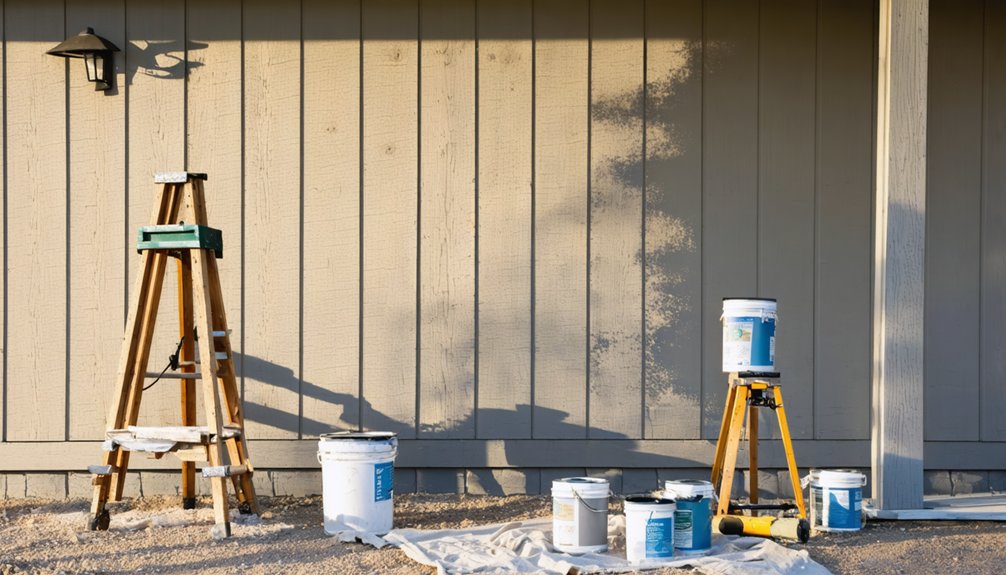
When selecting paint formulations for Hagerman’s arid climate, we prioritize products engineered for accelerated evaporation rates and low-moisture curing profiles rather than high-humidity formulations. Our focus shifts from mold-resistant additives to proper moisture management through strategic paint sheen selection.
In low-humidity environments, we can confidently specify matte and eggshell finishes throughout your home, as moisture penetration risks remain minimal. These sheens provide superior hide and touch-up capabilities compared to glossier alternatives.
We recommend low-VOC options like Benjamin Moore Aura and Sherwin-Williams Harmony, which cure effectively in dry conditions while maintaining excellent adhesion. The 50°F to 85°F application range aligns perfectly with Hagerman’s climate patterns. Coverage rates of 350-400 square feet per gallon optimize material costs, while rapid dry times—30 minutes to touch—accelerate project completion schedules.
Working Safely in Hagerman’s Windy Conditions
Wind dynamics in Hagerman present distinct operational challenges that directly impact painting safety protocols and application quality. We’ll help you navigate managing wind speed fluctuations that range from 8 mph morning conditions to afternoon peaks of 22 mph with gusts reaching 34 mph. These velocity changes demand strategic scheduling and equipment adaptation.
Critical Wind Management Protocols:
- Morning Application Windows – Execute primary coating operations before 10 AM, when wind speeds remain below 17 mph thresholds
- Equipment Stabilization – Anchor scaffolding, weight tarps, and secure all materials against west wind patterns
- Debris Contamination Barriers – Deploy protective sheeting around work zones for mitigating debris contamination in wet surfaces
We’ll monitor forecast data daily, discontinuing spray operations when conditions exceed safe application parameters.
Morning vs. Afternoon: Optimal Painting Hours
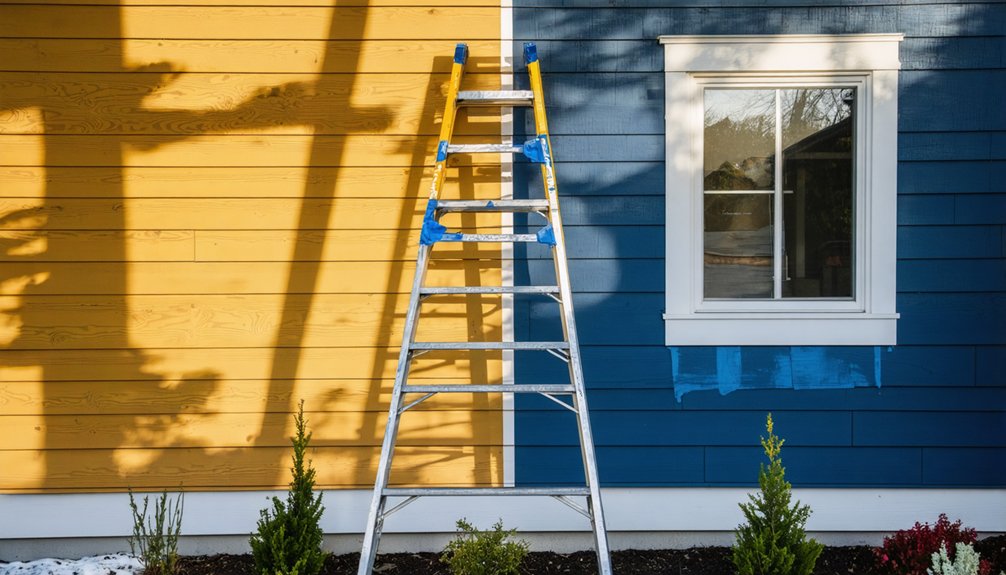
We’ve observed that early morning temperatures in Hagerman typically fall within the ideal 50°F-85°F range while maintaining lower humidity levels that promote proper paint adhesion and curing.
However, afternoon conditions introduce significant wind challenges that can compromise application quality and spray patterns, particularly during exterior work.
Based on our experience with local weather patterns, we recommend scheduling your painting sessions between 8 AM and 1 PM to maximize stable atmospheric conditions and guarantee complete drying before evening moisture returns.
Early Morning Temperature Advantages
Because exterior paint requires specific thermal conditions to cure properly, we recommend starting your Hagerman painting project during early morning hours when temperatures consistently fall within the critical 50°F to 85°F range. This window provides ideal drying conditions that professional painters rely on for superior adhesion and longevity.
Temperature-Related Benefits:
- Latex paints achieve guaranteed performance between 50°F-85°F, while oil-based formulations tolerate 40°F-90°F ranges
- Nighttime lows above 35°F-50°F guarantee proper curing throughout the complete polymerization cycle
- Even temperature dispersion prevents thermal shock that causes premature film failure and cracking
Starting early means you’re working alongside Hagerman’s experienced painting community, applying coatings when atmospheric conditions support molecular bonding rather than fighting against environmental factors that compromise your investment.
Afternoon Wind Challenges
As temperatures climb throughout Hagerman’s daytime hours, thermal gradients trigger predictable atmospheric disturbances that substantially compromise exterior coating applications. We’ve observed that afternoon wind variability intensifies post-noon, accelerating solvent evaporation rates and causing uneven film formation.
The Snake River Valley’s topography amplifies localized gusting patterns, embedding airborne particulates into wet surfaces and degrading adhesion integrity.
Our regional data confirms winds routinely exceed 15 mph thresholds during peak afternoon periods, creating application control challenges that manifest as streaks, sags, and contaminated finishes. We recommend implementing physical windbreaks and monitoring Idaho-specific forecasts to identify diurnal patterns. When gusts intensify beyond acceptable parameters, postponing work protects our investment.
Optimal Application Window Timing
When atmospheric conditions stabilize between 7:00 AM and 10:00 AM, we’ve identified Hagerman’s primary application window for exterior coating systems. This timeframe delivers consistent performance before mid day light conditions create thermal complications.
We’re targeting the ideal temperature range of 50°F-85°F with humidity below 50%, which our morning window reliably provides during late spring through early fall.
Critical Application Parameters:
- Dawn initiation (6:30-7:00 AM) captures stable atmospheric conditions before wind velocity increases
- Mid-morning completion (by 10:00 AM) guarantees proper flash-off before temperature peaks
- Interior work changeovers (10:00 AM-2:00 PM) maximize controlled environment advantages when exterior conditions deteriorate
We’re coordinating our application schedules with Hagerman’s microclimate patterns, making certain each coating layer cures within manufacturer specifications while avoiding afternoon thermal stress.
Preparing Wood and Trim for Temperature Extremes
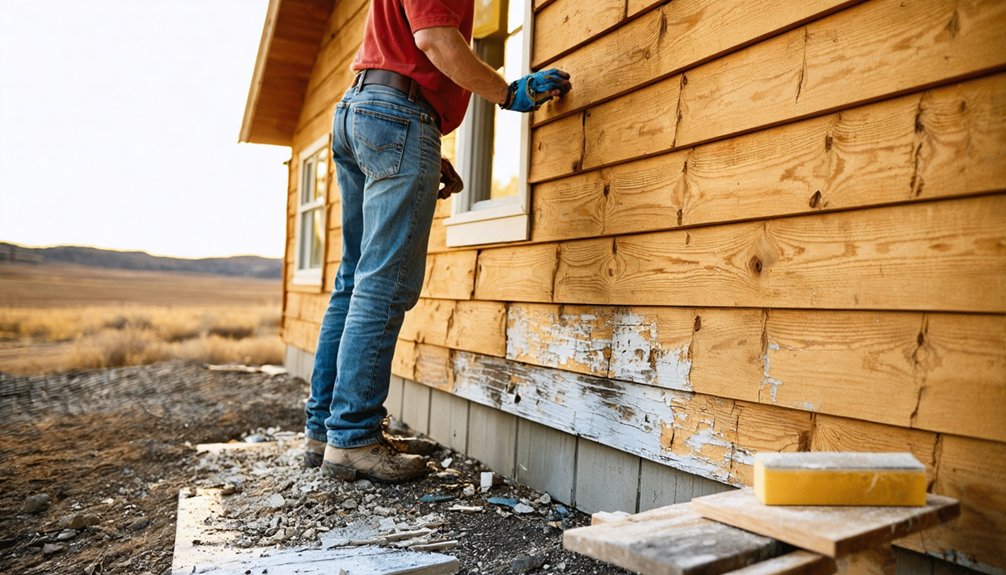
Hagerman’s 71°F annual temperature swing—from January lows of 21°F to July highs of 92°F—subjects wood and trim to severe expansion-contraction cycles that compromise paint adhesion and structural integrity. We’ll address wood expansion by sealing pores before temperatures drop below 35°F, when contraction creates cracks. Apply primer only above 40°F to prevent ice formation within the substrate.
Humidity impacts demand strategic moisture control—winter’s 78% relative humidity promotes absorption and swelling, while summer’s 37% lows accelerate drying. We’re selecting flexible acrylic caulks that accommodate dimensional changes without splitting. For conducive results, we’ll use breathable exterior paints that allow moisture vapor transmission while blocking liquid water.
Mildew-resistant finishes combat 67% January humidity levels. This preparation protocol safeguards your trim against Hagerman’s extreme conditions.
Monitoring Weather Forecasts for Paint Success
We’ll consult seven to ten-day weather forecasts before scheduling any exterior painting project in Hagerman, verifying that temperature ranges remain within 50-85°F for consecutive days and nights. Our team prioritizes dew point monitoring to guarantee surface temperatures stay at least 5°F above this critical threshold, preventing moisture condensation during curing periods.
Essential forecast parameters we analyze include:
- Precipitation probability patterns – Rain interruption mitigation requires identifying dry weather windows between storm systems, with immediate project suspension if unexpected rainfall occurs
- Wind speed assessments – Strong winds introduce airborne debris that compromises wet paint film integrity
- Humidity level tracking – Lower humidity percentages accelerate proper film formation and enhance crack resistance throughout the curing process
These meteorological evaluations protect your investment through scientifically-informed scheduling decisions.
Protecting Your Paint Job From UV Exposure and Dust
In Hagerman’s high-altitude climate, we must address two critical threats to paint longevity: intense UV degradation and airborne particulate contamination. UV rays break down chemical binders in paint films, while Idaho’s characteristic winds deposit dust and debris onto wet surfaces during application.
We’ll examine UV-resistant formulations, contamination control protocols, and protective coating systems that extend your paint job’s service life in these demanding environmental conditions.
UV-Resistant Paint Formulas
The science behind UV-resistant paint formulations centers on three indispensable components working in concert: protective pigments, specialized binder systems, and stabilizing additives. We’ll explore how pigment concentration adjustments directly impact your paint’s opacity and coverage efficiency.
Titanium dioxide and zinc oxide form the protective foundation, while ceramic microspheres enhance reflective capabilities. Resin crosslinking performance becomes pivotal through 100% acrylic binders and epoxy acrylate systems that resist degradation in Idaho’s intense sunlight.
Essential UV Protection Components:
- Hindered Amine Light Stabilizers (HALS) neutralize free radicals preventing structural breakdown
- Benzotriazole UV absorbers prevent yellowing and maintain color integrity
- Self-cross-linking acrylic urethane resins provide superior resistance to photodegradation
Premium formulations incorporate these elements to deliver 8-10 times greater thickness than standard paints, ensuring long-term protection for your Hagerman home.
Dust Control During Application
When dust particles settle onto wet paint surfaces, they compromise both the aesthetic finish and the protective barrier that UV-resistant formulations provide—making contamination control as critical as proper surface preparation. We establish professional-grade containment through systematic sealing work area protocols. Using ZipWall systems with poly sheeting, we create temporary barriers while sealing doors with blue tape. Air returns require complete plastic coverage to prevent HVAC circulation of particulates.
Controlling air circulation demands strategic implementation of negative pressure systems with outdoor exhaust. We position box fans in sealed enclosures at windows, cracking opposite openings for directional airflow. Floor protection involves static-cling plastic or X-Board on hard surfaces. H-Class industrial vacuums replace conventional sweeping—compressed air remains banned. Daily cleanup with shop vacs maintains contamination-free environments, while tack-cloth application immediately precedes coating for ideal adhesion.
Long-Term Surface Protection
Professional coating systems break down under Hagerman’s relentless solar radiation without engineered UV-resistant formulations that chemically stabilize pigment molecules against photodegradation. We protect your investment through multi-layer architecture: primer establishes corrosion barriers, intermediate coats build mil thickness with anti-corrosion pigments, and topcoats deliver final environmental shielding.
When choosing high performance sealants, we prioritize hydrophobic ceramic formulations that resist moisture penetration while blocking UV transmission. Evaluating topcoat durability requires analyzing flexibility coefficients—premium systems accommodate thermal expansion without microcracking.
Critical protection strategies:
- UV-blocking topcoats with photostabilizers prevent chalking and maintain color retention under 300+ annual sunshine days
- Clear sealant overlays create sacrificial barriers against abrasion and dust accumulation
- Physical shade structures combined with engineered coatings reduce surface temperature extremes by 40%
Annual inspections identify coating failures before substrate damage occurs.
Frequently Asked Questions
How Long Does Exterior Paint Typically Last in Hagerman’s Climate?
We’ve seen exterior paint longevity reach 7-10 years in Hagerman when we prioritize proper paint preparation and premium products. However, your home’s harsh UV exposure and temperature swings—think 100°F summers to subzero winters—demand professional-grade application techniques for maximum durability.
Do I Need a Permit to Paint My Home’s Exterior?
No, we don’t need paint permit requirements for exterior painting in Hagerman. Local regulations regarding painting don’t mandate permits for cosmetic work. However, we’ll verify with City Hall if our project involves structural modifications or historic district compliance.
Should I Hire a Professional Painter or Do It Myself?
We recommend conducting a thorough cost benefit analysis comparing material expenses against professional rates, while evaluating your time commitment—DIY requires 44-78 hours versus professional completion in 3-5 days with superior durability and warranty protection.
How Much Paint Will I Need for My Home?
We’ll start by calculating paint coverage using total wall square footage divided by 350-400 square feet per gallon, then factor in two coats while selecting appropriate paint sheen for your surface conditions.
What Exterior Colors Are Most Popular in Hagerman?
We’re seeing popular earth toned shades like Accessible Beige and Clary Sage dominate Hagerman exteriors. Clients increasingly pair these bases with vibrant accent colors—think Iron Ore or Hale Navy trim—creating dimensional, fade-resistant finishes that unite our community’s aesthetic.