Pressure washing and soft washing differ fundamentally in their cleaning mechanisms. We apply pressure washing at 2,000-4,600 PSI, using kinetic force and mechanical action to remove contaminants from hard surfaces like concrete and brick. Soft washing operates at just 500-1,500 PSI, relying instead on biodegradable chemical solutions that penetrate deeper and eliminate organic growth at its source. While pressure washing delivers immediate visual results, soft washing extends cleanliness duration by 4-6 times and minimizes surface damage risks. Understanding these distinctions helps you select the proper methodology for your specific project requirements.
Key Takeaways
- Pressure washing uses 2000-4600 PSI with mechanical force, while soft washing employs 500-1500 PSI with chemical solutions.
- Pressure washing excels on hard surfaces like concrete and brick; soft washing protects delicate materials like shingles and stucco.
- Soft washing relies on chemical action and dwell time rather than high-pressure kinetic force to eliminate contaminants.
- Soft washing results last 4-6 times longer by penetrating deeper and eliminating growth at the source.
- Pressure washing provides immediate visual results but risks surface damage; soft washing minimizes structural and safety risks.
Understanding Pressure Levels and Water Force
Anyone entering the exterior cleaning industry must first master the fundamental metrics that define equipment capability: PSI and GPM. We comprehend that PSI (pounds per square inch) quantifies water force, while GPM (gallons per minute) indicates flow volume. Together, these specifications determine our Cleaning Units—calculated by multiplying PSI times GPM.
Water pressure requirements vary considerably between methods. Pressure washing operates from 2000 to 4600 PSI for medium to heavy-duty applications, effectively removing stubborn deposits from concrete and industrial surfaces.
Soft washing employs 500 to 1500 PSI, prioritizing chemical solutions over force.
Understanding pressure adjustments is critical for safety and surface protection. It’s understood that streams exceeding 2901 PSI can puncture skin, making proper equipment selection essential for protecting both operators and substrates.
How Each Method Cleans Surfaces
We’ve covered the pressure differences, but now let’s examine the distinct cleaning mechanisms at work. Pressure washing relies primarily on mechanical action—high-velocity water physically dislodges contaminants through kinetic force alone.
Soft washing, conversely, uses chemical action combined with dwell time, where solutions break molecular bonds between surfaces and organic growth before low-pressure rinsing removes the loosened material.
Chemical vs. Mechanical Action
Understanding the fundamental differences between mechanical and chemical cleaning action is critical for selecting the appropriate surface treatment method. Pressure washing delivers hydraulic impact force at high PSI, physically dislodging contaminants through sheer water pressure rather than relying on detergent concentration. This mechanical approach provides rapid cleaning but demands surfaces with adequate impact resistance to prevent damage.
Conversely, soft washing applies biodegradable solutions at low pressure, utilizing surfactants that chemically dissolve dirt and organic growth at the molecular level. The active ingredients initiate chemical reactions on contact, requiring extended dwell time for deep penetration. This method eliminates mechanical stress on delicate materials while achieving thorough, lasting results. We’re choosing between brute force and intelligent chemistry—each approach serves distinct cleaning requirements within our professional toolkit.
Dwell Time and Results
When cleaning agents contact contaminated surfaces, dwell time becomes the critical variable that determines both efficiency and thoroughness of the treatment process. We’ve found that pressure washing typically requires 30 seconds to 15 minutes of chemical dwell timing, depending on contaminant severity. Oil stains and mold demand extended periods before mechanical action proves effective.
Soft washing prioritizes dwell over pressure, with targeted detergents penetrating organic growth at molecular levels. Our approach allows chemicals to address root causes while foam formulations cling to vertical surfaces, maximizing contact time.
Temperature impact on dwell greatly affects both methods—cold weather extends required waiting periods, while heat accelerates chemical reactions but risks premature drying. We’ve observed that soft washing delivers 25-50% faster completion on residential projects by emphasizing chemical action over repeated mechanical passes.
Which Surfaces Work Best for Each Technique
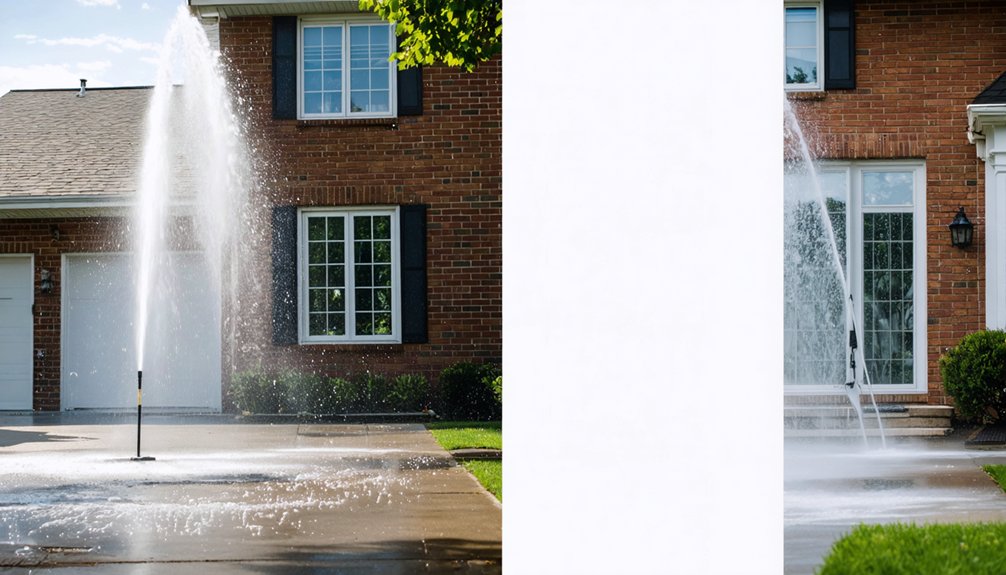
We’ll now match each cleaning method to the surfaces where it delivers ideal results without causing damage. Pressure washing excels on hard, non-porous materials like concrete, brick, and stone that can withstand 1,200-3,000 PSI, while soft washing protects fragile surfaces such as asphalt shingles, stucco, and painted exteriors. Understanding these applications prevents costly surface damage and selects the correct technique for each project.
Soft Washing Ideal Surfaces
Soft washing stands out as the safest method for delicate exterior surfaces that can’t withstand high-pressure water streams. We rely on customized cleaning solutions and proper pre-treatment preparations to protect vulnerable materials while achieving superior results.
Our soft washing approach effectively cleans:
- Vinyl siding – Low PSI prevents water intrusion while eco-friendly cleaners break down organic stains
- Roofing shingles – Preserves granules on asphalt, ceramic, and slate while eliminating algae and moss
- Stucco surfaces – Gentle application prevents erosion on porous cement plaster
- Windows and screens – Avoids seal damage and glass shattering with low-pressure rinsing
- Fences and decks – Protects stained finishes on soft woods without gouging or lifting coatings
We’ve found that combining high-volume water flow with mild detergents delivers thorough restoration without compromising structural integrity or aesthetic appeal.
Pressure Washing Best Applications
For wooden fence restoration, we adjust pressure based on material composition—vinyl and aluminum withstand higher psi while blasting away mold and mildew. Patios and walkways benefit from pressure washing’s ability to strip caked dirt, restoring appearance while avoiding the $425 average resealing cost.
Vinyl siding handles 1,200 to 1,500 psi with wide-angle nozzles, though we’ll reduce pressure for aluminum to prevent denting. This technique excels where mechanical force outperforms chemical action.
Comparing Cleaning Results and Longevity
When evaluating cleaning methodologies, we must examine both immediate efficacy and sustained performance metrics to determine ideal surface treatment protocols.
Our comparative analysis reveals critical distinctions in stain removal effectiveness and surface penetration depth:
- Pressure washing delivers immediate visual results on hard surfaces through mechanical force (1,500–4,400+ PSI)
- Soft washing penetrates deeper into porous materials, eliminating contaminants at their molecular source
- Chemical solutions in soft washing dissolve organic growth that pressure alone can’t adequately address
- Soft washing extends cleanliness duration by 4–6 times compared to surface-level pressure methods
- Pressure washing requires more frequent reapplication due to rapid algae and mildew regrowth
We’ve found that soft washing’s root-level treatment considerably outperforms pressure washing for longevity, while high-pressure methods excel at removing physically embedded deposits on durable substrates.
Safety Considerations and Potential Damage
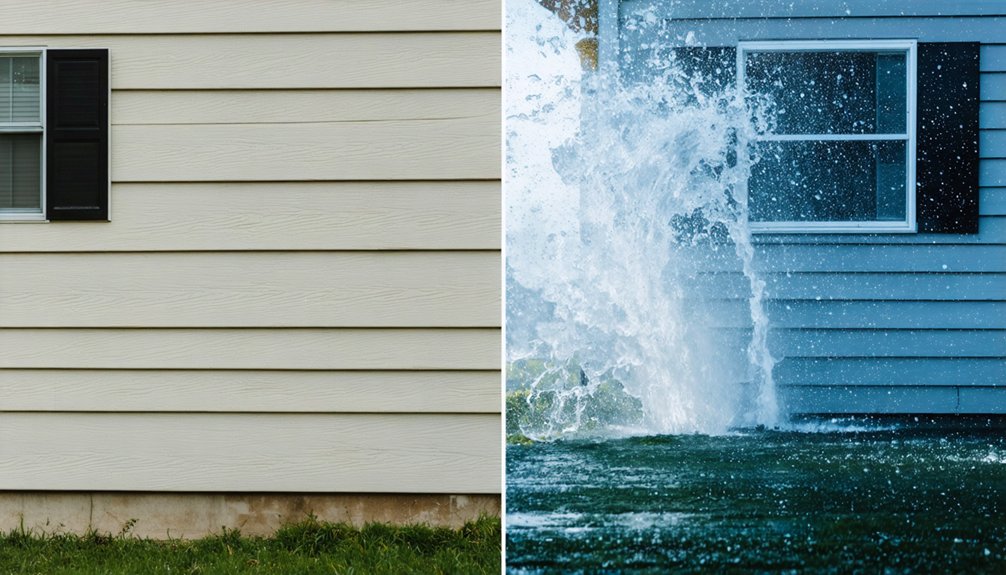
Beyond performance metrics, the inherent hazards associated with each methodology demand rigorous examination, as improper application can compromise both structural integrity and operator well-being. Pressure washing‘s 1,500–4,000 PSI force creates surface deformation risks—chipping shingles, etching stucco, stripping protective coatings. We’ve observed forced water intrusion beneath siding, degrading sealants around windows and trim. Consumer Reports documents injuries from blowback even at residential PSI levels.
Soft washing’s sub-500 PSI output eliminates mechanical damage while requiring proper chemical handling protocols. We prioritize biodegradable formulations that minimize landscaping impact, protecting vegetation and watersheds. The chemistry-based sanitization kills contaminants at their roots without dispersing spores. Both methods demand professional expertise, but soft washing‘s garden-hose-comparable pressure considerably reduces structural and operator injury potential across vulnerable substrates.
Equipment Setup and Nozzle Selection
Each methodology’s effectiveness hinges on equipment configuration, where pump capacity and nozzle geometry directly determine surface compatibility and cleaning efficacy. Understanding these technical distinctions guarantees we select appropriate tools for every project.
Pressure washing setups deliver:
- High-impact pumps generating 1,500-4,400 PSI through narrow nozzles
- Turbo nozzles like RotoJet creating rotating patterns at 3,700 PSI
- Cold water systems with adjustable unloaders for hard surfaces
- Ergonomic spray guns such as Acqualine SGS35 for operator control
- Non-marking hoses like KobraJet supporting extreme pressure demands
Conversely, soft washing prioritizes equipment versatility through modified units operating below 500 PSI with high GPM exceeding 6. We utilize chemical-resistant 12-volt transfer pumps and wide-angle fan nozzles that flood surfaces gently. These nozzle variations enable low-pressure chemical delivery, preserving delicate materials like wood siding while maintaining effective cleaning coverage.
Choosing the Right Method for Your Project
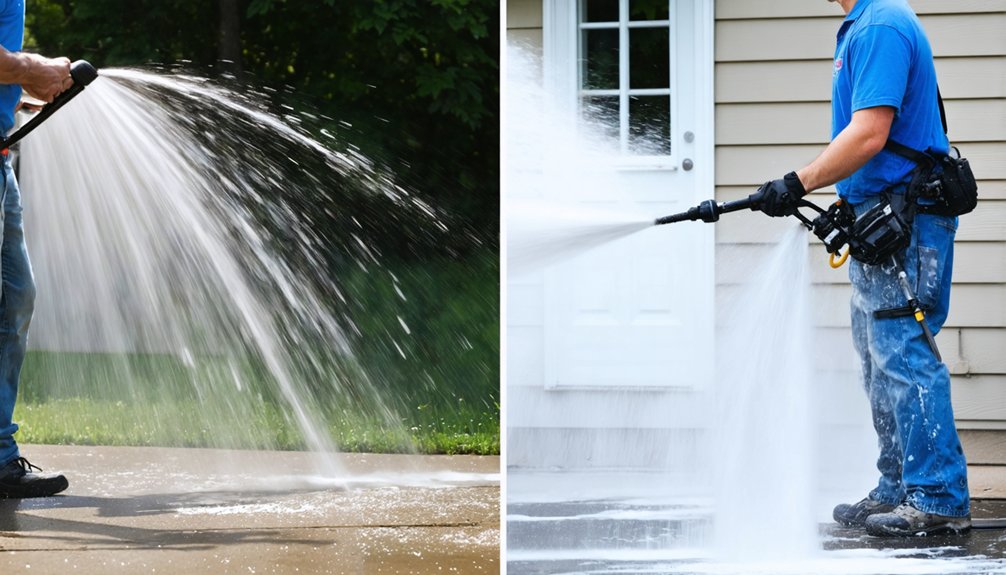
Selecting between pressure and soft washing methodologies requires systematic evaluation of substrate composition, contamination type, and damage thresholds. We recommend soft washing for all siding, shingle roofs, painted finishes, and porous materials where pressures below 500 PSI preserve integrity. Pressure washing suits stone, concrete driveways, and hardscapes requiring 1,500–4,000 PSI for stubborn staining removal.
When analyzing surface types, we prioritize longevity over speed—soft washing eliminates organic growth at the root, extending cleanliness 4–6 times longer than mechanical scouring alone. For service provider selection, we verify their substrate assessment protocols and equipment calibration standards. Professionals understand dwell times, biodegradable chemical applications, and pressure limitations that prevent etching, water intrusion, or finish degradation.
Both methods cost similarly ($250–$1,000), making proper technique selection critical for ideal outcomes.
Frequently Asked Questions
Can I Convert My Pressure Washer Into a Soft Washing System?
Yes, we can successfully convert your pressure washer into a soft washing system through pressure washer modifications like installing downstream injectors, specialized nozzles, and adjustable unloader valves. These soft washing equipment alternatives deliver effective cleaning at safe, reduced PSI levels.
What Is the Average Cost Difference Between Hiring Each Service?
We’ve found soft washing typically costs $400–$1,500 per house versus pressure washing’s $200–$500. The average hourly rate runs slightly higher for soft washing due to specialized chemicals, though our cost effectiveness comparison shows it’s more economical long-term.
Do I Need Special Licensing or Certification to Operate Either Method?
Think of licensing requirements as your professional passport—we’ll need general business licenses in most jurisdictions, while operator certification isn’t mandatory but demonstrates competency. Contractor licensing and environmental permits become critical when using chemical applications or serving commercial clients.
How Much Water Does Each Method Use per Cleaning Job?
Pressure washing typically uses 2-5 GPM while soft washing consumes remarkably less at 0.5-2 GPM, making it superior for water conservation. We’ll help you minimize environmental impact while achieving professional results through proper method selection.
Are the Cleaning Solutions Used in Soft Washing Safe for Pets?
Picture your furry friend exploring a freshly cleaned yard—we guarantee that’s safe. Our soft washing solutions’ chemical composition breaks down rapidly, minimizing environmental impact. We always rinse thoroughly and keep pets away until surfaces dry completely for maximum protection.