We’ve found that successful interior painting in Gooding’s high-desert climate requires meticulous surface preparation—vacuum all surfaces, wipe walls top-down with mild detergent, and fill imperfections with spackling compound. You’ll need quality 2-inch painter’s tape applied in 8-inch sections, followed by a primer coat over tape edges to seal microscopic gaps. We recommend the cross-hatching method for walls: vertical bands, horizontal passes, then another vertical layer. Maintain 40–70% humidity and 50–85°F temperatures during application, using dehumidifiers when necessary to prevent streaking. The techniques below address Gooding’s unique environmental challenges in detail.
Key Takeaways
- Thoroughly clean and repair walls before painting by filling holes, sanding smooth, and priming patched areas.
- Apply painter’s tape in short sections with firm pressure, then seal edges with primer to prevent paint bleed.
- Paint ceilings first using flat finishes, cutting in edges before rolling in narrow “W” patterns parallel to light sources.
- Build wall coverage through multiple thin coats using cross-hatching technique and maintaining wet edges to avoid lap marks.
- Maintain indoor temperatures between 50°F and 85°F with 40–70% humidity for optimal drying and curing results.
Essential Preparation Steps Before You Start Painting
Before we apply the first coat, thorough surface preparation determines paint adhesion, finish quality, and project longevity. We’ll start by removing furniture, wall hangings, and fragile décor from the workspace. Protecting remaining items with drop cloths prevents damage while minimizing paint spatter during application.
Next, we’ll vacuum all surfaces—walls, baseboards, windows, and closets—then wipe walls top-down using damp rags with mild detergent. This removes grease, dirt, and soap buildup that compromises paint bonding.
Wall repairs follow: we’ll fill cracks and holes with spackling compound, then sand smooth with 220-grit sandpaper. After vacuuming dust residue, we’ll apply primer to patched areas and bare wood.
Finally, we’ll apply painter’s tape for achieving seamless edging along trim and baseboards, ensuring professional-grade results.
Proper Taping and Caulking Techniques for Clean Lines
To achieve professional-grade paint lines in our Gooding interior projects, we’ll execute proper taping and caulking techniques that separate amateur work from expert finishes. We’ll select quality 2-inch painter’s tape and apply it in 8-inch sections, maintaining firm pressure with our putty knife to guarantee air pockets are eliminated.
Before addressing paint coverage requirements, we’ll seal microscopic gaps by applying a primer coat of our background color over the tape edge. When cutting in with our angled brush, we’ll use minimal paint quantities and work systematically along each taped edge.
Understanding proper tape removal techniques verifies we pull away tape at a 45-degree angle while paint remains slightly tacky, typically within one hour of application, preventing edge peeling or paint adhesion to the tape backing.
Best Practices for Painting Ceilings Like a Professional
Professional ceiling application demands specialized equipment and systematic execution that distinguishes contractor-grade results from amateur attempts. We’ll utilize a 2½-inch angle sash brush for cutting in edges, followed by a 9-inch roller with appropriate nap mounted on an extension pole. Paint sheen selection centers on flat finishes—BEHR PREMIUM PLUS Interior Ceiling Paint provides dead-flat results that minimize imperfections.
Our technique prioritizes uniform edge application: cut in where ceiling meets wall first, feathering 2-3 inches down. We’ll address corners, fixtures, and smoke alarms before rolling. Roll parallel to your main natural light source using narrow “W” patterns while maintaining wet edges to prevent lap marks. Complete the entire ceiling in one session, alternating between brush cut-ins and roller sections for seamless integration and professional-grade uniformity.
Achieving Flawless Wall Finishes With Proper Rolling Methods
Flawless wall finishes depend on mastering systematic rolling techniques that eliminate visible stroke patterns and surface irregularities. We’ll guide you through proven methods that professional painters rely on for consistent results.
Essential Rolling Techniques for Professional-Grade Results:
- Cross-Hatching Method – Apply vertical bands fifty centimeters wide, followed by horizontal passes, then finish with another vertical layer. This interweaving creates uniform coverage patterns without visible boundaries.
- Feathering Shifts – Use an almost-dry roller to blend fresh paint into completed sections, ensuring seamless shifts between areas.
- Strategic Layering Paint Application – Build coverage through multiple thin coats rather than single heavy applications, maintaining consistent pressure throughout each pass.
Work in manageable sections before paint dries, and you’ll achieve the professional finish your home deserves.
Optimizing Drying Conditions and Final Touch-Ups
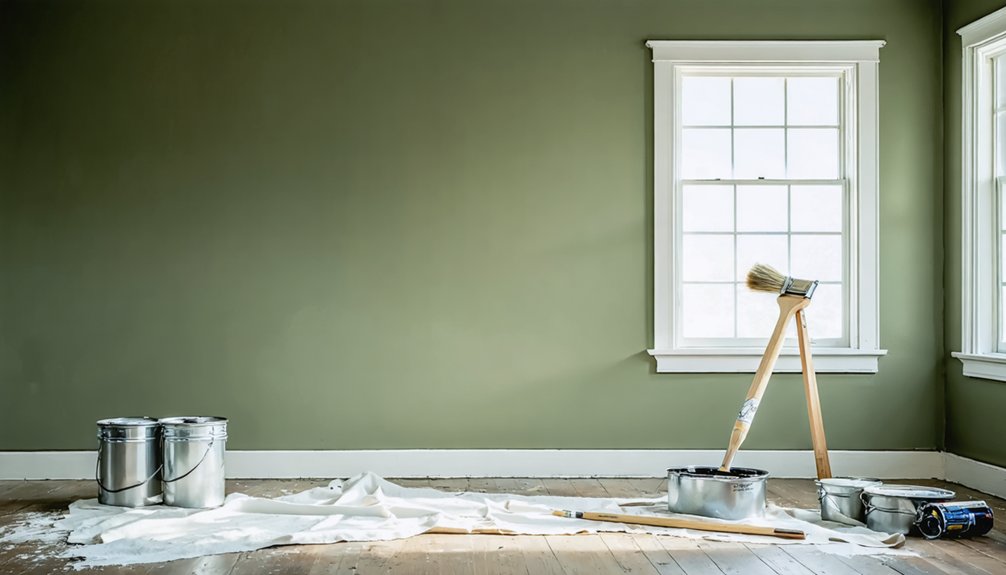
Why do perfectly applied paint layers still fail? We’ve found environmental control makes the critical difference. In Gooding’s variable climate, we maintain 40–70% relative humidity and temperatures between 50°F and 85°F during application.
Minimizing humidity issues requires active monitoring—we use dehumidifiers when levels exceed 70%, preventing streaking and blistering that compromise adhesion.
We increase airflow with strategically placed fans, opening windows slightly to accelerate moisture departure. When evaluating cure times, we distinguish between dry-to-touch (1–2 hours for latex) and full cure (up to 30 days). We wait 4–6 hours between coats, applying thin, even layers that prevent moisture entrapment.
Our systematic approach follows manufacturer recoat specifications precisely, avoiding premature second coats that cause lifting. We never rush curing with direct heat—persistence ensures lasting results.
Frequently Asked Questions
What Type of Paint Finish Works Best for High-Traffic Areas in Homes?
We recommend scrubbable satin paint for hallways and kitchens, durable eggshell finish for family rooms. Both resist scuffs, both withstand cleaning, both protect your walls. These professional-grade sheens deliver the washability our community’s homes need daily.
How Do I Choose the Right Paint Color for Gooding’s Natural Lighting?
We’ll test large samples under Gooding’s intense midday sun, evaluating interior paint undertones against reflected light from lava rock and agricultural landscapes. Proper lighting considerations include examining morning-to-evening shifts and seasonal variations for accurate color rendering.
Should I Prime Walls Before Painting or Can I Skip That Step?
We’ll need proper paint primer application for new drywall, repairs, color changes, or stains. Wall surface preparation determines if you can skip priming—only similar colors on clean, sealed surfaces allow it. Let’s assess your specific conditions together.
What’s the Best Way to Clean Painting Tools and Brushes After Use?
effective brush cleaning starts with scraping excess paint, then using appropriate solvents—water for latex, mineral spirits for oil-based. Proper brush storage means reshaping bristles and air-drying flat to preserve your tools.
How Long Should I Wait Before Moving Furniture Back Into Painted Rooms?
We recommend waiting 24 hours for latex paint and 48 hours for oil-based before furniture placement considerations. The drying time for paint varies by type, but following manufacturer specifications guarantees you’ll achieve perfect cure without surface damage.