We’ve found that satin or semi-gloss moisture-resistant paints deliver the best performance in bathrooms and kitchens, with Benjamin Moore’s Aura Bath & Spa and Sherwin-Williams Duration Home leading our tests. These formulations incorporate mildewcides and moisture barriers that extend paint life to 3-5 years in steam-saturated environments. Water-based alkyd paints excel on cabinetry, offering exceptional hardness and stain resistance. The finish matters tremendously—matte simply can’t withstand the humidity and cleaning demands these spaces require. Our extensive testing reveals specific application techniques that maximize longevity.
Key Takeaways
- Use moisture-resistant paints with mildewcides to prevent mold growth and extend paint life to 3-5 years in high-humidity spaces.
- Choose satin or semi-gloss finishes for walls and trim, as they offer superior moisture resistance and washability.
- Top brands include Benjamin Moore Aura Bath & Spa, Sherwin-Williams Duration Home, and Behr Premium Plus Interior for moisture protection.
- For cabinets, select water-based alkyd paints in semi-gloss or satin sheens for exceptionally hard, moisture-resistant finishes.
- Apply moisture-resistant primer after proper surface preparation, using thin coats and maintaining wet edges for optimal results.
Why Moisture Resistance Matters in High-Humidity Spaces
Moisture-resistant paint formulations address the fundamental challenge of water vapor permeability in high-humidity environments. In our bathrooms and kitchens, we’re constantly generating steam through hot showers, cooking processes, and direct water exposure. Standard paints can’t withstand this assault—they’ll peel, bubble, and crack within months.
That’s where specialized moisture regulating features become essential. Advanced resins create barriers that prevent water penetration while allowing trapped moisture to escape, maintaining wall integrity. We’ve found that incorporating mildewcides provides critical mold prevention strategies, inhibiting fungal growth that threatens both structural soundness and indoor air quality.
These formulations extend paint life to 3-5 years in high-use spaces, eliminating costly touch-ups. For those of us designing functional, healthy homes, moisture-resistant paints aren’t optional—they’re foundational to lasting performance.
Comparing Paint Finishes: From Matte to High-Gloss
Paint sheen selection fundamentally transforms both the aesthetic presentation and functional performance of our kitchen and bathroom surfaces. We’ll navigate the spectrum from matte to high-gloss, ensuring proper sheen selection for your moisture-prone spaces.
Matte finishes, while luxurious in bedrooms, aren’t recommended for bathrooms or kitchens due to poor washability. Eggshell provides balanced durability with moderate moisture resistance, suitable for powder rooms. Satin delivers exemplary performance for bathroom walls—its moisture-resistant properties and washability rival semi-gloss while enabling easier touch-ups.
Satin finish strikes the optimal balance for bathrooms—delivering moisture resistance and cleanability while maintaining superior touch-up capability over semi-gloss alternatives.
Semi-gloss excels on trim, cabinets, and high-contact surfaces with superior cleanability. High-gloss offers mirror-like durability for doors and cabinetry, though it’ll reveal every imperfection.
For room size considerations, higher sheens reflect light, visually expanding smaller bathrooms while highlighting architectural details in spacious kitchens.
Top Paint Brands and Formulations for Wet Environments
Understanding sheen characteristics prepares us to evaluate the specific formulations engineered for high-humidity performance. We’ll find Benjamin Moore’s Aura Bath & Spa delivers exceptional moisture resistance at $75–$110 per gallon, while Sherwin-Williams Duration Home offers comparable protection for $70–$85.
For budget-conscious projects, Behr’s Premium Plus Interior provides mildew-resistant coverage at $30–$45 per gallon. Paint sheen selection becomes pivotal when comparing Valspar’s Signature line ($64–$68) against specialized options like Zinsser Perma-White for mold-prone areas.
We should prioritize low-VOC formulations addressing paint odor and toxicity concerns—Benjamin Moore Advance and Dulux Kitchen formulations excel here. Hybrid enamels combine oil-based durability with water-based convenience, offering chip-resistant, self-leveling finishes that withstand constant moisture exposure in our most demanding spaces.
Selecting the Right Paint for Bathroom Cabinets
While wall surfaces demand moisture-resistant formulations, bathroom cabinetry requires specialized paints that withstand the unique combination of humidity exposure, frequent handling, and cleaning chemical contact.
We recommend water-based alkyd paints like Benjamin Moore Advance or Sherwin-Williams Emerald Urethane Trim Enamel, which cure to exceptionally hard finishes without requiring additional topcoats. These formulations resist moisture, stains, and mildew while providing superior durability in high-traffic applications.
Cabinet surface preparation determines your project’s longevity—we’ll need to thoroughly clean, sand, and prime existing surfaces before applying finish coats. For DIY painting techniques, semi-gloss or satin sheens offer ideal moisture resistance and cleanability. Valspar Cabinet Enamel’s self-leveling properties minimize brush marks, while Behr Premium Cabinet and Trim performs reliably for indoor applications. Together, we’ll achieve professional-grade results that protect your investment.
Color Trends That Transform Kitchen and Bathroom Design
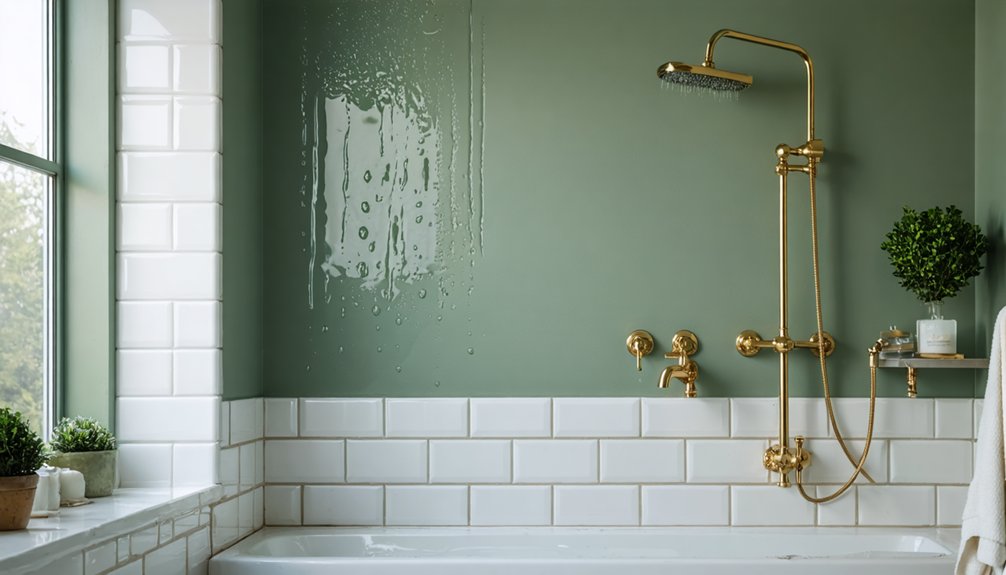
Color selections anchor the entire aesthetic of kitchen and bathroom renovations, and 2026’s palette shifts decisively toward warm neutrals that ground spaces in natural tranquility. We’re embracing smoky greens, fresh beiges, and warm browns that replace cool grays and stark whites with timeless versatility.
Three transformative approaches define this evolution:
- Warm Neutral Foundations – Silhouette and Universal Khaki create refined backdrops for cabinetry and full-room applications
- Earthy Accent Layers – Terracotta, soft sage, and mustard serve as mood boosting accents paired with maintenance free materials like travertine and limestone
- Strategic Drama – Color drenching in charcoal or navy delivers sophistication when balanced with reflective surfaces
Pantone’s Cloud Dancer exemplifies the ethereal off-white direction, while gloss-lacquered pastels inject playful energy into contemporary designs.
Testing and Choosing Colors Based on Your Lighting
Light transforms paint selections from theoretical swatches into lived experiences, making rigorous testing non-negotiable before committing to kitchen and bathroom palettes. We recommend painting substantial wall sections to track color balance under lighting throughout the day, observing how morning’s cool tones shift to afternoon’s warm intensity.
Create sample boards positioned near reflective surfaces—granite countertops, tile backsplashes, hardwood floors—to understand light reflection patterns that amplify or mute your choices. Match Kelvin temperatures strategically: bathrooms perform best at 3000-4000K for flattering neutrality, while kitchens benefit from 2700-3000K warmth.
Test dimmable fixtures to control ambiance, and always view samples under your actual lighting conditions. This methodical approach guarantees your selected colors harmonize with both natural window orientation and artificial bulb temperatures.
Professional Application Tips for Long-Lasting Results
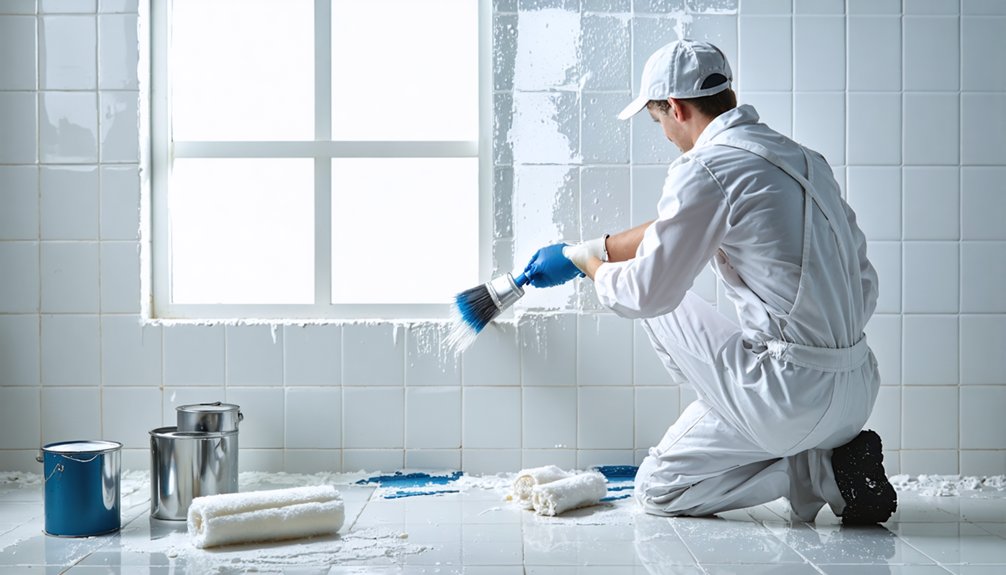
Selecting the perfect color means nothing if poor application undermines paint performance in moisture-heavy environments. We’ll share the surface preparation methods and primer application techniques that distinguish professional results from amateur attempts.
Our Three-Stage Application Protocol:
- Surface Preparation Methods – We clean with TSP or degreaser, sand lightly for mechanical adhesion, and seal all moisture entry points with quality caulking before primer touches surfaces.
- Primer Application Techniques – We apply moisture-resistant, mold-inhibiting primer using brushes for edges and fine-nap rollers for flat surfaces, allowing 2-3 hours between coats in humid conditions.
- Strategic Paint Layering – We cut in edges first, maintain wet edges during rolling, and sand between thin coats to achieve that factory-smooth finish that withstands daily moisture exposure.
Frequently Asked Questions
How Long Should I Wait Before Showering After Painting My Bathroom?
We recommend waiting 24-48 hours before showering after painting your bathroom. Proper drying time depends on paint type and ventilation considerations—latex paints need adequate airflow to cure properly, while oil-based formulas require longer periods before moisture exposure.
Can I Use Leftover Bathroom Paint for My Kitchen Walls?
While it’s *practically* universal, we’d recommend verifying paint compatibility first—bathroom formulations lack grease-resistance for kitchen demands. Check your paint shelf life too; expired coatings compromise adhesion and durability, affecting our desired aesthetic longevity and performance standards.
What Temperature and Humidity Levels Are Ideal for Painting Bathrooms?
We recommend maintaining an ideal temperature range between 50°F and 85°F with preferred humidity levels of 40-50% when painting your bathroom. These conditions facilitate proper paint adhesion, even drying, and professional-quality results we all desire.
How Often Should Moisture-Resistant Paint Be Reapplied in High-Humidity Areas?
Like a protective shield gradually weathering, we’ll reapply moisture-resistant paint every 5–7 years in our high-humidity spaces. Proper ventilation during application and the impact of high traffic usage directly influence this timeline for our shared spaces.
Does Bathroom Paint Require a Special Primer on New Drywall?
Yes, we’ll need moisture-resistant primers specifically formulated for bathroom conditions. We should avoid oil-based primers and instead utilize vapor barrier paints that seal drywall against humidity, preventing mold growth and ensuring our topcoat adheres properly in wet environments.