We’ve learned through decades of high-desert painting projects that Jerome’s 10-inch annual precipitation, 204 days of intense UV exposure, and 60-degree daily temperature swings create conditions that demand specialized surface preparation protocols most homeowners don’t anticipate. Your exterior requires high-pressure washing with biodegradable cleaners, extended drying times despite the arid climate, and climate-specific primers that accommodate thermal expansion cycles. We recommend 100% acrylic systems with Tg values of 60–100°C and UV-resistant formulations, applied exclusively during spring or fall windows when ambient temperatures stabilize between 60–85°F. This exhaustive guide covers everything from dust contamination control to frost mitigation strategies.
Key Takeaways
- Plan painting for late spring or early fall when temperatures stay between 60-85°F for optimal paint adhesion and curing.
- Power-wash surfaces to remove UV damage, dust, and contaminants, then allow extended drying time before applying primer.
- Choose 100% acrylic paints with UV-resistant formulations to withstand Jerome’s intense sun exposure and temperature fluctuations.
- Schedule work during low-wind periods and use barriers to prevent dust contamination during surface preparation and application.
- Apply climate-specific primers that seal against moisture and accommodate extreme temperature swings from -10°C to 80°C.
Understanding Jerome’s Unique Climate Challenges for Exterior Painting
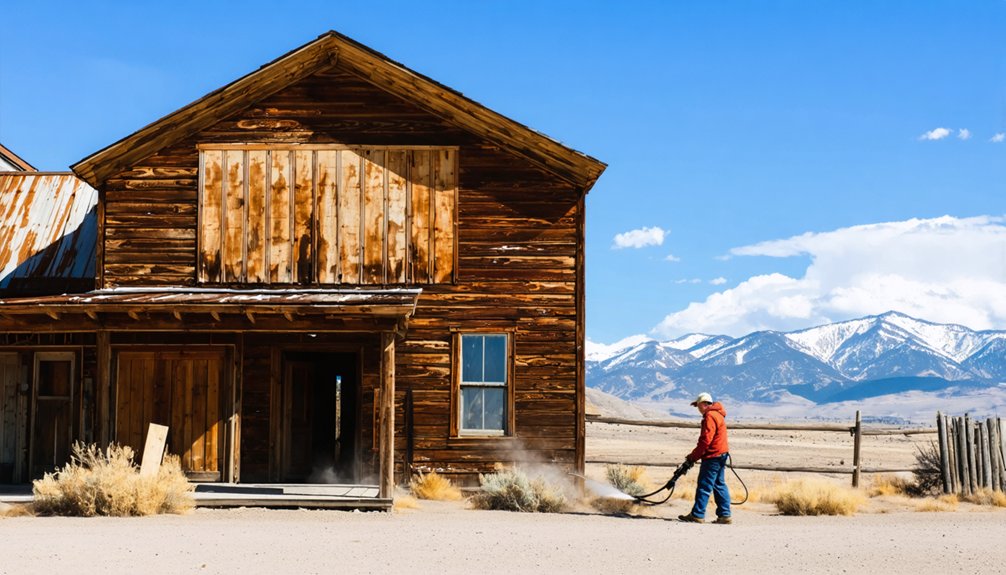
Jerome’s arid regional steppe climate presents distinct challenges that directly impact exterior paint performance and application methodology. With only 10 inches of annual precipitation and minimal snowfall, we’re dealing with moisture considerations that differ markedly from humid climates.
Jerome’s arid climate with minimal precipitation demands specialized exterior coating strategies that address moisture dynamics fundamentally different from humid environments.
The low humidity averaging 41% causes rapid evaporation during application, potentially compromising adhesion and film formation. Temperature impact becomes critical when July highs reach 90°F—excessive heat accelerates curing rates and reduces proper leveling.
Our 204 annual sunshine days deliver intense UV radiation that degrades standard formulations prematurely. Spring temperature fluctuations between 30-52°F create variable curing conditions, while February winds averaging 19 mph introduce contamination risks and accelerated solvent evaporation.
We must account for these environmental stressors when selecting premium coating systems and scheduling application windows.
Choosing the Optimal Time of Year for Your Painting Project
We’ve identified late spring (May-June) and early fall (September) as the ideal windows for exterior painting in Jerome, with ambient temperatures consistently ranging between 60-85°F and humidity levels around 52%.
Spring conditions offer moderate temperatures that facilitate proper latex paint curing without the adhesion challenges present during winter’s sub-50°F periods or summer’s 90°F+ extremes.
Fall delivers comparable temperature advantages while avoiding spring’s higher contractor demand, though both seasons require advance scheduling to secure professional crews during these premium timeframes.
Spring’s Ideal Painting Conditions
When exterior painting success hinges on environmental conditions, spring emerges as the technically superior season for Jerome homeowners. We’re working within ideal temperature regulation parameters of 40°F to 90°F, with spring averaging 60-80°F—critical for proper adhesion and film formation. This moisture balance prevents the bubbling and streaking that compromise finish quality during humid summer months.
We’ll find minimal foliage interference allows complete access to trim, eaves, and architectural details that become obscured later. The predictable dry periods enable consistent application schedules without rain delays that extend project timelines. Spring’s stable atmospheric conditions promote even curing rates, ensuring long-lasting performance.
Additionally, we can address winter damage—cracks, peeling from ice and wind—before summer’s temperature extremes exacerbate deterioration. Early scheduling secures professional availability before peak demand.
Fall’s Temperature Advantages
While spring offers compelling advantages, fall presents equally superior technical conditions for exterior painting projects in Jerome. We’ve found that September through October consistently delivers the ideal 50°F to 70°F temperature range essential for durable paint bonds. This moderate window prevents the rapid-drying complications of summer’s heat and winter’s curing failures.
Fall’s humidity levels—typically 30-50%—promote even adhesion while eliminating moisture interference that causes streaking or peeling. We appreciate the stable weather patterns that minimize day-night temperature fluctuations, reducing project interruptions.
Beyond technical merit, fall enhances painter working comfort through cooler mornings and reduced heat stress, improving application precision. Combined with fewer pests, competitive pricing, and better contractor availability, fall positions your Jerome home for a professional-grade, long-lasting finish.
Avoiding Extreme Weather Seasons
Understanding Jerome’s seasonal extremes enables you to circumvent costly application failures and premature coating deterioration. We’ve identified December through February as unsuitable for exterior paint performance due to 21.9°F lows that compromise adhesion and 80% humidity preventing proper curing.
March’s 11.3 rainy days create wet surfaces that reject paint bonds, while temperature fluctuations from 33.3°F to 67.1°F cause expansion-contraction issues. These seasonal painting considerations directly impact your investment’s longevity.
Winter’s freezing conditions require specialized cold-weather formulations, limiting product selection and increasing costs. Spring’s unpredictability—combining rain, potential snow, and 53% cloud cover—delays curing processes. By avoiding these challenging periods, we safeguard your home’s coating integrity and deliver professional-grade results that withstand Jerome’s climate demands.
Surface Preparation in High Desert Conditions
Before applying any coating system, we must address the unique challenges that Jerome’s high desert climate presents to exterior surfaces. Constant thermal expansion and contraction, combined with intense UV exposure and fine sand particles from dust storms, demand rigorous preparation protocols.
Thorough surface cleaning begins with high-pressure washing to remove accumulated salts, mildew, and loose coatings. We’ll employ biodegradable cleaners followed by mechanical preparation—sanding creates the proper profile for ideal adhesion while removing inconsistencies that compromise bonding.
Proper moisture control requires extended drying times despite our arid climate, as condensation can settle overnight. We never proceed until surfaces are completely dry, preventing future blistering and peeling.
Finally, climate-specific primers seal against contaminants while accommodating our region’s extreme temperature fluctuations, ensuring your coating system withstands Jerome’s demanding environmental conditions.
Selecting Paint Products for Extreme Temperature Fluctuations
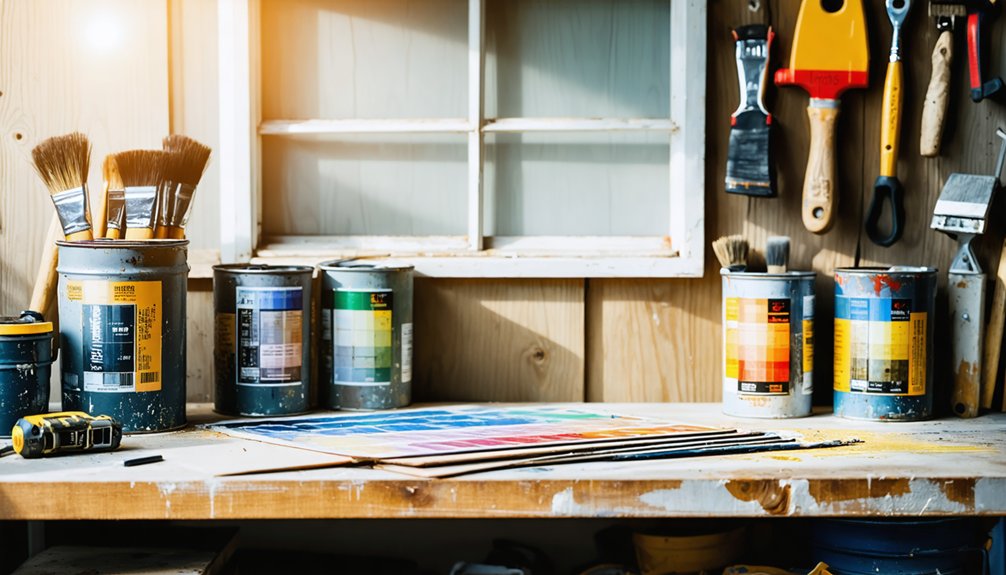
Jerome’s extreme temperature swings—from subzero winters to 95°F+ summers—demand paint formulations with proven thermal performance across their full usable range. We recommend 100% acrylic systems with Tg values of 60–100°C for residential exteriors, as they maintain film integrity from –10°C to 80°C while resisting UV degradation better than alkyd or standard latex alternatives.
Your application windows narrow to spring and fall months when substrate temperatures stabilize between 50–85°F, ensuring proper cure without solvent flash-off or water-based viscosity issues that compromise adhesion.
Temperature-Rated Paint Formulations
Extreme temperature fluctuations in Jerome demand paint formulations engineered specifically for thermal stress resistance. We’ll guide you through silicone-based and multipolymeric matrix coatings that protect your home’s surfaces under Idaho’s demanding climate.
Modified silicone copolymers offer single package application convenience with temperature ratings up to 600°F, while advanced formulations like 854-HA require high heat cure requirements at 450°F for 1000°F continuous resistance. The silicone content directly correlates with thermal performance—higher ratios deliver superior protection.
For extreme fluctuations, 827-HB Inert Multipolymeric Matrix handles -300°F to 1200°F without heat-cure, featuring 65% solids and rust-inhibitive properties. We recommend silicone alkyds (812-LH, 850-PR) for surfaces experiencing up to 600°F, applying two coats at ideal temperatures between 65-85°F for proper adhesion and longevity.
Seasonal Application Windows
Understanding thermal-resistant formulations means nothing if you apply them outside viable weather windows. In Jerome’s climate, we’ll maximize success through strategic seasonal equipment utilization and careful planning.
Optimal Application Periods:
- Spring (April-May): Daytime highs above 60°F with stable nights prevent dew formation, while extended daylight supports longer working sessions
- Summer (June-August): Start before sunrise, rotating to north/west walls first; stop applications when air hits 85°F to avoid blistering
- Fall (September-October): Monitor overnight lows—temperatures below 35°F halt curing despite acceptable daytime conditions
We’ll implement seasonal moisture management by deploying dehumidifiers during humid periods and maintaining ventilation with fans. Ideal humidity hovers around 50% with light breeze. Avoid temperature swings exceeding 20°F between day and night, as yo-yo conditions disrupt latex coalescence and compromise adhesion.
Protecting Your Home From UV Damage and Sun Exposure
When ultraviolet radiation strikes your home’s exterior surfaces, it initiates a cascade of chemical degradation that systematically breaks down paint binders and pigments. In Jerome’s high-altitude environment, we’re facing 12% increased UV penetration compared to sea-level locations, which accelerates this deterioration process considerably.
We’ve observed that south-facing walls experience the most severe color loss—up to 40% intensity reduction within 3-5 years on unprotected surfaces. For coating lifespan enhancement, we recommend UV-resistant acrylic formulations containing embedded light stabilizers. These specialized polymers create a defensive barrier that reflects damaging wavelengths before molecular bonds break.
Maximizing UV protection requires strategic color selection—lighter tones naturally deflect solar radiation while reducing thermal stress. We’ll also specify coatings with integrated UV absorbers that neutralize radiation at the surface level, preventing chalking and premature failure.
Managing Wind and Dust During the Painting Process
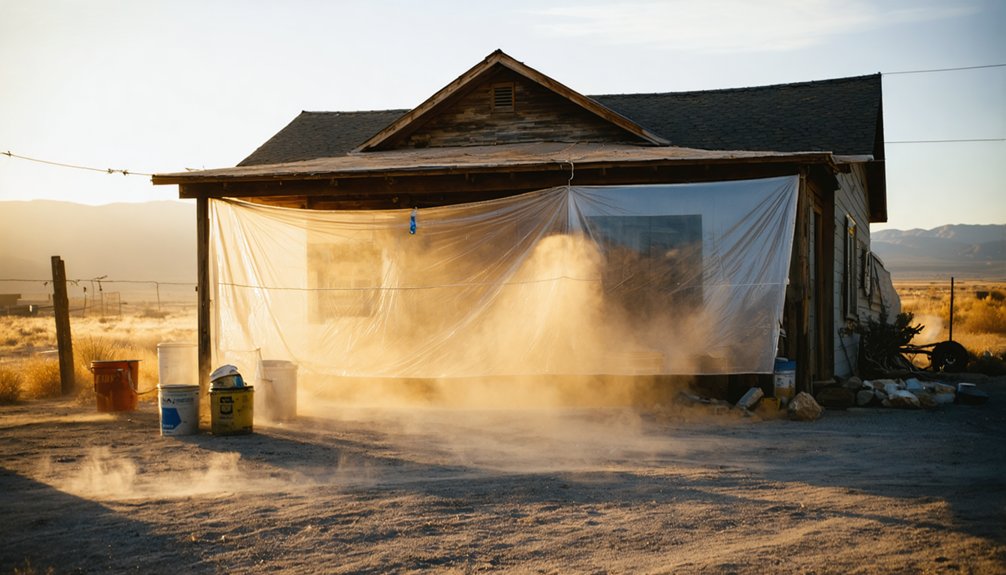
Jerome’s high-desert environment presents dual contamination challenges that’ll compromise coating adhesion and surface finish quality if left unmanaged. We’ve developed proven dust mitigation strategies specifically for Idaho’s arid conditions where wind speeds and loose soil threaten every exterior project.
Uncontrolled dust infiltration will destroy your coating’s bond strength and create surface defects that compromise both appearance and longevity.
Effective barrier placement requires strategic positioning:
- Install fences or tarps perpendicular to prevailing wind directions to reduce airborne particle velocity
- Apply polymer suppressants to bind soil particles in high-traffic zones surrounding your work area
- Seal air returns and HVAC vents before sanding to prevent system contamination
We recommend scheduling application during low-wind periods and maintaining wheel-washing stations if vehicles access unpaved areas. Water spray provides temporary control, though you’ll need frequent reapplication in our climate. Position barriers to create wind tunnel protection around your home’s exterior.
Addressing Moisture and Frost Concerns in Winter Months
Winter painting in Jerome demands rigorous moisture management protocols that extend beyond standard surface preparation requirements. We’ll implement condensation control techniques by deploying dehumidifiers on cold surfaces where water vapor accumulates, particularly around windows and exterior walls.
Before application, we systematically eliminate frost, mildew, and existing mold through power-washing followed by complete drying cycles. Our mold mitigation strategies include applying inhibiting primers in high-humidity zones and sealing envelope penetrations with weather stripping to prevent draft-induced condensation.
We maintain interior temperatures above 50°F using safely positioned space heaters, ensuring proper cure conditions. Surfaces must achieve absolute dryness—moisture trapped in wood, stone, or metal substrates compromises adhesion and promotes biological growth.
We schedule applications during 10 AM-3 PM windows when surface thaw occurs, monitoring extended forecasts for sustained dry periods above minimum temperature thresholds.
Pre-Painting Inspection Checklist for Jerome Homeowners
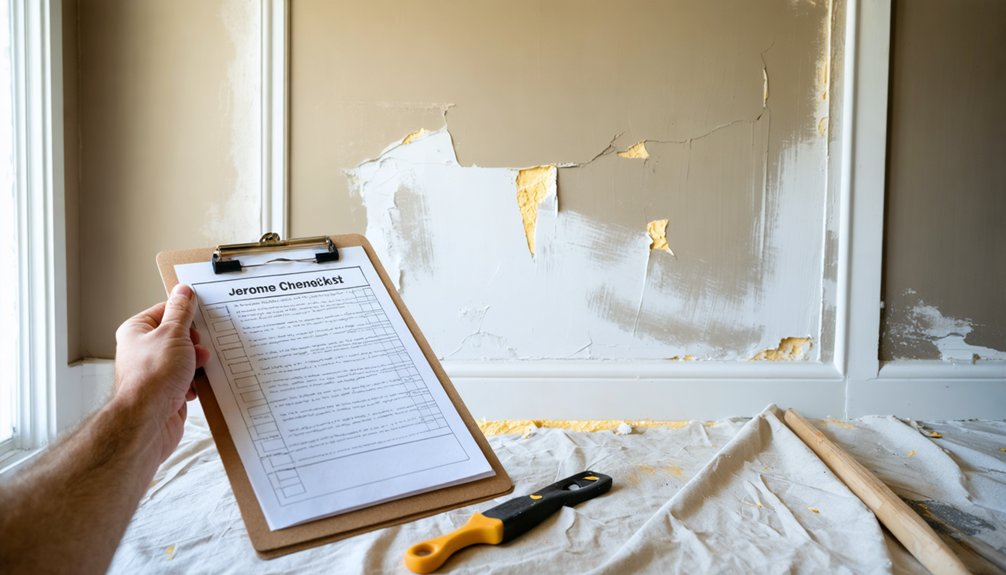
Before applying the first coat, we conduct systematic structural evaluations that identify compromise points threatening paint longevity and adhesion performance. Our Jerome team examines foundation plumbness, siding integrity, and wood-to-ground contact points that accelerate deterioration. We’re implementing moisture management strategies that address water intrusion patterns before they safeguard your investment.
Critical inspection elements include:
- Substrate assessment – Evaluating flaking, blistering, and chalking on existing coatings to determine preparation protocols
- Structural integrity verification – Documenting wall straightness, frame squareness, and mortar joint condition
- Environmental compliance – Confirming EPA-certified renovator requirements for pre-1978 homes with lead-based paint concerns
Repairing exterior damage precedes all surface preparation. We’re documenting gaps, cracks, and decay patterns while securing proper flashing, gutter functionality, and soffit conditions. This systematic approach guarantees effective adhesion and finish durability.
Frequently Asked Questions
How Long Should I Wait Between Primer and Topcoat Applications?
We’ll wait 1 hour between coats for water-based products, ensuring proper paint drying time. For oil-based primers, we recommend 24 hours before topcoating. Correct paint application techniques require testing adhesion and monitoring your environmental conditions for ideal results.
Do I Need Special Permits for Exterior Painting Projects in Jerome?
We don’t need building permits for standard exterior painting in Jerome. However, we must follow local zoning regulations for pre-1978 homes with lead paint, ensuring EPA-certified renovators handle the work and proper paint disposal guidelines are observed.
What’s the Average Cost per Square Foot for Professional Painting Services?
Traversing pricing waters, we’ll find professional painting averages $2-$6 per square foot in Jerome. Paint quality considerations and local painter recommendations drastically impact your investment. We’ll help you secure competitive bids matching Idaho’s $3.64 average interior rate.
Should I Use Brush, Roller, or Spray Equipment for Best Results?
We’ll recommend your application technique based on project scope: brushes deliver precision on trim, rollers provide efficient paint coverage for walls, and sprayers achieve professional finishes on large surfaces—each tool serves specific purposes in our thorough approach.
How Often Should Homes in Jerome Be Repainted for Maintenance?
We recommend repainting every five to ten years in Jerome, though surface preparation techniques and paint quality considerations directly impact longevity. High-traffic areas need attention sooner, while proper substrate prep extends your investment considerably in our semi-arid climate.