We’ll guide you through Heyburn’s demanding preparation requirements, starting with thorough power washing to remove accumulated dust from 8.7 mph average winds, followed by moisture meter testing to detect hidden dampness in our semi-arid climate. You’ll need to address substrate expansion from 68°F temperature swings, apply elastomeric primers to compromised surfaces, and schedule application during spring or fall’s 50-85°F windows. Our exhaustive protocols below cover timing strategies, humidity management, and specialized coating systems that withstand Idaho’s extreme conditions.
Key Takeaways
- Power wash exterior surfaces to remove dust and debris from Heyburn’s semi-arid climate and 8.7 mph average wind conditions.
- Schedule painting during spring (April-June) or fall (September-October) when temperatures consistently range between 50-85°F for optimal application.
- Use moisture meters to detect hidden dampness and digital hygrometers to ensure humidity stays within the ideal 40-70% range.
- Apply rust treatment and specialized primers to metal surfaces; use elastomeric coatings for stucco and masonry to withstand expansion-contraction cycles.
- Select low-temperature latex paints (functional at 35°F) or oil-based products (40°F minimum) based on application timing and weather conditions.
Understanding Heyburn’s Unique Climate Challenges
When preparing exterior surfaces for paint application in Heyburn, Idaho, we must account for the region’s semi-arid climate characterized by a 48.1°F annual temperature average and extreme seasonal fluctuations between 86°F summer highs and 18°F winter lows. These temperature swings create expansion and contraction cycles that compromise substrate integrity.
Low rainfall impacts surface preparation considerably—with only 10 inches annually, we face persistent dust accumulation requiring thorough power washing protocols. High elevation concerns include increased UV exposure, accelerating paint degradation and necessitating primers with superior adhesion properties.
Wind conditions averaging 20-30 mph with gusts exceeding 40 mph demand strategic timing for application to prevent contamination and guarantee proper curing. We’ll address moisture content assessment next, considering the 93% humidity variations affecting prime painting windows.
Choosing the Best Season for Exterior Painting
We’ve determined that exterior painting success in Heyburn hinges on selecting the ideal seasonal window. Our analysis shows spring (April-June) and fall (September-October) provide the most consistent 50-85°F temperature ranges and stable humidity levels for proper paint adhesion and curing.
We’ll examine why these seasons outclass summer’s heat extremes and winter’s freeze risks for your home’s exterior coating application.
Spring and Fall Advantages
Exterior painting success in Heyburn depends heavily on selecting the ideal season, with spring and fall emerging as the two primary windows for professional-grade results.
We’ve found that spring offers mild temperatures between 60–80°F and extended daylight hours that accelerate project completion timelines. However, unpredictable precipitation and temperature fluctuations create scheduling challenges that can compromise surface preparation and adhesion.
Fall presents more stable conditions with consistent dry weather and lower humidity levels, creating ideal curing environments for superior finishes. The steady temperatures prevent rapid drying complications while minimizing paint bubbles and cracks. Yet we must account for compressed timelines due to shorter daylight hours and early frost risk.
Understanding these seasonal trade-offs enables us to optimize scheduling and deliver professional-grade exterior coatings for your home.
Avoiding Winter Painting Risks
While spring and fall deliver ideal conditions, winter painting projects introduce significant performance risks that compromise coating integrity and long-term durability. We’ve observed that temperatures below 50°F prevent proper adhesion and void most manufacturer warranties.
Cold conditions thicken paint viscosity, creating application failures including heavy streaks, ridging, and uneven sheen. Overnight temperature drops interrupt the curing process, weakening molecular bonds between coating and substrate.
Moisture thresholds become critical during winter months. Dew formation, ice dams, and freeze-thaw cycles trap moisture beneath paint films, causing blistering and premature delamination. Paint flexibility suffers when applied in cold conditions, making coatings brittle and prone to cracking within months.
We recommend postponing exterior projects until temperatures stabilize above 50°F for 24-hour periods, ensuring favorable curing conditions and maximizing your investment’s longevity.
Summer Heat Considerations
Summer’s intense heat creates application challenges that directly oppose winter’s temperature restrictions, yet both conditions compromise coating performance through different mechanisms. When temperatures exceed 85°F, we’ll encounter rapid solvent evaporation that prevents proper film formation and crosslinking. This accelerated drying produces brush marks, adhesion failure, and surface blistering that compromise long-term durability.
We’ve found that proper temperature control requires strategic scheduling—early morning or evening application windows when surfaces register between 50-70°F. Minimizing sun exposure through shade tracking allows us to extend viable work periods during summer months. We’ll monitor substrate temperatures directly, since dark-colored surfaces often exceed ambient readings by 20-30 degrees.
Late spring and early fall provide superior conditions: stable temperatures, controlled curing rates, and ideal film development that summer’s heat disrupts.
Temperature Requirements for Successful Paint Application
Because successful paint adhesion depends fundamentally on ambient conditions, we’ll first examine the critical temperature parameters that govern exterior coating applications. Standard latex formulations require minimum air temperatures of 50°F during application, while oil-based products tolerate 40°F thresholds. We’re analyzing nighttime temperature effects because proper curing demands temperatures above 32°F for 48-72 hours post-application—nighttime drops compromise film formation and create moisture-related staining risks.
Our ideal application window spans 60°F to 70°F, supporting consistent technique and proper paint settlement. Beyond 90°F, rapid solvent evaporation causes blistering and inadequate substrate bonding. We’re considering cold weather paint formulations for marginal conditions, as specialty low-temperature latex products function at 35°F. Surface temperature alignment with air temperature specifications guarantees reliable adhesion across your project’s entirety.
Managing Humidity Levels in High Desert Conditions
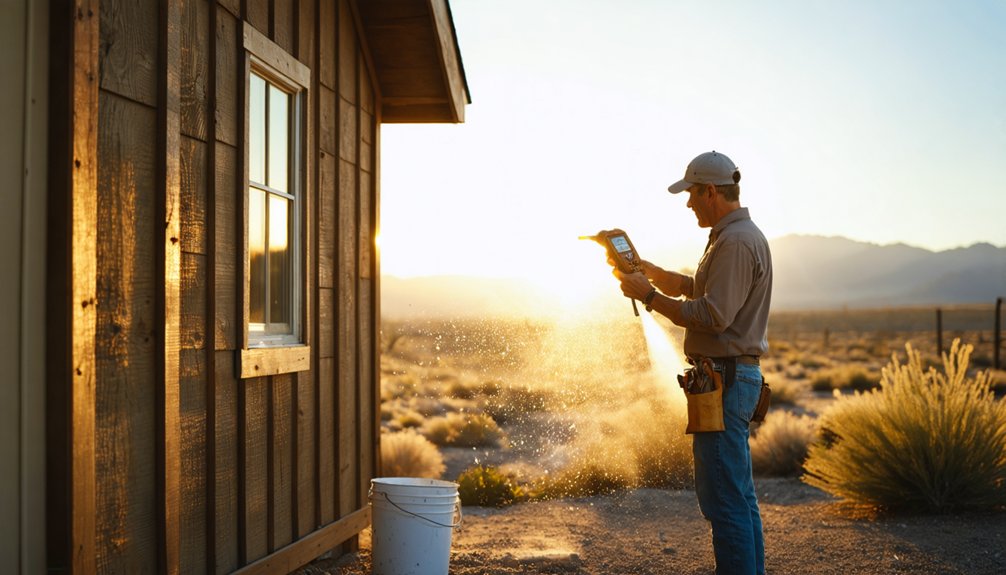
Humidity levels directly control paint curing rates in Heyburn’s high desert environment, where relative humidity averages 52.2% annually. We’ve found that maintaining the appropriate 40-70% range guarantees proper moisture evaporation from painted surfaces. Each 10% increase above 50% extends curing time by 20-30%, which is why we’re vigilant about controlling indoor humidity before starting projects.
March conditions in Heyburn hover near 65%—acceptable but requiring attention. We use digital hygrometers for continuous monitoring paint adhesion throughout application. When humidity exceeds suitable thresholds, we deploy dehumidifiers to bring levels down before primer application.
Moisture meters detect hidden dampness that hand-touch tests miss, particularly on wood substrates that absorb atmospheric moisture. This technical approach prevents leaching, bubbling, and premature peeling—common defects when humidity isn’t properly managed.
Protecting Your Paint Job From Wind and Dust
Wind speeds averaging 8.7 mph in Heyburn’s high desert climate compound environmental challenges we’ve already addressed through humidity control. We protect your investment through systematic surface preparation—power washing removes airborne particulates that compromise coating adhesion. Our crews mask and protect adjacent areas during all prep phases, then apply weather-appropriate paints engineered for Idaho’s temperature swings and wind exposure.
For stucco and masonry, we specify elastomeric systems that flex with substrate movement while resisting wind-induced peeling. Metal surfaces receive rust treatment and specialized primers before topcoats. We schedule application during minimal wind periods and conduct immediate quality checks.
Post-application, we provide detailed aftercare guidance for long term protection. Annual monitoring for peeling or fading, coupled with prompt trim repairs, maintains the integrity we’ve built together against Heyburn’s demanding conditions.
Essential Surface Preparation Steps
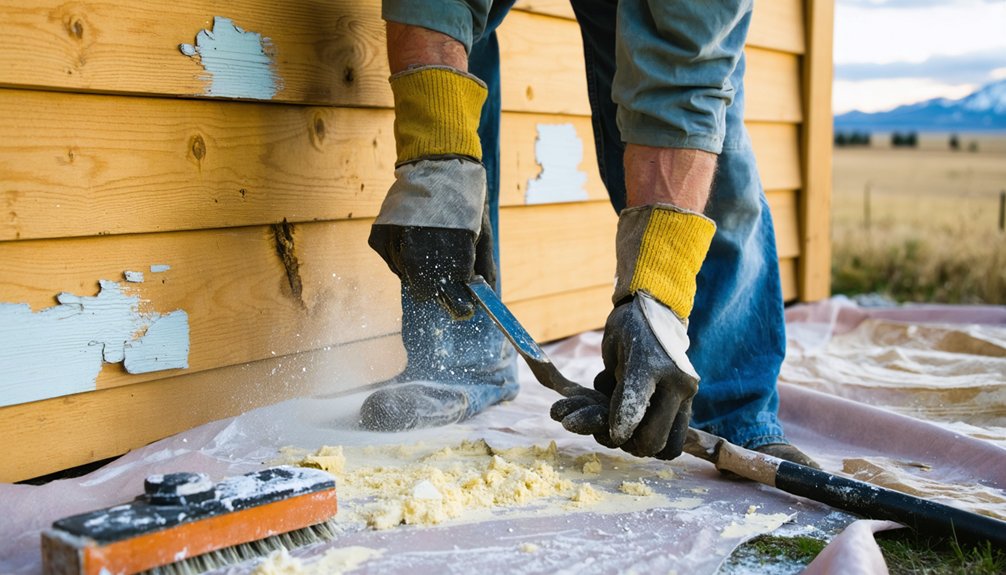
Before we apply a single coat, proper surface preparation determines whether your paint job lasts three years or thirty in Heyburn’s demanding climate. We start by scraping troublesome surfaces using proper tools to remove all chipped or peeling paint, creating a smooth base for adhesion.
Next, we’re addressing water damage concerns around gutters, downspouts, and roof lines—replacing rotting wood immediately prevents future failures.
We fill cracks and holes with patching compound, then sand everything smooth with 80-120 grit sandpaper. For glossy surfaces, we scuff-sand to promote proper bonding. After cleaning with damp rags, we apply primer to bare wood and previously stained areas. We’ll mask windows and trim with painter’s tape while protecting your landscaping with drop cloths, ensuring professional results throughout.
Selecting the Right Paint for Idaho Weather
When selecting paint for Heyburn’s variable climate, we must first determine whether acrylic latex or oil-based formulations better suit your project’s demands. Acrylic latex paints provide superior flexibility during temperature swings—essential for preventing cracking when surfaces expand in summer heat and contract during freezing winters.
For projects scheduled during cooler months, we’ll need low-temperature formulations that cure properly at 50°F or below, ensuring proper film formation when standard paints would fail to bond adequately.
Acrylic Latex Vs Oil-Based
Selecting between acrylic latex and oil-based paint systems directly impacts your home’s exterior longevity in Heyburn’s variable climate. We’ve found acrylic latex advantages include superior flexibility during temperature fluctuations, preventing the cracking that plagues rigid coatings. The high molecular weight acrylic resins withstand UV exposure and freeze-thaw cycles inherent to Idaho conditions.
Performance Comparison:
- Durability: Acrylic latex expands and contracts seamlessly, while oil-based formulations become brittle, leading to premature failure
- Application Efficiency: Water-based systems dry within one hour versus oil’s six-to-eight-hour cure time
- Environmental Compliance: Low-VOC acrylic formulations eliminate ventilation concerns during occupied-space applications
Oil based paint drawbacks include yellowing in low-light areas and extended drying periods that complicate multi-coat schedules. For Heyburn’s demanding seasonal changes, we recommend acrylic latex systems.
Low-Temperature Paint Options
Idaho’s compressed painting season demands low-temperature formulations that maintain film integrity below traditional 50°F thresholds. We’ve successfully deployed Sherwin-Williams Duration, Resilience, SuperPaint, and A-100 Exterior—all engineered for 35°F application—extending our viable work window through Thanksgiving.
These innovative paint formulations eliminate product switching between seasonal lines. We’ve documented 15 years of warranted durability in cold conditions, with performance parameters consistently met in Heyburn’s variable fall climate.
Critical to success: we measure surface temperatures independently from ambient air readings. Metal substrates—gutters, fascia—often register below 35°F when air temps reach 40°F, compromising adhesion. We’ve observed chalking and premature fading when overnight lows hit freezing, particularly on new construction rushed during early cold snaps.
Our protocol: postpone application when forecasted overnight lows approach 32°F, ensuring proper film formation during critical cure phases.
Timing Your Application During the Day
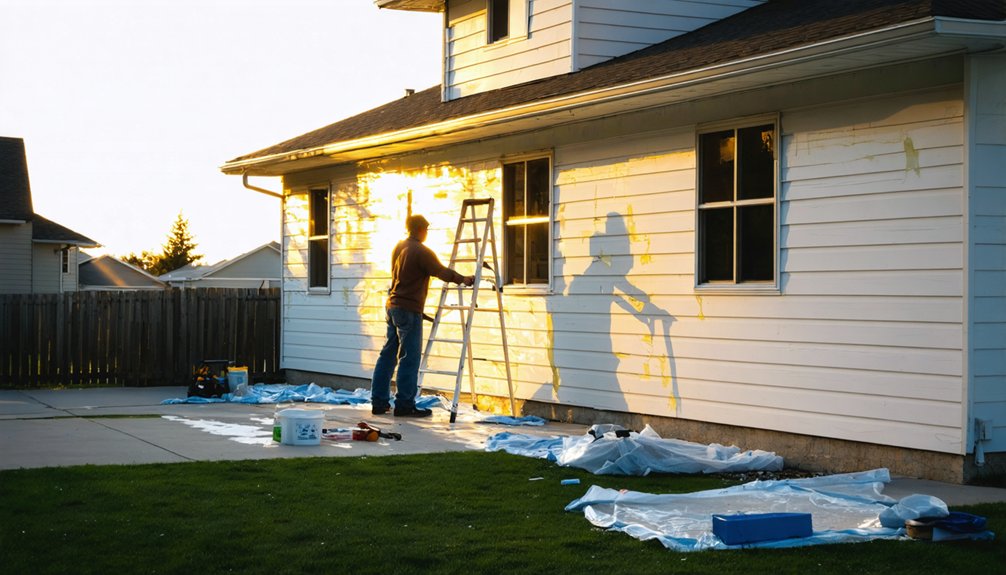
Strategic scheduling of your paint application during ideal temperature windows directly impacts adhesion quality and film formation. We’ve refined our approach through Heyburn’s high desert climate patterns to maximize coating performance.
Coordinating paint stages throughout the day:
- Ideal morning hours (6-10 AM): Apply primer and base coats on sun-exposed elevations while temperatures remain in the optimal 60-75°F range, ensuring proper film leveling before afternoon heat.
- Midday shift (10 AM-2 PM): Shift operations to north-facing and shaded surfaces where lower surface temperatures prevent premature skinning and maintain open time for proper brushwork.
- Evening application (5-8 PM): Complete finish coats as temperatures moderate, allowing adequate cure time without rapid solvent evaporation that compromises flow and leveling properties.
This systematic rotation prevents common adhesion failures we encounter during peak thermal stress periods.
Monitoring Weather Forecasts Before You Start
Why do experienced contractors check weather data multiple times before mobilizing equipment and materials to a Heyburn exterior project? We’re protecting your investment through rigorous forecasting accountability. Start by accessing National Weather Service’s 7-day outlook and AccuWeather’s hourly breakdowns 72 hours before application.
We verify temperature holds between 50°F-85°F, humidity stays below 85%, and precipitation probability remains at 0% for the critical 48-hour window. Wind speeds must stay under 15 mph—Heyburn’s common 25-35 mph gusts create overspray issues we won’t risk. WeatherSpark provides historical patterns showing summer’s favorable 21% humidity versus problematic 93% spikes.
These weather monitoring tips aren’t optional extras; they’re professional standards separating quality craftsmanship from costly do-overs. We’ll reschedule rather than compromise adhesion, curing, or finish quality.
Ensuring Proper Drying and Curing Time
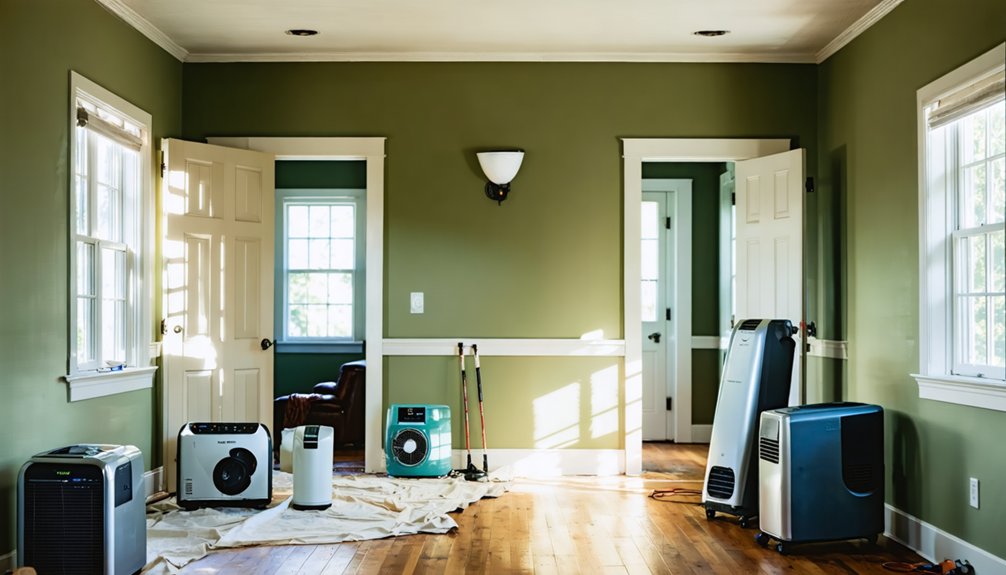
We’ve observed that successful paint projects in Heyburn require careful attention to environmental conditions during both the drying and curing phases. Temperature ranges between 60-85°F and humidity levels of 40-70% provide ideal conditions for proper paint adhesion and moisture release.
Understanding the distinction between surface dry time—which occurs within minutes to hours—and the full 30-day cure period allows us to schedule your project activities and protect newly painted surfaces appropriately.
Ideal Temperature and Timing
Temperature control dictates paint performance more than any other environmental factor during exterior applications. We recommend maintaining consistent temperatures between 60°F and 85°F throughout Heyburn’s variable climate. Achieving optimum surface temperature requires strategic timing and surface assessment before any roller touches your siding.
Our application protocol follows these critical parameters:
- Apply between 10 a.m. and 3 p.m. when natural light and ambient warmth optimize drying conditions
- Measure surface temperature with an infrared thermometer to verify it reads warm rather than hot to touch
- Ensure 24-hour periods above 50°F post-application without night drops below 32°F compromising the curing process
Latex formulations demand 50°F minimums, while oil-based products tolerate 40°F thresholds. We always verify manufacturer specifications match our local weather forecasts.
Humidity and Weather Considerations
Moisture levels in Heyburn’s air directly determine whether your paint coating achieves proper film formation or develops costly defects. We recommend maintaining 40-50% relative humidity during application and the critical 72-hour curing window.
High humidity above 60% traps moisture beneath the film, causing blistering and extending drying times by 20-30% per 10% RH increase. Conversely, humidity below 30% accelerates solvent evaporation, creating lap marks and surface imperfections.
Our humidity control strategies include operating dehumidifiers in damp conditions and guaranteeing adequate ventilation without creating drafts. We avoid activities affecting indoor air quality impacts—no showers, boiling water, or humidifier use during curing. Deploy fans strategically to promote airflow while monitoring RH levels. These protocols safeguard complete chemical crosslinking and prevent premature paint failure.
Frequently Asked Questions
How Much Does Professional Exterior Painting Typically Cost in Heyburn, Idaho?
We’ll find professional exterior painting in Heyburn typically costs $7,500-$10,000 for average homes. The average cost per square foot ranges $1.50-$4.50, while hourly labor rates run $45-$60, depending on your project’s specific requirements and surface preparation needs.
Do I Need Permits to Paint My Home’s Exterior in Heyburn?
No, we don’t need permits for cosmetic exterior painting in Heyburn. However, we’re always checking local regulations and understanding zoning requirements before starting work, ensuring we’re compliant with Idaho’s 2018 IBC guidelines and city ordinances.
How Long Will My Exterior Paint Job Last in Idaho’s Climate?
Your exterior paint’ll last 5-7 years on wood, 8-12 on fiber cement. Paint durability factors like UV exposure and freeze-thaw cycles matter here. We recommend seasonal painting considerations—apply during late spring through early fall for ideal curing and adhesion.
Should I Paint My Home Myself or Hire a Professional Contractor?
We recommend hiring professionals for most projects. DIY painting challenges—uneven coverage, surface prep errors, and extended timelines—typically outweigh cost savings. Professional painter expertise delivers superior finishes, proper substrate preparation, and long-term durability that protects your investment.
What Color Options Work Best for Heyburn’s High Desert Environment?
Looking for colors that’ll withstand intense UV exposure? We recommend warm earth tones and desert-inspired neutrals—they naturally resist solar degradation while complementing your high-altitude environment. These pigment formulations maintain superior color retention under sustained radiation exposure.