Yes, we’ve found that pressure washing can severely damage your siding when improper technique or excessive PSI is applied. High-pressure streams compromise protective coatings, force water behind the building envelope, and deteriorate vulnerable materials like fiber cement seams, wood grain, and mortar joints. We’ve documented cases where moisture intrusion voids manufacturer warranties and creates hidden mold growth within wall cavities. Understanding the specific thresholds for your siding material and proper application methods will help you protect your investment from irreversible structural damage.
Key Takeaways
- Pressure washing strips protective layers from vinyl, erodes fiber cement seams, and splinters wood siding when force exceeds safe thresholds.
- High-pressure water penetrates gaps around windows and housewrap, saturating hidden sheathing and framing that promotes structural decay.
- Forced water intrusion creates trapped moisture reservoirs that enable mold growth within 24-48 hours in poorly ventilated areas.
- Excessive pressure removes paint, fades vinyl colors, gouges wood surfaces, and cracks mortar joints in brick and stucco.
- Unauthorized pressure washing violates manufacturer warranties, potentially causing over $10,000 in replacement costs without claim coverage.
How Pressure Washing Causes Structural Damage to Different Siding Materials
While pressure washing appears to be an efficient cleaning solution, improper technique causes irreversible structural damage across all siding types.
We’ve observed how excessive PSI strips protective layers from vinyl, accelerates oxidation, and creates panel dislodgement risks through cracked connections. Fiber cement brands like James Hardie suffer surface erosion at vulnerable seams and joints, where even moderate pressure compromises material integrity.
Wood siding experiences splintering and deep saturation that promotes rot, while painted surfaces lose their finish entirely.
Brick mortar deteriorates under high pressure, and stucco walls flake when force exceeds safe thresholds. Metal and aluminum panels dent easily, with stripped coatings exposing material to accelerated corrosion.
Each material demonstrates how siding integrity compromised through pressure washing creates cumulative damage, shortening lifespan and requiring costly restoration work we’d rather help you avoid.
The Hidden Danger of Water Intrusion Behind Your Siding
The most devastating consequence of pressure washing extends beyond surface deterioration—it forces water directly behind your siding system where it initiates structural decay invisible from the exterior.
We’ve documented how high-pressure streams compromise flashing integrity around windows and exploit gaps in housewrap, creating moisture migration pathways that bypass your home’s drainage plane. Once trapped behind siding, water saturates sheathing and framing members, progressing from dampness to advanced wood rot.
Our infrared imaging reveals that pressurized water reaches areas natural rainfall never touches, accelerating deterioration timelines from years to months. Effective wood rot prevention requires maintaining—not breaching—your siding’s protective barriers. We recommend moisture meter testing after any pressure washing to verify your building envelope remains intact and dry.
Why Pressure Washing Creates Mold and Mildew Problems
Beyond immediate surface damage, pressure washing initiates a cascade of moisture-related failures that transform your siding into an incubator for mold and mildew growth. We’ve observed how forced water penetrates behind panels, creating trapped reservoirs that can’t properly dry. This prolonged moisture exposure becomes critical when combined with organic matter displacement—debris redistributed across textured surfaces provides the exact nutrients fungal colonies need to establish themselves.
The problem compounds when protective sealants strip away under high pressure, exposing porous materials to direct water absorption. We’re particularly concerned about shaded areas where inadequate airflow prevents evaporation, extending dampness for days. When moisture remains on siding surfaces beyond 24-48 hours, environmental mold spores don’t just land—they germinate, colonize, and compromise your home’s envelope integrity.
Paint Removal and Surface Degradation From High-Pressure Cleaning
Most homeowners don’t realize that pressure washing equipment delivering 1500-3300 psi generates sufficient force to permanently strip protective coatings from virtually every siding material. We’ve documented consistent patterns of surface degradation across residential properties:
Pressure washing equipment routinely exceeds safe operating thresholds, causing irreversible damage to protective coatings that most homeowners never anticipate.
- Vinyl siding experiences paint removal, color fading, and panel misalignment when exposed to pressures exceeding manufacturer specifications
- Wood surfaces develop furred grain and gouging at 3000 psi, exposing bare substrates to accelerated deterioration
- Aluminum coatings strip away under excessive force, eliminating corrosion protection
- Mortar joints in brick and stucco crack from concentrated water jets
- Metal panels dent and warp when operators use improper pressure settings
The combination of paint loss and structural compromise creates compounding damage that requires extensive remediation beyond simple cosmetic repair.
Warranty Violations and Safety Hazards You Need to Know About
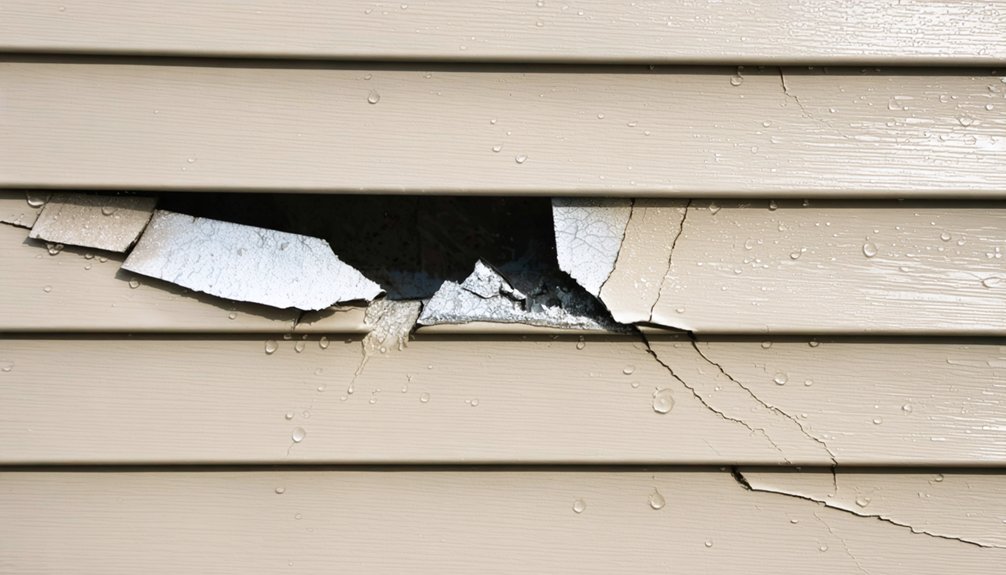
When manufacturers issue warranties for siding and roofing materials, they embed specific maintenance requirements that homeowners must follow—and pressure washing violations represent one of the most common paths to complete warranty invalidation. We’ve documented cases where LP Smartside explicitly prohibits pressure washer use, while other materials specify maximum PSI thresholds that untrained operators routinely exceed.
Material compatibility challenges become critical when high-pressure spray forces water behind protective barriers, creating hidden moisture damage that progresses undetected for months. The cost of warranty disputes often exceeds $10,000 when manufacturers deny claims based on unauthorized cleaning methods. Once voided, you’ll face complete replacement expenses without recourse.
Professional contractors understand these specifications and maintain documentation proving compliance—protection that DIY approaches can’t replicate.
Frequently Asked Questions
What PSI Level Is Considered Safe for Cleaning Siding?
Like telegraphing instructions to distant operators, we’ll guide you through the appropriate PSI range of 1,500-2,000 for vinyl siding. Master pressure adjustment techniques by dialing down from your washer’s maximum capacity to protect your home’s exterior.
How Often Should Siding Be Cleaned Without Causing Damage?
We recommend a proper siding maintenance schedule of annual cleanings for most homes. The ideal siding cleaning frequency depends on your climate and environmental factors, but yearly intervals prevent buildup while minimizing material stress and moisture intrusion risks.
Can Soft Washing Effectively Remove All Types of Stains?
We’ll find soft washing effectiveness excels against organic stains like mold and algae, but soft washing limitations mean it won’t remove heavy inorganic deposits or deeply embedded grime requiring mechanical pressure for complete elimination.
What Are the Best Alternatives to Pressure Washing for Siding?
We recommend soft washing as your primary alternative, combining specialized cleaning solutions with protective coatings. This method reduces maintenance requirements while preserving siding integrity. Regular brushing and vinegar-based treatments offer additional low-pressure options for our community’s homes.
How Much Does Professional Soft Washing Typically Cost?
We’ve found professional soft washing typically costs $0.30 to $0.70 per square foot, or $250 to $1,000 total. Experienced service providers offer affordable cleaning solutions that protect your siding while delivering superior results through proper chemical application and low-pressure techniques.