Painting kitchen cabinets costs $200-$600 for DIY or $2,000-$6,500 professionally, while full replacement runs $2,200-$24,600 depending on cabinet quality. We’ve found that refacing offers a middle ground at $4,500-$15,000, reusing existing frames while updating surfaces. Painted cabinets last 8-10 years with touch-ups needed every 5-8 years, whereas new hardwood cabinets deliver 20-30 years of service. Your choice depends on your budget, timeline, and long-term goals—each option carries distinct advantages we’ll break down to help you make the smartest investment for your kitchen.
Key Takeaways
- Painting cabinets costs $425-$1,464 on average, while full replacement starts at $2,200 and can exceed $24,600 depending on materials.
- DIY painting runs $200-$600 compared to professional painting at $2,000-$6,500, offering significant savings for budget-conscious homeowners.
- Cabinet refacing provides a middle option at $4,500-$15,000, reusing existing frames while updating appearance with new surfaces.
- Professional cabinet painting takes 3-5 days versus 2-4 weeks for complete replacement, minimizing kitchen disruption significantly.
- Painted cabinets last 8-10 years requiring periodic touch-ups, while new cabinets offer 20-30 years with minimal maintenance needs.
Breaking Down the Cost of Painting Kitchen Cabinets
How much should you expect to pay for painting your kitchen cabinets? We’re looking at an average of $750 for a full kitchen, with typical projects ranging from $425 to $1,464. Your costs depend heavily on material quality and painting skill level. DIY approaches run $200 to $600 for materials and tools, while professional services typically cost $2,000 to $6,500.
Kitchen size drastically impacts pricing. Small kitchens with 8-12 cabinets cost $900 to $1,500, medium-sized spaces run $1,500 to $2,800, and large kitchens exceed $2,800. Material quality drives preparation costs—solid wood requires $200 to $400 in primer and paint, while laminate surfaces need specialized bonding primers costing $300 to $600. Professional work averages $3 to $10 per square foot.
What You’ll Pay for Full Cabinet Replacement
Full cabinet replacement represents a considerably larger investment than painting, with costs starting at $2,200 and extending beyond $24,600 depending on your material choices and kitchen layout.
We’ve found that stock cabinets offer the most accessible entry point at $100 to $300 per linear foot installed, making them ideal for budget-conscious homeowners. Semi-custom options range from $200 to $650 per linear foot, delivering improved material quality without custom pricing. For those seeking truly bespoke solutions, custom cabinets run $500 to $1,200 per linear foot installed.
Project complexity substantially impacts final costs—demolition adds $300 to $800, while plumbing or electrical modifications range from $500 to $2,000. Most homeowners invest between $15,000 to $25,000 for complete replacements, though extensive renovations can reach $50,000.
Cabinet Refacing: The Middle-Ground Option
Between the budget-friendly option of painting and the substantial investment of full replacement, cabinet refacing delivers a transformative update at moderate cost—typically ranging from $4,500 to $15,000 for an average kitchen. We’re replacing cabinet doors and drawer fronts while applying fresh veneer to existing boxes, creating an entirely new appearance without demolition.
This process offers a reduced waste advantage since we’re reusing structurally sound cabinet frames rather than sending them to landfills. You’ll find versatile style options through custom-fabricated components that match contemporary design trends. The catch? Your cabinets need flat surfaces without grooves and must be structurally sound—no water damage or warping.
We complete most projects within one week, making refacing an efficient middle ground that updates your kitchen’s aesthetic while preserving quality construction underneath.
Timeline: How Long Each Project Takes
While budget considerations guide your cabinet decision, project duration often proves equally important when you’re living in the space during renovations. We’ve found that painting cabinets typically takes 3–5 days for professional process steps, including surface prep, primer application, and topcoat installation. You’ll need an additional week for full curing before heavy use.
Replacement projects extend considerably longer—2–4 weeks for complete installation. This timeline accounts for cabinet removal, new cabinetry delivery, and necessary trim work. DIY project duration stretches even further, often requiring 2–4 weeks of evenings and weekends.
The disruption difference is substantial. Painting preserves your kitchen layout with minimal interference, while replacement involves demolition, potential plumbing adjustments, and cascading projects like countertop installation that extend timelines unexpectedly.
Longevity and Maintenance Requirements
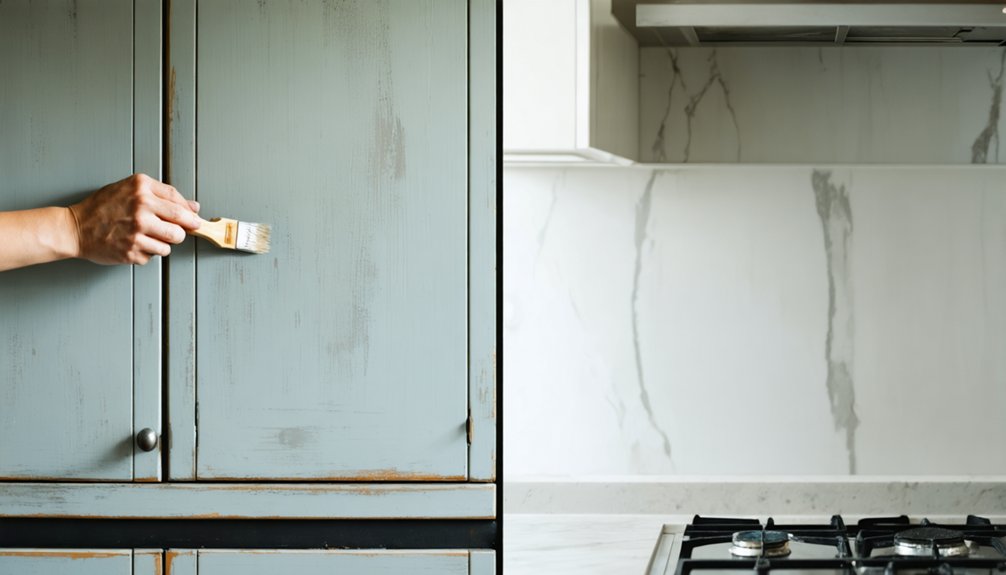
Beyond the initial investment, we need to examine how long each option performs and what upkeep they’ll demand over time. Painted cabinets typically deliver 8-10 years with professional application, while new hardwood cabinets offer 20-30 years of service—a difference that fundamentally alters the long-term cost equation.
Let’s break down the expected lifespan for each choice and the maintenance frequencies that’ll impact your budget down the road.
Expected Lifespan Per Option
When weighing cabinet longevity, professionally painted cabinets typically deliver 8-10 years of service with proper care and quality application, though this timeframe can drop to just 2-3 years if surface preparation falls short. Understanding painted cabinet lifespan expectations helps us make informed renovation decisions.
New cabinet longevity concerns differ vastly—brand-new installations generally last 15-20 years depending on material quality, extending well beyond painted options.
Key lifespan considerations for both options:
- Humidity fluctuations and daily kitchen intensity dramatically impact painted cabinet durability
- Paint quality and topcoat selection directly influence how long your finish remains intact
- New cabinets require hardware maintenance as hinges loosen over time
- Both options need proper cleaning methods—abrasive cleaners accelerate deterioration
We’ll need touch-ups every 5-8 years for painted cabinets, while new installations demand minimal intervention throughout their extended lifespan.
Maintenance Frequency and Costs
Painted cabinets demand regular upkeep that directly affects your long-term investment returns. We’ll need to budget for periodic touch-ups in high-traffic areas, though these costs remain considerably lower than replacement expenses. Professional paint jobs with proper preparation extend paint finish longevity, reducing maintenance frequency over time. We’re looking at straightforward cleaning and occasional spot repairs rather than complex renovations.
Replacement cabinets minimize immediate maintenance needs through factory-applied protective finishes, but we can’t ignore the hidden maintenance costs that surface during installation—plumbing adjustments, electrical work, and unexpected structural issues. When we choose painting, we’re selecting predictable, manageable maintenance cycles. Touch-up work stays simple and non-invasive, keeping our kitchens functional while preserving our budget. This approach gives us control over long-term expenses without sacrificing quality.
Choosing the Right Option for Your Kitchen
We’ve covered the costs and durability factors, but the smartest choice depends on your cabinet’s current state and how long you plan to stay in your home.
We recommend starting with a thorough inspection of your cabinet boxes—check for warping, water damage, and structural integrity before committing to any option.
Your timeline matters too: if you’re selling within five years, painting delivers maximum return with minimal investment, while replacement makes sense only when you’re staying long-term and need a complete kitchen overhaul.
Assess Your Cabinet Condition
We’ll need to evaluate critical material degradation factors:
- Moisture exposure evaluation: Open all doors and use a flashlight to check for water stains, warping, or mold growth inside cabinets, especially near sinks
- Structural integrity: Test drawer operation, examine shelf brackets, and look for cracks, sagging shelves, or termite damage
- Hardware functionality: Check hinges, handles, and drawer glides for looseness or malfunction
- Surface condition: Assess peeling paint, grease accumulation, discoloration, and laminate damage on exteriors
If 50% or more shows significant damage, we’re looking at replacement rather than painting.
Consider Your Long-Term Goals
If you’re selling within 1–3 years, painting delivers excellent ROI at roughly one-third the cost of refacing—typically $1,500–$7,000 versus $4,000–$15,000. We’ve found this option works best when cabinets are structurally sound but visually dated, providing high-impact updates that maximize resale appeal.
For long-term homeowners, refacing offers superior value despite higher upfront costs. Quality refacing finishes last 15–20 years compared to painted cabinets requiring touch-ups every 5–8 years. When budget priorities align with extended durability, refacing eliminates repeated maintenance expenses.
Both options represent cost effective alternatives to full replacement ($12,000–$35,000), helping us achieve updated kitchens without demolition-level investments.
Return on Investment and Home Value Impact
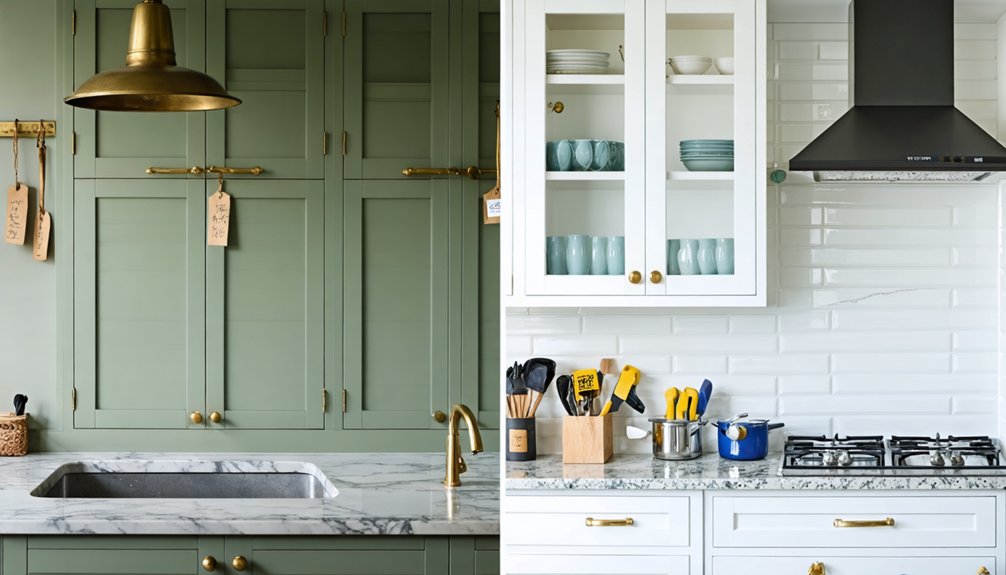
When homeowners weigh cabinet painting against replacement, the financial return often matters as much as the immediate cost. We’ve found that cabinet painting delivers 60-80% ROI for quick upgrades, while replacement can achieve up to 100% ROI when paired with new countertops and modern finishes. However, these numbers shift dramatically based on market demand and neighborhood resale value.
Cabinet painting returns 60-80% ROI versus replacement’s 100%, but market conditions and neighborhood values dramatically influence these numbers.
Key ROI factors we recommend considering:
- Professional painting costs one-quarter to one-third of replacement ($1,200-$7,000 vs. $4,500-$25,000)
- Higher-priced homes absorb upgrade costs more easily—a $411,000 home needs only 2.4% above comparable properties to break even
- Painting rarely creates meaningful equity alone; overall kitchen condition drives value
- Professional finishes outperform DIY approaches in returns due to superior quality and buyer perception
Frequently Asked Questions
Can I Paint Laminate or Thermofoil Cabinets Successfully?
Yes, we can paint both successfully. Where bare wood accepts paint naturally, laminate resists it—that’s why using bonding primers transforms the surface. We’ll guide you through achieving even finish with proper prep, ensuring you’re never working alone.
Do Painted Cabinets Require Special Cleaning Products or Techniques?
We don’t need special products—mild dish soap and water work perfectly. Proper primer application and specialized paint finishes create durable surfaces that handle routine cleaners. We’ll avoid harsh chemicals and abrasives that damage your investment.
Will Cabinet Painting or Replacement Affect My Kitchen’s Resale Value More?
Replacement typically boosts resale value more, with high-end markets preferring new cabinets. However, painting delivers 70–80% cost recovery—exceptional for budget-conscious sellers. We’ll help you weigh cabinet refacing considerations against resale value impacts for your timeline.
Can I Reface Cabinets Myself or Is Professional Installation Required?
You can tackle DIY cabinet refacing options yourself, but we’d recommend professionals for best results. Cabinet material considerations for refacing matter—solid wood’s easier than laminate. We’ve seen skilled DIYers succeed, though pros guarantee precision and longevity.
What Cabinet Door Styles Work Best for Painting Versus Replacement?
We recommend flat panel doors and recessed panel doors for painting since they’re smooth and simple. Heavily ornate styles or damaged doors work better with replacement, giving you the fresh profile and finish you’re looking for.