We’re watching white cabinets evolve from stark brightness into soft, warm neutrals while cool grays fade rapidly—designer consultations show requests plummeting from 80% to just 10%. Navy maintains its decade-long reign as the sophisticated anchor that bridges traditional and contemporary styles, especially in matte finishes and two-toned applications. The real story? Warm neutrals like greige, mushroom, and taupe are dominating kitchen design, creating cozy, livable spaces that balance the clean palette we love with the texture and warmth we crave—and understanding these shifts will transform how you approach your cabinet selection.
Key Takeaways
- White cabinets remain popular but are shifting from stark bright whites to warmer off-whites, creams, and beiges for added texture.
- Cool gray cabinets have declined sharply, with designer requests dropping from 80% to 10% due to their sterile, impersonal feel.
- Navy cabinets continue strong as a timeless choice, offering sophisticated depth in both modern and classic kitchen designs.
- Warm neutrals like greige, mushroom, and taupe now dominate trends, replacing cool grays as the preferred neutral baseline.
- Greige blends gray’s sophistication with beige’s warmth, creating cozy yet refined spaces that avoid stark or cold aesthetics.
The Evolution of White Cabinets: From Stark to Soft and Warm
For over a decade, white cabinets commanded 40% of the kitchen design market, their clean lines and neutral palette adapting seamlessly to every countertop material, backsplash pattern, and flooring choice. White shaker doors became the timeless standard, installed in the majority of remodels and new builds.
But we’re witnessing a shift. The stark, bright whites of the 2010s are evolving into warmer interpretations—off-whites, creams, beiges, and soft putty-like hues that bring inviting serenity to our spaces. While white held 28% preference in the 2026 Houzz Kitchen Trends Study, it’s adapting rather than disappearing. Today’s soft neutrals appeal to our desire for warmth and texture, allowing personalized palettes that feel organic. We’re pairing these creamy tones with natural wood accents and brushed brass hardware for layered, sophisticated depth.
Why Gray Cabinets Are Giving Way to Warmer Neutrals
We’re watching cool gray cabinets—once the go-to neutral for modern kitchens—lose their dominance as homeowners reject their cold, industrial feel. The change favors warmer neutrals like taupe, greige, and soft beige that bring inviting depth and organic connection to cabinetry palettes.
This shift reflects a broader design evolution where comfort trumps starkness, replacing blue-undertoned grays with earth-inspired tones that layer beautifully with natural wood, warm metals, and veined stone surfaces.
Cool Grays Feel Dated
Cool gray cabinets—the ones with distinct blue or slate undertones—dominated kitchen design from roughly 2016 through 2021, but they’ve officially crossed into dated territory. We’re experiencing widespread cool gray fatigue as these shades now evoke sterile, flipper-ready spaces that feel impersonal and detached.
The issue isn’t gray itself—it’s the lack of character in gray cabinets paired with industrial finishes and concrete countertops that read more warehouse than home. These cool-toned kitchens lack the warmth, pattern, and personality we’re craving in 2026.
When gray requests dropped from 80% to just 10% in designer consultations, the message became clear: those blue-based cabinet hues feel cold and overdone. If you’re still drawn to gray, choose warmer greige or taupe undertones instead.
Warmer Tones Gain Popularity
As cool grays exit the design conversation, warm neutrals are stepping in to reclaim kitchen cabinetry with softer, more dimensional palettes that feel inherently livable. We’re seeing mushroom and taupe tones position themselves as the new baseline—offering that sweet spot between beige and gray that reads unmistakably modern. These earthy palettes bring velvet-like depth that sterile whites simply can’t match.
Moody neutrals like charcoal and graphite deliver drama without full black intensity, while terracotta, rust, and muted olive accents ground spaces in nature-inspired comfort. Warm browns—espresso, chestnut, cocoa—pair beautifully with stone surfaces and wood flooring, creating tailored cohesion throughout.
Designers confirm clients are embracing these grounded, personality-rich hues. The shift reflects our collective desire for spaces that wrap us in warmth rather than clinical precision.
Greige Replaces Traditional Gray
Gray cabinets have run their course. We’re witnessing a decisive shift toward greige—that perfect blend of gray and beige that brings warmth without sacrificing sophistication. While cool grays dominated our kitchens from 2010-2015, today’s homeowners crave something more inviting.
Greige undertones transform stark neutrals into cozy, livable spaces. These warmer hybrids shift beautifully in natural light, leaning beige during the day and cooling slightly under artificial illumination. They’re forgiving too, hiding daily wear far better than white while maintaining that clean aesthetic we love.
Designer endorsements solidify greige’s staying power. Benjamin Moore’s Light Pewter exemplifies this stable warmth, playing harmoniously with wood tones and stone surfaces. We’re embracing this evolution because greige delivers quiet luxury—a timeless neutral that feels collected rather than cold, investing in comfort alongside resale value.
While fleeting trends come and go, navy cabinets have anchored American kitchens for over a decade—and they’re not going anywhere. We’re seeing this enduring hue elevated through matte navy finishes that bring high-end sophistication to both compact and expansive spaces.
The beauty lies in navy’s chameleon-like versatility—it grounds modern flat-panel designs with handleless drawers while adding depth to classic Shaker profiles.
Textured backsplash integrations create stunning contrast against smooth navy cabinetry, especially when paired with warm brass hardware and butcher block countertops. We love how a navy island commands attention in neutral kitchens, or how two-toned applications—think navy lowers with white uppers—balance drama with airiness.
Unlike white’s maintenance demands, navy delivers timeless appeal without compromise.
The Rise of Warm Neutral Tones in Cabinet Design
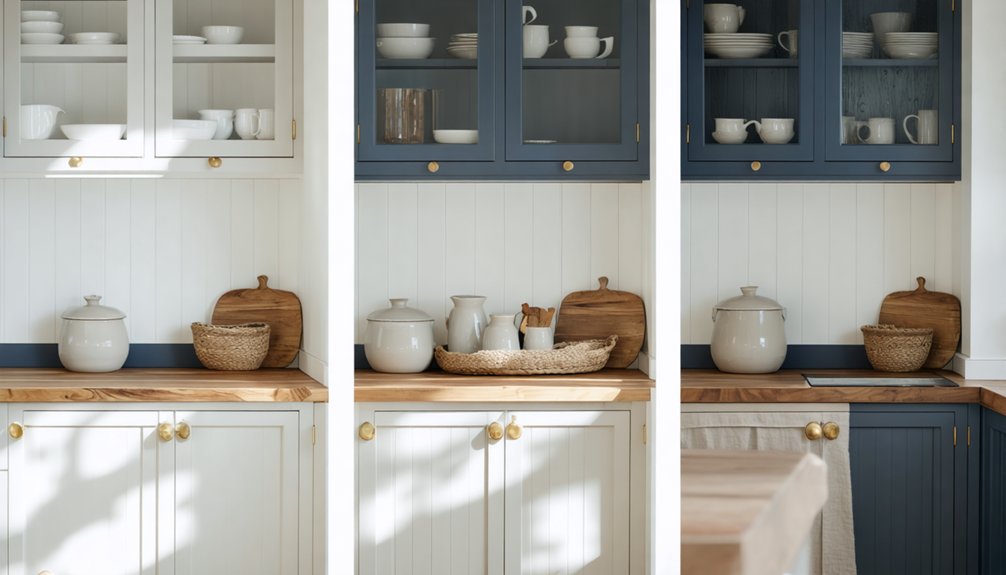
We’re watching cool grays fade from kitchen palettes as homeowners embrace the subtle complexity of greige—a sophisticated hybrid that anchors spaces without the starkness of traditional gray. Mushroom and taupe tones now dominate our consultations, offering that elusive sweet spot between beige and gray that reads as genuinely collected rather than builder-grade neutral.
Pantone’s 2026 Color of the Year, Cloud Dancer, validates this movement toward soft, breathable neutrals that create airy volume while maintaining the warmth today’s kitchens demand.
Greige Replaces Cool Gray
Cool grays dominated kitchen design for years, but they’re stepping aside for their warmer, more sophisticated cousin: greige. We’re watching this chameleon neutral transform spaces with its perfect balance of gray sophistication and beige warmth.
The versatility of greige tones shines through its transitional nature—appearing more beige in morning light, then shifting to gray under afternoon shadows. This adaptability makes it essential for material-rich kitchens where cool grays once created visual tension with warm wood elements.
Why we’re choosing greige over cool gray:
- Harmonizes beautifully with oak, walnut, and bleached wood tones
- Adds dimension and coziness that flat cool grays lack
- Works seamlessly with brushed brass, black, and chrome fixtures
- Shifts naturally between beige and gray across lighting conditions
- Creates sophisticated depth in layered neutral palettes
Mushroom and Taupe Appeal
As design studios shift their focus from stark whites and cool grays, mushroom and taupe tones are claiming the spotlight with their earthy sophistication and chameleon-like depth. We’re watching 96% of designers embrace these warm neutrals as their top cabinet selections for 2026, and it’s easy to see why.
Mushroom brings those subtle green, olive, or mauve undertones that shift beautifully from daylight to evening, while taupe sits perfectly between beige, brown, and gray with hints of violet.
These colors offer us versatile undertones that work seamlessly with mixed lighting conditions and open sightlines. They’re pairing gorgeously with brushed brass hardware and wood floors, creating spaces that feel both calming and intentionally curated. We’re seeing them transform full kitchens and islands into grounded, elevated environments that welcome rather than shout.
Cloud Dancer Soft Neutrals
Right alongside mushroom and taupe’s earthy grounding, Pantone’s 2026 Color of the Year—Cloud Dancer (11-4201)—is redefining what soft neutrals can achieve in cabinet design. This luminous white delivers color versatility that stark whites can’t match, creating airy kitchens that feel genuinely welcoming rather than clinical.
We’re seeing Cloud Dancer transform cabinetry through:
- Light-reflective properties that amplify natural daylight and enhance spatial perception
- Pairing flexibility with warm woods, brushed brass, and matte black hardware
- Emotional wellness benefits through calming, serene atmospheres
- Textural enhancement that highlights quartzite veining and oak grain
- Timeless design adaptability across shaker-style and in-frame profiles
Whether anchoring upper cabinets or balancing muted sage lowers, Cloud Dancer represents luxury minimalism’s evolution—softer, more honest, infinitely livable.
Green Cabinets: Nature-Inspired Colors for Cozy Elegance
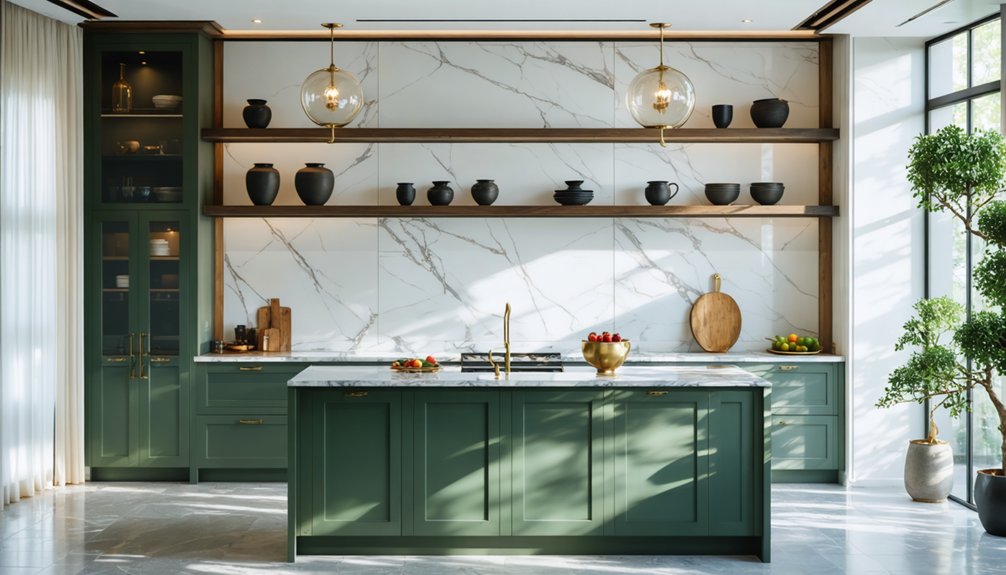
Green cabinets have captured the design world’s attention, with 76% of professionals naming this nature-inspired hue their premier cabinet color choice for 2026. We’re seeing this trend evolve beyond traditional paint into stained wood cabinet finishes, where semi-transparent green stains on white oak veneer deliver organic depth.
Multilayered green palettes now define sophisticated kitchens—sage green brings modern rustic charm, while deep emerald and muted moss create dramatic focal points. We’re pairing these nature-inspired tones with matte black fixtures, brass hardware, and marble countertops for elevated contrast.
The psychological impact matters too: green evokes natural calm while functioning as a versatile neutral. Two-tone applications feature olive lower cabinets beneath crisp white uppers, proving this invigorating palette counters design fatigue while welcoming you home.
Two-Tone Kitchen Strategies for Maximum Visual Impact
While green cabinets establish a powerful foundation with their nature-inspired warmth, we’re amplifying their impact through strategic two-tone applications that redefine spatial perception. These evolving two tone combinations create immediate depth—lighter uppers paired with darker lowers make ceilings soar while grounding our spaces with intentional contrast.
We’re seeing versatile color pairings dominate 2026 design conversations:
- Navy lowers with cream uppers command highest conversion rates across demographics
- Jade or dusty sage islands against warm greige perimeters anchor biophilic schemes
- Natural wood tones mixed with soft taupes introduce organic dimension
- Truffle brown bases paired with off-white uppers deliver approachable luxury
- Matte-finish combinations replace glossy cool grays for nurturing aesthetics
These strategies deliver 15-22% higher project values while requiring minimal material investment—transforming cookie-cutter layouts into curated environments that signal belonging.
Choosing Between Cool and Warm Cabinet Colors for Your Space
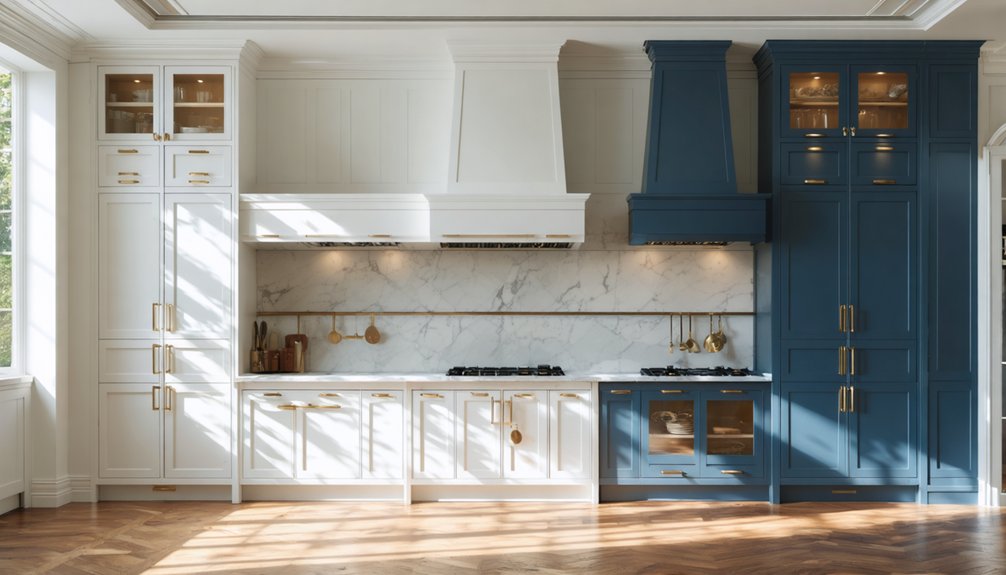
Every cabinet color decision ultimately hinges on temperature—that subtle warmth or coolness radiating from undertones that transforms how we experience our kitchens physically and emotionally. We’re seeing terracotta and walnut finishes advance in north-facing spaces, creating inviting gathering zones that counter cool natural light.
Meanwhile, soft grays and maritime blues recede visually, making compact kitchens feel remarkably spacious while promoting focused meal prep. Balanced color schemes emerge when we pair warm oak cabinets with cool subway tile backsplashes, achieving dimensional depth through contrast. Monochromatic color palettes work brilliantly too—layering warm beiges from ceiling to floor creates cocooning energy, while cool gray variations offer serene sophistication.
South-facing rooms welcome cooler hues without feeling austere, whereas warmer tones energize spaces craving sociability and warmth.
Frequently Asked Questions
Do White Cabinets Show Dirt and Fingerprints More Than Darker Colors?
White cabinets are like blank canvases—they reveal every touch. We’ve found fingerprint visibility on lighter cabinets vastly exceeds darker shades. If you’re seeking cabinet colors that hide dirt better, gray and navy offer superior concealment while maintaining on-trend sophistication.
How Much Does Professional Cabinet Painting Cost Compared to Replacement?
Average professional cabinet painting costs $2,000–$8,000, saving you 60–85% versus full replacement’s $15,000–$40,000 price tag. DIY cabinet painting costs just $200–$600, though we’d recommend investing in professional finishes for maximum design impact and longevity.
Can I Paint Over Existing Cabinet Finishes Without Stripping Them First?
We’ve seen homeowners transform outdated oak cabinets into sleek navy showpieces without stripping. Painting over glazes works beautifully when you’re applying cabinet primers first—clean thoroughly, then watch your kitchen join today’s most coveted design trends.
Which Cabinet Colors Work Best in Small Kitchens With Limited Natural Light?
We’d recommend creamy off-whites like Alabaster or soft pale blues—they’re brilliant at maximizing light reflection in tight, dim spaces. Balancing contrast with countertops creates depth, while these trending hues keep your kitchen feeling airy and welcoming together.
How Long Does Cabinet Paint Typically Last Before Needing a Refresh?
Like fine wine aging gracefully, we’ll see our professionally painted cabinets last 8-12 stunning years. Proper cabinet maintenance and factors affecting paint longevity—including prep quality and traffic patterns—determine whether your trend-forward finish stays Instagram-worthy or needs reviving.