We’ve found that successful interior painting in Murtaugh starts with thorough wall preparation—treating mold with anti-mold agents, eliminating flaking paint, and priming properly. You’ll want to use products formulated for Idaho’s temperature fluctuations and apply them in a ceiling-to-baseboard sequence. We recommend cutting in your perimeters first, then rolling in 4×4-foot sections using W-patterns while maintaining wet edges. Below, we’ll walk you through the complete process with specific techniques that guarantee professional results in our unique climate conditions.
Key Takeaways
- Prepare walls by removing debris, treating mold with anti-mold agents, scraping flaking paint, and applying primer to seal surfaces.
- Use low-VOC paints formulated for low-temperature application, crucial for Idaho’s climate and indoor air quality.
- Follow ceiling-to-baseboard workflow: paint ceiling first, cut in edges, roll walls, then finish with trim and baseboards.
- Apply tape in 8-inch sections with tight seals and remove at 45-degree angle while paint is still wet.
- Load roller evenly and paint in 4×4-foot sections using W or M patterns, maintaining wet edges throughout.
Preparing Your Walls for a Professional-Quality Finish
Before applying the first coat of paint, proper wall preparation determines whether you’ll achieve a professional-quality finish or encounter premature peeling and adhesion failures. We start by understanding wall composition through thorough evaluation, identifying problem areas that require intervention.
Remove dust and debris with a vacuum or towel, then address kitchen residues using a laundry detergent solution. Treat mold with anti-mold agents and apply sealer for heavy growth. We eliminate all flaking paint with scrapers and sandpaper, creating smooth surfaces for ideal adhesion. Grease requires degreaser or TSP treatment before painting.
After repairs, we prime walls to seal surfaces and prevent future mold. Sand dried primer with fine-grit sandpaper, then wipe clean with a damp cloth. This systematic approach guarantees long-lasting results.
Mastering the Art of Taping and Surface Protection
While proper wall preparation establishes the foundation for quality results, effective taping and surface protection translate that groundwork into crisp, professional paint lines.
Quality wall prep builds the foundation, but strategic taping and surface protection deliver the razor-sharp edges that define professional-grade paint results.
We’ll start by selecting the right adhesive: low-tack tape prevents paint pull on fresh surfaces, while high-tack options block brushstrokes along baseboards. Apply tape in 8-inch sections, keeping the roll flat against surfaces. Press firmly with a credit card along the paint edge to guarantee a tight seal.
We recommend removing tape at a 45-degree angle while paint remains wet—this prevents bleed-through and secures sharp lines. Between coats, consider tape storage options that preserve adhesive integrity. After project completion, follow proper tape disposal methods by discarding used strips promptly.
Master these techniques, and you’ll achieve the professional finishes Murtaugh homeowners expect.
Strategic Painting Sequence for Interior Rooms
With your surfaces properly masked and protected, the sequence in which you apply paint determines whether you’ll achieve professional results or spend hours correcting avoidable mistakes. We always follow a ceiling to baseboard workflow—painting overhead surfaces first prevents drips from compromising finished walls below.
Once ceilings dry completely, we move to walls, cutting in edges before rolling sections to eliminate lap marks. Trim work, including door and window casings, comes next, with baseboards representing the final element in this top-down progression.
Thorough paint project planning means understanding that each surface protects the work following it. This logical sequencing eliminates double-taping and rework while allowing productive use of drying time between coats, keeping your project moving efficiently forward.
Essential Application Techniques for Even Coverage
Achieving professional-grade paint coverage requires mastering the fundamental mechanics of brush and roller manipulation rather than relying on premium materials alone. We’ve found that proper roller technique starts with loading your roller evenly, then applying paint in a W or M pattern before filling gaps with vertical strokes. This method guarantees optimal paint consistency across the entire surface without lifting the roller mid-section.
Our proven application sequence includes:
- Cutting-in perimeters: Paint 3- to 5-inch strips along edges at a 45-degree angle before rolling
- Maintaining wet edges: Overlap each stroke into previously painted areas to eliminate lap marks
- Strategic sectioning: Work in 4×4-foot areas from top to bottom, allowing complete drying between two full coats
We always criss-cross our strokes diagonally, then horizontally, finishing with light vertical lay-off for uniform coverage.
Choosing the Right Paint Products for Long-Lasting Results
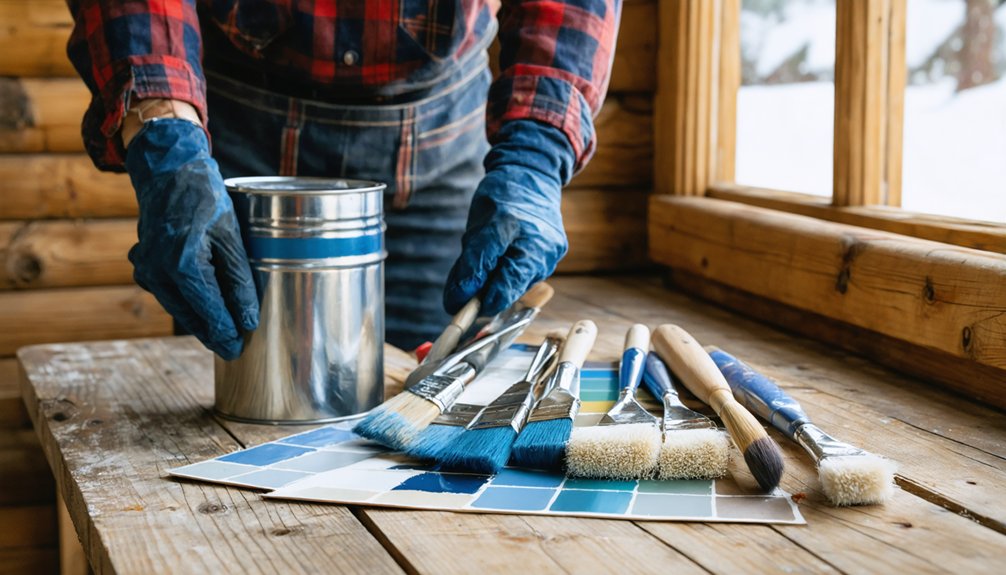
Because paint formulation directly determines both initial application success and long-term surface durability, we prioritize product selection based on specific performance metrics rather than price point alone. Benjamin Moore Aura delivers superior hide characteristics with lifetime warranty backing, while BEHR Dynasty achieves reliable one-coat coverage.
For Murtaugh’s variable climate conditions, we’ll need products formulated for low-temperature application—some specialty lines perform down to 35°F when standard paints require 50-90°F minimums.
Paint strikethrough considerations become critical when covering existing colors, particularly with lighter shades over darker bases. We recommend examining durability enhancing additives in premium formulations like Sherwin Williams Emerald Urethane, which provides exceptional bonding properties.
GREENGUARD GOLD certified options guarantee low VOC emissions while maintaining professional-grade performance standards our community expects.
Frequently Asked Questions
What Should I Do if I Notice Paint Peeling Shortly After Finishing?
We’ll immediately check for underlying issues like moisture infiltration or surface contamination that caused premature failure. After addressing root causes through proper substrate preparation, we’ll consider repainting affected areas using compatible coatings with adequate cure times between applications.
How Long Should I Wait Between Coats When Painting Interior Walls?
We’ll wait 2-4 hours between latex coats and 24 hours for oil-based paints. Proper paint drying times depend on ideal humidity levels below 70% and temperatures between 50-85°F for excellent adhesion and finish quality.
Can I Paint Over Wallpaper or Should I Remove It First?
We strongly recommend proper wallpaper removal before painting. Test wall preparation by checking adhesion and substrate condition first. Removing wallpaper guarantees ideal paint bonding, eliminates seam telegraphing, and prevents future delamination issues that compromise your finish quality.
What’s the Best Way to Clean Paint Brushes and Rollers for Reuse?
We’ll scrape excess paint first, then rinse brushes thoroughly with appropriate solvent until water runs clear. After cleaning, we recommend applying paint brush conditioner to restore bristles and safeguard your tools maintain professional-grade performance for future projects.
How Do I Fix Drips or Runs That Dried Before I Noticed Them?
Like archaeologists excavating layers, we’ll scrape dried drips at 30-45 degrees with razor blades, then sand progressively from 100 to 220-grit. Address paint drying issues methodically, then cover up dried drips with feathered touch-ups using original paint.