We’ve found Buhl’s cold semi-arid climate (BSk) requires specific exterior painting protocols—target late spring through early fall when temperatures hold steady between 50-85°F, avoid the 100-125 annual frost days, and always prep surfaces with power washing at 1500-3000 PSI to remove dust accumulation. We specify 100% acrylic coatings with inorganic pigments to resist UV degradation from 216 sunny days, and we maintain substrate temperatures 5°F above dew point during application. This guide covers the complete weatherization strategy we’ve developed for Idaho’s high-desert conditions.
Key Takeaways
- Plan exterior painting for May-June or September-October when temperatures stay between 50-85°F for optimal paint curing.
- Use 100% acrylic coatings with inorganic pigments to withstand Buhl’s intense UV exposure and 100-plus annual frost days.
- Power wash surfaces at 1500-3000 PSI and ensure wood moisture stays below 15% before applying paint.
- Apply heat-reflective formulations and UV-protectant primers on south-facing walls to prevent sun damage and fading.
- Maintain surface temperatures 5°F above dew point and avoid painting when overnight temperatures drop below 50°F.
Understanding Buhl’s Semi-Arid Climate and Painting Conditions
Because Buhl, Idaho operates under a BSk Köppen classification—a cold semi-arid climate—exterior painting projects here require specialized material selection and application protocols that differ markedly from those used in humid or temperate zones. We’re working with 216 sunny days annually and minimal precipitation averaging just 10 inches, which creates intense UV degradation concerns. Our paint pigmentation selection must prioritize inorganic pigments over organic variants to withstand this cumulative sunlight exposure without chalking or fading.
The region’s 100-125 frost days demand coatings with superior flexibility ratings to accommodate thermal expansion cycles between 21°F winter lows and 89°F summer peaks. Low humidity conditions—while advantageous for rapid curing—necessitate careful attention to open time management during application. We’ll need elastomeric or premium acrylic formulations meeting ASTM D6904 standards specifically engineered for semi-arid performance parameters.
Optimal Seasons for Exterior Painting in Buhl
While Buhl’s semi-arid climate provides extended painting windows compared to humid regions, we’re still constrained by seasonal temperature fluctuations and precipitation patterns that directly impact coating performance. We’ve found late spring through early fall delivers suitable conditions, with May through June offering the optimal sweet spot—temperatures consistently ranging 60-80°F support proper paint curing durations without accelerated drying that compromises adhesion.
Summer’s intense heat demands early-morning application strategies, while September and October provide stable temperatures ideal for color selection strategies requiring multiple coats. We must monitor forecast windows ensuring three-day dry periods minimum. Winter applications below 35°F risk film formation failures in latex formulations.
Our professional approach prioritizes substrate temperatures within manufacturer specifications—typically 50-85°F—ensuring long-term coating integrity for fellow Buhl homeowners.
Temperature and Weather Considerations for Paint Application
Understanding seasonal windows establishes the foundation, yet successful coating application demands precise attention to ambient conditions and substrate temperatures during actual field operations. We monitor air temperature impacts within the critical 50°F to 85°F range for latex systems, while oil-based formulations tolerate 40°F to 90°F.
Surface temperature fluctuations require infrared verification—substrates in direct sunlight exceed ambient readings and cause premature film failure. We maintain surfaces 5°F above dew point with humidity between 40% and 70% for proper cure dynamics.
During Southern Idaho’s variable climate, we halt operations when temperatures drop below 50°F overnight, as this arrests chemical cross-linking even after initial tack. Premium acrylics permit 35°F application but demand sustained warmth for 36 hours post-application.
Preparing Your Home’s Exterior for Idaho’s Climate Challenges
Though ambient conditions govern application windows, substrate preparation determines coating longevity in Buhl’s semi-arid BSk climate where 216 annual sunny days, 18 inches of snowfall, and 10 inches of precipitation create distinct challenges.
In Buhl’s semi-arid climate with 216 sunny days annually, proper substrate preparation outweighs timing for lasting paint performance.
We’ll power wash exteriors at 1500-3000 PSI to remove fine dust accumulation, then vacuum crevices thoroughly. Before winter painting, we’re clearing eaves and gutters for ice dam prevention—critical when January temperatures hit 20-22°F.
We’ll test wood moisture below 15% using calibrated meters, then seal freeze-thaw cracks with elastomeric caulk rated -20°F to 120°F.
For seasonal color selection, we’re applying UV-protectant primers on south-facing walls where July’s 87-89°F accelerates fading. We’ll acclimate materials 48 hours to local temperature ranges and allow surfaces 7-10 days to stabilize in Buhl’s fluctuating conditions.
Protecting Your Paint Job From Wind, Dust, and Precipitation
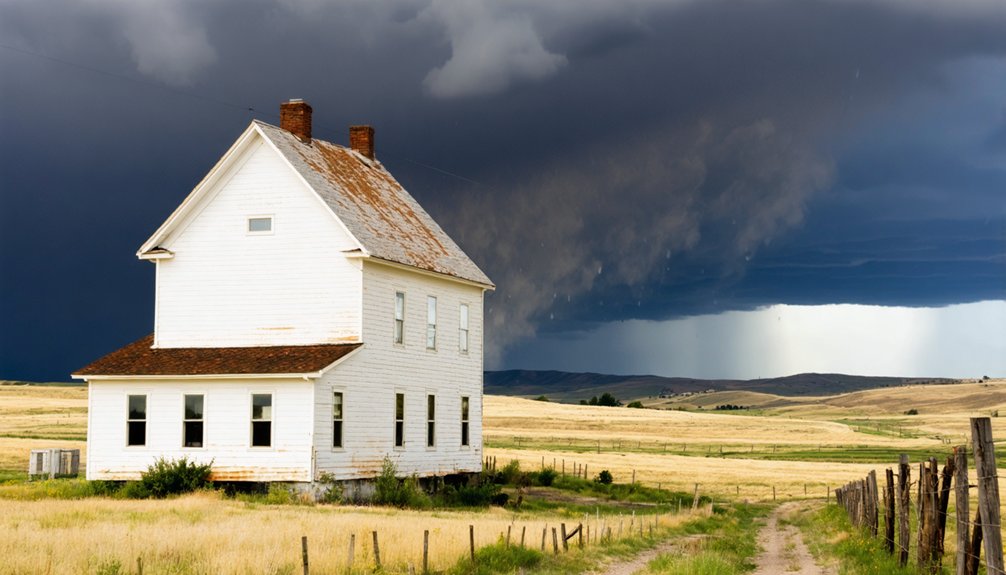
Properly prepared surfaces require engineered protection systems that counter Buhl’s specific environmental stressors. We’ve developed application protocols that safeguard long term paint durability against Idaho’s harsh conditions.
Multi-Layer Defense System:
- Wind resistance: 100% flexible acrylic coatings withstand gusts without peeling, maintaining adhesion through temperature fluctuations
- Dust mitigation: Premium primers seal porous substrates, creating non-porous barriers that repel fine high-desert particulates
- Precipitation barriers: Two-coat acrylic latex applications over sealed primers prevent moisture intrusion and freeze-thaw damage
- UV protection: Heat-reflective formulations reduce surface degradation during combined sunny-windy exposures
- Comprehensive sealing: Caulking all penetrations—windows, doors, trim—stops water seepage and wind infiltration
We guarantee every job receives exterior-grade materials specifically engineered for Idaho’s variable climate, giving you professional-level protection that outlasts standard applications.
Frequently Asked Questions
How Long Does Exterior Paint Typically Last on Buhl Homes?
Like a shield weathering Idaho’s elements, we’ve seen exterior paint last 5-7 years on Buhl homes. Proper surface preparation and climate exposure directly impact longevity—our high-desert conditions demand premium coatings and meticulous prep work for ideal performance.
What Paint Colors Work Best in Buhl’s High-Sun Climate?
We recommend climate-appropriate palettes featuring light neutrals, whites, and beiges for your home. These colors address sun exposure considerations by reflecting Buhl’s intense UV rays, minimizing heat absorption, and resisting fade better than darker pigments in our semi-arid conditions.
Do I Need Special Permits for Exterior Painting in Buhl?
We’ll spare you bureaucratic nightmares—exterior painting doesn’t require permits under local building codes in Buhl. No painting permit requirements exist for simple repaints. However, we’d verify with Building Department if structural repairs accompany your project.
Should I Hire Professionals or DIY My Exterior Painting Project?
We’d recommend professionals unless you’ve got proper scaffolding and fall protection—DIY safety considerations are critical on multi-story homes. Our cost benefit analysis shows pros deliver superior adhesion and weatherproofing worth the investment for Idaho’s climate demands.
How Much Does Professional Exterior Painting Cost in Buhl?
Labor accounts for 70-90% of your investment. We’ll find average contractor pricing in Buhl ranges $1,800-$4,500, with paint quality considerations directly impacting longevity. Idaho’s costs run 7% below national rates, benefiting our community’s homeowners considerably.