We’ve found that most interior spaces require repainting every 5–7 years under normal conditions, though high-traffic zones like kitchens, hallways, and bathrooms need attention every 2–4 years due to moisture exposure and accelerated wear patterns. Children’s rooms typically demand 2–3 year cycles, while adult bedrooms can extend to 8–10 years with proper maintenance protocols. Premium formulations, strategic finish selection, and controlled humidity levels substantially impact these timelines—our analysis below details how specific environmental factors and surface preparation techniques maximize your paint longevity.
Key Takeaways
- Most interior spaces need repainting every 5–7 years under normal conditions, depending on room function and traffic patterns.
- High-traffic areas like kitchens, hallways, and bathrooms require repainting every 2–5 years due to accelerated wear.
- Children’s rooms typically need repainting every 2–4 years, while adult bedrooms can last 7–10 years with proper maintenance.
- Moisture-resistant paints and proper ventilation in bathrooms and kitchens help extend paint life to 3–4 years minimum.
- Premium paints, surface preparation, humidity control, and regular touch-ups can maximize longevity up to 15 years.
General Timeline for Interior Repainting
Interior paint durability depends on multiple variables, including room function, traffic patterns, and environmental conditions that accelerate wear. We’ve established industry standards indicating that most interior spaces require repainting every 5–7 years under normal conditions. However, this timeline shifts based on specific room characteristics and usage patterns.
Most interior spaces require repainting every 5–7 years under normal conditions, though specific room characteristics alter this timeline.
High-traffic zones—kitchens, hallways, and bathrooms—demand attention every 2–5 years due to moisture exposure, constant contact, and cleaning requirements. Children’s rooms typically need revitalizing every 2–3 years as evolving interests and play-related wear accumulate.
Conversely, ceilings maintain their finish for 7–10 years, requiring intervention only when stains or damage appear.
Beyond physical deterioration, design trends and aesthetic preferences influence repainting schedules. Color palettes cycle every 8–10 years, prompting updates that reflect contemporary styles rather than functional necessity.
Living Rooms and Bedrooms: What to Expect
We’ve established baseline repainting intervals of 5-7 years for living rooms and up to 10 years for adult bedrooms under standard conditions.
Children’s rooms require more frequent attention—typically every 2-4 years—due to accelerated wear from daily activity and play-related damage. Strategic selection of durable paint formulations and protective room decor can extend these timelines considerably, particularly in low-traffic spaces where premium coatings deliver maximum longevity.
Standard Repainting Timeline
Most residential spaces follow predictable repainting cycles based on room function and traffic patterns. Our periodic refresh recommendations establish living rooms at 5-7 year intervals under normal conditions, though high-traffic households may require 3-5 year cycles due to accelerated fading and dirt accumulation. We’ve found that central gathering spaces sustain more incidental contact and grease exposure, necessitating earlier intervention.
Bedrooms present different considerations for ideal repaint frequency. Adult bedrooms typically last 8-10 years when we use durable finishes, while standard personal spaces align with 5-7 year timelines. Guest rooms extend these intervals further given minimal use patterns.
Traffic levels, sunlight exposure, and paint quality remain our primary determining factors. We recommend monitoring for visible wear signals—fading, scuffs, marks—that indicate when your space requires professional attention, regardless of timeline expectations.
Children’s Rooms Need More
Children’s rooms demand noticeably accelerated repainting schedules compared to standard residential spaces, typically requiring fresh coats every 2-3 years rather than the 5-7 year cycles we observe in adult bedrooms. This frequency stems from documented wall contact patterns—elementary-age children average 27 minutes daily with markers and crayons, translating to 5.5 hours monthly of potential wall staining.
High-activity rooms with inadequate toy storage and play space organization necessitate annual repainting due to concentrated dirt buildup and surface abrasion. We recommend satin or eggshell finishes for enhanced durability against frequent washing.
Teen spaces extend to 5-7 year intervals when utilizing darker, less-visible-dirt color palettes. Strategic implementation of calming blues and greens, combined with proper ventilation systems, maximizes paint longevity while supporting cognitive development requirements.
Extending Paint Longevity
Living rooms and adult bedrooms consistently deliver 7 to 10 years of paint durability under normal residential conditions, with premium applications extending this range to 8 to 15 years when proper maintenance protocols are observed.
We maximize longevity through strategic implementation:
- Proper surface preparation: Thorough cleaning, patching, and priming establishes ideal adhesion that prevents premature failure
- Controlled environmental conditions: Managing humidity levels and minimizing direct sunlight exposure reduces fading and degradation
- Strategic finish selection: Semi-gloss formulations provide 8 to 12 years durability, while satin finishes deliver 7 to 10 years with medium scrub resistance
Professional-grade paints combined with light cleaning practices extend service life beyond standard expectations. Regular minor touch-ups preserve aesthetic integrity, often pushing well-maintained surfaces toward the 15-year maximum benchmark established by industry standards.
Children’s Rooms Need More Frequent Attention
Anyone raising children understands that walls in their rooms endure considerably more wear than standard living spaces. Industry standards recommend repainting children’s rooms every 1-2 years, with hyperactive environments requiring annual attention.
We’ve observed that elementary-aged children average 27 minutes daily with markers, contributing to accelerated wall deterioration through crayon damage, watercolor stains, and general soiling from high-activity play.
Kid’s rooms typically need revitalizing every 2-3 years, though this timeline shortens when frequent friend gatherings occur. We recommend washable, durable finishes for play zone decor and educational wall designs.
As children mature into teenagers, repainting intervals extend to 5-7 years, particularly when darker shades conceal dirt effectively.
Environmental factors like ventilation and natural light drastically impact paint longevity, while evolving interests often necessitate color updates before structural wear demands it.
Kitchens and Bathrooms: High-Moisture Challenges
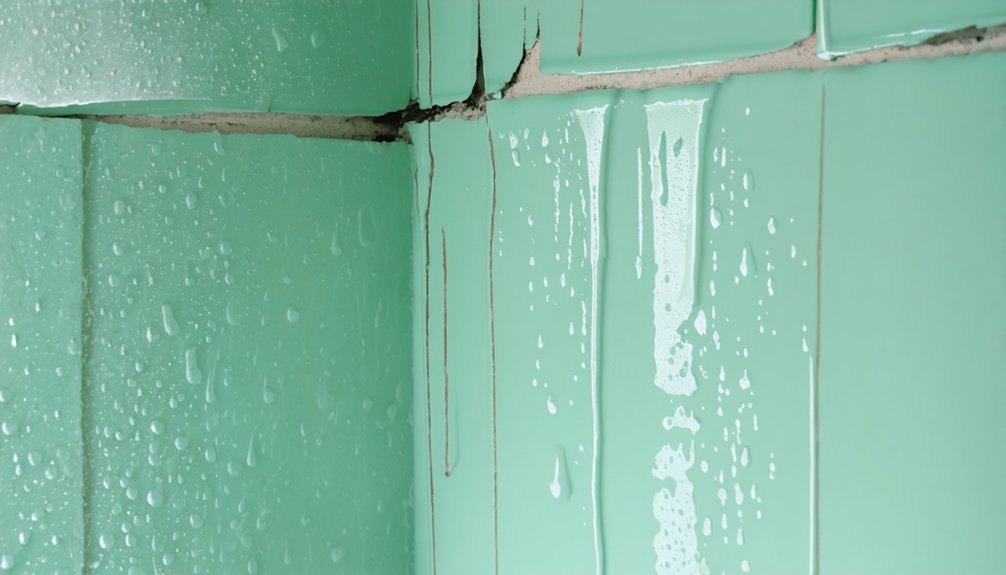
Kitchens and bathrooms present the most demanding repainting schedules in residential spaces, requiring attention every 3-4 years due to sustained exposure to steam, grease, and elevated humidity levels.
We’ve observed that moisture infiltration compromises paint adhesion and accelerates substrate deterioration through peeling, discoloration, and mold proliferation.
The solution lies in strategic material selection—specifically moisture-resistant and washable formulations—combined with proper mechanical ventilation systems that mitigate atmospheric moisture content.
Moisture Accelerates Paint Deterioration
When relative humidity exceeds 60%, paint curing slows dramatically and creates a cascade of deterioration mechanisms that fundamentally compromise coating integrity. Our high humidity impact assessments reveal that moisture accelerates failure through three critical pathways:
- Adhesion breakdown occurs when water vapor migrates through substrates, creating blistering and delamination at corners and edges
- Extended vulnerability windows develop as latex paints experience 50-75% slower evaporation above 70% RH, attracting contaminants during the tacky phase
- Mold colonization initiates when RH exceeds 80%, preventing complete cure and fostering growth beneath film surfaces
Through environmental conditions analysis, we’ve documented that high-moisture spaces require repainting every 2-4 years versus 8-10 years in controlled environments. Understanding these mechanisms helps us anticipate maintenance cycles and specify appropriate protective coatings for challenging applications.
Ventilation and Paint Selection
While environmental conditions determine deterioration rates, the materials we select create the first line of defense against moisture-driven paint failure. Our paint selection strategy must prioritize finishes engineered for moisture management in high-humidity zones.
Semi-gloss formulations provide superior water resistance through their reflective surface properties, making them industry-standard for areas surrounding tubs and showers. Satin finishes offer balanced performance where aesthetics matter without sacrificing durability.
We’ll maximize longevity by specifying mildew-resistant paints containing antimicrobial agents—case studies demonstrate these formulations maintain integrity for two years minimum without peeling. However, paint selection alone won’t suffice. We must integrate exhaust ventilation systems that actively remove humid air, as proper airflow complements even premium moisture-resistant coatings.
This dual approach—advanced materials plus mechanical ventilation—defines professional moisture management protocols.
High-Traffic Areas Require Regular Updates
Because frequent contact and environmental stressors accelerate paint degradation, high-traffic zones demand more aggressive maintenance schedules than low-use spaces. We’ve established industry-standard intervals that balance performance with budget conscious approaches:
- Hallways and Corridors: Repaint every 2-3 years using eggshell sheen formulations that resist scuff marks and dents from constant passage.
- Kitchens: Schedule updates every 3-4 years to combat grease accumulation, steam exposure, and cooking residue that compromise film integrity.
- Bathrooms: Maintain 3-4 year cycles addressing moisture damage, mold prevention, and humidity-related deterioration.
Our high performance paint recommendations prioritize scrubbable finishes with superior adhesion properties. Households with children or pets should adopt the shorter end of these ranges, while proper ventilation systems can extend intervals slightly without sacrificing aesthetic standards.
Ceilings and Trim: Different Maintenance Schedules
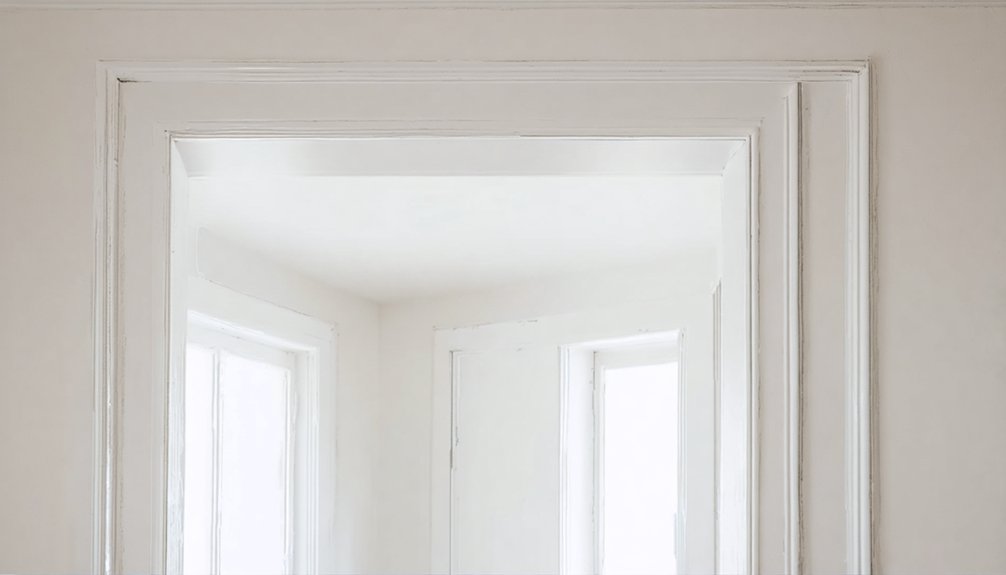
We’ve established distinct maintenance schedules for ceilings and trim based on their exposure to wear factors. Ceilings typically require repainting every 10+ years due to minimal contact, while baseboards and trim need attention every 2-3 years from ground-level damage.
Maintaining stored touch-up paint from original applications enables us to address minor imperfections without full repaints, extending the intervals between inclusive refinishing projects.
Ceiling Repainting Timeline
Ceilings typically require repainting every 5 to 7 years under normal residential conditions, though high-quality paint can extend this interval to 10-15 years when applied correctly.
We’ve identified specific timeline variations based on room function and environmental exposure:
- Standard living spaces (living rooms, dining rooms, bedrooms) maintain their finish for 5-7 years with minimal wear
- High-moisture environments (kitchens, bathrooms) demand attention every 3-4 years, requiring moisture control strategies and proper ventilation
- Commercial applications or cathedral ceilings necessitate professional service every 3-5 years due to accessibility challenges
Lighting considerations profoundly impact longevity—natural light accelerates fading in darker colors. We recommend coordinating ceiling repaints with wall projects for color cohesion.
Address water damage immediately; structural issues compromise paint adhesion regardless of quality.
Trim Maintenance Frequency
Trim maintenance operates on accelerated cycles compared to ceiling repainting schedules, demanding weekly attention for surface care and professional refinishing every 2-3 years in high-traffic environments.
We’ll implement weekly dusting protocols to prevent oil accumulation on baseboards, door casings, and window frames. Deep cleaning every few months addresses crevice buildup that standard dusting can’t reach.
Bi annual inspections identify cracks, warping, or moisture damage before deterioration advances, protecting our investment through early intervention. Professional assessment determines ideal protective coating application intervals, with wax finishes providing scratch resistance and dimensional stability.
High-touch areas like door frames and handrails require abbreviated maintenance cycles due to accelerated wear patterns. We’re establishing systematic inspection routines and conditioning schedules that extend refinishing intervals while maintaining architectural detail integrity throughout our homes.
Touch-Up Paint Storage
Strategic paint preservation begins the moment our refinishing projects conclude, with proper storage protocols determining whether touch-up materials remain viable for future ceiling and trim maintenance needs. Ideal paint storage conditions require consistently cool, dry environments away from temperature fluctuations that compromise chemical stability.
We’ll maximize paint storage duration through these essential practices:
- Container Integrity: Seal lids tightly, creating airtight barriers against oxidation and film formation
- Labeling Protocols: Document room locations, application dates, and manufacturer specifications for seamless future matching
- Environmental Controls: Maintain storage temperatures between 50-77°F, protecting against freeze-thaw cycles and extreme heat
Our properly preserved materials typically remain usable for 2-3 years, though latex formulations often exceed these standards when storage conditions meet industry benchmarks. Regular inspections identify separation or spoilage before application attempts.
How Paint Quality Affects Repainting Frequency
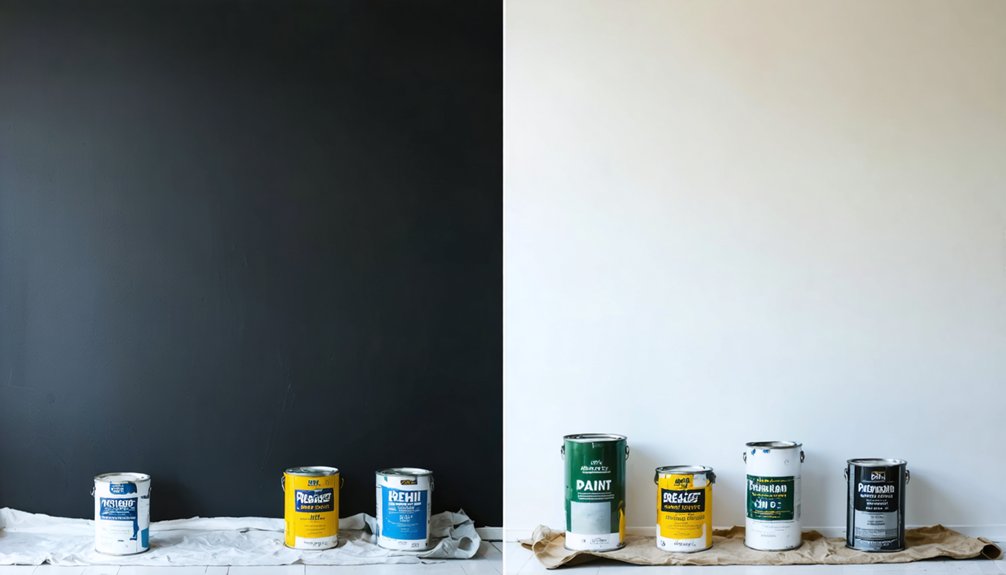
Premium paint formulations substantially extend intervals between repaints through superior resin systems and pigment technology. We’ve observed that paint quality differences fundamentally determine durability outcomes—high-grade products from manufacturers like Benjamin Moore resist scuffs, maintain color vibrancy, and withstand repeated cleaning far better than budget alternatives. While surface preparation significance can’t be dismissed, premium paints compensate for minor prep shortcomings through superior adhesion properties.
In our professional experience, quality investments deliver measurable returns: living rooms and bedrooms maintain appearance for 5-7 years, while moisture-resistant formulations in kitchens and bathrooms extend intervals to 3-4 years. Budget paints, regardless of application conditions, degrade rapidly due to inadequate binders and inferior pigments. We recommend selecting appropriate finish sheens—eggshell for bedrooms, semi-gloss for bathrooms—to maximize your quality investment and minimize repaint frequency.
The Impact of Children and Pets on Your Walls
While premium paint formulations provide your best defense against premature deterioration, households with children and pets accelerate wear patterns beyond what even superior products can withstand. We’ve observed that children’s rooms typically require repainting every 2–3 years compared to adult spaces lasting 5–10 years. This increased frequency stems from constant wall contact, rapid dirt accumulation, and playful wear that no finish can fully prevent.
Household activity levels demand these protective strategies:
- Select eggshell or satin sheen finishes for maximum durability in high-traffic zones
- Implement regular maintenance schedules accounting for frequent wall washing requirements
- Plan repainting cycles around developmental shifts from nursery to teen spaces
Pet impact on walls compounds these challenges, making proactive paint selection and maintenance protocols essential for preserving interior finishes throughout active family life.
Choosing the Right Paint Finish for Longevity
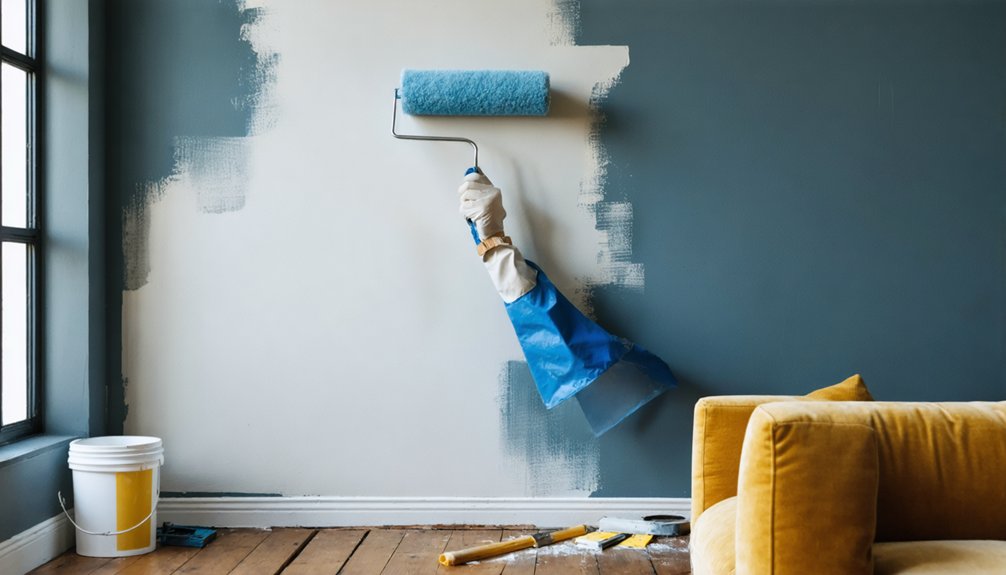
Beyond selecting premium formulations, the sheen level you specify directly determines your paint’s resistance to wear and maintenance demands. Higher-sheen finishes contain more resin binder, forming harder films that resist scuffs, fingerprints, and cleaning damage.
We recommend satin or semi-gloss for kitchens and bathrooms where humidity and grease accelerate deterioration—expect 3-5 year cycles here. For bedrooms, flat or eggshell suffices with 7-10 year longevity since traffic remains minimal.
Critical sheen considerations include understanding that shinier surfaces highlight wall imperfections yet clean effortlessly, while matte finishes conceal flaws but develop burnished spots from repeated wiping. Modern paint quality factors have evolved—today’s premium low-sheen products often outlast inferior high-gloss alternatives.
We’ve observed satin increasingly replacing semi-gloss for trim applications, balancing durability with contemporary aesthetics our community expects.
Signs It’s Time to Repaint Your Interior
Even when paint remains intact, specific deterioration patterns signal replacement timelines you can’t ignore. Your paint inspection records should document these critical failure indicators:
Document deterioration patterns meticulously—peeling, bubbling, and cracking indicate moisture damage demanding immediate professional intervention beyond cosmetic concerns.
- Structural compromise: Peeling, bubbling, or cracking reveals moisture infiltration and substrate damage requiring immediate remediation
- Surface degradation: Chalky texture, faded pigmentation near UV exposure zones, and embedded stains that resist conventional cleaning protocols
- Moisture pathology: Mold growth, blistering in high-humidity zones, and water staining visible in your humidity monitoring data
We’ve established professional repainting intervals: high-traffic corridors need attention every 2-3 years, while bathrooms require evaluation every 3-4 years. Living spaces typically extend to 5-7 years under controlled conditions. These benchmarks help us maintain property value and interior aesthetics within industry-standard maintenance cycles.
Frequently Asked Questions
Can I Repaint Over Wallpaper or Must I Remove It First?
While you *can* paint over wallpaper, we don’t recommend it as a permanent fix. Wallpaper condition and wallpaper type considerations determine feasibility—sound, non-vinyl paper accepts latex paint, but removal guarantees superior adhesion and finish quality long-term.
How Much Does Professional Interior Painting Typically Cost per Room?
Professional interior painting costs $300–$2,000 per room, depending on size and complexity. We’ve found labor expenses constitute the largest portion, while average paint quality selections markedly impact your final investment in transforming your home’s interior spaces.
What’s the Best Season to Schedule Interior House Painting Projects?
We recommend scheduling interior painting during fall or winter’s offseason when ideal painting weather conditions include low humidity and stable temperatures. You’ll benefit from faster drying times, reduced costs, and contractors’ fuller attention to your project’s details.
Should I Use Primer Before Repainting or Paint Directly Over Old Paint?
Like building on a cracked foundation, skipping primer invites failure. We recommend you apply paint primer when switching sheens or covering glossy surfaces—it’s industry standard. Choose paint sheen compatibility carefully; primer extends durability 20-30% for lasting results.
How Long Must I Wait Before Moving Furniture Back After Painting?
We’ll need to wait 24-48 hours before repositioning furniture after painting. Latex paint’s drying time allows movement within a day, while oil-based finishes require longer. Proper paint coverage won’t protect against premature contact, so patience guarantees ideal results.