We strongly recommend pressure washing before painting, as it eliminates contaminants that compromise bond integrity and can extend your coating’s lifespan from a premature 3-5 years to the full 10-15 years you’re investing in. However, you’ll need to follow proper protocols—1500-3000 PSI for residential applications, appropriate detergent selection, and critically, adequate drying time of 1-2 weeks to prevent trapped moisture that leads to blistering and delamination. Guaranteeing these professional-grade techniques safeguards you’re protecting rather than compromising your property’s value.
Key Takeaways
- Pressure washing removes contaminants that prevent proper paint adhesion, helping coatings last 10-15 years when done correctly.
- Surface preparation, including cleaning, accounts for 80-90% of paint longevity and prevents premature coating failure.
- Use 1500-3000 PSI pressure washers with proper techniques to avoid forcing water into walls or damaging siding.
- Allow 1-2 weeks drying time after pressure washing to ensure consistent moisture levels for optimal paint adhesion.
- Pre-1978 homes require special care due to lead paint risks; consider professional assessment before pressure washing.
The Case for Pressure Washing: Key Advantages Before Painting
When evaluating pre-paint surface preparation, pressure washing delivers measurable advantages that directly impact coating performance and longevity. We’re building a favorable paint base by eliminating contaminants that compromise bond integrity—chalking residues, embedded grime, mold colonies, and salt deposits that block molecular adhesion. This process guarantees enhanced surface adhesion, preventing common failure modes like blistering, bubbling, and premature delamination.
Beyond adhesion improvement, we’re protecting your investment through moisture barrier optimization. Properly bonded coatings seal exterior substrates against water infiltration, preventing rot and structural degradation. The practice extends coating lifespan to match manufacturer warranties while revealing underlying damage requiring repair before application.
We’ve documented 2-5% property value increases through proper preparation protocols. By removing touch-up-only areas from full repaint scope, we’re reducing project costs while delivering professional-grade results that meet industry standards.
Understanding the Potential Risks and Moisture Concerns
While pressure washing offers significant preparation benefits, we’re obligated to address documented failure modes that compromise both project outcomes and structural integrity. High-pressure streams force water into wall cavities through existing gaps, creating trapped moisture that prevents consistent moisture levels required for proper paint adhesion. We’ve observed premature potential paint damage when crews seal saturated surfaces before adequate drying—typically one week minimum, extending to two weeks post-rain in humid conditions.
Commercial washers operating at 1500-3300 PSI can chip siding, erode mortar, and penetrate wood substrates when operators use incorrect angles or PSI settings. The industry standard limits wood siding to 1200 PSI maximum. Additionally, lead paint contamination becomes a critical concern on pre-1978 homes, as high-pressure blasting disperses toxic chips into soil rather than containing them properly.
How Proper Surface Preparation Ensures Paint Longevity
Though paint selection receives disproportionate attention in homeowner planning, we’ve documented that surface preparation accounts for 80-90% of coating longevity despite consuming only 60-70% of project time. Our protocol includes thorough cleaning to eliminate contaminants, scraping loose paint, sanding glossy surfaces for mechanical adhesion, filling gaps to prevent moisture intrusion, and priming bare areas for substrate compatibility.
We’ve observed properly prepared cedar maintaining integrity for 10-12 years, while inadequate preparation reduces even quality coatings to 3-4 year lifespans. The data shows fiber cement and vinyl substrates reaching 12-15 years when protocol is followed. Factory-primed materials excel, though field-cut edges demand immediate priming. Our profession recognizes that substrate compatibility and preparation rigor determine whether your investment delivers value or necessitates premature recoating.
Protecting Your Investment: Preventing Damage and Decay
Beyond substrate preparation, systematic protection protocols determine whether your coating investment delivers projected service life or fails prematurely. We’re evaluating cost effectiveness when we recognize that mid-grade paint over properly cleaned surfaces outperforms premium products applied to contaminated substrates. Surface preparation represents 40% of project costs, yet prevents premature failures requiring complete repainting cycles.
We’re addressing environmental concerns by removing mold and biological growth before coating application—these contaminants cause substrate deterioration and paint failure when trapped beneath new layers. Environmental factors accumulate on exterior surfaces and transfer directly beneath fresh coatings without adequate removal.
Professional pressure washing eliminates stubborn grime, stains, and mildew more effectively than manual methods, protecting both immediate adhesion and long-term coating performance. Proper preparation prevents costly touch-ups and extended maintenance cycles.
Professional Guidelines and Recommended Cleaning Approaches
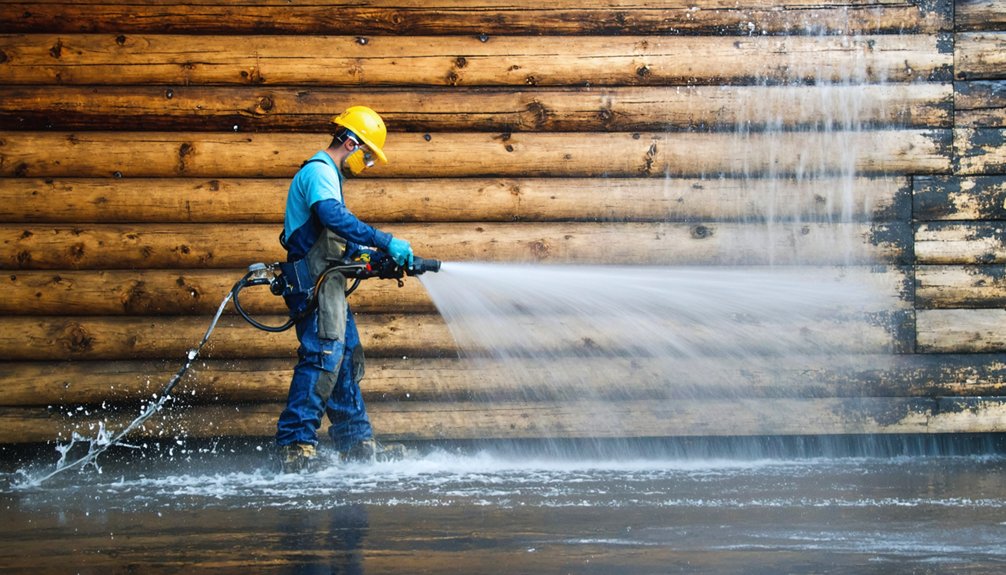
Industry protocols distinguish successful coating applications from premature failures through standardized cleaning methodologies that address substrate-specific requirements. We’ve established that proper tools selection begins with pressure washers rated between 1500-3000 PSI for residential applications, with professional contractors preferring electric models at 2500 PSI minimum.
Appropriate detergent usage demands formulations engineered for specific siding materials, typically incorporating mildewcides when addressing biological contamination.
Our recommended approach requires pre-washing surface preparation—scraping loose paint and repairing damaged substrates before cleaning commences. We maintain nozzle positioning at 12-18 inches from surfaces, employing overlapping strokes from top to bottom.
Critical protocol dictates thorough post-wash inspection for paint adhesion failures requiring remediation before primer application. These established procedures guarantee ideal coating performance and longevity, protecting your investment through proven industry methodologies.
Frequently Asked Questions
How Long Should I Wait After Pressure Washing Before Painting My House?
We recommend waiting 24-72 hours after pressure washing, depending on your surface type and climate. Proper surface preparation requires monitoring moisture content considerations—ensure levels drop below 15% using a moisture meter before we begin painting.
Can I Pressure Wash My House Myself or Hire a Professional?
We recommend weighing DIY pressure washing considerations—equipment costs, technique mastery, damage risks—against professional pressure washing recommendations. Professionals deliver industry-standard results with proper pressure calibration and moisture management, ensuring ideal paint adhesion for your project’s success.
What Pressure Setting Is Safe for Different Types of House Siding?
We recommend appropriate pressure settings between 500-2000 PSI depending on your siding material to prevent potential siding damage. Vinyl and fiber cement require soft washing under 500 PSI, while brick tolerates 1500-2000 PSI safely.
Does Pressure Washing Increase Home Value More Than Painting Alone?
Ironically, pressure washing alone won’t outperform painting—but we’ll achieve maximum higher property value when we combine both methods. Together, they deliver increased curb appeal meeting industry standards, ensuring our homes command premium prices efficiently.
How Often Should I Pressure Wash My House Between Paint Jobs?
We recommend annual exterior cleaning schedules for most homes between paint jobs, typically in late spring or fall. Paint preparation considerations may require biannual washing in high-humidity or polluted areas where grime accumulates faster, following industry standards.