We protect exterior paint from sun damage by selecting UV-resistant formulations with HALS stabilizers and titanium dioxide pigments, then applying light-colored satin or semi-gloss finishes that reflect solar radiation. We’ll prepare surfaces meticulously, use substrate-specific primers, and maintain consistent wet-film thickness during application. Adding exterior shading like awnings (which reduce heat gain by 77%) and scheduling annual inspections with touch-ups extends paint life from 3-5 years to 10-15 years. Our detailed guide below covers advanced protection strategies, maintenance schedules, and product-specific recommendations you’ll need.
Key Takeaways
- Select UV-resistant paints with stabilizers, HALS, and inorganic pigments like titanium dioxide for superior fade protection.
- Choose light neutral colors with satin or semi-gloss finishes to reflect sunlight and minimize thermal stress.
- Install exterior shading like awnings, solar screens, or plant deciduous trees to block direct sun exposure.
- Ensure proper surface preparation with thorough cleaning, priming, and uniform paint application for maximum durability.
- Conduct annual inspections and washing, with complete repaints every 7-10 years to maintain protective coating integrity.
Choose High-Quality UV-Resistant Paint
When selecting exterior paint for sun-exposed surfaces, you’ll want formulations that incorporate advanced UV blockers and stabilizers as their primary defense mechanism. Research professional recommendations for paints containing titanium dioxide and zinc oxide—these pigments reflect harmful UV rays while UV absorbers dissipate solar energy as heat.
UV-blocking pigments like titanium dioxide and zinc oxide reflect harmful rays while specialized absorbers convert solar energy into dissipated heat.
We recommend acrylic urethane formulations with HALS (Hindered Amine Light Stabilizers) that neutralize free radicals before they trigger polymer degradation.
When you discuss life expectancy considerations with paint specialists, prioritize products featuring ceramic microspheres and self-cross-linking resins. These components guarantee your coating withstands thousands of hours of direct sunlight without significant fading or chalking.
High-quality UV-resistant paints often include lifetime warranties, reflecting their superior durability against cracking, peeling, and color loss in harsh climates.
Select Appropriate Paint Colors and Finishes
While UV-resistant formulations provide essential protection, your color and finish selections directly impact how well exterior paint withstands solar degradation. We recommend light neutrals—soft whites, beiges, and pale grays—that reflect UV rays rather than absorbing them, reducing thermal stress and extending longevity. Paint sheen properties matter considerably: satin and semi-gloss finishes reflect sunlight more effectively than flat, preventing chalking and color loss.
For pigment stability considerations, specify paints with inorganic pigments like titanium dioxide and iron oxide, which resist UV breakdown far better than organic alternatives. If you’re choosing darker colors, Benjamin Moore Aura’s ColorLock technology delivers superior fade resistance. We advise avoiding bright reds, blues, and deep blacks in high-sun areas—they’ll degrade rapidly, undermining your investment in quality paint.
Apply High-Quality Primers and Protective Coatings
Beyond selecting the right paint formulation, establishing a robust foundation through premium primers dramatically boosts your exterior’s UV resistance. We recommend UV-blocking primers specifically formulated for extreme conditions—they seal porous surfaces, enhance adhesion, and create an essential barrier against ultraviolet degradation.
To optimize application technique, we apply multiple thin coats rather than single thick layers, ensuring even UV-blocker distribution throughout the paint thickness. Focus additional coats on south and west-facing walls experiencing maximum sun exposure.
We leverage weatherproofing enhancements by adding clear UV-resistant topcoats in particularly sunny areas. These protective barriers shield against moisture and thermal stress while maintaining color vibrancy. Reapplying these coatings every few years greatly extends your paint’s longevity, keeping your home’s exterior protected within our community of proactive homeowners.
Prepare Surfaces Properly Before Painting
We can’t expect UV-resistant topcoats to protect our exterior surfaces if we haven’t properly prepared the substrate first. Before we apply any paint system, we’ll need to execute a three-phase preparation protocol: remove all contaminants and loose material, sand and repair defects to create a sound substrate, and apply paint in uniform wet-film thickness.
These foundational steps directly impact coating adhesion and long-term durability against sun exposure.
Clean and Remove Debris
Proper surface preparation determines whether exterior paint will last three years or fifteen years, making thorough cleaning the most critical step in sun damage prevention. We’ll start by pressure washing at 1,500-2,500 PSI, maintaining 12-18 inches from the surface while working top to bottom.
For mold and mildew, our scrubbing techniques involve applying a one-part bleach to three-parts water solution with stiff-bristled brushes on textured surfaces. TSP works best for grease buildup, while stucco-specific cleaners remove efflorescence. We must completely remove all chalking—that loosely bound powder forming from sun and moisture degradation—through scraping, sanding, and washing. After applying cleaning solutions, we’ll rinse thoroughly and wait 24-48 hours for complete drying before priming.
Sand and Repair Surfaces
After cleaning removes surface contaminants, sanding creates the mechanical tooth necessary for paint adhesion while repairing structural defects prevents future failure. We’ll use 80-120 grit sandpaper on most exterior surfaces, employing 60 grit for feathering paint edges. For wood, we’ll sand with the grain using medium-grit followed by fine-grit. Before sanding, we’ll stabilize weathered surfaces and treat any insect damage.
We’ll replace rotting wood around gutters and roof lines, then fill masonry voids using ConSeal Patch for cracks and holes. On metal, we’ll remove rust completely with brushes and sandpaper, abrading aluminum and galvanized steel the same day as cleaning. After sanding, we’ll wipe surfaces with tack cloth to eliminate dust particles. We’ll confirm moisture content stays below 15% before priming.
Apply Paint Evenly
Surface preparation sets the foundation, but the application technique determines whether paint will provide lasting protection against UV degradation. We’ll apply uniform brush strokes in one direction to guarantee consistent film thickness across all surfaces. Working from top to bottom prevents drips and maintains even coverage throughout the project.
We must use thin consistent coats rather than single heavy applications. Two to three thin layers provide superior UV resistance compared to one thick coat, which traps moisture and promotes premature failure. We’ll maintain wet edges by working in manageable sections, preventing lap marks that compromise appearance and protection.
For wood substrates, we recommend oil-based primers before topcoats. Metal surfaces require rust-inhibiting primers, while stucco benefits from elastomeric products that accommodate thermal expansion under intense sunlight.
Implement Regular Maintenance and Cleaning
Even the highest-quality exterior paint won’t last without systematic maintenance. We’ll conduct yearly inspections focusing on south- and west-facing walls where sun exposure peaks, checking for fading, chalking, blistering, or peeling. Our gentle cleaning routines include annual washing with mild soap and soft brushes, removing abrasive dust, pollen, and pollutants that amplify UV degradation.
We’ll perform prompt touch-ups on chips and cracks before they spread, keeping extra paint available for immediate repairs. For our sun-exposed facades, we can enroll in professional maintenance plans that monitor thermal stress indicators. Consider applying roof treatments and reflective coatings to reduce heat absorption. UV-protective clear topcoats on trim and decks provide additional barriers. Schedule complete repaints every 7-10 years, or sooner when chalking appears on full-sun exposures.
Use Landscaping and Shade Strategies
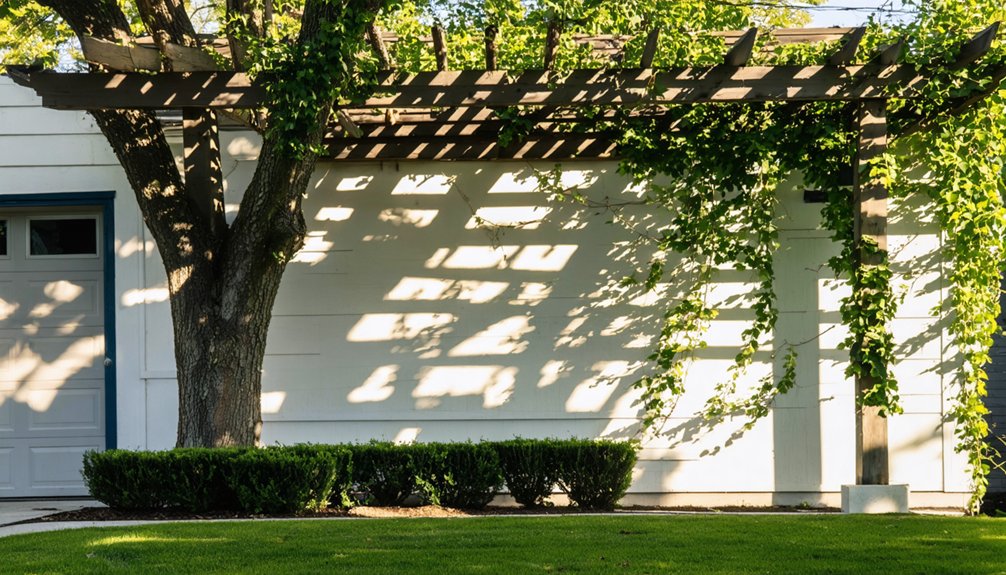
We’ll protect your exterior paint by implementing strategic landscaping that blocks harmful UV rays before they reach vulnerable surfaces.
Our approach combines carefully positioned shade trees—particularly deciduous varieties that allow winter sun while blocking intense summer radiation—with architectural elements like powder-coated aluminum awnings and extended eaves that shield south- and west-facing walls.
We’re also installing exterior roller shades or solar screens on windows to reduce direct sunlight exposure on adjacent siding, creating multiple layers of defense that can extend paint life by 40-60% in high-UV climates.
Plant Strategic Shade Trees
Large deciduous trees planted on the south and west sides of your house create natural barriers that intercept intense UV radiation before it reaches painted surfaces. We’ll focus on tree species selection that delivers maximum shade density—choose maples, oaks, or elms with broad canopies that block sunlight during peak summer months while permitting winter sun penetration after leaf drop.
Our landscape integration techniques involve layering heights strategically. We position taller deciduous specimens near exterior walls, then underplant with shorter flowering trees and dense shrubs for complete coverage. Mix evergreens like arborvitaes along property boundaries for year-round protection.
We arrange trees in natural clusters rather than rigid rows, matching mature sizes to specific areas requiring shade. Regular pruning maintains ideal canopy positioning, directing shade precisely onto vulnerable painted surfaces throughout daylight hours.
Install Awnings and Overhangs
While strategic tree placement forms your first line of defense, architectural shade structures deliver immediate, precisely controlled protection for painted exterior surfaces.
We’ll find awnings particularly effective—they reduce solar heat gain by 77% on west-facing walls where paint degradation accelerates fastest. For material composition, we recommend heavy-duty polyester with TPE coating over aluminum frames, balancing UV resistance with structural integrity.
Fixed overhangs at 24-30 inches provide superior durability against hail and snow loads without requiring storm retraction. Installation cost varies considerably: fabric awnings start around $300 per window, while integrated roof overhangs cost $15-25 per linear foot during construction.
Both options protect our paint investment while reducing cooling energy by 2-27%, making them practical solutions for our community’s long-term exterior maintenance strategy.
Add Window Treatments
Beyond architectural modifications, window treatments create a critical secondary barrier against UV degradation that compromises exterior paint longevity. When we install solar screens on exterior window frames, we’re blocking up to 80% of heat gain before solar radiation reaches the glass surface, effectively protecting adjacent painted surfaces from continuous UV exposure. These screens maintain visibility while providing daytime privacy and reducing interior temperatures.
For those prioritizing aesthetics, we can incorporate sheer shadings with tiltable fabric vanes that balance UV protection with natural light penetration. UV-blocking window films offer another solution, rejecting 78% of solar heat and 99% of damaging rays when applied directly to glazing surfaces. Exterior shades manufactured from fabric or vinyl materials deliver superior heat reduction on south- and west-facing exposures where paint degradation accelerates most rapidly.
Consider the Timing and Weather Conditions for Painting
Since exterior paint performance depends heavily on environmental conditions, understanding when to apply your coating can make the difference between a finish that lasts decades and one that fails within months. We recommend choosing ideal weather conditions between 50°F and 70°F with humidity below 80% to guarantee adhesion. Avoid direct sunlight—if the surface feels warm to touch, it’s too hot. Paint during early morning or late afternoon to prevent rapid drying that traps moisture and causes blistering.
Spring and fall offer the most stable conditions in most regions. We’ve found that maintaining proper surface preparation combined with temperatures staying above 32°F for several nights secures proper curing. Monitor both ambient air temperature and surface temperature—they must exceed the dew point by more than 5°F for successful application.
Add Extra Protection to High-Exposure Areas
We’ve identified south-facing doors, window trims, full-sun decks, and unshaded fencing as surfaces that face maximum UV exposure and require enhanced protection strategies. These vulnerable areas benefit from double-coat systems using acrylic sealers, marine-grade varnishes, or polyurethane topcoats applied over high-density pigment paints containing titanium dioxide and UV inhibitors.
Identify Vulnerable Exterior Surfaces
Not all exterior surfaces face equal sun exposure, which means your paint protection strategy needs targeted prioritization. We’ll focus our efforts on south-facing walls, which receive prolonged UV bombardment and show cracking first. West-facing surfaces demand attention too—intense afternoon heat accelerates binder breakdown and chalking.
Dark-colored paint absorbs excessive heat, requiring our consideration for lighter alternatives. Horizontal surfaces like decks endure all-day overhead exposure plus expansion-contraction cycles.
Utilize infrared camera inspections to detect heat absorption patterns invisible to naked eyes. We’ll spot thermal buildup before visible damage appears. Evaluate seasonal maintenance needs by checking high-exposure areas annually—look for powdery residue, peeling, or adhesion loss. Areas protected by awnings or overhangs remain pristine, proving shade’s protective value for our most vulnerable surfaces.
Apply Additional Protective Layers
After identifying our most vulnerable surfaces, we’ll fortify them with specialized protective layers that function as sacrificial barriers against UV assault. Clear UV-resistant topcoats containing Hindered Amine Light Stabilizers (HALS) neutralize free radicals before they degrade our paint film.
We’ll apply elastomeric coatings on high-exposure areas—these thick, flexible barriers expand and contract without cracking while blocking moisture intrusion. For surfaces facing intense sunlight, we’ll use sealants with UV absorbers that stabilize pigments and extend lifespan.
Before application, we must consider material compatibility between our existing paint and protective products. We’ll evaluate manufacturer warranties to safeguard our additional layers won’t void coverage. Premium brands like Sherwin-Williams offer compatible systems specifically engineered for our climate challenges, creating thorough defense against solar degradation.
Monitor and Touch Up Problem Areas Promptly
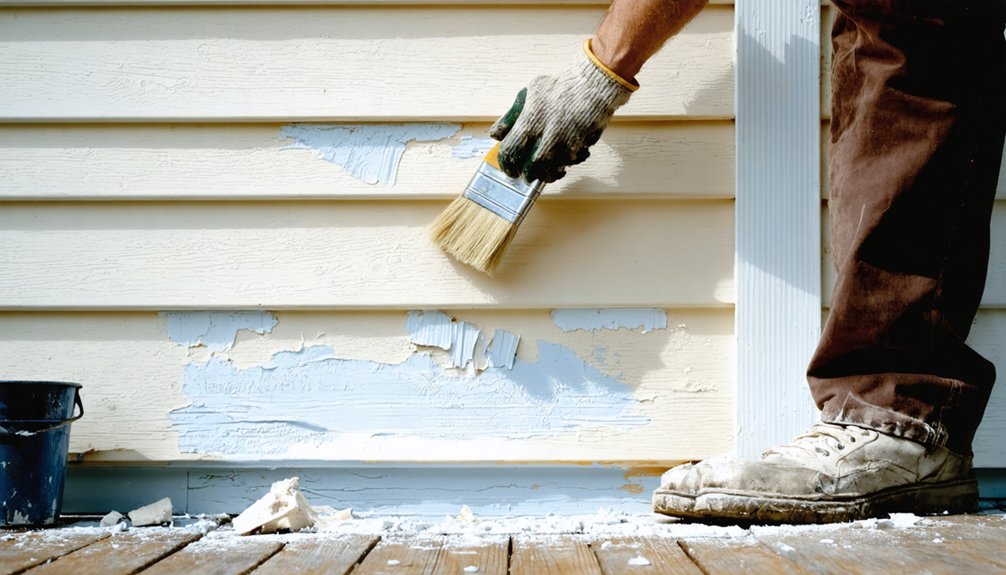
Regular quarterly inspections of your home’s exterior paint allow you to catch UV damage before it requires expensive full-surface repainting. We’ll focus on south- and west-facing walls where UV exposure hits hardest. Use binoculars to spot chalking, uneven fading, or cracking without climbing ladders. Document findings with photos to track maintenance history.
When you identify problem spots, we’ll power wash gently at low pressure, then scrape loose paint and sand smooth. Apply UV-resistant primer before touch-ups using premium acrylic latex with UV inhibitors—matching your original paint exactly. Feather edges with thin layers for seamless blending. Choose satin or semi-gloss finishes for superior UV resistance.
Watch for weather patterns, especially after heatwaves when damage accelerates. Reapply clear UV-protectant coatings every few years to extend your paint’s lifespan considerably.
Schedule Professional Inspections and Repainting
While homeowner touch-ups handle minor wear, we’ll need professional expertise to evaluate your entire exterior and execute thorough repainting when UV damage progresses beyond spot repairs.
To optimize annual inspection process, we schedule certified contractors who detect chalking, film degradation, and adhesion failures invisible to untrained eyes. These evaluations determine whether localized treatments suffice or community-wide repainting becomes necessary.
Material-specific timelines guide our professional scheduling:
- Wood siding: Repaint every 3-7 years due to moisture vulnerability
- Stucco: Requires fresh coats every 5-7 years against cracking
- Aluminum siding: Maintains protection for 5-10 years between applications
When multiple buildings show fading, peeling, or water staining, we streamline professional scheduling by securing contractors who apply premium UV-resistant formulations with proper surface preparation—ensuring maximum longevity against solar degradation.
Frequently Asked Questions
Does the Direction My House Faces Affect How Quickly Paint Fades?
Yes, we’ve seen south-facing homes fade twice as fast as north-facing ones. Different sun exposure patterns create varying paint exposure levels—west walls endure harsh afternoon UV while northern surfaces stay protected, requiring strategic primer selection for longevity.
Can Window Film Help Protect Exterior Paint Near Glass Surfaces?
Window film application won’t protect exterior paint near glass surfaces—it only shields interiors. We recommend PPF for paint’s reflective properties and UV resistance on exterior surfaces. Professional-grade films bond directly to painted areas, delivering the protection you’re seeking.
Are There Insurance Benefits for Using Uv-Resistant Exterior Paint?
We haven’t found direct insurance premium reductions for UV-resistant paint, but some paint manufacturer discounts exist through warranty programs. However, reduced maintenance claims and fewer repairs can indirectly benefit your homeowner’s coverage over time.
How Does Altitude or Elevation Impact Sun Damage to Exterior Paint?
We’ve found that elevation variations intensify UV exposure by 4% per 1,000 feet, while solar angle fluctuations create extreme temperature swings. Higher altitudes demand premium acrylic-urethane paints with titanium dioxide pigments to combat accelerated degradation our community experiences.
Do Different Siding Materials Require Different UV Protection Approaches?
Yes, we’ve found each siding demands tailored UV protection. Paint material composition varies by substrate—vinyl needs flexible coatings, while fiber cement requires breathable formulas. We’ll adjust your siding maintenance frequency accordingly, ensuring ideal protection for your home’s specific exterior material.