We’ve refined exterior painting in Castleford’s semi-arid continental climate where 34°F temperature swings and 214 sunny days demand specific protocols. You’ll need acrylic latex with ClimateFlex technology or urethane enamel, applied during late May through early September when temperatures hold between 60-80°F. Surface prep requires pressure washing, 48-hour drying periods, and moisture meter confirmation before priming. Morning applications prevent rapid drying while UV inhibitors and elastomeric coatings manage thermal expansion. The guide below outlines every critical specification for maximum longevity.
Key Takeaways
- Paint during late May to early September when temperatures consistently stay between 60-80°F for optimal application and curing.
- Use acrylic latex paints with ClimateFlex technology and UV inhibitors to withstand 34°F temperature swings and intense sun exposure.
- Allow minimum 48-hour drying time after pressure washing and confirm substrate dryness with moisture meters before painting.
- Apply elastomeric coatings and prioritize morning work hours to manage thermal expansion and prevent rapid drying issues.
- Conduct annual inspections for moisture intrusion and UV damage, with touch-ups every 5 years for long-term protection.
Understanding Castleford’s Unique Climate and Its Impact on Exterior Paint
Castleford’s semi-arid continental climate subjects exterior paint systems to aggressive thermal cycling and accelerated degradation patterns. We’re dealing with summer diurnal swings reaching 34°F—from 89°F peaks to overnight cooling—that cause continuous expansion and contraction in substrate materials.
Winter presents frost and condensation concerns when temperatures drop to 21°F, creating moisture penetration risks at vulnerable joints and seams. The 214 annual sunny days deliver intense UV radiation that breaks down resin binders, while our mere 10 inches of precipitation paradoxically doesn’t guarantee ideal humidity levels for proper curing.
January’s 4.4 inches of snowfall compounds moisture intrusion challenges. These conditions demand elastomeric coatings with superior flexibility ratings and high-solids formulations that withstand our region’s demanding thermal stress patterns.
Best Seasons for Exterior Painting Projects in Castleford
We’ve found that summer presents the most reliable window for exterior painting in Castleford, with consistent temperatures between late May and early September supporting proper paint adhesion and curing.
The high desert climate during these months provides low humidity levels that minimize finish defects like bubbling and blistering, though we must schedule applications during cooler morning hours to avoid rapid drying from intense afternoon heat.
This seasonal timing allows us to complete projects before fall temperature swings arrive, ensuring adequate cure time before winter conditions set in.
Summer: Optimal Application Conditions
When daytime temperatures stabilize between 60 and 80°F, we’ve reached the ideal window for exterior paint application in summer months. Castleford’s dry July-August climate delivers low humidity conditions that minimize moisture-related adhesion failures and surface defects.
We strategically schedule applications during early morning or late evening hours, painting sun-exposed elevations first when ambient conditions remain cooler. This approach mitigates rapid drying challenges that compromise film formation above 85°F.
We shift to shaded façades during afternoon heat peaks, addressing painter fatigue concerns while maintaining quality standards. Extended daylight hours accelerate project timelines without sacrificing precision.
However, afternoon thermal loading on direct-sun surfaces demands vigilant surface temperature monitoring—overheated substrates exceeding manufacturer specifications risk blistering and poor adhesion. Summer’s consistent weather patterns support thorough exterior renovations when properly managed.
Seasonal Timing Considerations
Strategic project scheduling across Castleford’s seasonal variations determines coating performance outcomes and application efficiency. We’ve identified late spring and early fall as ideal windows when temperatures stabilize between 60-80°F and humidity levels support proper adhesion.
Southern Idaho’s intense summer heat necessitates sectioned work schedules, targeting early morning or evening applications to prevent rapid drying and uneven finishes.
Winter painting proves impractical when temperatures drop below 50°F, causing inadequate curing and potential cracking. We recommend planning your painting budgeting around May, June, and September timeframes. These periods minimize weather-related delays that inflate professional painting costs.
Fall’s stable conditions guarantee uniform curing without pollen contamination or insect debris. By aligning project timelines with Castleford’s distinct seasonal patterns, we’ll maximize coating durability while optimizing labor efficiency.
Surface Preparation in Dry Continental Climate Conditions
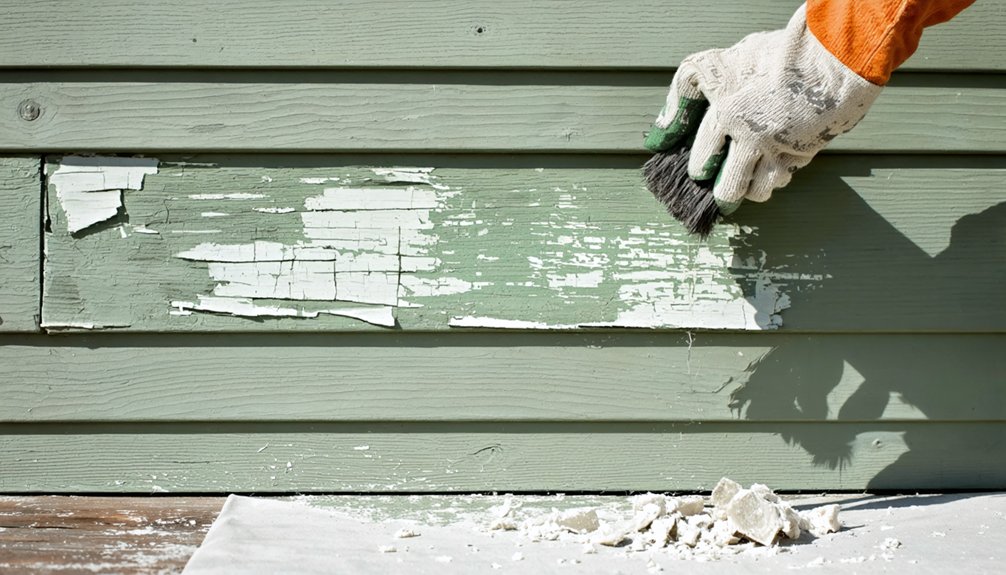
Surface preparation determines paint longevity more than any other factor in exterior applications, particularly in Castleford’s dry continental climate where temperature extremes and low humidity create unique substrate challenges.
We’ll start by pressure washing all exterior surfaces to remove accumulated dirt and degraded coatings. After allowing 48 hours minimum drying time, we’ll scrape any remaining loose paint and address siding replacement considerations where deterioration exists. Our moisture meter readings confirm substrate dryness before we proceed with repairs.
In Castleford’s arid conditions, we can expedite the preparation timeline while maintaining quality standards. We’ll fix cracks, replace rotted wood, and sand repaired areas smooth. Once dust removal is complete, we’ll apply appropriate primers that establish proper moisture barrier application. This systematic approach guarantees ideal adhesion for our climate-specific conditions.
Selecting the Right Paint Products for Idaho’s Temperature Extremes
After completing proper surface preparation, your paint selection becomes the determining factor in coating performance. We recommend products engineered specifically for Idaho’s continental climate challenges.
Sherwin-Williams Latitude Exterior Acrylic Latex provides application flexibility from 35 to 120 degrees Fahrenheit, compared to standard formulations limited to 50-90 degrees. Its ClimateFlex Technology delivers moisture resistance within 30 minutes, even at minimum temperatures.
For superior paint durability, Sherwin-Williams Emerald Urethane Enamel withstands extreme heat, cold, and moisture conditions while resisting fading and peeling. Benjamin Moore Aura performs effectively in freezing conditions, while Kelly Moore Acryshield excels in high-temperature applications.
We specify acrylic latex formulations with mildewcides for Castleford’s irrigation and snowmelt moisture concerns. High-quality acrylic latex coatings expand and contract with thermal fluctuations, preventing bonding failures around joints and trim.
UV Protection and Sun Damage Prevention Strategies
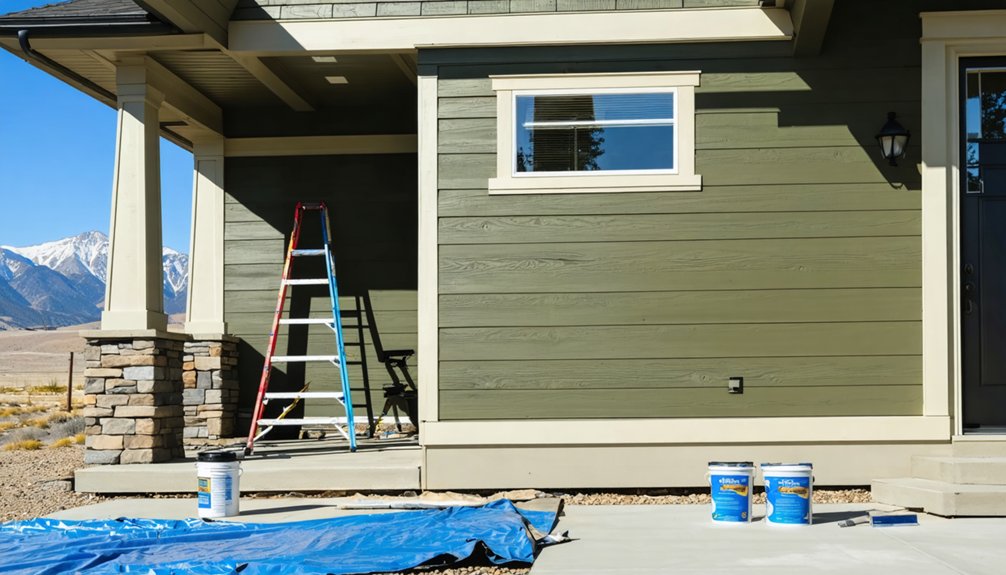
Because Castleford’s high-altitude location delivers approximately 300 days of annual sunshine, exterior coatings require engineered UV inhibitors that prevent photodegradation of paint binders and pigments. We recommend patent-pending formulations with coverage rates of 325-450 square feet per gallon, applied in minimum two-coat systems for adequate film thickness. UV sensitive materials demand silicone-based topcoats offering 7-year mold-free guarantees on weather-exposed surfaces.
Our roof coating selections incorporate flexible adhesion systems that accommodate thermal expansion cycles while maintaining protective integrity. We’ve achieved ideal results through pressure washing preparation followed by spray application of low-VOC formulas. These one-component systems eliminate mixing variables while delivering consistent protection.
For maximum durability, we specify commercial-grade coatings with lifetime guarantees backed by regular inspection protocols that identify early photodegradation indicators.
Managing Temperature Fluctuations and Thermal Expansion
When thermal cycling subjects painted surfaces to repeated expansion and contraction, substrate materials experience dimensional changes that compromise coating adhesion and film integrity. We’ve observed that Castleford’s dramatic day-to-night temperature swings—often exceeding 30°F—accelerate paint failure around joints and trim where stress concentrations occur.
Our paint durability considerations prioritize elastomeric coatings that accommodate thermal movement without cracking. We recommend Element Guard™ for applications down to 35°F, ensuring proper film formation during installation. For thermal insulation requirements, we specify reflective pigments that reduce substrate temperatures by up to 20°F, minimizing expansion cycles.
We maintain application protocols within the 50-85°F window and verify multi-day forecasts. Strategic surface preparation—including power-washing, thorough caulking, and primer application on bare substrates—creates resilient systems that withstand Idaho’s challenging thermal environment.
Cold Weather Painting Limitations and Winter Considerations
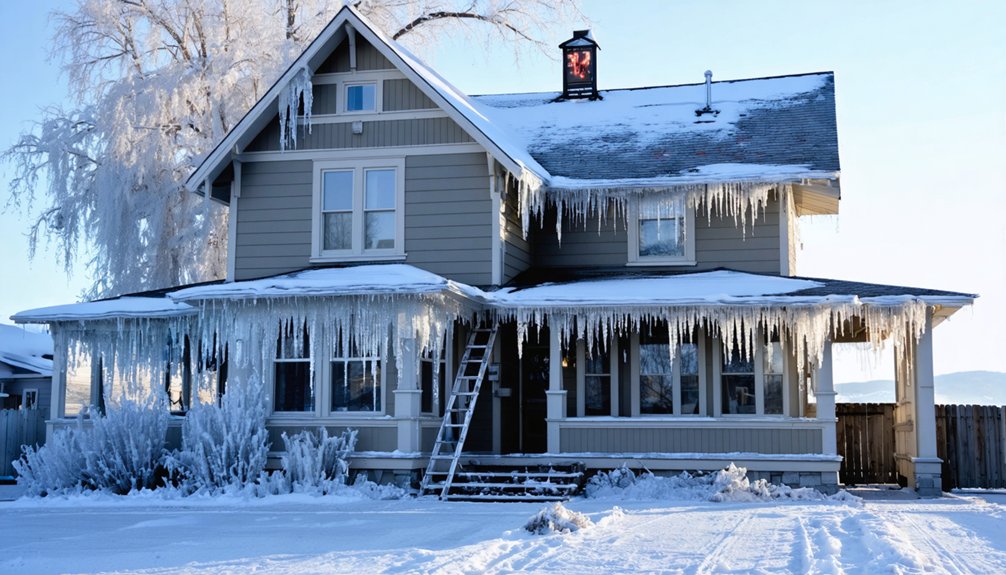
Winter conditions in Castleford present three critical constraints that we must address before exterior painting projects. Temperature fluctuations below the 50°F threshold compromise paint adhesion and curing rates, while snow accumulation and moisture intrusion prevent proper surface preparation.
We’re also working against compressed daylight hours that limit application windows and increase the risk of dew formation during the extended curing period.
Temperature Impact on Application
Understanding temperature thresholds proves critical for exterior painting success in Castleford’s variable climate. We’ve found latex-based paints require minimum 50°F for proper application, while oil-based formulations tolerate 40°F before binding issues emerge. Specialty paints claim 35°F capability under perfect conditions, though we recommend caution at these extremes.
Cold temperatures directly impact paint performance issues throughout the curing process. Below 55°F, drying slows considerably, extending recoat intervals from 4 hours at 75°F to 6+ hours at 50°F. We’ve observed oil paints thicken in cold, reducing coverage per gallon. Latex formulations exhibit water spotting and inconsistent drying patterns.
Surface temperatures must exceed air temps post-winter, as inadequate curing causes film cracking, poor adhesion, and eventual peeling. Our ideal application window centers at 77°F within the effective 50-90°F range.
Snow and Moisture Risks
Although snow creates obvious visual obstacles for exterior painting projects, the moisture infiltration it generates presents far greater threats to paint system longevity in Castleford. We’ve documented how freezing-thawing cycles force water into porous substrates, creating expansion cracks that compromise paint adhesion.
Preventing moisture intrusion requires understanding these critical failure mechanisms:
- Ice dams form in gutters, channeling meltwater behind siding and creating hidden substrate damage
- Condensation from snowmelt raises surface tension, preventing proper paint film formation
- Trapped moisture under existing coatings promotes blistering as temperatures fluctuate
- Cold substrates retain water, delaying evaporation and extending vulnerability periods
Avoiding paint failure demands surface temperatures exceeding 50°F for 36 hours post-application. We recommend substrate inspections before any project to identify snow-related damage requiring remediation.
Shorter Daylight Working Hours
As fall shifts toward winter, reduced daylight hours compress our viable painting windows to narrow midday periods when temperatures briefly climb above minimum thresholds. We prioritize sun-exposed elevations first, sequencing applications to capture direct sunlight that accelerates proper curing.
Early sunsets in late fall force completion by early afternoon—late applications risk dew formation as darkness approaches.
Coordinating painting schedules becomes critical when working daylight shrinks from October through March. We monitor 7-10 day forecasts to identify stable temperature windows, ensuring paint receives the necessary 8-12 hours above 50°F before overnight lows threaten adhesion.
Winter’s low sun angles provide minimal workable hours, making early starts essential. While extending daylight hours isn’t possible, strategic surface sequencing and flexible low-temperature primers help us maximize limited painting opportunities when conditions align.
Proper Drying and Curing Times for Castleford’s Low Humidity
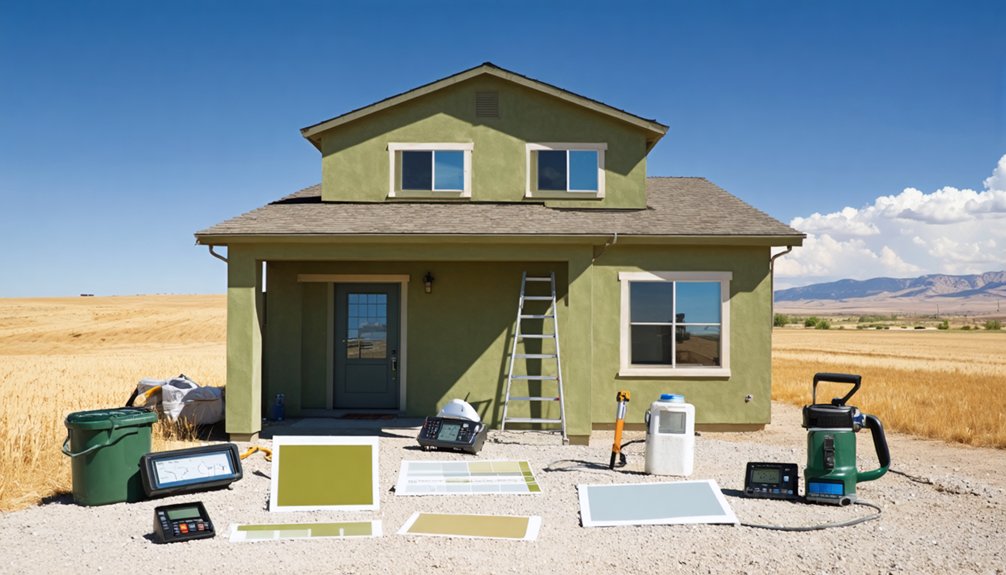
Since Castleford’s low humidity levels regularly drop below 30%—mirroring conditions found in New Mexico—exterior paint drying times escalate markedly compared to moderate-humidity regions. We’ll achieve latex touch-dry in 1-2 hours, yet full cure demands 30 days despite rapid surface evaporation. Our community must implement air circulation monitoring to prevent uneven curing defects that compromise long-term adhesion.
Critical timing benchmarks for our climate:
- Allow 4-6 hours between latex coats when humidity drops below 30%
- Schedule application during 50-85°F windows to avoid cracking above 90°F
- Maintain 48-hour weather monitoring post-application for ideal results
- Position work areas away from direct sunlight during high-heat periods
We’ve found oil-based paints cure in 7-14 days with minimal humidity impact, while latex reaches halfway cure at 14 days before achieving full hardness at 30.
Maintenance Schedules and Long-Term Paint Protection Planning
Every Castleford exterior paint system requires structured maintenance protocols to maximize service life and prevent premature failure. We recommend annual inspections focusing on moisture intrusion points, UV degradation zones, and thermal stress areas. Implement seasonal washing routines using low-pressure techniques to remove alkaline dust accumulation common in our agricultural region. Touch up planning should address vulnerable surfaces—window sills, south-facing elevations, snow-load zones—on five-year cycles using precisely color-matched coatings.
Long term cost optimization demands material-specific repainting intervals: wood and aluminum cladding require attention every 3-7 years, while fiber cement extends to 10-15 years. We specify premium UV-resistant formulations applied during suitable temperature windows (50°F-85°F) in late spring or early fall. Proper surface preparation, including caulking penetrations and priming scraped areas, guarantees maximum adhesion and weather resistance throughout Castleford’s temperature extremes.
Frequently Asked Questions
What Exterior Paint Colors Fade Slowest in Castleford’s Intense Sunlight?
We’ve found lighter colors—whites, beiges, and soft pastels—fade slowest in Castleford’s intense sunlight. Quality paint product selection with UV-resistant formulas, combined with proper paint fading prevention techniques like premium primers, guarantees your home’s exterior maintains its appearance longest.
Should I Hire Professional Painters or DIY My Castleford Home Exterior?
Painting your Castleford home isn’t painting by numbers—we’d recommend hiring professionals. DIY challenges include Idaho’s extreme temperature swings and altitude considerations, while professional painter advantages deliver proper surface prep, climate-appropriate coatings, and warranty protection for our harsh high-desert conditions.
How Much Does Exterior Painting Typically Cost for Castleford Idaho Homes?
We’ll find average painting costs in Castleford range $3,000-$5,000 for typical homes, though your project varies by square footage and stories. Let’s connect with local material suppliers to optimize your budget while maintaining proper surface preparation standards.
Do I Need Permits for Exterior Painting Projects in Castleford Idaho?
No, we don’t need paint permit requirements for exterior painting in Castleford, Idaho—it’s explicitly exempt as finish work. However, we should verify local HOA regulations, as neighborhood covenants may impose color or application restrictions beyond county codes.
What Paint Sheen Works Best for Castleford Home Siding and Trim?
We recommend eggshell or satin for your siding and semi-gloss for trim in Castleford. Proper surface preparation guarantees ideal paint coverage, while these sheens balance Idaho’s UV exposure with durability. This combination maximizes weather resistance and cleanability for our climate.