We’ve found that successful exterior painting in Murtaugh requires accounting for the region’s 68-degree temperature differential and freeze-thaw cycles that can compromise paint adhesion and long-term film integrity if you don’t time application within the critical 50-85°F window. Proper surface prep includes power washing, scraping peeling paint, and sanding with 180-220 grit paper to establish mechanical tooth for coating adhesion. We’ll show you how selecting elastomeric formulations and UV-resistant topcoats specifically engineered for Idaho’s climate extremes guarantees your investment withstands thermal cycling and the area’s 213 annual sunny days.
Key Takeaways
- Plan painting projects between late spring and early fall when temperatures remain consistently between 50-85°F for optimal adhesion.
- Power wash surfaces, scrape peeling paint, sand with 180-220 grit, and patch all cracks before applying primer.
- Choose paints with freeze-thaw resistance, UV protection, and flexible elastomeric formulations for Murtaugh’s temperature extremes.
- Monitor weather for temperatures above 50°F, wind gusts under 15 mph, and low precipitation before starting work.
- Allow extended 24-48 hour curing times when temperatures drop below 60°F, especially during shoulder seasons.
Understanding Murtaugh’s Climate and Ideal Painting Windows
Before scheduling exterior painting projects in Murtaugh, Idaho, we must analyze the region’s temperate climate patterns that directly impact paint adhesion and curing times. Our regional temperature variations span from January lows of 20°F to July highs of 88°F, creating distinct application windows.
Murtaugh’s 68-degree temperature swing between winter and summer demands strategic timing for optimal paint adhesion and proper curing results.
We’ve identified favorable conditions between late spring (after April 21-30 frost dates) through early fall, when temperatures consistently maintain the critical 50-85°F range.
Seasonal precipitation trends reveal 11 inches annual rainfall and 21 inches of snow, both below national averages. With 213 sunny days exceeding the US standard, we’re positioned advantageously for exterior work. However, we’ll avoid winter’s subfreezing conditions and the 125-150 annual frost days.
Summer’s dry heat provides ideal low-humidity environments for proper paint curing and adhesion.
Essential Surface Preparation Techniques for Long-Lasting Results
While identifying ideal weather conditions establishes the foundation for successful painting projects, proper surface preparation determines whether our paint job will last five years or fifteen.
We’ll achieve professional-grade results through these critical techniques:
- Cleaning and degreasing: Power washing combined with thorough degreasing procedures eliminates accumulated grime, mold, and contaminants. TSP solutions handle stubborn grease while vinegar-water mixtures address mildew before surfaces dry completely.
- Removing loose debris: Scraping peeling paint with wire brushes and removing loose debris prevents future bubbling. We’ll inspect thoroughly to confirm solid attachment across all siding and trim.
- Sanding and repair: Creating surface roughness with 180-220 grit sandpaper improves adhesion. Patching compounds fill cracks and holes, establishing uniform texture before primer application seals porous areas and covers stains for maximum durability.
Selecting the Right Materials and Tools for Local Conditions
Since Murtaugh’s warm summer continental climate subjects exterior surfaces to 68°F temperature swings between July’s 88°F highs and January’s 20°F lows, we’ll need paints engineered specifically for freeze-thaw cycling and thermal expansion. Flexible elastomeric formulations prevent cracking during winter’s 21-inch snowfall while maintaining integrity through summer peaks.
For our 213 sunny days annually, UV-resistant topcoats are non-negotiable on south-facing walls. We’ll prioritize acrylic latex paints with mildew resistance requirements despite low 11-inch rainfall—occasional moisture still occurs. The dry climate demands moisture trapping avoidance through breathable formulations that accommodate 40-70% humidity ranges.
Application tools must handle extreme conditions: high-quality brushes resist 90°F lap marking, while sprayers maximize efficiency under intense sun exposure. Low-temperature paints extending usability to 35°F broaden our seasonal work windows considerably.
Weather Challenges and How to Work Around Them
Murtaugh’s continental climate presents distinct challenges for exterior painting projects, demanding strategic scheduling around temperature thresholds, precipitation patterns, and wind conditions. We’ll need temperatures consistently above 50°F for proper paint adhesion—current forecasts show we’re approaching that window within 3-5 days as highs climb from 44°F to mid-60s.
Critical planning considerations:
- Monitor dew points below 36°F while mitigating precipitation risk through contingency scheduling during 20-30% rain probability periods
- Schedule application when wind gusts remain under 15 mph to prevent overspray and surface contamination
- Account for extended 24-48 hour curing times in sub-60°F temperatures
Optimizing equipment maintenance becomes essential during spring’s variable conditions, while temporary shelter systems protect work areas from unexpected moisture exposure. We’re tracking nighttime lows carefully—temperatures dropping to 22-27°F require postponement until warming stabilizes.
Safety Measures for Painting in Murtaugh’s Environment
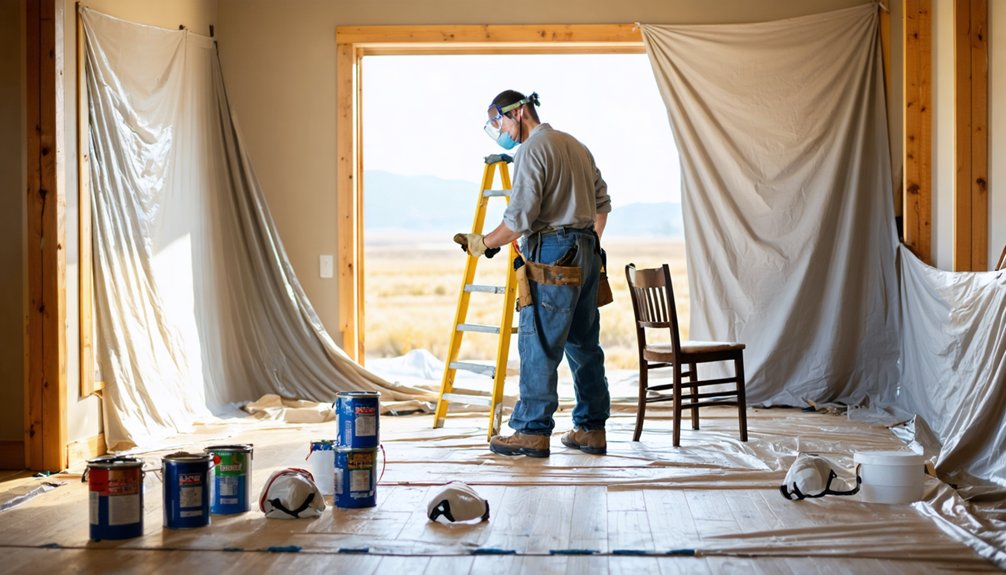
Beyond timing your project around Murtaugh’s weather windows, you’ll need exhaustive safety protocols that address both regulatory compliance and practical hazard mitigation. When ensuring proper spray booth ventilation, we’re establishing enclosed spaces with full roofs and three complete walls that draw air inward—meeting MACT standards under 40 CFR 63 Subpart HHHHHH.
Your spray equipment should utilize HVLP, electrostatic, or airless technologies while complying with federal paint stripping regulations overseen by Idaho DEQ. We’ll equip operators with filter cartridge respirators meeting OSHA Shipyard Employment standards for exterior applications. Gun cleaning demands enclosed solvent collection—no atomized mist release permitted.
These aren’t suggestions; they’re baseline requirements. Idaho’s Region 10 enforcement means your Murtaugh project operates within established frameworks, protecting both your team and environmental quality standards.
Frequently Asked Questions
How Long Does Exterior Paint Typically Last in Murtaugh’s Climate?
We’ll typically see 5–7 years in Murtaugh’s high-UV climate. However, with ideal paint surface preparation and premium paint quality considerations like UV-resistant acrylics, we can extend your home’s finish to 8–10 years between applications.
Should I Hire a Professional Painter or Do It Myself?
While DIY seems budget-friendly, we’d recommend professionals for superior paint quality considerations and precise paint application techniques. They’ll deliver even coverage, proper substrate preparation, and lasting durability—ultimately saving you money through reduced maintenance cycles.
What Are the Average Costs for Painting a Home in Murtaugh?
Based on regional data, we’ll estimate $4,900-$6,500 for Murtaugh homes, factoring average home size considerations at $2-$6 per square foot. We recommend consulting local paint supplier recommendations in Twin Falls for accurate material pricing and contractor referrals.
Do I Need Permits to Paint My Home’s Exterior?
you won’t need permits for basic exterior repainting in Murtaugh. However, we recommend verifying permit requirements with Twin Falls County regarding local painting regulations, especially if you’re replacing siding or modifying structural elements.
How Can I Choose the Right Paint Colors for My Home?
We’ll help you select complementary color schemes by analyzing your home’s fixed features and architectural style. Start with neutral paint palettes that harmonize with your roof, brickwork, and neighborhood aesthetic while considering sun exposure patterns for ideal results.