We’ll guarantee your Eden home’s paint longevity by starting with pressure washing at 1,500-2,500 PSI to eliminate surface contaminants, then treating mold with a 1:3 bleach solution. Next, we’ll establish a 12-inch clearance zone around your property’s perimeter, removing climbing vines and relocating obstacles. We’ll repair all peeling, blistering, and substrate damage before scuff sanding surfaces for ideal mechanical adhesion. Following proper cut-in techniques and primer application with 1-to-4 hour drying intervals sets the foundation for professional results that’ll transform your exterior’s performance and appearance.
Key Takeaways
- Pressure wash exterior surfaces at 1,500-2,500 PSI from top to bottom, treating mold with diluted bleach solution before painting.
- Trim vegetation to create a 12-inch clearance zone and remove climbing vines from siding, trim, and foundation walls.
- Repair surface damage by removing peeling paint, filling defects with appropriate putty, and sanding smooth before priming.
- Apply primer using cut-in technique at edges, then roll in V or W patterns across small sections.
- Use synthetic bristle brushes for latex paints and microfiber rollers paired with quality painter’s tape for professional results.
Cleaning and Clearing Your Home’s Exterior Surfaces
Before applying fresh paint to your Eden home’s exterior, we must eliminate all surface contaminants that compromise adhesion and finish quality. We’ll pressure wash at 1,500-2,500 PSI, maintaining a 12-18 inch distance while working top to bottom. For mold and mildew, we’ll apply a bleach solution—one part bleach to three parts water—using garden sprayers. Hand scrubbing addresses stubborn spots on textured surfaces like stucco.
Moisture control tactics require extra attention on north-facing and shaded walls. We’ll close windows, cover electrical fixtures, and mask non-painted areas before washing.
After scraping loose paint and sanding with 80-120 grit sandpaper, we guarantee complete chemical residue removal through thorough rinsing. Allow 24-48 hours for drying before proceeding with our painting process.
Managing Landscaping and Vegetation Around Your Property
We’ll establish a minimum 12-inch clearance zone between all vegetation and exterior surfaces to guarantee proper paint adhesion and prevent moisture retention against the substrate.
Any climbing vines, including ivy or clematis, must be completely removed from siding, trim, and foundation walls, as their holdfasts and tendrils compromise coating integrity.
We’ll temporarily relocate all planters, furniture, and decorative objects from porches, decks, and walkways to maintain unobstructed access for surface preparation and application equipment.
Clear 12-Inch Plant Buffer
Creating proper clearance between vegetation and your home’s exterior surfaces represents a critical pre-painting requirement that directly impacts both application quality and long-term coating performance. We’ll need to establish a minimum 12-inch buffer zone around the entire foundation perimeter, employing vegetation clearance techniques that protect both plants and siding.
This involves carefully trimming back shrubs, relocating potted plants, and temporarily securing climbing vines away from work areas. While specific regional landscaping guidelines for Eden properties may vary, we’re maintaining this standard distance to guarantee adequate painter access, prevent moisture retention against fresh coatings, and eliminate potential paint contamination from foliage contact.
We’ll document the original plant positions to facilitate accurate restoration post-project, preserving your landscape’s aesthetic integrity throughout the preparation process.
Remove Vines and Growth
Climbing vines and invasive growth patterns complicate exterior painting projects by concealing substrate damage, trapping moisture against siding materials, and physically obstructing surface preparation equipment. We’ll need proper species identification before removal—distinguishing beneficial natives from invasive species like English ivy determines our approach.
Cut established vines at dual heights: shoulder-level and ground-level around your home’s perimeter. For thicker growth exceeding one inch, we’ll use pruning saws rather than hand clippers.
Seasonal root extraction timing matters greatly—removing root systems after rainfall softens Eden’s soil. We’ll dig out complete root structures using garden forks, preventing regrowth that’ll interfere with your paint application. Immediately bag cut materials to prevent re-rooting on moist ground. Apply mulch barriers along your foundation after extraction, creating protective zones that maintain clean surfaces for ideal paint adhesion and longevity.
Relocate Porch Objects Temporarily
After securing your foundation perimeter from vegetative interference, your porch demands equal attention—every railing spindle, siding panel, and trim board requires unobstructed access for proper surface preparation and coating application.
We’ll implement systematic porch furniture storage by relocating lightweight chairs and tables to your driveway or garage first, then grouping heavier objects on level ground to prevent tipping. Cover all relocated items with tarps for dust and weather protection.
For deck areas, we’ll move chairs and loungers to grassy zones beyond the painting perimeter while safeguarding cushions indoors against moisture infiltration. Proper patio decor storage includes transferring fence-adjacent planters to side yards and labeling covered items for accurate post-project placement.
Document original positions photographically—this guarantees we’ll restore your outdoor living space to its exact configuration.
Repairing Surface Damage and Paint Defects
When evaluating surface damage on your Eden home’s exterior, we prioritize identifying the defect’s depth and extent before selecting repair methods. Dull patches and chalky textures indicate clear coat deterioration requiring sanding and primer application. Deep scratches exposing bare metal demand immediate attention to prevent rust formation. We address peeling and blistering by removing compromised layers down to sound substrate.
Prepping surfaces properly involves eliminating contaminants like bird droppings (pH 3-5), tree sap, and iron salt deposits that compromise adhesion. We sand solvent pops and bubbles to their occurrence level before repainting. Restoring paint adhesion requires thorough substrate cleaning and compatible material selection. For adhesion loss areas, we apply proper putty pretreatment and flexible fillers matched to paint hardness, ensuring adequate flash-off times prevent future defects.
Applying Primers and Preparing for Top Coats
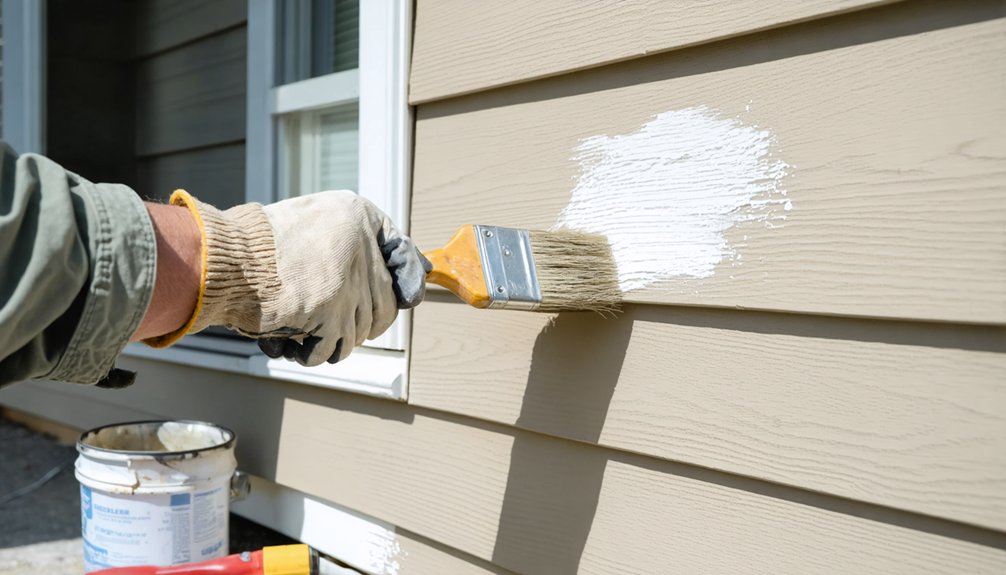
Proper primer application fundamentally determines topcoat performance and longevity on Eden exterior surfaces. We’ll employ the cut-in technique first, establishing a 2-to-3-inch band around edges, corners, and where walls meet trim.
For expansive areas, we’ll use roller application in V or W-shaped strokes across 3-by-3-foot sections, working systematically from top to bottom.
Essential primer application protocols include:
- Scuff sanding surfaces to create ideal mechanical adhesion
- Ensuring proper ventilation throughout the priming process
- Dampening rollers and brushes before initial primer contact
- Applying two coats over heavy stains or tannin-rich substrates
- Allowing suitable drying time of 1-to-4 hours between applications
We’ll perform light sanding between coats using fine-grit sandpaper, then wipe surfaces with dampened towels to remove particulate contamination before topcoat application.
Essential Equipment and Materials for Professional Results
Achieving professional-grade results in Eden’s challenging climate requires specific tools engineered for exterior applications. We’ll need high-quality synthetic bristle angle sash brushes for latex paints, paired with microfiber roller covers that deliver smooth finishes on varied textures. Proper brush selection directly impacts coverage efficiency and edge precision.
Our surface preparation demands a complete arsenal: hand maskers for crisp tape lines, painter’s multi-tools for scraping, and putty knives for compound application. Paint thinners and additives become critical in Eden’s temperature fluctuations, ensuring ideal viscosity and flow. We’ll protect surfaces with canvas drop cloths and premium painter’s tape. Extension poles, edging tools, and assorted sandpaper grades complete our professional kit.
Together, we’re equipped to handle Idaho’s unique environmental demands with contractor-level precision.
Understanding Eden’s Climate Considerations for Exterior Painting
Eden’s semi-arid continental climate presents distinct parameters that directly influence exterior paint performance and application timing. With only 11 inches of annual precipitation and 206 sunny days, we’re working in conditions that demand specific product selection and scheduling strategies.
Critical Climate Factors for Your Paint Project:
- Temperature windows: We’ll schedule between May 10 and early October when temperatures consistently exceed 50°F, avoiding the 100-125 annual frost days
- Moisture considerations: The 75 precipitation days yearly create minimal wash-off risk during curing phases
- UV protection requirements: Intense summer sun at 88°F necessitates fade-resistant formulations for longevity
- Wind protocols: Frequent 10-35 mph gusts require secured scaffolding and dust management systems
- Humidity advantages: Low moisture levels accelerate drying cycles and prevent blistering defects
Frequently Asked Questions
How Long Does a Typical Exterior Paint Job Last in Eden’s Climate?
Like Noah preparing for nature’s onslaught, we’ll help you understand Eden’s reality: the average lifespan of exterior paint reaches 7-10 years here. However, weather conditions affecting paint longevity—including UV exposure and freeze-thaw cycles—require vigilant maintenance protocols together.
Should I Hire a Professional or Paint My Eden Home Myself?
When comparing DIY vs professional painting, we recommend evaluating paint quality options alongside your skill level. Professional crews deliver superior surface preparation, premium materials, and lasting finishes that’ll protect your investment far better than most DIY attempts.
What Time of Year Is Best for Painting in Eden, Idaho?
We’d recommend late spring or early fall for painting in Eden. These periods offer ideal temperature range (60-80°F) and stable weather conditions, ensuring proper adhesion and curing while avoiding summer’s extreme heat or winter’s frost challenges.
Do I Need Permits to Paint My Home’s Exterior in Eden?
No, we don’t need permits for exterior painting in Eden—it’s exempt finish work. However, we’ll want to verify paint color selection compliance with any HOA covenants, and local paint supply stores can confirm municipal coating regulations.
How Much Does Professional Exterior Painting Typically Cost in Eden?
We’ll typically invest $3,000-$8,000 for professional exterior painting in Eden, depending on your home’s square footage. Our paint material selection and partnerships with local paint suppliers help us optimize costs while delivering the quality finish you deserve.