We recommend three proven methods for stripping old paint from wood: chemical strippers (solvent or water-based), heat guns at 1100°F, or progressive sanding from 80 to 220 grit. For large-scale projects, we’ll use mechanical tools like the Paintshaver Pro with integrated dust collection. Always test for lead paint first and deploy proper PPE—chemical-resistant gloves, respirators, and HEPA vacuums meet EPA standards. Our detailed approach below covers method selection, safety protocols, and surface preparation techniques for professional-grade results.
Key Takeaways
- Chemical strippers dissolve paint layers effectively; solvent-based options work faster while water-based alternatives reduce fume exposure and toxicity.
- Heat guns set at 1100°F soften paint through thermal action; scrape bubbled paint immediately to prevent re-hardening.
- Sand with progressive grits from 80 to 220; use orbital patterns to avoid directional scratches and prevent veneer damage.
- Mechanical tools like Paintshaver Pro and power planers expedite large-scale stripping on clapboards, shingles, and flat surfaces.
- Wear chemical-resistant gloves, eye protection, and respirators; use HEPA vacuums for lead paint and ensure proper ventilation.
Chemical Strippers for Paint Removal
Chemical strippers systematically break down the molecular bonds between paint and wood substrates through controlled chemical reactions. When comparing solvent-based vs water-based strippers, we’ll find solvent formulations deliver faster results and superior strength, while water-based alternatives reduce fume exposure and toxicity levels.
Regular-strength products remove up to five layers within one hour; extra-strength versions complete the job faster. We’ll encounter various application forms—liquids for horizontal surfaces, sprays for polyurethane, and pastes for vertical woodwork.
Tips for choosing eco-friendly strippers include selecting citrus-based formulas that remain wet for 24 hours, or bio-based options like FranMar 600GL that effectively remove coatings, mastics, and sealers. Always work in ventilated spaces and wear protective equipment to meet industry safety standards.
Using Heat Guns to Remove Paint
Heat guns offer a mechanical alternative that removes paint through thermal softening rather than chemical dissolution, eliminating solvent fumes and waiting periods between applications. We’ll set our heat gun to approximately 1100°F for ideal stripping efficiency while maintaining one-inch distance from the surface. Within seconds, we’ll observe bubble formation indicating proper heat penetration. We can angle the gun underneath these bubbles for accelerated lifting.
Simultaneous heating and scraping prevents re-hardening, though allowing several seconds of cooling time produces larger removal chunks. For intricate woodwork, unique heat gun attachments concentrate heat flow, enabling precise application on spindles and detailed sections. Wire wool extracts softened paint from complex profiles. This methodology prioritizes minimizing wood damage through controlled temperatures and continuous gun movement, concluding with progressive-grit sanding from 40 to 240 grit.
Sanding Away Old Paint Layers
When chemical strippers prove impractical or heat guns risk damaging delicate substrates, we’ll turn to mechanical abrasion as our primary removal method. We’ll start with 80-grit abrasives to strip compromised finishes safely, then advance through a progression of grit sizes—120, 180, and finally 220—to achieve primer-ready surfaces.
Our ROTEX sanders switch between coarse and fine modes, while orbital sanding patterns prevent directional scratches that telegraph through topcoats. We’ll connect dust extractors to maintain jobsite cleanliness and respiratory safety. For crevices our power tools can’t reach, hand blocks become essential.
The key is monitoring material removal carefully; over-sanding compromises veneer integrity. We’re not stripping to bare wood unless refinishing—just creating sufficient tooth for adhesion. This systematic approach delivers consistent, professional results.
Mechanical Tools for Large-Scale Paint Removal
For exterior restoration projects spanning hundreds of square feet, we’ll deploy specialized power tools that dwarf handheld sanders in productivity. The Paintshaver Pro leads our arsenal, stripping clapboards and shingles at high speed while its integrated dust shroud maintains EPA compliance during lead paint removal. We’ll pair it with HEPA vacuums to collect shavings rather than dispersing hazardous dust.
Power planers featuring reversible carbide blades deliver adjustable precision from 0 to 0.012 inches—carbide blade sharpness proves essential for clean removal without excessive surface abrasion considerations. Their 10,000 RPM motors handle multiple paint layers in seconds.
For thorough deck preparation, we employ contour sanders with hardened gearboxes and variable speed control, ensuring our team maintains professional-grade efficiency across demanding restoration timelines.
Essential Safety Equipment and Precautions
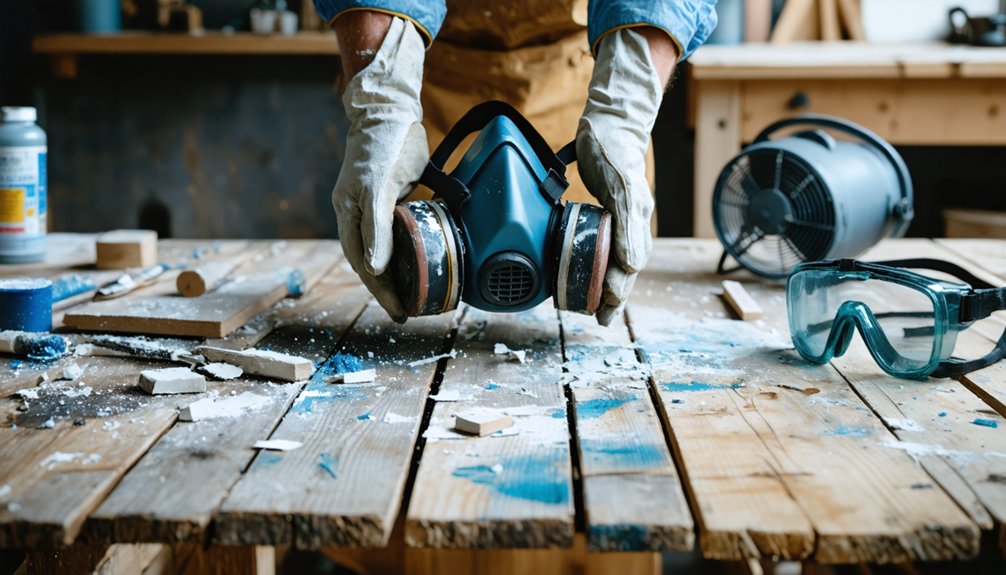
Before initiating any paint removal operation, we’ll equip our team with thorough personal protective equipment to mitigate exposure risks across chemical, mechanical, and thermal methods. Chemical-resistant rubber gloves, eye protection, and respiratory gear form our baseline defense against corrosive substances and airborne particles.
We’ll implement HEPA vacuum systems meeting EPA guidelines when lead paint‘s present, as sanding creates hazardous inhalation risks. Our workspace demands proper fume extraction systems—especially critical for confined space ventilation requirements where VOCs accumulate rapidly.
Chemical strippers necessitate reviewing safety data sheets before application, while proper waste containment procedures prevent environmental contamination. Infrared and laser methods minimize dust generation, making them preferred alternatives for lead abatement.
We’ll protect work surfaces with drop cloths and maintain continuous airflow to safeguard our crew’s health throughout operations.
Finishing and Restoration After Paint Removal
Successfully removing paint represents only half the restoration equation—we’ll now transform stripped wood into professionally finished surfaces through systematic sanding, cleaning, and refinishing protocols.
We’ll progress through grits methodically: 40-60 for bulk removal, 80-100 for smoothing, then 120-150 along grain. Final 180-240 hand sanding guarantees ideal stain application. After scraping residue from tight details, we’ll eliminate white film using steel wool with grain, then wash with alcohol for contaminant-free surfaces.
Test stain on inconspicuous patches first—we’ll blend colors like rustic red and coffee bean for authentic grain matching. For finish durability, Danish oil provides renewable hardwood protection, while HVLP systems deliver professional spray results. Proper curing requires 2-4 weeks between coats, ensuring optimal hardness that withstands daily use while maintaining our restored wood’s authentic character.
Frequently Asked Questions
Can I Remove Paint From Antique or Valuable Wood Furniture Safely?
We’ll test antique condition first, we’ll assess wood value thoroughly, and we’ll select appropriate methods carefully. Using delicate restoration techniques like Citristrip and low-temperature infrared strippers, we safely preserve your furniture’s integrity while meeting conservation industry standards together.
How Do I Identify What Type of Paint Is on My Wood?
We’ll conduct paint composition analysis by testing hardness, checking solvent response, and determining paint age through visual inspection. Oil-based resists water; water-based softens with it. We’ll also assess odor, drying characteristics, and surface flexibility for accurate identification.
What’s the Best Method for Removing Paint From Carved Wood Details?
We’d apply chemical paint strippers like Peel Away1 paste for intricate carved details, letting them dwell 12-24 hours under plastic. We’d avoid heat gun application on carvings—it risks damaging delicate woodwork. Then we’d use bamboo skewers for precision removal.
How Much Does Professional Paint Removal Service Typically Cost?
We’ll find the average cost runs $2.62-$4.44 per square foot nationally, though carved details require specialized professional expertise that pushes rates to $10.45-$20.72 per square foot, meeting industry standards for intricate woodwork restoration.
Can I Paint Over Old Paint Instead of Removing It Completely?
We can paint over old paint if it’s intact and sound, eliminating removal steps. After cleaning and light sanding, we’ll cover old paint with primer for ideal adhesion, then apply topcoats—delivering professional results efficiently while meeting industry standards.