We recommend pressure washing your home every 12-18 months under normal conditions, though your specific schedule depends on several critical factors. If you’re in a humid or coastal area, you’ll need cleaning every 6-8 months to prevent salt corrosion and mold growth. Urban properties require more frequent attention—typically every 8-12 months—due to pollution and exhaust buildup, while rural homes can extend to 18 months between cleanings. Below, we’ll break down exactly how climate, location, and siding material determine your ideal maintenance timeline.
Key Takeaways
- Most homes need annual pressure washing, but humid, coastal, or heavily polluted areas require cleaning every 6-8 months.
- Coastal properties demand pressure washing every 3-4 months due to aggressive salt buildup that damages siding and fixtures.
- Urban homes accumulate dirt 50-60% faster than rural properties, requiring annual cleaning versus bi-annual for rural homes.
- Wood siding needs gentler, inspection-based soft-washing techniques to prevent damage while maintaining protective finishes.
- High-traffic urban areas and polluted zones need cleaning every 6-8 months to prevent permanent damage from corrosive contaminants.
General Pressure Washing Frequency Recommendations
How often should you pressure wash your house? Most homes require pressure washing once per year to effectively control dirt accumulation, mold growth, and surface grime. We recommend scheduling this essential maintenance in spring or fall when conditions are conducive.
Annual cleaning works well for vinyl, metal, and composite siding, especially homes with minimal shade or tree coverage. Before we begin any job, proper surface prepping guarantees we don’t damage your siding while achieving maximum results. This yearly routine extends your siding’s lifespan and maintains curb appeal.
However, homes in humid, coastal, or heavily polluted areas need washing every 6-8 months due to accelerated buildup. We’ve found that cost effective cleaning solutions combined with proper timing prevent expensive repairs down the road. Inspect your surfaces regularly for green algae or dark stains between scheduled cleanings.
How Climate and Weather Affect Washing Schedule
- Humid environments (Florida, Great Lakes) require semiannual washing due to accelerated mold and algae growth
- Heavy precipitation impact regions (Oregon’s 36-52 inches annually) demand post-storm cleanings and strategic timing outside December-February downpours
- Dry climates (Arizona, Nevada) maintain effectiveness with annual schedules, combating wind-blown dust in a cost-effective manner
Seasonal weather shifts dictate ideal timing. We schedule within 50-75°F ranges—never below 40°F (freezing risk) or above 85°F (rapid solution evaporation). Spring washing addresses pollen surges before summer humidity peaks.
Pressure Washing Guidelines by Siding Material
Wood is our sensitive siding material, demanding inspection-based cleaning only when visibly dirty. We’ll use soft-washing techniques to prevent splintering or paint damage—never high pressure.
Each material has specific PSI tolerances and vulnerability thresholds we must respect. Guaranteeing your home’s exterior composition safeguards we’re protecting our investment while maintaining curb appeal.
Environmental Factors That Increase Cleaning Needs
We’ve found that where your home sits dramatically affects how often you’ll need pressure washing services. Urban pollution, high humidity, and proximity to natural debris sources can cut recommended cleaning intervals from annually to every 3-4 months.
Let’s examine how specific climate conditions and environmental exposures dictate your maintenance schedule.
Climate and Weather Impacts
Your home’s climate determines how often you’ll need to pressure wash, with environmental factors creating vastly different maintenance schedules across regions. We’ve identified three critical climate zones that directly impact your cleaning frequency:
- High Humidity Coastal Areas: Homes in Florida and North Carolina need washing every 6-12 months due to humidity variations promoting mold, mildew, and algae growth. Waterfront properties require quarterly attention.
- Heavy Rainfall Regions: Tampa and similar areas demand once or twice yearly cleaning, ideally pre-rainy season, as storms accelerate dirt accumulation.
- Dry Dusty Climates: Arid regions with minimal sunlight exposure blocking and low moisture extend intervals to 1-2 years between washings.
Understanding your specific climate conditions helps us protect our homes effectively while avoiding unnecessary maintenance costs.
Surroundings and Pollution Exposure
The environment surrounding our homes creates exposure levels that directly dictate pressure washing schedules, with pollution sources accelerating exterior contamination at measurable rates. We’ve found that urban locations near industrial zones or heavy traffic require pressure washing every 3-4 months due to elevated dirt accumulation rates from emissions and particulates.
Homes in dust-prone areas show visible buildup around vents and corners, signaling accelerated intervention needs every 3-6 months. Pollen exposure adds another layer, particularly for allergy-sensitive households requiring quarterly treatments. When we notice persistent odor and stain intensity despite routine maintenance—especially greasy textures on siding—it’s confirmation that environmental pollutants have penetrated surfaces.
High-exposure properties often need bi-monthly scheduling to prevent irreversible contamination and maintain protective finishes.
Best Times of Year to Pressure Wash Your Home
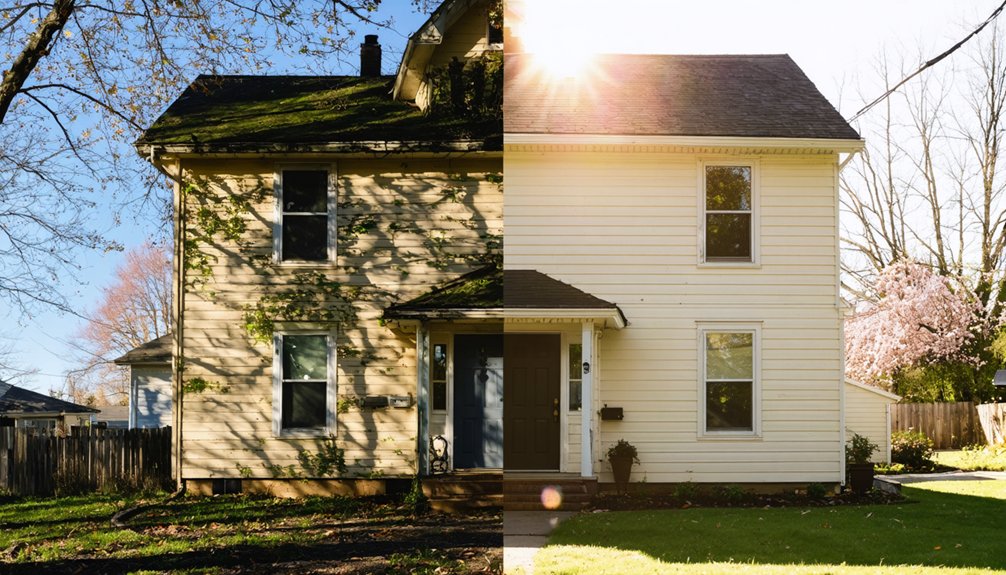
While pressure washing delivers year-round benefits, strategic timing maximizes cleaning effectiveness and protects your investment. We’ve identified ideal pollen cleaning timeframes and seasonal temperature considerations that guarantee optimal results for your home.
Three Prime Pressure Washing Windows:
- Spring (March-May): Post-pollen peak removes stubborn yellow residue while 40-75°F temperatures prevent freezing risks and control green growth before summer humidity arrives.
- Fall (September-November): Cooler conditions enhance detergent performance, clearing summer’s accumulated mildew and debris before freeze-thaw cycles damage surfaces.
- Summer Maintenance: Early morning or evening sessions in shaded areas combat mildew buildup, with warm conditions promoting rapid drying.
Regional factors like Florida’s year-round humidity or Georgia’s heavy pollen seasons influence your specific schedule. We recommend annual thorough washing between March and November, avoiding extreme weather that compromises safety and effectiveness.
Warning Signs Your House Needs Immediate Cleaning
Although most homeowners follow annual maintenance schedules, certain conditions demand immediate pressure washing intervention regardless of your last cleaning date. We’ve identified common organic growth indicators that require urgent attention: green or black patches appearing on shaded siding areas, musty odors near exterior walls, and algae blooms spreading across surfaces. These biological threats compromise your home’s structural integrity and create health hazards.
Unsightly siding discoloration presents another critical warning sign. When you notice sticky pollen layers that won’t rinse off, chalky residue on trim, or dark streaks running down gutters, we recommend scheduling professional cleaning within two weeks. Slippery walkways and decks pose immediate safety risks requiring same-day action. Don’t wait if you’re experiencing overflowing gutters or visible mold growth—these conditions accelerate property damage exponentially.
Special Considerations for Coastal and Humid Regions
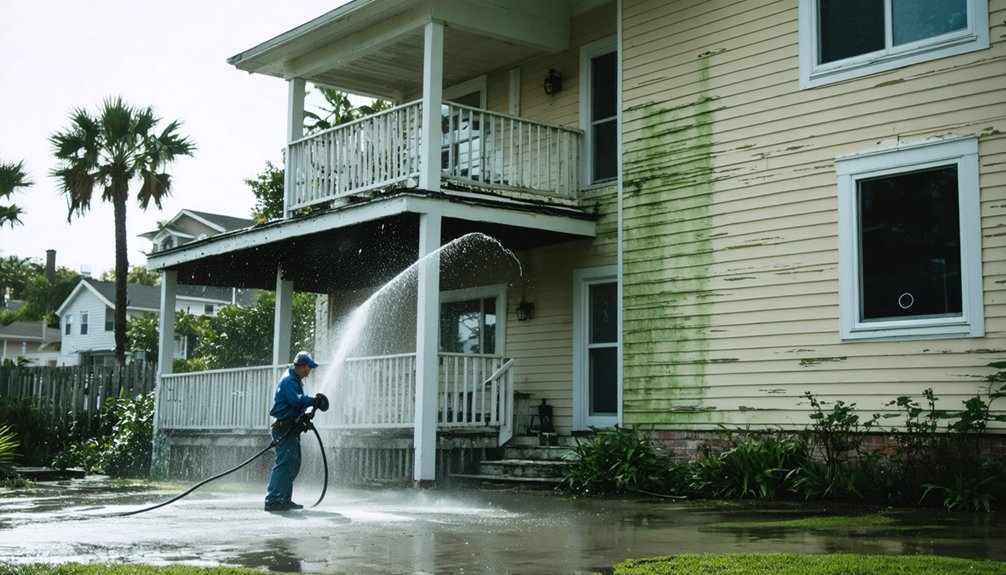
Living near the coast or in humid regions fundamentally changes your pressure washing timeline due to accelerated environmental damage. Salt spray from ocean air carries moisture-attracting particles that keep your siding perpetually damp, creating ideal conditions for algae and mold to colonize surfaces in as little as 6-8 months instead of the typical 12-month interval.
We recommend twice-yearly cleanings for coastal homes—ideally in spring and fall—to remove corrosive salt buildup before it damages paint, wood, and metal while preventing the dark streaks and chalky patches that develop when salt residue bakes into your exterior.
Salt Air Buildup Effects
Because ocean spray carries salt particles that settle on exterior surfaces, coastal homes face accelerated deterioration that inland properties never experience. Understanding salt air degradation patterns helps us protect our waterfront investments effectively.
We’ve observed these critical impacts on coastal properties:
- Paint and coatings corrode rapidly, leading to peeling and discoloration within months rather than years
- Wood siding warps and discolors as salt penetrates protective finishes
- Metal fixtures deteriorate faster in humid, salty conditions, requiring premature replacement
Our salty climate maintenance routines must adapt accordingly. Fort Pierce waterfront homes need pressure washing every 3-4 months to combat aggressive buildup. We recommend soft washing for delicate surfaces like stucco and painted siding every 6-12 months. Annual cleaning represents the absolute minimum—quarterly intervals prevent costly structural damage while maintaining curb appeal.
Mold Growth Prevention Schedule
Salt corrosion damages surfaces quickly, but mold presents an equally aggressive threat that attacks coastal homes from a different angle. We’ve determined that mold inspection frequency in humid and coastal regions requires pressure washing every 6-12 months to prevent colony establishment. Homes in Florida or the Pacific Northwest need cleanings every 6-9 months due to rapid spore accumulation.
Our moisture control strategies include immediate post-storm cleaning within 72 hours and avoiding work above 80% relative humidity. We recommend bi-annual schedules—spring and fall—for areas with heavy foliage. Apply EPA-registered antimicrobials at 1200-2000 PSI on vulnerable surfaces like roofs and shaded walls. Remember, visible mold demands immediate action. Wood siding requires annual treatment, while vinyl tolerates 2-3 years between cleanings in humid conditions.
Urban vs. Rural Pressure Washing Requirements
Your home’s location dramatically impacts how often you’ll need pressure washing services. We’ve found that urban environments require considerably more frequent maintenance than rural settings due to distinct contamination patterns.
Urban homes face 50-60% faster dirt accumulation than rural properties, requiring more frequent professional pressure washing to maintain exterior surfaces.
Urban vs. Rural Cleaning Intervals:
- Urban homes: Annual washing (every 8-12 months) to combat traffic exhaust, industrial soot, and pollutants that accumulate 50-60% faster than rural outdoor debris accumulation
- Rural properties: Bi-annual cleaning (every 12-18 months) addressing tree sap, pollen, and organic growth from dense foliage
- High-traffic urban areas: Every 6-8 months for buildings near major roads where acidic pollutants threaten structural integrity and color preservation differences
If you’re located in polluted metropolitan areas like Las Vegas or Denver, we recommend quarterly assessments to prevent permanent damage from corrosive contaminants affecting your home’s exterior surfaces.
Seasonal Maintenance and Storm Damage Prevention
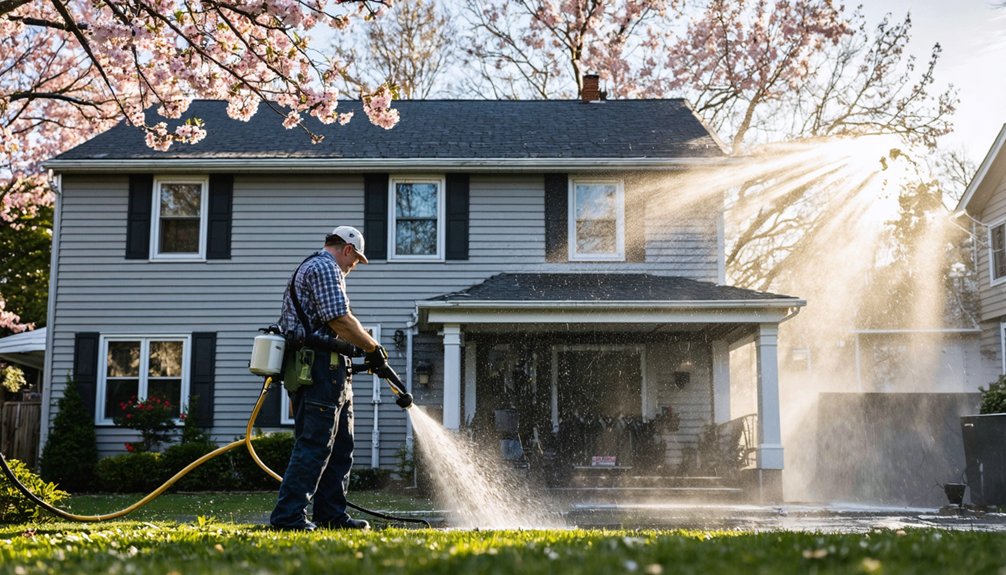
While many homeowners focus solely on annual cleaning schedules, we’ve found that aligning pressure washing with seasonal changes delivers superior protection against storm damage and environmental degradation.
Spring sessions remove winter grime and pollen buildup before summer storms arrive, while fall cleaning eliminates leaves and organic debris that trap moisture against surfaces during winter freezes. This debris removal prevents mold growth, staining, and structural deterioration that accelerates when weather extremes lock contaminants in place.
We recommend scheduling between March and November when temperatures stay above freezing. Late spring offers ideal conditions—stable weather before monsoons and summer heat. Fall sessions clear summer dust and corrosive road salt residues before snow arrives.
Beyond appearance enhancement, this strategic timing protects your investment by preventing trapped moisture and organic matter from causing long-term damage during harsh weather cycles.
Creating a Custom Pressure Washing Schedule for Your Property
We’ll help you develop a pressure washing schedule tailored to your property’s specific environmental conditions and materials. By systematically evaluating factors like climate exposure, siding type, and surrounding vegetation, we can determine whether you need quarterly coastal maintenance or straightforward annual cleaning.
Let’s examine your home’s unique characteristics to establish ideal washing intervals that prevent damage while maintaining curb appeal.
Assess Your Home’s Conditions
Because no two properties face identical environmental pressures, determining the right pressure washing frequency demands a systematic evaluation of your home’s specific conditions. We recommend conducting a thorough assessment using these critical factors:
- Climate and Environmental Exposure: Document humidity levels, rainfall patterns, and proximity to pollution sources that accelerate deterioration
- Surface Materials Impact: Evaluate how your siding type—vinyl, brick, or stucco—responds to moisture retention and biological growth in your specific climate zone
- Signs of Excessive Buildup: Monitor for mold, mildew, algae, discoloration, or film accumulation that indicates cleaning intervals
Build Your Maintenance Calendar
Armed with a clear understanding of your property’s unique vulnerabilities, you’re ready to construct a pressure washing timeline that protects your investment without causing surface damage. We recommend calculating cleaning frequency by layering your climate baseline with environmental modifiers—coastal homes start at twice yearly, while tree-dense lots add a second session regardless of region.
Mark identifying seasonal cleaning triggers on your calendar: schedule post-pollen washes in late spring and pre-winter cleanings in fall. Urban properties near traffic need 6-8 month intervals, whereas mild-climate vinyl siding stretches to 12-18 months. Document each session’s date and observations to refine future timing. This systematic approach prevents both harmful buildup and over-washing damage, ensuring your exterior maintains curb appeal and structural integrity year-round.
Frequently Asked Questions
Can I Pressure Wash My House Myself or Should I Hire Professionals?
We’d recommend evaluating DIY considerations like your siding type and pressure settings first. However, hiring factors such as surface vulnerability, climate demands, and safety risks often make professionals worthwhile—especially for delicate materials requiring specialized soft-washing techniques.
What PSI Setting Is Safe for Different Types of House Siding?
We’ll adjust PSI based on your surface material composition—vinyl tolerates 1,300-1,600 PSI, while delicate wood needs just 400-1,500 PSI. Brick handles 1,500-3,000 PSI safely. Always pair proper pressure with correct cleaning solution concentration for ideal results.
How Much Does Professional Pressure Washing Typically Cost?
We’ll find professional pressure washing costs $180-$900 per job, averaging $350-$650 for typical homes. Average annual maintenance costs depend on local market pricing and your home’s size, but we’d budget $300-$500 yearly for safe, proper exterior cleaning.
Will Pressure Washing Damage Windows, Gutters, or Outdoor Fixtures?
We’ve seen pressure washing damage these components when using improper technique—like excessive PSI or wrong nozzle angles. However, we’ll preserve your home’s structural integrity by maintaining safe distances, appropriate pressure settings, and protecting vulnerable fixtures beforehand.
Should I Use Detergent or Chemicals When Pressure Washing My House?
Picture streams of sudsy water cascading down your home’s exterior—we recommend using detergent for ideal results. Using bleach solution effectively removes mold while maintaining siding integrity. We’ll guide you through safe chemical selection that protects your investment and our community’s homes.