We’ll guide you through exterior painting in Twin Falls’ challenging semi-arid climate, where temperatures swing from 20°F to 89°F and 210 sunny days accelerate UV degradation. You’ll need 100% acrylic latex paints meeting ASTM D3960 standards, applied after power washing at 1,200-2,000 PSI and proper surface prep. Professional jobs last 7-10 years versus DIY’s 2-3 years, with costs ranging from $520-$710 for materials-only DIY to $3,000-$8,000 for professional services. Below, we’ll explore preparation techniques, color selection, and maintenance strategies specific to our high-desert conditions.
Key Takeaways
- Twin Falls’ semi-arid climate requires 100% acrylic latex paints meeting ASTM D3960 standards for UV resistance and temperature flexibility.
- Proper preparation includes power washing at 1,200–2,000 PSI, caulking gaps, and spot-priming bare wood before painting begins.
- Choose lighter, earthy tones like warm greys and sage greens to reflect sunlight and minimize UV degradation.
- DIY painting costs $520-$710 for 2,000 square feet versus $3,000-$8,000 professionally, with materials representing 30-50% of total expenses.
- Professional coatings last 7-10 years compared to DIY jobs requiring touch-ups within 2-3 years in harsh conditions.
Understanding Twin Falls Climate and Paint Requirements
Twin Falls’ semi-arid climate presents unique challenges that directly impact exterior paint performance and longevity. We’re dealing with extreme temperature swings—July highs reaching 89°F while January lows plummet to 20°F—demanding coatings with exceptional flexibility to safeguard against cracking.
Our 210 annual sunny days accelerate UV degradation, making fade-resistant formulations vital. High visibility concerns mean your paint choice affects curb appeal in our crystal-clear conditions averaging 11-13 miles monthly. Dry air challenges require moisture-permeable products that won’t trap minimal atmospheric water.
We recommend 100% acrylic latex paints meeting ASTM D3960 standards for exterior durability. The low humidity (49% in May) reduces mildew risk but intensifies UV exposure, requiring titanium dioxide-enriched pigments. Freeze-thaw resistant coatings rated to -20°F guarantee winter performance across our distinct seasonal extremes.
Signs Your Home Needs Repainting
Recognizing deterioration indicators prevents costly structural damage and maintains your home’s protective envelope. We’ll spot fading when south-facing walls show dull, uneven coloration—UV exposure breaks down pigments and compromises protection.
Peeling, cracking, or blistering paint exposes bare substrates to moisture infiltration and rot development. When we rub exterior surfaces and find chalky residue, the paint film’s degraded beyond effective protection.
Chalky residue on exterior surfaces signals paint film breakdown, leaving substrates vulnerable to moisture damage and structural compromise.
Mildew growth and water stains indicate moisture penetration requiring immediate attention. Deteriorating wood surfaces demand thorough inspection—soft spots signal active rot from water seepage.
We’ve observed that structural integrity issues develop when failing caulk around windows and doors allows continuous water exposure. Industry standards recommend repainting wood siding every 5-7 years to prevent warping and decay, while addressing these warning signs promptly protects your investment.
Essential Preparation Steps for Exterior Painting
We always begin exterior painting projects by thoroughly inspecting surfaces for damage, loose paint, and structural issues that could compromise adhesion.
Our process includes power washing at 1,200–2,000 PSI to remove dirt, pollen, and mildew, followed by a mandatory 24-hour drying period—critical in Idaho’s dry climate for proper paint bonding.
We then address all defects through scraping, sanding, strategic caulking of gaps and cracks, and spot-priming bare wood or repaired areas with flexible exterior bonding primer that withstands Twin Falls’ temperature extremes.
Inspect and Clean Surfaces
Our cleaning process includes:
- Pressure washing to remove grime, mildew, and dirt buildup using appropriate pressure levels that won’t damage surfaces
- Biodegradable cleaners for thorough exterior cleaning following industry best practices
- Bleach solution (one part bleach, three parts water) to tackle stubborn mold growth
We document surface conditions to determine whether repairs or replacements are necessary, ensuring every Twin Falls home receives professional-grade preparation.
Caulk and Prime Defects
After surfaces are thoroughly cleaned and dried, defect repair becomes the critical bridge between preparation and paint application. We’ll scrape off peeling paint and sand rough edges before addressing gaps and cracks. Apply flexible exterior caulking around windows, doors, and trim—this sealed caulk appearance prevents water intrusion and pest nesting while meeting warranty requirements.
For priming, we target bare wood, blistered spots, and nail head penetrations with exterior bonding primer. Twin Falls’ temperature swings demand primers engineered for UV protection and flexibility. Properly primed surfaces resist cracking in our extreme heat and cold cycles. We brush peel bond primer on isolated defects, allow one-hour drying, then sand and apply a second coat. This targeted approach extends your paint job’s lifespan by 50% compared to skipping these essential steps.
Choosing the Right Paint and Color Schemes
When selecting exterior paint for Twin Falls homes, the region’s high-elevation climate demands formulations engineered to withstand extreme UV exposure, dramatic freeze-thaw cycles, and rapid temperature fluctuations. We recommend 100% acrylic paints that provide superior adhesion and flexibility through temperature extremes ranging from intense summer heat to sub-zero winters.
Essential paint technology features include:
- UV-resistant formulations that fade at only 2% annually versus 7% for standard paints
- All-acrylic binders offering superior weather protection compared to vinyl-acrylic alternatives
- Mildewcides preventing mold growth from snowmelt and irrigation exposure
For regional color palettes, we’ve found earthy tones like warm greys and sage greens harmonize beautifully with the surrounding foothills. Desert-inspired neutrals such as Barcelona Beige complement Twin Falls’ rocky landscapes, while lighter shades reflect sunlight to minimize UV degradation and maintain long-term color retention.
The Professional Painting Process Explained
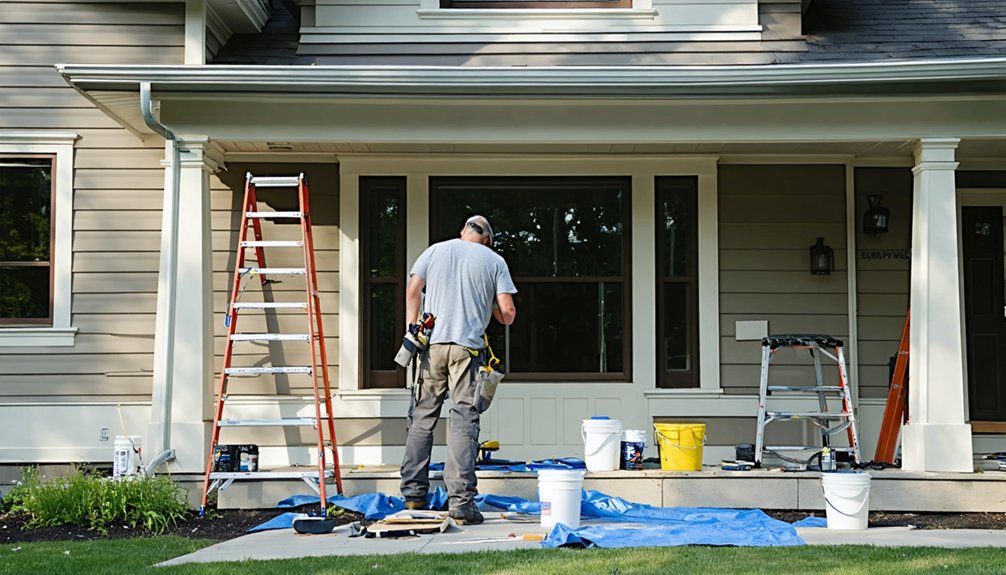
Selecting premium paint formulations represents only half of achieving a durable, professional-grade exterior finish—the application process itself determines whether your investment delivers its full lifespan potential. We begin with thorough surface preparation, including pressure washing, scraping loose material, and sanding rough edges with 80-120 grit sandpaper.
Our homeowner communication expectations include detailed walkthroughs before starting and upon completion, ensuring alignment on scope and satisfaction. We prime entire surfaces—not just spots—using compatible formulations for uniform adhesion.
Paint performance considerations demand proper application techniques: spraying with back-brushing for large areas, two-coat systems with adequate drying time, and top-down sequencing. Weather adjustments protect your investment, while systematic masking and final touch-ups demonstrate our commitment to excellence.
DIY vs. Professional Exterior Painting
When we’re evaluating DIY versus professional exterior painting for your Twin Falls home, the time and cost trade-offs become immediately apparent. A professional crew completes most projects in 3 to 7 days at an average cost of $4,904 to $6,476, while DIY efforts extend to 1 to 2 weeks but reduce material expenses to $500 to $2,000.
We’ll break down these investments to help you determine which approach aligns with your budget, schedule, and skill level for Idaho’s demanding climate conditions.
Time Investment Comparison
While most Twin Falls homeowners focus primarily on cost differences between DIY and professional painting, the time investment gap proves equally significant in the decision-making process. Time allocation considerations reveal that DIY projects typically consume 3–7 days of actual work, often stretching across multiple weekends or even months when balancing job and family commitments. DIY learning curve factors add substantial hours for material acquisition, equipment rental, and mistake remediation.
In contrast, our professional crews complete most exterior painting projects in approximately 3 days:
- Day 1: Thorough surface preparation and window covering
- Day 2: Primary paint application using professional spraying techniques
- Day 3: Finishing coats and detail work
This efficiency translates beyond immediate completion—professionally applied coatings last 7–10 years compared to DIY jobs requiring touch-ups within 2–3 years.
Cost Savings Analysis
The financial appeal of DIY exterior painting centers on eliminating labor costs, which typically represent 50-70% of professional project expenses. In Twin Falls, we’re looking at hourly rates of $25-$75 per painter, with professionals charging $2.20-$4.37 per square foot total.
Our cost minimization strategies focus on material-only expenditures: paint and primer run $34.64-$47.57 per 134 square feet of coverage.
We can tackle do it yourself preparation tips like power washing (saving $240-$400), caulking, and masking ourselves. For a 2,000-square-foot home, professionals charge $3,000-$8,000, while our material costs stay around $520-$710. That’s substantial savings when we invest our own time and effort into proper surface preparation and application techniques.
Cost Breakdown for Exterior Painting Projects
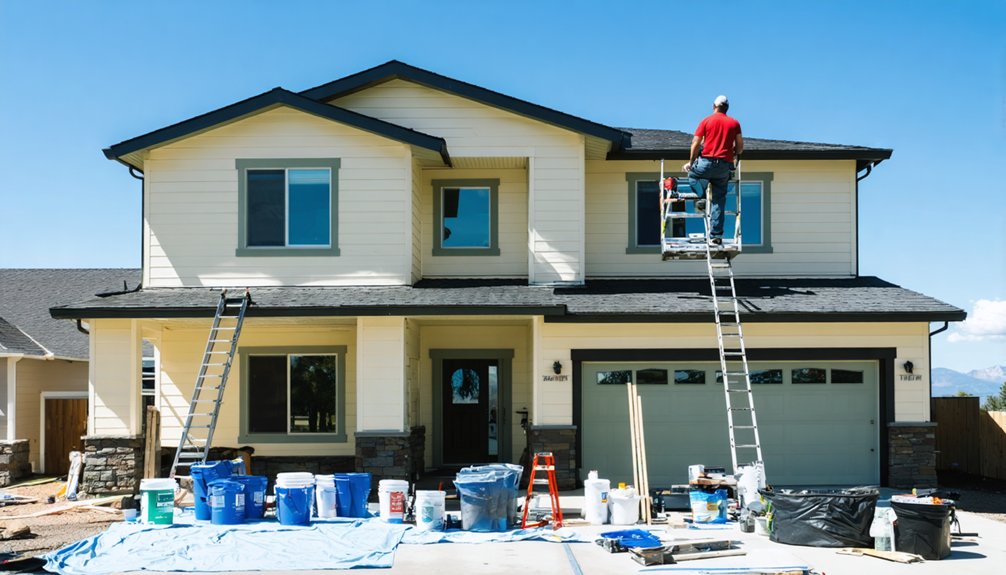
Understanding exterior painting costs requires examining multiple pricing factors that directly impact your investment. In Twin Falls, we’re seeing faux painting estimates between $1.83 and $3.66 per square foot, while standard exterior work ranges from $2.20 to $4.37. Regional pricing factors in the Rocky Mountains average $2,900 for complete projects, though your final cost depends on several variables.
Twin Falls exterior painting costs range from $1.83 to $4.37 per square foot, with regional projects averaging $2,900 complete.
Key cost components include:
- Surface preparation and material type – brick surfaces require extensive priming ($4,000-$12,000), while wood siding projects run $1,000-$4,000
- Home size and complexity – multi-story properties increase costs by 50% per level
- Permits and accessibility – expect $200-$300 for permits, with additional charges for dormers and architectural details
Project timeline considerations affect labor allocation, ensuring we complete your home efficiently.
Maintenance Tips to Extend Your Paint Job
After investing in quality exterior painting, proper maintenance directly impacts how long your paint job lasts and performs. We recommend annual power washing with mild dish soap to remove accumulated pollutants without damaging your siding. Effective maintenance schedules include seasonal inspections to catch peeling, cracks, and bubbles early, plus treating mildew with water-vinegar solutions in shaded areas.
Keep gutters and downspouts functioning properly to prevent water damage. Inspect caulking around windows and doors twice yearly, resealing gaps immediately. In Idaho’s climate, UV-resistant paint formulations combat intense sun exposure while flexible coatings resist freeze-thaw cycles.
Touch up high-traffic areas like doors and trim as needed. Plan for complete recoating every 5-10 years. Thorough surface preparation during touch-ups prevents minor issues from becoming costly full repaints.
Local Twin Falls Painting Contractors and Services
When selecting a qualified exterior painting contractor in Twin Falls, you’ll find established professionals who understand Idaho’s specific climate challenges and building requirements. We recommend verifying contractor licensing requirements before hiring—look for bonded, insured companies with EPA Lead-Safe Certification like Cam Wells Services, which has served our community since 2017.
Paint service reliability depends on several factors you should evaluate:
- Experience in local conditions: Contractors like Roe Painting bring over 25 years working with southern Idaho’s weather patterns
- Transparent pricing: Aim High Painting offers single quotes with no hidden charges
- Comprehensive services: Look for providers handling prep work, minor repairs, and premium products like Sherwin-Williams
Top-rated contractors on Angi and BBB listings include Steven Painting LLC, Painters Plus LLC, and Innovation Painting LLC, all demonstrating proven track records in our region.
Frequently Asked Questions
What Painting Permits or Approvals Are Required in Twin Falls, Idaho?
We don’t need permits for exterior painting in Twin Falls—it’s exempt under IRC 105.2. However, we should verify local homeowner association policies and paint color restrictions before starting, as HOAs may impose additional requirements beyond city codes.
How Do I Handle Painting Around Utilities and Meter Boxes Safely?
Think of utilities as sleeping giants—we’ll protect them carefully. We’ll utilize insulating materials like tape and cardboard, avoid electrical contact completely, and maintain proper clearances. Together, we’re following industry standards that keep our Twin Falls homes safe.
Can I Paint My Home’s Exterior During Winter Months in Twin Falls?
We don’t recommend winter exterior painting in Twin Falls due to serious weather considerations. Temperatures below 50°F create paint adhesion challenges, preventing proper curing. Let’s schedule your project for spring when conditions meet industry standards for lasting results.
What Warranty Should I Expect From Professional Painters in Twin Falls?
Think of warranties as your safety net: we recommend expecting 1-3 year paint quality warranties on workmanship from Twin Falls professionals, plus customer satisfaction guarantees. Licensed contractors typically offer coverage reflecting industry standards and their experience level.
How Do I Dispose of Leftover Paint and Supplies Properly in Idaho?
We’ll take latex paint to recycling centers accepting household waste or solidify it for trash disposal. For oil-based products, we must use hazardous waste disposal facilities like HHW collection events, never pouring anything down drains or onto ground.