We’ve developed a systematic exterior painting protocol for Wendell’s high-desert climate that addresses the region’s 50-90°F temperature swings and minimal humidity. Our process begins with 2,000-3,000 PSI pressure washing, followed by precision masking and ideal caulking of vulnerable joints. We specify 100% acrylic latex formulations with 35% minimum volume solids and elongation ratings above 300% to withstand diurnal temperature fluctuations. Our hybrid application method combines airless spraying with strategic back-rolling for perfect adhesion. The following sections detail each critical phase of this climate-specific approach.
Key Takeaways
- Pressure wash at 2,000-3,000 PSI and allow 24 hours drying before primer in Wendell’s dry climate.
- Use 100% acrylic latex paint with 35% volume solids and 300% elongation for temperature fluctuations.
- Apply silicone or polyurethane caulk at 45°F minimum with ±25% movement capability for joints.
- Select satin or semi-gloss finishes with heat-reflective pigments for UV protection and breathability.
- Spray siding with airless equipment, back-roll textured surfaces, and brush trim for optimal adhesion.
Pressure Washing and Surface Preparation for Idaho’s Climate
Idaho’s dry, non-humid climate fundamentally changes how we approach pressure washing compared to moisture-heavy regions. We’re leveraging 2,000-3,000 PSI equipment with rotating nozzles for chemical-free surface preparation, sweeping in broom-like patterns for general cleaning and circular motions for stubborn buildup.
Our immediate cleanup procedures are critical—especially around windows, screens, and doors—because older Idaho homes often lack adequate weather stripping. We’re implementing weather exposure precautions by wiping up water intrusion immediately to prevent swelling and structural damage.
The dry air works in our favor: surfaces dry within 24 hours at 80°F, ready for primer application. We’re removing summer grime, mold, and algae that compromise paint adhesion while preventing freeze-thaw damage from temperature fluctuations. This systematic approach guarantees optimal bonding and long-term coating performance.
Masking Techniques to Protect Your Property
Professional masking consumes 30-40% of our total exterior painting preparation time, but we’re preventing costly rework and maintaining client trust through systematic protection protocols.
We apply 1.5-inch painter’s tape around window glazing perimeters, covering with high-density .31 mil plastic sheeting trimmed precisely using neon-plastic razor knives. For doorframes, we overlap tape at corners, creating tight seals that eliminate paint seepage.
Precision tape application and corner overlaps create impenetrable barriers that protect critical surfaces from paint seepage during exterior projects.
Our ceiling perimeters receive 2.5-inch tape combined with 6-inch masking paper for securing temporary containment barriers. We extend drop cloths across decks and rooflines, anchoring edges with duct tape before layering masking paper.
This approach to preventing unwanted paint transfer requires meticulous surface cleaning—we brush away dust and verify complete dryness before tape application, ensuring adhesion integrity throughout Idaho’s variable climate conditions.
Caulking and Sealing to Prevent Water Damage
Before primer contacts exterior surfaces, we systematically seal every vulnerable penetration point and joint intersection to establish waterproof barriers that protect Wendell homes from Idaho’s freeze-thaw cycles and seasonal moisture exposure. We select silicone or polyurethane caulk for its superior expansion capabilities, targeting windows, doors, siding joints, and foundation cracks where water intrusion threatens structural integrity.
Our proper caulking application techniques include cutting tubes at 45-degree angles, pushing rather than pulling to eliminate air pockets, and immediately tooling beads to create concave profiles that redirect moisture. We’re implementing maintenance and long-term performance standards by scheduling applications during dry weather above 45°F and specifying sealants with ±25% movement capability.
For gaps exceeding 1/4 inch, we’re installing backing material before caulking to guarantee lasting adhesion and protection.
Choosing Professional-Grade Paint for Wendell’s Weather Conditions
When selecting exterior coatings for Wendell homes, we’re prioritizing 100% acrylic latex formulations with minimum 35% volume solids to withstand the region’s 70°F temperature swings and 206 annual days of UV exposure. Our paint sheen selection focuses on satin or semi-gloss finishes—these reflective properties deflect UV radiation while maintaining breathability in low-humidity conditions averaging 10 inches annual precipitation.
Primer considerations demand alkali-resistant stain-blocking bases that bond through 17-19 mph wind-driven dust abrasion. We’re specifying products with elongation ratings above 300% to accommodate 36°F diurnal temperature fluctuations without film cracking. High-build formulations compensate for arid air’s reduced leveling time, ensuring proper mil thickness. Given January lows of 18°F and July peaks at 90°F, our coatings require freeze-thaw stability and heat-reflective pigments for ideal performance longevity.
Application Methods: Spraying, Rolling, and Brushing
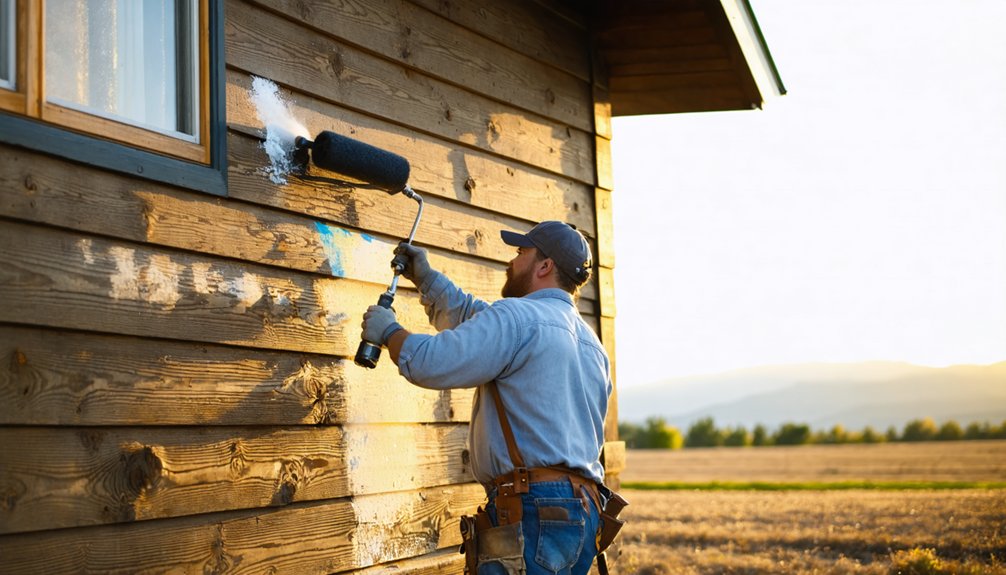
Quality coatings paired with proper application techniques determine exterior paint longevity in Wendell’s demanding climate. We recommend strategic equipment selection based on your home’s surface characteristics. Airless sprayers deliver 400-600 sq ft/hour coverage on expansive siding, reducing labor time by 30-50%. We follow spraying with back-rolling to guarantee paint penetration into textured surfaces, maintaining 10-12 mils dry film thickness. For trim work, we employ angled sash brushes that provide superior adhesion on high-wear areas exposed to Idaho’s temperature fluctuations.
Our hybrid approach optimizes efficiency: spray the body, then roll or brush detailed sections. We filter paint to 50 microns, preventing equipment clogs. Application techniques adapt to Wendell’s 50-90°F working window—we apply two coats for 8-10 years durability, avoiding wind-induced stippling through proper masking protocols.
Specialized Sealants for Challenging Exterior Areas
While application techniques establish your paint’s initial performance, strategic sealant selection prevents the moisture intrusion and substrate movement that compromise Wendell exteriors within 3-5 years.
Proper sealant systems prevent the moisture damage and structural movement that destroy Wendell paint jobs within five years.
We specify silicone caulking for control joints and curtain wall systems because it delivers 5-30 year lifespans—far exceeding urethane’s weathering resistance. For porous stucco substrates, we apply silicone elastomeric coatings that create waterproof barriers while reducing repair frequency.
Big Stretch sealant eliminates plasticizer migration that causes shiners and fisheye on painted trim joints. Before any topcoat application, we deploy specialty primers and sealers: Zinsser Peel Stop stabilizes failing surfaces, Gardz penetrates porous substrates, and Stix bonds to glossy materials.
This systematic approach addresses substrate-specific challenges you’ll encounter across Wendell’s diverse architectural conditions, ensuring cohesive weatherproofing performance.
Four-Day Exterior Painting Timeline
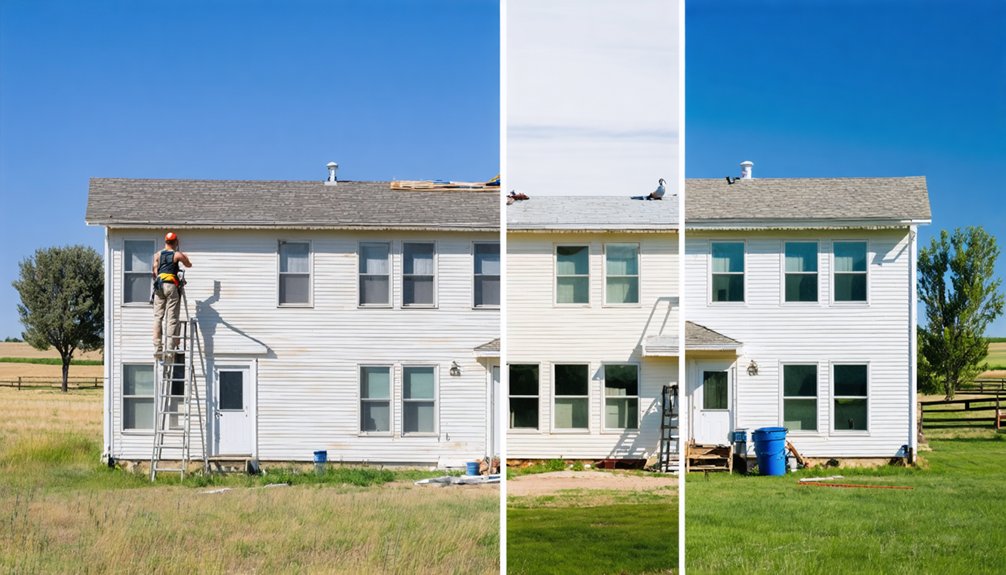
Because exterior painting projects require precise sequencing to prevent substrate exposure and guarantee proper cure intervals, we’ve developed a systematic four-day timeline that coordinates surface preparation, moisture management, and coating application.
Day one focuses on comprehensive surface evaluation and pressure washing. We’ll protect your landscaping, remove fixtures, and eliminate contaminants that compromise adhesion.
Day two addresses structural integrity through scraping, sanding, and repairing damaged substrates before appropriate priming techniques can be applied.
Day three involves complete primer application to repaired areas, with 4-24 hour cure intervals depending on ambient conditions.
Day four delivers finish coats at 150-300 square feet per painter hourly, using 3-4 person crews for optimal efficiency.
When evaluating project timeline expectations, we factor weather patterns and substrate conditions to guarantee lasting results for your Wendell home.
Managing Paint Drying Times Between Coats
Proper recoat timing determines whether your Wendell exterior painting project achieves maximum durability or experiences premature failure. We’ll guide you through critical intervals that protect your investment.
For latex applications, we maintain the 4-6 hour recoat window when temperatures stay between 50-85°F. Oil-based formulations require 24 hours minimum above 70°F. Proper timing for recoating prevents adhesion issues that compromise longevity.
We monitor humidity levels closely—high moisture extends drying phases and risks surface defects. Minimizing drying delays means applying thin, even coats rather than thick layers that prolong cure times. Our approach prioritizes ventilation to accelerate solvent evaporation.
Understanding the distinction between dry-to-touch and full cure guarantees we’re recoating during ideal windows. This technical precision separates professional results from amateur failures in Idaho’s variable climate conditions.
Quality Control for Clean Lines and Even Coverage
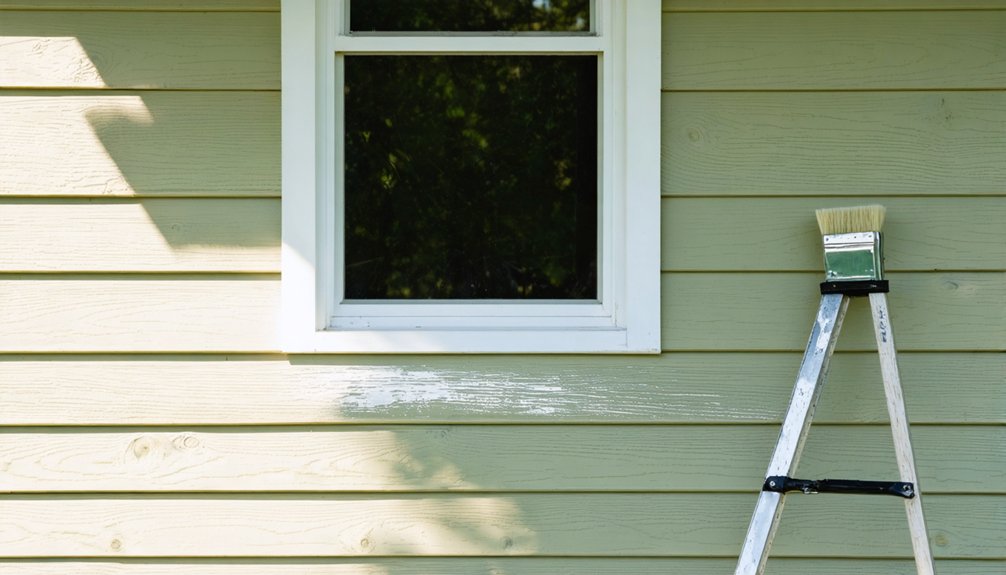
We’ll implement rigorous quality control protocols to guarantee your exterior paint application meets professional standards for clean lines and uniform coverage. Preventing drips and runs requires maintaining proper paint viscosity, applying thin consistent coats, and immediately addressing any sags during application with a loaded brush or roller.
To achieve uniform color coverage, we’ll verify each surface receives adequate mil thickness through systematic inspection under varied lighting conditions, checking for thin spots, streaks, and color inconsistencies before declaring the project complete.
Preventing Paint Drips and Runs
When exterior paint drips and runs mar an otherwise professional finish, they signal fundamental breakdowns in surface preparation, product selection, or application technique. We address these issues systematically by loading brushes only one-third deep, conserving paint volume while optimizing brushwork efficiency. We roll excess material onto screens before wall contact, then apply thin coats using “W” patterns for even distribution.
Our quality standards demand angled brushes for edges and paint conditioners to extend working time. We work in controlled sections, maintaining consistent stroke speed while monitoring environmental conditions—avoiding humid or windy periods that promote sagging. When wet drips appear, we feather them immediately with clean brushes. For dried runs, we sand with fine-grit paper, prime the affected area, and execute seamless touch-ups that restore uniform coverage.
Achieving Uniform Color Coverage
Uniform color coverage requires systematic control over three interdependent variables: substrate consistency, application methodology, and environmental parameters. We’ll execute pressure-washing protocols followed by 24-48 hour drying periods to eliminate moisture interference.
Our color uniformity assessment involves inspecting surfaces under both natural daylight and artificial lighting conditions, revealing inconsistencies invisible under single-source illumination. We’ll measure wet film thickness using calibrated paint gauges, ensuring adequate coverage without excessive buildup.
Back-brushing techniques work material into irregular surfaces while removing drips for uniform finish. Our staged quality inspections verify coverage requirements at each coat application, examining window frames, corners, and junctures where defects manifest most prominently.
We’ll conduct tactile inspections, running hands over painted surfaces to detect rough spots, drips, and brush marks compromising uniformity.
Protecting Landscaping and Hardscaping During the Process
Since paint overspray and drips pose significant risks to vegetation and hardscaping, we’ll implement thorough protection measures before starting any exterior work. We begin with pruning landscaping before painting, trimming back overgrown shrubs and branches that might contact wet surfaces. Cleaning gutters prior to painting prevents debris interference and safeguards proper drainage throughout the project.
We’ll cover plants completely using breathable drop cloths secured with stakes or frames to preclude movement. For ground protection, we overlap large tarps across lawn areas, eliminating gaps where paint droplets could penetrate. Plywood walkways minimize soil compaction from foot traffic. We water plants deeply beforehand—moist soil repels paint more effectively than dry ground.
During application, we’ll adjust spray nozzles for precise control and maintain drop sheets near all vulnerable areas. Post-project, we’ll promptly remove coverings and water landscaping to wash away residues.
Frequently Asked Questions
What Are the Best Months to Paint Exterior Homes in Wendell, Idaho?
Wendell’s 52.2% average humidity creates exceptional conditions for painting. We recommend May through October when ideal temperature ranges between 60-85°F align with favorable weather conditions. These months provide consistent drying times and minimal precipitation for your exterior project.
How Much Does Professional Exterior Painting Typically Cost in Wendell?
Based on local pricing trends, we’ll typically invest $1,700 to $3,700 for professional exterior painting in Wendell. Our cost comparison shows this aligns with regional averages, factoring in surface preparation, material specifications, and application techniques.
Do I Need Permits for Exterior House Painting in Wendell?
Ironically, while Wendell’s code requirements mandate landscaping plans for building permits, we don’t need specific permits for exterior painting. However, residential finishes must receive approval through the building official’s process to match neighborhood appearance standards.
How Long Does Exterior Paint Last in Idaho’s Climate Conditions?
In Idaho’s climate, we’ll see exterior paint lasting 5-10 years depending on paint durability factors like UV exposure and freeze-thaw cycles. Proper paint application techniques substantially extend longevity, especially when we’re addressing substrate preparation and premium product selection.
Should I Repaint My Entire House or Just Damaged Areas?
Like a worn quilt needing full restoration, we recommend repainting your entire house. Proper surface preparation and uniform color selection guarantee longevity, while spot repairs risk mismatched aesthetics and compromised protection across your home’s exterior envelope.