We’ve found that exterior painting in Shoshone requires 100% acrylic latex formulations with UV-resistant additives to withstand the semi-arid climate‘s 209 sunny days and dramatic temperature swings. You’ll achieve ideal results by scheduling projects during late spring (May-June) or early fall (September) when temperatures stay between 50-70°F. We always prioritize thorough surface preparation through pressure washing and mechanical abrasion before applying elastomeric coatings that resist the region’s freeze-thaw cycles. Below, we’ll detail the specific techniques and product specifications that guarantee your investment withstands Southern Idaho’s demanding high desert conditions.
Key Takeaways
- Use 100% acrylic latex paints with UV-resistant formulations to withstand Shoshone’s semi-arid climate and 209 sunny days annually.
- Paint during late spring (May-June) or early fall (September-October) when temperatures stay between 50-70°F for optimal adhesion.
- Thoroughly prepare surfaces through pressure washing and mechanical abrasion to combat dust accumulation and UV degradation damage.
- Avoid winter painting due to 18-inch snowfall and 78% humidity, which compromise paint adhesion and proper curing.
- Apply paint in early morning during summer months to prevent rapid drying and cracking from extreme heat.
Understanding Shoshone’s Climate Impact on Exterior Paint
Shoshone’s semi-arid climate presents distinct challenges for exterior paint systems that demand careful consideration during product selection and application. We’re dealing with high daytime temperatures reaching 91°F in July, coupled with rapid temperature swings of up to 36°F during summer months. These extreme fluctuations cause paint films to expand and contract repeatedly, leading to premature failure if we don’t specify appropriate products.
The region’s 18-inch annual snowfall and 78% January humidity create additional stress factors we can’t ignore. With only 10.47 inches of precipitation yearly, UV exposure becomes our primary concern during those 209 sunny days. We’ll need elastomeric coatings or 100% acrylic formulations that withstand thermal cycling while maintaining adhesion through freeze-thaw cycles. Proper surface preparation becomes non-negotiable in these conditions.
Optimal Timing for Painting Projects in Southern Idaho
While selecting the right paint system matters considerably, we’ll compromise even the most advanced coatings if we’re applying them during unfavorable weather conditions. The ideal painting temperature range falls between 50 and 85 degrees Fahrenheit, with superior results occurring between 50 and 70 degrees. We’ve found late spring (May–June) and early fall (September) provide perfect conditions for Southern Idaho projects.
Paint quality maintenance begins with proper application timing. We must avoid temperatures below 35–40 degrees, where water-based paints freeze and fail to cure. Extreme heat causes rapid drying, resulting in cracked, peeled finishes that compromise long-term durability. We always check 7–10 day forecasts before scheduling, ensuring surfaces remain completely dry throughout application. During summer months, we adjust our techniques with early morning applications to maintain perfect curing conditions.
Selecting Paint Types for Temperature Extremes and UV Exposure
Given Shoshone’s extreme temperature fluctuations—from sub-freezing winters to 90°F+ summers—we’ll need paint formulations specifically engineered to withstand thermal cycling and intense UV radiation.
100% acrylic latex paints (Benjamin Moore Aura, Sherwin-Williams Emerald) offer superior flexibility during freeze-thaw cycles while maintaining proper moisture vapor transmission.
UV-resistant formulations with heat-reflective pigments prevent chalking and yellowing under Idaho’s intense sun exposure.
Satin or semi-gloss sheens provide enhanced durability and easier maintenance than flat finishes in harsh conditions.
We’ll avoid oil-based products—they’re prone to cracking below freezing and yellowing under UV exposure. Apply when temperatures remain between 50-70°F, ensuring proper curing above 32°F for several nights. This approach maximizes adhesion and longevity for our high-desert climate.
Surface Preparation Techniques for High Desert Conditions
We’ll address two critical preparation challenges unique to Shoshone’s high desert environment: persistent dust accumulation and UV-degraded surfaces.
Desert winds deposit fine particulates that compromise paint adhesion, requiring specialized cleaning protocols before any coating application.
Sun-damaged stucco and wood substrates demand thorough assessment and repair, as thermal expansion cycles create hidden structural defects that standard preparation methods often miss.
Dealing With Dust Accumulation
Because Shoshone’s high desert climate generates persistent dust accumulation on exterior surfaces, we must implement rigorous cleaning protocols before applying any coating systems. We’ll eliminate contaminants through systematic surface preparation:
- Pressure washing at 1,500-2,500 PSI from 12-18 inches distance, working top-to-bottom
- Chemical treatment using vinegar-water solutions for powdery residue or 1:3 bleach-water mixtures for dust-bound mildew
- Mechanical abrasion through sandblasting or grinding to create proper surface profile
After washing, we’ll allow 24-48 hours drying time before inspection. We’ll hand-scrub north-facing walls where moisture and dust concentrate, then sand any rough areas. Once surfaces pass tactile inspection, we’re ready to apply humidity blocking treatments and dust resistant coatings that withstand our challenging desert environment.
Repairing Sun-Damaged Surfaces
After cleaning dust accumulation, we’ll shift to addressing the ultraviolet degradation that plagues Shoshone’s exterior surfaces year-round. We’ll inspect for peeling, cracking, and blistering caused by intense high desert UV exposure. Tightly adhering old paint requires only loose contamination removal—we won’t strip surfaces unnecessarily.
Identifying stain causes helps us determine acceptable minor rust or mill scale per SSPC-SP6 standards. We’ll patch imperfections with spackle for small areas, then sand smooth using 220-180 grit. Cracks exceeding three inches wide need filling before we proceed.
For concrete repairs, we’ll grind with diamond bits to establish mechanical bond. After profiling surfaces through abrasive blasting or grinding, we’ll prime immediately to safeguard against further UV degradation. This systematic approach guarantees our community’s homes withstand harsh desert conditions.
Weather Windows and Moisture Considerations
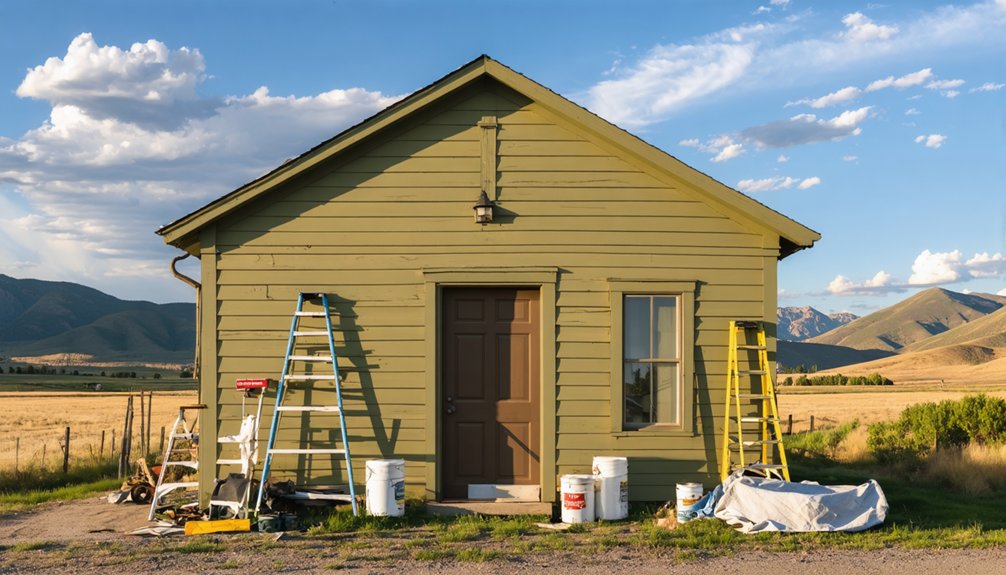
We’ve identified two critical weather windows in Shoshone’s high desert climate: the prime May-through-September season when temperatures stay within the 50-85°F ideal range, and the secondary spring window after snowmelt dries completely. Understanding these periods prevents costly paint failure from freeze damage during November-March lows that drop to 16.9°F or adhesion problems during July’s 91.4°F peaks.
We’ll focus on leveraging the region’s 209 sunny days and sub-1-inch summer precipitation to maximize successful application while managing the 18-inch annual snowfall and 78% winter humidity spikes.
Optimal Painting Season Timing
When should you schedule exterior painting in Shoshone, Idaho to maximize adhesion and longevity? We’ve analyzed local climate data to identify painting schedule considerations that align with your zone 6b conditions.
Optimal timing windows include:
- Late Spring (May 10-June 10): Post-frost temperatures within 40-90°F range support proper curing while avoiding extreme heat that compromises adhesion.
- Early Fall (September 13-October 15): Cooler, steady conditions optimize durability as hot season ends, though shortened daylight limits work hours.
- Mid-Summer (July-August): Consistent dryness favors large-scale projects when you paint during early morning or evening to prevent rapid drying above 90°F.
Exterior preparation requirements demand 2-4 hour rain-free intervals and temperatures above 50°F minimum. We recommend monitoring forecasts closely during shoulder seasons when precipitation variability increases.
Managing Snow and Humidity
Because Shoshone’s 18-inch annual snowfall concentrates during the November-through-February cold season, we must identify moisture-free intervals that protect substrate integrity and coating adhesion. Our painting schedule considerations prioritize post-snowmelt periods in early spring when ground snow dissipates, eliminating moisture trapping beneath fresh coatings. We’ll avoid winter’s peak relative humidity of 66% in November, which severely compromises drying times and adhesion performance.
July and August deliver ideal conditions—humidity drops to 25-37%, while dew points averaging 45°F prevent condensation formation. This humidity impact on drying accelerates curing cycles and establishes consistent film development. With 209 sunny days annually and just 54 precipitation days, we’re strategically targeting summer’s low-moisture windows. We’ll monitor dew points above 50°F as critical thresholds, safeguarding our work from adhesion failures that compromise long-term durability.
Color Selection for Shoshone’s Intense Sunlight
Shoshone’s elevation of 3,963 feet amplifies ultraviolet radiation exposure on painted surfaces, creating accelerated pigment breakdown that homeowners must account for during color selection. We recommend implementing solar reflectance strategies through high-LRV formulations that minimize heat absorption during those 88°F summer peaks. Ultraviolet protective additives in 100% acrylic latex systems provide essential defense against our 209 annual sunny days.
Critical Color Selection Criteria:
- Light-toned earth hues with cool undertones reflect shortwave radiation while complementing our arid landscape
- Titanium dioxide-enriched primers establish UV-blocking base layers before topcoat application
- Low-sheen or matte finishes scatter intense light, reducing photochemical stress on binder integrity
These specifications protect your investment against our region’s unique combination of extended daylight hours and elevated UV index conditions.
Protecting Your Paint From Winter Freeze-Thaw Cycles
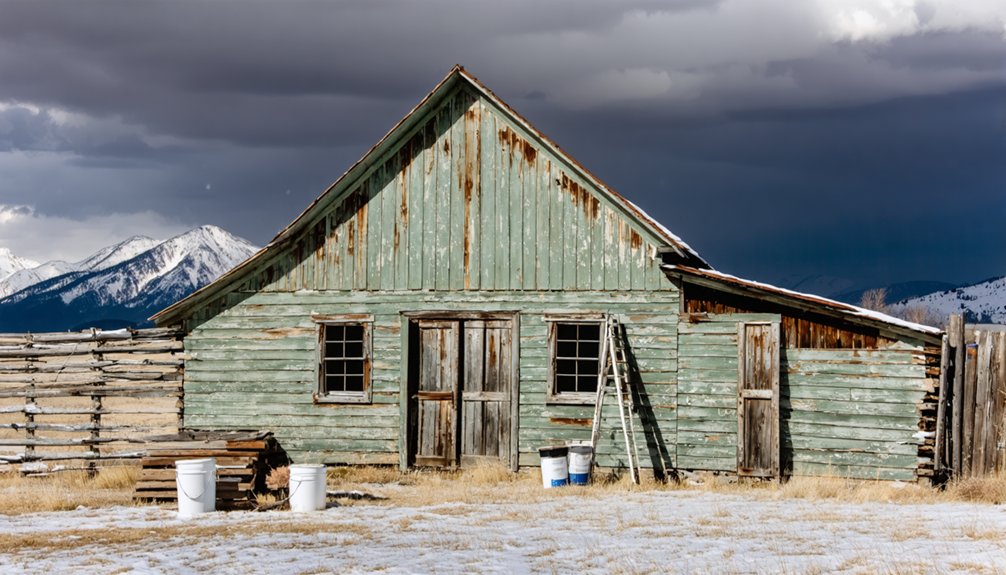
Though temperatures in Shoshone regularly plunge below freezing between November and March, the greatest threat to exterior coatings isn’t the cold itself—it’s the relentless expansion-contraction cycle that occurs when moisture penetrates paint films. We’ve found that water expands 9% when freezing, exerting pressures up to 27,000 psi that crack surfaces and cause spalling.
To protect your investment, we recommend elastomeric coatings that stretch 300%, bridging thermal-induced micro-cracks. Before application, we’ll test substrate pH levels and neutralize alkaline surfaces with alkali-resistant primers. Proper surface preparation includes chemical soft washing to eliminate bacterial growth and salt stains mitigation through detergent rinses.
Throughout winter, subsurface moisture monitoring helps us identify vulnerabilities early. We’ll inspect caulking integrity, touch up wear spots, and maintain gutter systems to prevent ice dam formation against painted surfaces.
Maintenance Schedule for Long-Lasting Exterior Finishes
Protective coatings require systematic maintenance protocols to achieve their projected service life in Shoshone’s high-desert climate. We’ve developed a detailed schedule that addresses the region’s unique environmental stressors while maximizing your investment.
Systematic maintenance protocols maximize coating longevity in Shoshone’s challenging high-desert environment while protecting your long-term investment.
Our recommended maintenance framework includes:
- Biannual exterior washing with appropriate cleaning frequency—spring and fall—to remove UV-degrading contaminants and moisture-trapping debris
- Annual thorough inspections targeting south and west-facing elevations where solar exposure accelerates coating breakdown
- Detailed record keeping documenting observation dates, degradation patterns, and remedial actions taken
We recommend establishing a digital maintenance log to track coating performance over 7-10 year cycles. This documentation enables us to identify accelerated wear patterns early, schedule targeted touch-ups before minor defects propagate, and optimize repainting intervals based on actual surface conditions rather than arbitrary timelines.
Frequently Asked Questions
What Permits Are Required for Exterior Painting Projects in Shoshone?
We’ve found that exterior painting projects in Shoshone typically don’t trigger building permit requirements when they’re purely cosmetic. However, we’ll need to verify zoning regulations and confirm no structural alterations occur during our work.
How Much Does Professional Exterior Painting Typically Cost in Southern Idaho?
We’ll find professional exterior painting in Southern Idaho costs $2 to $4 average cost per square foot. Pricing based on home size typically ranges from $3,792 for smaller properties to $10,000 for larger two-story structures.
Can I Paint My Home’s Exterior Myself or Should I Hire Professionals?
You’ll need 19 hours for 1,100 square feet solo. We recommend professionals handle your exterior—DIY preparation requirements like scaffolding pose fall hazards, while professional application techniques guarantee UV-resistant coverage meets Idaho’s demanding climate safely.
Are There HOA Restrictions on Exterior Paint Colors in Shoshone Neighborhoods?
We haven’t identified specific HOA restrictions in Shoshone neighborhoods, but we recommend verifying your community’s CC&Rs for neighborhood color schemes and historical preservation regulations. Let’s guarantee your project complies with local architectural standards and safety requirements together.
What Warranty Should I Expect From Paint Contractors in Idaho?
We’ll expect your painting partner to provide 2-5 year paint quality assurance coverage for workmanship defects. Idaho’s contractor licensing requirements don’t mandate warranties, so we recommend verifying coverage terms, exclusions, and claim procedures before signing contracts.