We’ve found Murtaugh’s 4,189-foot elevation and extreme temperature swings (-20°F to 88°F) demand 100% acrylic latex formulations with elastomeric properties and UV-resistant pigments for lasting exterior paint performance. You’ll achieve ideal results by scheduling projects during late spring (April-June) or early fall (September-October) when temperatures stay between 50-85°F and humidity ranges 40-70%. We always pressure wash surfaces 24-48 hours before application, excavate foundation lines one inch deep, and apply high-adhesion primers to withstand freeze-thaw cycles. Our thorough approach addresses every critical variable affecting your home’s protection.
Key Takeaways
- Paint during late spring (April-June) or early fall (September-October) when temperatures stay between 50-85°F for optimal adhesion.
- Use 100% acrylic latex with elastomeric properties and UV-resistant pigments to withstand extreme temperature swings and high-altitude sun exposure.
- Pressure wash surfaces and allow 24-48 hours drying time before applying paint to prevent moisture-related failures.
- Excavate one inch along foundation lines before painting and backfill afterward to create effective moisture barriers against snowmelt.
- Apply high-adhesion primers with breathable, low-VOC formulations to handle freeze-thaw cycles and the arid 11-inch annual rainfall climate.
Understanding Murtaugh’s Climate and Its Impact on Exterior Painting
Before selecting paint systems for Murtaugh homes, we must analyze the region’s demanding environmental conditions that directly affect coating performance and longevity. Our community faces significant temperature swings—from 20°F January lows to 88°F July highs—creating expansion-contraction stress on coatings.
With 213 sunny days annually at 4,189-foot elevation, UV degradation accelerates rapidly, making paint sheen considerations critical for durability. Premium formulations with UV inhibitors prevent premature chalking and fading.
The arid climate presents unique challenges: 11 inches annual rainfall reduces mildew concerns but creates low-humidity curing conditions. Wind speeds of 10-20 mph carry abrasive particulates requiring thorough surface preparation.
Moderate drought conditions favor oil-based systems, though moisture barrier strategies remain essential during our 21-inch snowfall season. Understanding these factors guarantees proper specification and application techniques.
Best Times of Year to Paint Your Home’s Exterior in Murtaugh
Timing exterior painting projects correctly determines whether coatings achieve their rated service life or fail prematurely in Murtaugh’s variable climate. We recommend late spring (April–June) and early fall (September–October) as ideal painting seasons, when temperatures consistently range between 50–85°F and humidity levels stay within the suitable 40–70% range. These windows provide the stable conditions necessary for proper paint adhesion and curing.
Summer projects require strategic scheduling—we start early morning or late evening to avoid temperatures exceeding 85°F that cause rapid drying and streaking. Effective moisture management strategies include monitoring forecasts for rain showers and ensuring surfaces remain dry for 24–48 hours post-application.
We never paint when temperatures drop below 50°F, as inadequate curing leads to peeling, cracking, and premature coating failure that compromises your home’s protection.
Weather Challenges That Affect Outdoor Painting Projects
Understanding Murtaugh’s weather patterns allows us to anticipate coating failures before they occur and implement protective measures that extend your exterior paint’s service life.
We face significant variability in humidity across Idaho’s microclimates, requiring vigilant moisture management protocols. Temperature fluctuations between 50-85°F directly impact adhesion rates—falling below 50°F triggers bubbling, while exceeding 85°F accelerates drying, causing uneven film formation. We’ve observed that exposure to sub-35°F conditions within 36 hours post-application compromises project integrity entirely.
Wind-driven debris contamination during application necessitates protective barriers, while precipitation during curing produces adhesion failures and structural bubbling. UV degradation accelerates chalking and elasticity loss in our high-altitude environment. Together, we combat these challenges through strategic timing and specification-grade acrylic latex formulations designed for Idaho’s demanding seasonal shifts.
Preparing Your Home’s Exterior Surfaces for Paint Application
Proper substrate preparation determines coating performance more than any other variable in exterior painting projects. We begin with comprehensive surface assessment, documenting mold, mildew, rot, and paint failure across your property.
Thorough surface assessment and documentation of existing substrate conditions forms the critical foundation for all successful exterior coating applications.
Our debris removal guidelines require pressure washing all surfaces, followed by 24-hour drying periods before proceeding. We’ll clear obstructions systematically—removing fixtures, pulling vegetation from foundations, and relocating outdoor items.
Scraping and sanding create uniform surfaces, with feathered edges enabling seamless transitions. For concrete surface preparations, we excavate approximately one inch along foundation lines, backfilling after application. We’ll caulk all gaps between dissimilar materials and mask adjacent surfaces meticulously.
Drop cloths protect landscaping and hardscapes throughout the process. This methodical approach ensures optimal adhesion and long-term coating integrity for Murtaugh’s challenging climate conditions.
Selecting the Right Paint Products for Murtaugh’s Climate Conditions
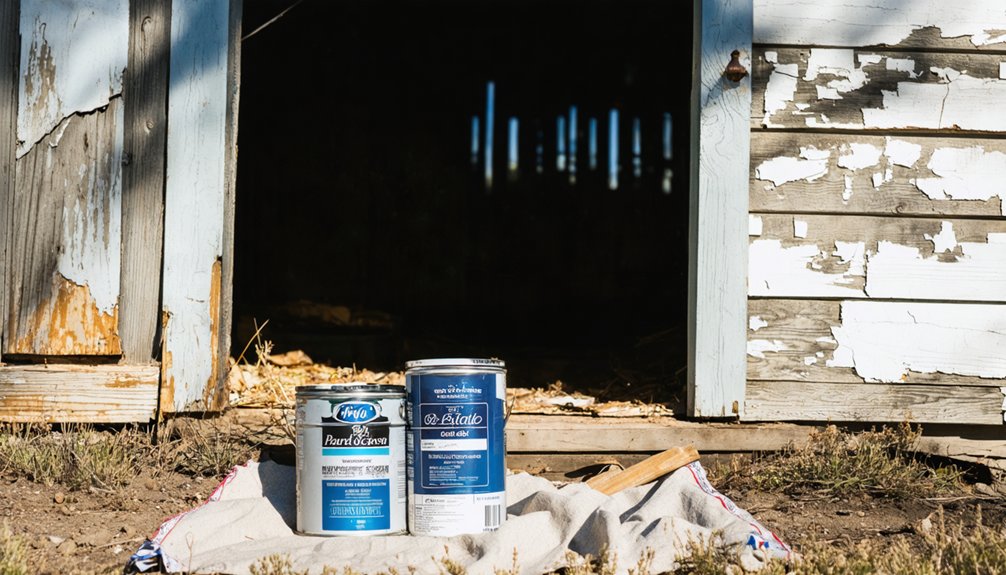
Murtaugh’s extreme temperature fluctuations—from 20°F winter lows to summer highs exceeding 90°F—demand coating systems engineered for thermal cycling and moisture resistance. We’ll specify 100% acrylic latex formulations with elastomeric properties to accommodate expansion-contraction cycles through 125-150 annual frost days. For our Zone 6b environment, select products rated for -5°F to 0°F minimum temperatures.
Given 213 sunny days annually, we’re prioritizing UV-resistant pigments and reflective finishes that address energy efficiency considerations while preventing chalking degradation. Low-VOC formulations prove essential in our arid 11-inch precipitation zone. Humidity management requirements remain critical despite dry conditions—breathable coatings prevent moisture entrapment during 77 precipitation days.
Semi-gloss or satin sheens provide robust durability, while high-adhesion primers guarantee substrate bonding through freeze-thaw exposure and 21-inch snowfall accumulation.
Protecting Your Paint Job From Sun Damage and UV Exposure
With Murtaugh receiving 213 sunny days annually, we’re implementing multi-layered UV defense strategies that guarantee longevity by 40-60% compared to standard formulations.
Our targeted pigment selection prioritizes inorganic compounds—titanium dioxide, iron oxides, and chromium oxide—delivering superior UV resistance over organic alternatives. We’re incorporating Hindered Amine Light Stabilizers (HALS) that neutralize free radicals before they jeopardize paint film thickness integrity.
We specify elastomeric coatings with UV absorbers that dissipate harmful energy as harmless heat, preventing polymer chain degradation. Our application protocols guarantee proper paint film thickness through double-coat systems, eliminating vulnerable thin spots where UV penetration accelerates failure.
We’re enhancing protection with UV-blocking clear coats and recommending lighter reflective colors that minimize heat absorption. This thorough approach safeguards your investment against Idaho’s intense solar exposure.
Managing Temperature Extremes During the Painting Process
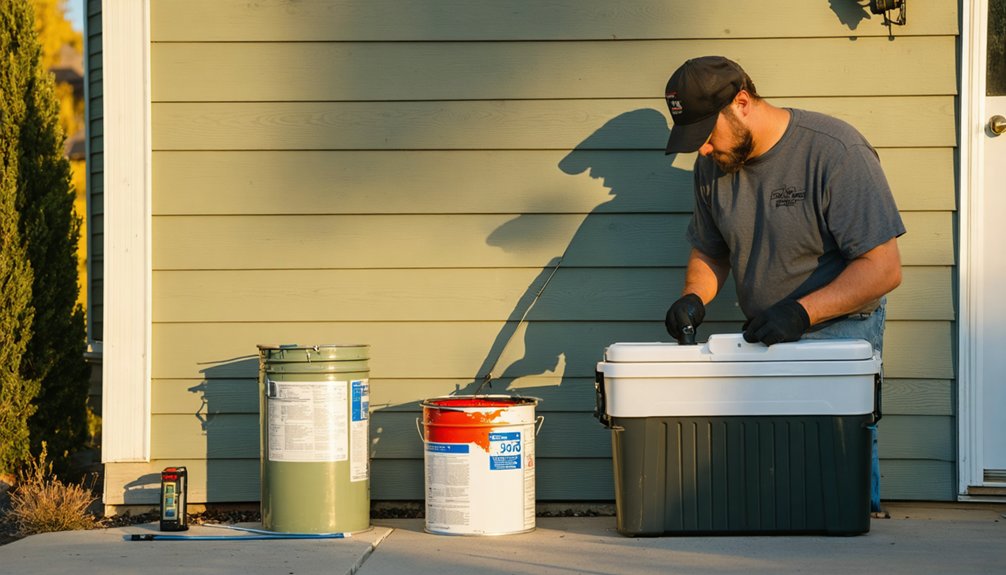
While UV protection establishes long-term durability, we’re addressing the immediate challenge of ambient and surface temperature management during application—a factor that directly impacts film formation and adhesion. Minimizing heat effects requires scheduling work during early morning or evening hours, avoiding the late morning to early afternoon window when surface temperatures peak.
We’re monitoring both air and surface temperatures with infrared thermometers, ensuring readings stay within our paint’s specified range of 35°F to 100°F. Optimizing painting conditions means maintaining surfaces at least 5°F above the dew point while capitalizing on Idaho’s low humidity. Below 50°F, molecular bonding fails, risking delamination.
During heat waves, we’re pausing operations as surface temperatures can dramatically exceed ambient readings in direct sunlight.
Dealing With Wind, Dust, and Dry Climate Considerations
Southern Idaho’s persistent wind patterns introduce three critical complications to exterior painting: accelerated solvent evaporation that compromises film formation, airborne particulate contamination of wet surfaces, and mechanical stress on freshly applied coatings.
We’ve developed proven protocols for coping with high winds. Power wash and scrape substrates 24 hours before application, allowing complete drying. Apply elastomeric or acrylic formulations designed for arid climates—these resist rapid moisture loss while maintaining flexibility through expansion-contraction cycles. Multiple thin coats compensate for accelerated evaporation better than single heavy applications.
Masking paper management requires working with prevailing wind direction. We tack leading edges first, then quickly secure bottom perimeters using frog tape. Fill all cracks beforehand to prevent dust infiltration. Weather-resistant primers and sealants provide essential protection against wind-driven abrasion and particulate embedding.
Maintaining Your Exterior Paint in Murtaugh’s Seasonal Weather
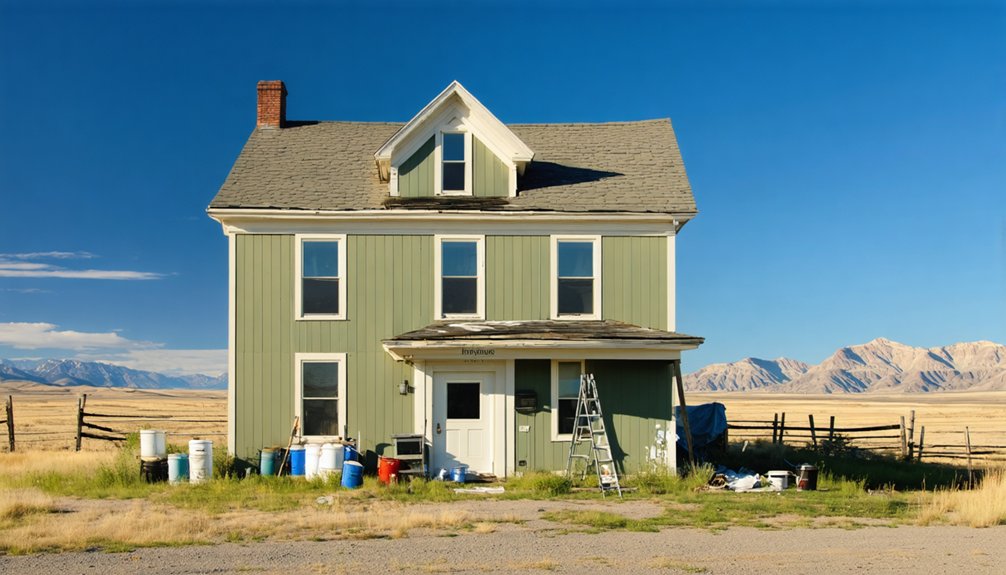
We’ll establish a systematic maintenance protocol that addresses Murtaugh’s 70-degree temperature swings between January lows of 20°F and summer highs near 90°F. Our biannual inspection schedule targets spring and fall changeover periods when thermal cycling stress reveals cracks, peeling, and coating failures that demand immediate repair.
This proactive approach requires documented coating thickness measurements and UV degradation assessments to schedule reapplication every 5-7 years before protective barriers fail.
Seasonal Inspection and Repairs
Because Murtaugh’s climate subjects exterior paint to temperature swings from January’s 20°F lows to July’s 88°F highs—combined with 21 inches of annual snow and 77 precipitation days—systematic seasonal inspections prevent minor defects from escalating into structural failures.
We’ll conduct winter assessments for ice dam damage and freeze-thaw cracking. Spring requires moisture monitoring around trim and siding where snowmelt penetrates compromised caulking. During summer’s intense UV exposure across 213 sunny days, we’ll check for chalking and blistering on south-facing elevations.
Fall inspections target mildew growth and wind-driven rain erosion. Thermal expansion creates stress points requiring immediate patching. We’ll document damage patterns, repair cracks post-precipitation events, and address hardware loosened by temperature fluctuations. This proactive protocol protects our investment against Murtaugh’s demanding seasonal conditions.
Protective Coating Maintenance Schedule
Seasonal inspections identify damage requiring immediate repair, yet long-term paint system performance depends on our adherence to a structured protective coating maintenance schedule calibrated to Murtaugh’s specific climate patterns. We’ll establish coating lifespan expectations based on local conditions: UV-resistant topcoats require annual reapplication before June, while elastomeric sealants need renewal every 2-3 years.
Our reapplication frequency guidelines account for 213 sunny days and 77 precipitation events annually. We’re scheduling water-repellent sealers biennially and UV-protective clear coats every 24 months. Flexible acrylic systems demand replacement every 4-5 years against wind erosion.
Between applications, we’ll rinse surfaces semi-annually, clean quarterly during dusty periods, and touch up chalking within 30 days. This disciplined approach maximizes protection.
Frequently Asked Questions
How Long Does Exterior Paint Typically Last on Murtaugh Homes?
We’ve found exterior paint lasts 5-10 years on your home, depending on weather conditions and paint quality. Idaho’s freeze-thaw cycles and UV exposure demand premium acrylic latex formulations. We’ll help you maximize your investment’s longevity.
Should I Hire a Professional Painter or Do It Myself?
We recommend evaluating your DIY project considerations—ladder safety, surface prep expertise, and proper coating application—against professional painter benefits like certified technique, efficient scaffolding use, and warranty protection. Your skill level and safety capabilities should guide this decision.
What Is the Average Cost per Square Foot for Exterior Painting?
In Idaho, we’re seeing $2-$6 per square foot for exterior painting, though material quality and color selection vastly impact your final costs. We recommend budgeting toward the higher range for proper surface preparation and premium coatings that’ll protect your investment.
Do I Need Permits to Paint My Home’s Exterior in Murtaugh?
We’ll navigate permitting waters together: exterior painting typically doesn’t require permits in Murtaugh under Twin Falls County zoning regulations. However, we must verify historical property status and environmental considerations with Planning and Zoning at 1-800-955-3044 before starting.
How Often Should I Repaint My Home’s Exterior in This Climate?
We’ll typically repaint every 5-7 years in Murtaugh’s climate conditions. However, paint quality and our region’s freeze-thaw cycles drastically impact longevity. We recommend annual inspections to catch early deterioration, ensuring your home stays protected and our community looks great.