We’ve found fall’s 50-85°F temperatures create ideal conditions for exterior painting in Hansen, offering stable humidity and proper curing. Before applying any coating, we test wood moisture content—readings above 15% compromise adhesion, while levels exceeding 20% indicate replacement needs. Southern Idaho’s intense summer heat demands strategic morning or evening application to prevent surface defects. Proper surface preparation, including scraping, sanding, and primer application, determines paint longevity more than any other factor in our high-desert climate, and understanding these protocols guarantees your investment withstands Hansen’s distinct four-season challenges.
Key Takeaways
- Fall and early summer offer optimal painting conditions with stable 50-85°F temperatures and low humidity for proper adhesion.
- Test wood moisture content before painting; readings above 15% prevent proper bonding, while 20%+ requires replacement.
- Systematically prepare surfaces by scraping, sanding, caulking, and priming to ensure paint longevity in Hansen’s four-season climate.
- Protect property using painter’s tape, plastic sheeting, canvas drop cloths, and plant supports to prevent overspray damage.
- Apply oil-based primers on wood trim to block tannin bleeding and use spray techniques for efficiency.
Optimal Seasons and Weather Conditions for Paint Application
Exterior paint application in Hansen, Idaho requires precise timing to guarantee proper curing and long-term durability. We’ve identified fall as our ideal window, delivering stable temperatures between 50-85°F and minimal humidity that prevents adhesion failures.
Fall’s stable 50-85°F temperatures and low humidity create optimal conditions for paint adhesion and curing in Hansen’s climate.
Early summer provides extended daylight and consistent conditions, though we’ll adjust paint thinning requirements based on temperature peaks. Spring’s unpredictable moisture creates bubbling and premature peeling risks we can’t afford.
Southern Idaho’s intense heat demands strategic morning or evening scheduling to avoid surface defects. We monitor seasonal color variations, as temperature fluctuations affect pigment stability and final appearance. Winter remains unsuitable, with temperatures dropping below critical curing thresholds.
Our community understands that proper timing isn’t optional—it’s fundamental to achieving professional results that withstand Hansen’s distinct four-season climate challenges.
Evaluating Your Home’s Exterior Surfaces
How thoroughly should we examine our home’s exterior before committing to a paint project? We’ll need comprehensive moisture intrusion assessment and evaluation of structural integrity implications across all surface types.
Our inspection protocol includes:
- Wood siding — Test moisture content with meters; readings above 20% require replacement, not paint
- Metal surfaces — Remove all rust and verify fastener tightness before primer application
- Masonry and stucco — Measure crack widths; anything exceeding 1/8 inch needs filling with appropriate compounds
- Chimney structures — Confirm 2-inch minimum cap thickness with proper drip edges per code requirements
We’re conducting adhesion tests through scraping existing coatings. Surface cleanliness standards demand complete removal of dirt, mildew, and flaking paint. Ideal moisture levels stay below 15% for paint bonding.
Essential Preparation Steps Before Painting
Before we apply the first coat, we’ll conduct a thorough surface assessment to identify peeling paint, wood rot, cracks, and areas requiring repair.
We systematically address each defect through scraping, sanding, caulking, and primer application to guarantee proper paint adhesion and longevity.
Our masking protocol protects windows, fixtures, landscaping, and adjacent surfaces from overspray while establishing clean paint lines throughout the project.
Surface Assessment and Repair
Proper surface preparation determines paint longevity more than any other factor in exterior coating applications. We’ll conduct a thorough inspection of your Hansen home’s exterior to identify compromised areas requiring intervention before coating.
Our assessment protocol includes:
- Wood rot evaluation – We examine trim, siding, and exposed surfaces for decay, water intrusion, and structural compromise
- Damage documentation – We identify blistering paint, failed caulking, and settlement cracks requiring remediation
- Material integrity testing – We assess nail penetrations, corner boards, and cut ends for primer application needs
- Environmental impact analysis – We evaluate sun damage on door jambs and temperature-related deterioration
Wood replacement options range from partial trim repairs to full board substitution. Preventing future damage requires addressing underlying moisture sources and applying flexible, UV-resistant primers to vulnerable areas before final coating.
Masking and Area Protection
Once structural repairs and surface corrections are complete, protecting adjacent areas from coating materials becomes the primary focus. We’ll establish worksite organization by removing movable fixtures and covering decks with .31mm high-density plastic sheeting, extending protection beyond ladder placement zones to account for overspray drift.
Clean all window surfaces with lint-free cloths before applying painter’s tape—1 to 2.5 inches wide—pressing firmly to eliminate air pockets and guarantee tight seals. We’re masking doorframes with overlapping corners and tucking paper under siding gaps for complete coverage. Baseboards receive wide tape combined with masking paper, while we slide plastic underneath for full floor protection. FrogTape technology provides clean paint lines on trim work.
We’ll double-check all masked perimeters, sealing voids with strategically placed paper pieces before spraying begins.
Protecting Your Property During the Painting Process
We’ll implement thorough site protection protocols to safeguard your property’s non-painted surfaces and landscaping elements during application. Our masking procedures include taping off windows, doors, and fixtures, while drop cloths and plastic sheeting cover concrete surfaces, walkways, and surrounding vegetation.
This methodical approach prevents overspray damage, minimizes cleanup requirements, and guarantees paint adheres only to designated exterior surfaces.
Masking Windows and Fixtures
Before applying the first coat of exterior paint, masking windows and fixtures protects your Hansen home’s non-painted surfaces from overspray, drips, and accidental contact. We’ll use painter’s tape in 1-inch or 1.5-inch widths paired with 0.3-millimeter painter’s plastic for thorough coverage.
Our window masking process includes:
- Running continuous tape along frame edges without full initial press for positioning adjustments
- Folding 6-inch plastic edges over themselves before attaching to taped surfaces
- Using wider tape than the frame width to create a buffer zone
- Reinforcing with overlapping second tape layers for complete seal
For doors, we focus on preparing intricate details while maintaining door functionality. We mask hardware first, avoid tape on moving parts, and use narrower tape for panels. Each window or door requires approximately 5 minutes for proper masking technique.
Covering Concrete and Walkways
During exterior painting projects in Hansen, your concrete driveways, walkways, and patios face constant exposure to paint drips, roller splatter, and overspray that can permanently stain these surfaces. We’ll protect these areas using heavy-duty canvas drop cloths or plastic sheeting secured with painter’s tape along all edges.
Before covering, we assess whether your concrete needs restoration. If we identify spalling, cracks, or surface irregularities, we’ll employ concrete patching techniques using fast-setting hydraulic cement or masonry crack fillers. After repairs cure completely, we sand with 120-grit sandpaper for uniformity.
When choosing the right concrete paint for future projects, we recommend breathable masonry paints or elastomeric coatings that prevent moisture trapping while providing water repellency—essential for Hansen’s climate conditions.
Protecting Landscaping and Vegetation
Your landscaping represents a significant investment that requires thorough protection during exterior painting projects. We’ll implement extensive coverage systems to safeguard your vegetation from paint damage.
Our protection protocol includes:
- Barrier Installation – We deploy high-quality drop cloths and plastic sheeting around vulnerable areas, securing edges with weights to prevent wind displacement
- Plant Watering Schedule – We hydrate vegetation the evening before painting to increase stress resilience and prevent paint adhesion to leaves
- Temporary Support Structures – We position tomato cages or frames under coverings to elevate materials off delicate plants, preventing crushing damage
- Material Disposal Methods – We shake protective covers away from garden beds to avoid loose paint particles settling on soil
We’ll remove all coverings nightly to prevent suffocation and heat stress, ensuring your landscaping remains healthy throughout the project.
Professional Techniques for Superior Paint Coverage
Professional paint coverage begins with meticulous surface preparation that directly impacts the longevity of your exterior finish. We’ll sand thoroughly to create ideal adhesion, then remove all dust before applying high-quality oil-based primers that block tannin bleeding on wood trim.
Our application methodology employs angled sash brushes for precision work, moving top-to-bottom to control drips naturally. We’ll apply spray techniques for body surfaces—covering four to five times quicker—while hand-rolling trim components guarantees superior penetration. Paint sheen selection greatly influences durability and appearance outcomes.
Professional-grade equipment delivers the even coverage your home deserves. We follow standard protocols: one primer coat, followed by two coats of premium acrylic latex paint. Environmental impact mitigation guides our water-based primer selections when applicable, balancing performance with responsible practices throughout Hansen’s climate conditions.
Extending the Life of Your Exterior Paint Job
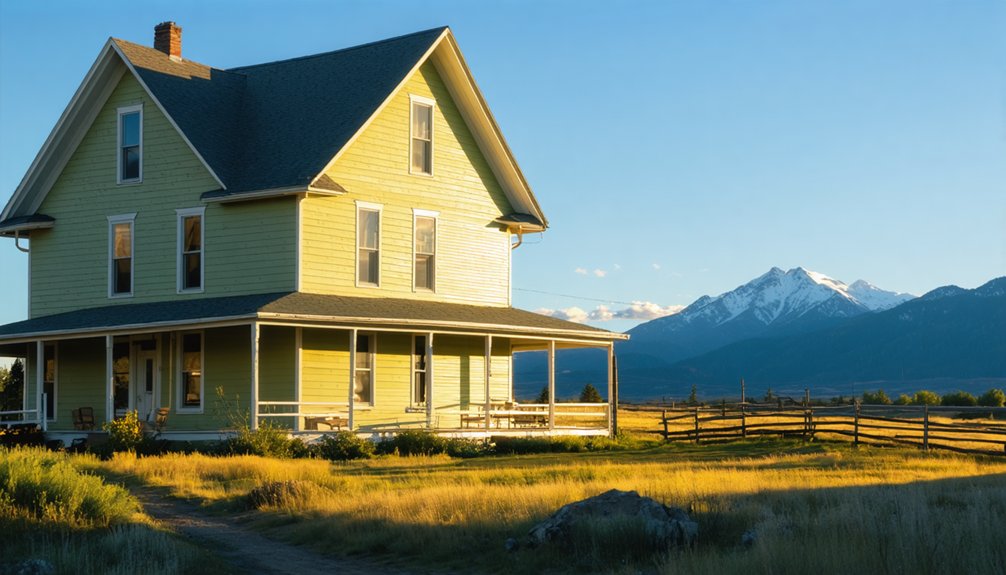
Because Hansen’s extreme temperature fluctuations and intense UV exposure place extraordinary demands on exterior coatings, strategic paint system maintenance becomes essential for maximizing your investment’s lifespan. We recommend implementing these proven protocols:
- Annual inspections focusing on south and west-facing elevations where UV degradation accelerates
- Prompt touch-ups addressing minor wear before moisture penetrates substrate layers
- Painting schedule modifications targeting late spring through early fall windows when temperatures remain consistently between 50-85°F
- Winterizing exterior surfaces by verifying proper caulking and sealing before freeze-thaw cycles commence
When we combine professional-grade acrylic latex formulations with meticulous surface preparation, you’ll achieve the 7-10 year performance threshold typical for Idaho’s climate zone. Lighter color selections further extend repainting intervals by minimizing UV-driven pigment degradation.
Recognizing When Your Home Needs Repainting
Even with rigorous maintenance protocols in place, Hansen homeowners must monitor their exterior surfaces for specific degradation patterns that signal when repainting becomes necessary rather than optional. We’ll identify critical paint failure patterns starting with south-facing elevations, where UV-induced fading manifests as chalky discoloration—particularly pronounced in dark pigments.
When we observe alligatoring, peeling at horizontal trim junctions, or hairline crazing networks, the protective barrier has compromised. These indicators demand immediate attention before moisture penetrates substrates. We’re especially vigilant for wood swelling, soft spots beneath blistered paint, and mildew colonization on shaded exposures—all suggesting our moisture mitigation strategies have been breached.
Temperature fluctuations accelerate these failures, making systematic inspection protocols essential. When multiple degradation markers converge, we’ve reached that decisive repainting threshold.
Choosing the Right Paint Products for Idaho’s Climate
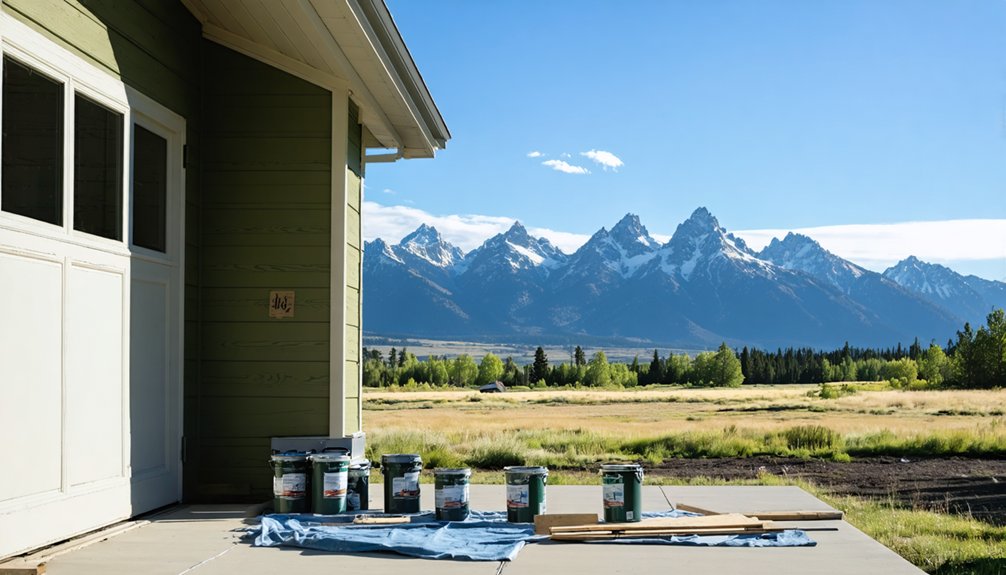
Hansen’s environmental conditions demand paint formulations engineered specifically for extreme thermal cycling and elevated UV exposure. We’ve identified acrylic latex systems as ideal for paint durability in our region’s temperature fluctuations. These formulations prevent cracking and peeling while minimizing paint maintenance requirements.
Acrylic latex systems engineered for extreme thermal cycling deliver superior paint durability while preventing cracking in Hansen’s challenging climate conditions.
For superior performance, we recommend:
- Sherwin-Williams Emerald Urethane Enamel – engineered for heat, cold, and moisture resistance
- Benjamin Moore Aura – excels in post-application freezing conditions
- Sherwin-Williams Resilience – tolerates light rain during application
- Mildewcide-enhanced formulations – crucial for moisture-prone siding
UV-resistant additives prevent premature chalking and color degradation. We prioritize products with fade-resistant pigmentation and self-cleaning technology like Emerald Rain Refresh. Proper primer selection guarantees substrate adhesion, extending your exterior’s service life while reducing maintenance intervals.
Frequently Asked Questions
Do I Need a Permit to Paint My Home’s Exterior in Hansen, Idaho?
Verily, we’ve confirmed Hansen’s code doesn’t require permits for exterior painting. We’ll guide you through paint color considerations and proper exterior surface preparation using industry-standard protocols, ensuring your project meets technical specifications while building community pride together.
How Much Does Professional Exterior Painting Typically Cost in Hansen?
We’ll find professional exterior painting in Hansen typically costs $1.20-$3.31 per square foot, averaging $6,500-$8,500 for single-family homes. Factors influencing pricing include siding type, surface condition, stories, architectural complexity, and required prep work.
Can I Paint Over Old Lead-Based Paint on My Historic Home?
we can paint over lead-based paint hazards on your historic home, but we’ll need professional lead abatement services first to stabilize deteriorated surfaces and guarantee EPA-compliant encapsulation before any topcoat application.
Should I Paint or Replace Damaged Wood Siding on My House?
We’ll need to inspect wood condition first—if rot extends beyond surface level, replacement’s necessary. For localized damage, we’ll consider wood repair options like epoxy consolidants or Dutchman patches before committing to full replacement versus painting.
What Exterior Paint Colors Are Most Popular in Hansen Neighborhoods?
We’re seeing warm neutrals dominate Hansen’s trendy color palettes—Accessible Beige and Revere Pewter lead neighborhood color schemes. Sage greens and charcoal grays follow closely, creating cohesive streetscapes that blend beautifully with Idaho’s natural landscape while maintaining your home’s individual character.