We’ve found that spring and fall deliver ideal conditions for pressure washing Idaho homes, with temperatures consistently above 60°F but below the problematic 75°F threshold. Spring operations effectively remove winter’s accumulated road salt, mold spores, and organic debris while ensuring proper surface drying before summer heat arrives. Fall washing provides essential preventive maintenance by eliminating contaminants before freeze-thaw cycles compromise your exterior materials. Idaho’s semi-arid climate and temperature fluctuations create specific operational windows that directly impact cleaning effectiveness and surface protection—factors we’ll examine to help you schedule strategically.
Key Takeaways
- Spring and fall offer optimal conditions in Idaho, with moderate temperatures above 60°F and lower humidity for effective cleaning and drying.
- Avoid summer pressure washing when temperatures exceed 75°F, as intense heat causes rapid solution evaporation and potential surface thermal stress.
- Winter operations should be avoided entirely due to freezing temperatures that create equipment risks and prevent proper surface drying.
- Spring pressure washing removes winter debris, road salt, and mold spores while taking advantage of accelerated drying conditions.
- Fall timing provides preventive maintenance before freeze-thaw cycles, with moderate conditions ideal for thorough cleaning and surface protection.
Why Spring Is the Prime Season for Pressure Washing in Idaho
As Idaho’s winter freeze subsides and temperatures stabilize above 60°F, we’re presented with ideal conditions for pressure washing that simply don’t exist during other seasons. We’re dealing with peak equipment performance—no freezing water lines or frost damage risks that plague winter operations. Spring’s moderate climate accelerates surface drying, preventing moisture-related complications.
Our primary focus involves post melt debris removal, targeting accumulated grime, road salt residue, and organic matter that’s embedded itself during freeze-thaw cycles. We’re also addressing winter induced discoloration—those stubborn gray streaks and faded patches caused by months of ice, snow, and UV reflection off white surfaces. This timing allows us to eliminate mold spores before they colonize in spring’s damp conditions, while preparing substrates for proper paint adhesion if you’re planning exterior refinishing projects.
Fall: The Strategic Alternative for Pre-Winter Preparation
Fall’s moderate humidity and stable temperatures optimize surface drying, preventing trapped water that expands during freezing. We’re removing the breeding grounds for winter mold proliferation while conditions still permit thorough remediation.
This timing protects your investment, extending material lifespan through preventive maintenance rather than reactive repairs.
Summer Pressure Washing: Timing and Temperature Considerations
Summer conditions present distinct operational challenges that demand protocol adjustments we’ve refined through Idaho’s intense heat cycles. We’ve established critical temperature thresholds—avoiding operations above 75°F when direct sunlight accelerates evaporation and causes streaking on vinyl siding. Our seasonal temperature variations require strategic scheduling: early morning (6:30-10 AM) or late evening (4-8 PM) windows when surfaces have cooled sufficiently.
Optimal equipment usage means pre-rinsing hot surfaces to prevent thermal stress and applying detergents exclusively in shaded areas. We never combine hot water with heated surfaces—the compounded heat damages materials and compromises seal integrity in our washers. Midday operations (11 AM-4 PM) create unacceptable risks: rapid soap evaporation, reduced chemical effectiveness, and warping vulnerabilities in wood and vinyl. We’ve adapted our protocols because understanding these thermal dynamics protects both property and equipment longevity.
Weather Conditions That Impact Pressure Washing Success
Summer’s high-desert heat accelerates solution evaporation, reducing detergent effectiveness before it penetrates grime. Strong winds scatter chemicals unevenly and dry streams mid-application, creating streaks on siding.
We implement strict moisture control protocols during Idaho’s seasonal shifts when rain dilutes detergents and promotes immediate mildew regrowth. Low humidity accelerates drying on porous surfaces, while excessive moisture in shaded areas prolongs drying times, risking paint damage.
Understanding these interconnected weather factors guarantees successful outcomes year-round.
Idaho’s Unique Climate Factors for Scheduling Your Wash
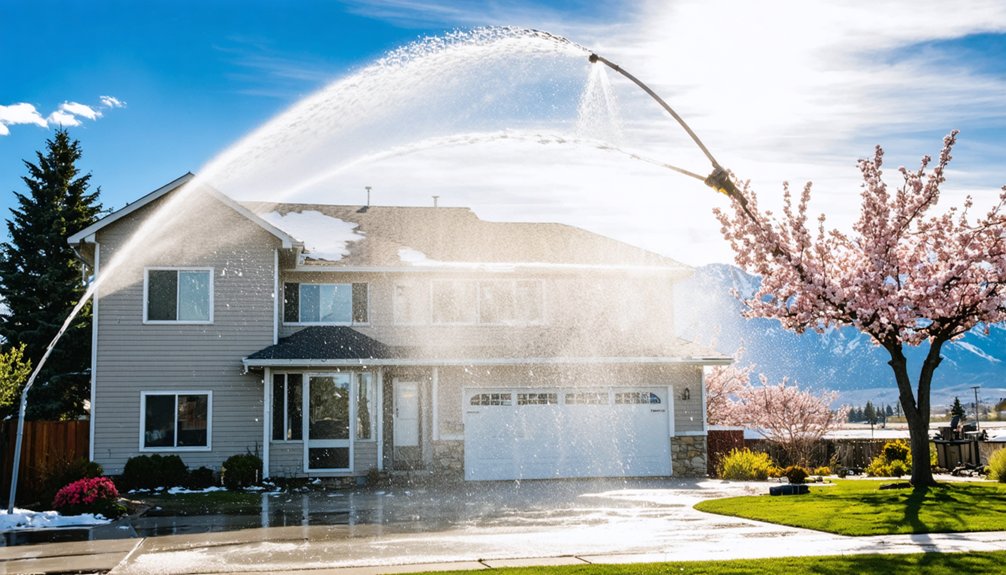
Idaho’s high-desert climate and pronounced seasonal extremes demand precise scheduling to protect both your property and our pressure washing equipment. We must account for regional climate nuances that differentiate the Treasure Valley’s semi-arid conditions from North Idaho’s heavier precipitation zones.
Seasonal moisture patterns dictate our approach—spring runoff and fluctuating temperatures create unpredictable surface conditions, while summer’s intense heat causes rapid evaporation that compromises cleaning solution effectiveness. We avoid winter operations when freezing temperatures risk equipment damage and create hazardous ice formation on treated surfaces.
Fall’s moderate conditions offer an ideal scheduling window before storms arrive. Understanding these climate-specific variables guarantees we deliver safe, effective results while preventing thermal shock to siding and minimizing water infiltration risks during vulnerable seasonal shifts.
Frequently Asked Questions
How Much Does Professional Pressure Washing Cost in Idaho?
We’ve found that local pressure washing companies in Idaho charge between $50-$100 per hour, with average hourly rates around $75-$90. Commercial projects typically run $0.34-$0.70 per square foot, ensuring proper surface preparation and safety compliance.
Can I Pressure Wash My Home Myself or Hire Professionals?
We can tackle DIY pressure washing techniques for smaller projects, but we’ll achieve superior results through benefits of professional pressure washing—safer equipment handling, proper PSI calibration, and expert surface assessment that protects our homes from costly damage.
How Long Does It Take to Pressure Wash an Entire House?
We’ll typically complete your house in 2-6 hours depending on size and conditions. We recommend scheduling during ideal weather conditions—mild temperatures between 50-80°F—and starting at early time of day for favorable drying and safety compliance.
What Surfaces Should Not Be Pressure Washed on My Home?
We’ve all learned this lesson: never pressure wash asphalt shingles, windows, electrical components, delicate siding materials, or painted surfaces. These areas require soft-washing techniques to prevent granule loss, seal damage, shock hazards, and irreversible finish degradation on your home.
How Often Should I Pressure Wash My Idaho Home Annually?
We recommend pressure washing your Idaho home annually, with the perfect frequency being once per year in late spring or early fall. However, seasonal considerations like heavy pollen or proximity to foliage may require bi-annual treatments for excellent protection.