We’ve painted hundreds of Declo homes where the 70°F daily temperature swings and 202 annual sunny days demand precise surface preparation and strategic coating application. Start with thorough structural assessment, remove all efflorescence from masonry, and use professional-grade airless sprayers with 50-75% overlap between passes. We always back-roll rough-cut cedar and weathered siding to force coating into substrate pores while maintaining consistent mil thickness. Select neutral colors two to three steps down the fan deck to combat UV degradation, and strain all paint before application. This detailed guide covers timing, regional standards, and advanced techniques we’ve refined through years of southern Idaho projects.
Key Takeaways
- Prepare surfaces thoroughly by removing rot, cleaning efflorescence from masonry, and repairing wood damage before painting.
- Apply paint during stable weather windows, avoiding spring-winter transitions when rain-snow mixtures occur frequently.
- Use airless sprayers with 50-75% overlap and back-roll on rough substrates to achieve uniform mil thickness.
- Select neutral colors resistant to UV fading, matching undertones to brick, stone, and roof materials.
- Strain paint before application and choose formulations designed for extreme thermal cycling exceeding 70°F differentials.
Understanding Declo’s Climate and Weather Challenges for Exterior Painting
Because Declo’s climate subjects exterior coatings to extreme thermal cycling, we must account for temperature differentials exceeding 70°F between winter lows of 17°F and summer peaks approaching 90°F. These conditions demand elastomeric formulations that withstand daily expansion-contraction cycles of 34°F.
We’re facing 202 annual sunny days delivering intense UV radiation exposure that degrades standard latex binders, requiring titanium dioxide-fortified paints with UV stabilizers. The region’s 10-inch annual precipitation creates arid conditions affecting soil and vegetation impacts—wind-blown dust particles contaminate wet surfaces during our 12-19 mph average wind speeds.
December’s 1.44-inch precipitation combined with freeze-thaw cycling from 20 inches of snowfall accelerates coating failure through moisture intrusion. Our application windows narrow considerably during spring-winter shifts when rain-snow mixtures compromise adhesion.
Essential Surface Preparation Steps Before Painting
Before we apply any primer or paint to your Declo home’s exterior, we’ll conduct a thorough structural assessment to identify compromised materials, rot damage, and areas requiring immediate replacement—particularly around gutters, downspouts, and roof lines where Idaho’s freeze-thaw cycles cause deterioration.
We’ll remove all light fixtures, house numbers, shutters, and hardware that could obstruct proper surface preparation or interfere with achieving clean paint lines. This systematic inspection and hardware removal establishes the foundation for addressing substrate issues methodically, ensuring we’re working with structurally sound surfaces that will hold coatings for years to come.
Inspect and Repair Surfaces
Proper surface inspection reveals the foundation upon which every successful exterior paint project depends. We’ll systematically examine all exterior surfaces, focusing on areas around gutters, downspouts, and roof lines where moisture infiltration assessment becomes critical. North-facing walls and shaded locations receive particular attention since moisture lingers there longer, accelerating deterioration.
Our wood treatment considerations include examining surfaces for insect damage, replacing rotting materials immediately, and stabilizing weathered areas exposed to extended sun and moisture. We’ll apply oil-based primers for superior adhesion and UV protection.
For masonry, we’ll clean efflorescence using specialized stucco cleaners and seal cracks with elastomeric primers. Metal surfaces require complete rust removal before applying rust-inhibiting primers. We’ll fill all holes and cracks with exterior-grade fillers, ensuring proper adhesion through thorough surface preparation.
Remove Obstacles and Hardware
Once you’ve completed surface repairs and priming, clearing the work area becomes your next systematic focus. We’ll relocate hoses, patio furniture, and freestanding planters beyond the 10-15 foot perimeter required for safe access.
Removing stubborn hardware demands methodical attention—extract nails, address numbers, light fixtures, and door hardware systematically. Detach shutters and window screens where feasible to eliminate painting obstructions.
We’ll cover utilities and irrigation systems with protective sheeting while verifying utility access points remain identifiable for emergency situations. Position tools centrally for efficient workflow. In Declo’s variable conditions, secure all protective coverings against wind displacement.
Remove or mask gutters, downspouts, and electrical fixtures. This disciplined approach guarantees our team maintains professional standards while safeguarding your property’s functional systems throughout the project.
Professional Tools and Equipment for Quality Results
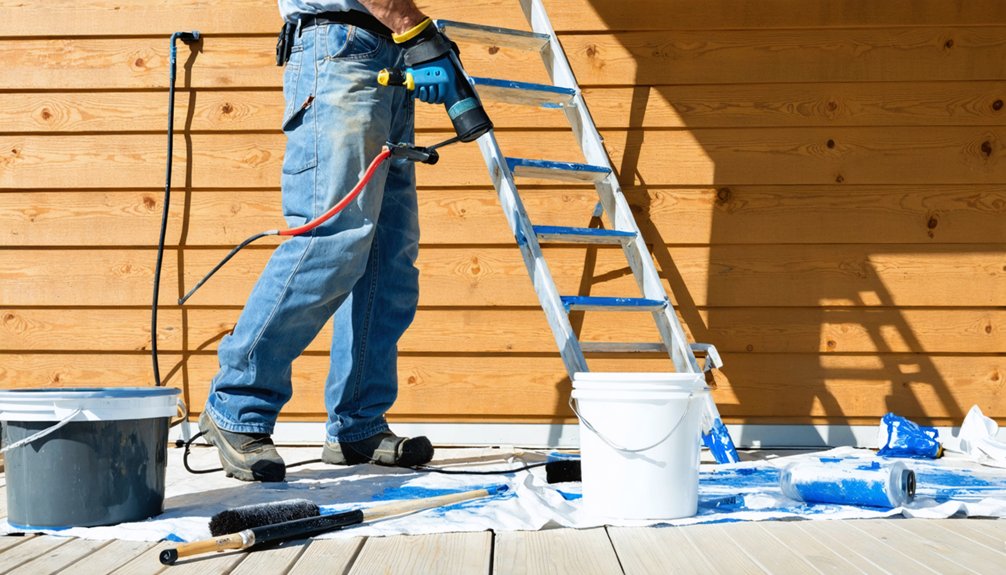
When tackling exterior painting projects in Declo’s variable climate, we’ll need specialized equipment that moves beyond basic consumer-grade tools. Professional-grade airless sprayers from Graco or Titan deliver superior coverage at high PSI, applying paint up to 10 times faster than traditional brushing. We’ll pair these with RAC X tips for consistent finishes across varied textures.
For surface preparation, our arsenal includes multipurpose 5-in-1 tools, pressure washers rated for exterior applications, and graded abrasives. Extension ladders reaching 72 feet provide safe access to high eaves, while portable paint storage systems and ergonomic painting accessories minimize fatigue during extended sessions.
Quality application demands 9-inch rollers with 1/2-inch nap for textured surfaces, angled sash brushes for trim precision, and Pro-Extra high-capacity trays. Canvas drop cloths and painter’s tape guarantee professional-grade protection throughout the project.
Proven Spray and Brush Application Techniques
We’ll focus on two critical application techniques that directly impact your exterior paint’s longevity and appearance in Declo’s climate. Proper spray overlap—maintaining consistent 50% coverage between passes—prevents thin spots and secures uniform mil thickness across all surfaces.
Back-rolling immediately after spray application mechanically works the coating into the substrate, eliminating air pockets and optimizing adhesion to your home’s exterior materials.
Mastering the Spray Overlap
Before achieving professional-grade exterior paint finishes, mastering the spray overlap technique stands as the most critical skill for Declo homeowners and contractors alike. We recommend maintaining 50% to 75% overlap between passes for ideal paint coverage density across most applications.
When working with directional spray patterns on horizontal siding, we direct the spray upward to coat the bottom lip while overlapping the previous pass by 50%. Our technique involves continuous arm movement—triggering only after initiating the half-overlap, then releasing before completing each stroke. We start at panel edges, spraying 50% off-surface onto masking paper for full mil coverage.
For vertical corners, we aim directly into the junction with the tip positioned on top, ensuring even distribution across both surfaces simultaneously.
Back-Rolling for Better Adhesion
After spraying exterior surfaces in Declo’s variable climate, we back-roll the wet paint to force coating material deep into substrate pores, grooves, and voids—a critical step that transforms adequate coverage into superior adhesion. This technique expels trapped air pockets that cause premature bubbling, cracking, and peeling while preventing paint from bridging over surface imperfections.
We prioritize back-rolling on rough-cut cedar, weathered siding, and absorbent substrates where surface porosity demands mechanical paint integration. Using 3/8″ to 1/2″ nap roller covers with light, even pressure, we work the wet coating vertically then horizontally to guarantee uniform mil thickness. This process accounts for Declo’s moisture levels and temperature fluctuations, extending paint durability by 4-5 years compared to spray-only applications on porous materials.
Color Selection and Paint Straining Best Practices
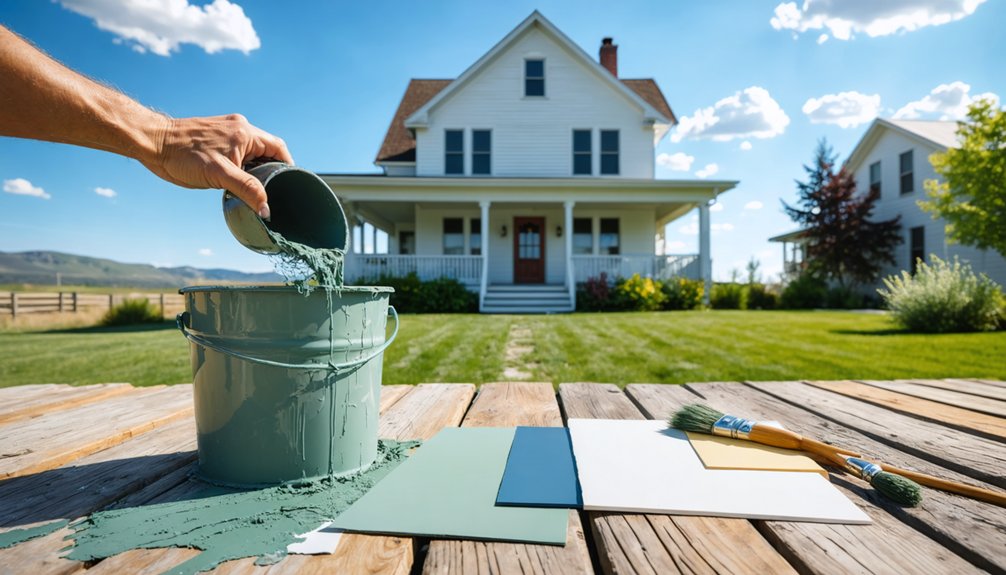
Selecting exterior paint colors for Declo homes demands a systematic approach that accounts for fixed architectural elements, regional climate factors, and long-term durability metrics. We match paint undertones to existing brick, stone, or roof materials—identifying whether your home features orange-beige, yellow-beige, or green-beige foundations. Color tone coordination starts with selecting neutrals two to three steps down the fan deck to prevent premature fading.
We test samples on your actual exterior surfaces, observing how Idaho’s intense sunlight alters appearance throughout the day.
Our exterior design compatibility process includes:
- Pairing warm-toned brick with taupe or warm gray for cohesive shifts
- Selecting LRV 68-76 neutrals like Pale Oak for balanced light reflection
- Straining paint through fine mesh before application to remove contaminants
- Applying satin or eggshell finishes that withstand temperature fluctuations while hiding surface imperfections
Timing Your Exterior Paint Project in Southern Idaho
Your carefully chosen paint colors and meticulously strained coating will fail prematurely if applied outside Declo’s narrow weather windows. We’ve identified September through early October as ideal for Southern Idaho applications, when consistent 60-80°F temperatures guarantee proper curing without weather delay risks.
Late spring offers secondary opportunities between storm systems, though unpredictable precipitation increases project abandonment. Summer’s extreme heat accelerates drying beyond manufacturer specifications, compromising film formation and long-term adhesion.
We monitor optimal outdoor temperature thresholds religiously—never below 50°F overnight, capped at 85°F during application. Declo’s high desert climate demands precise scheduling; our crews start at dawn during warmer months, capitalizing on stable morning conditions.
Fall’s reduced humidity at 40-70% range and extended forecast reliability make it our premium season for exterior applications requiring maximum durability.
Regional Painting Standards and Trim Finishing Methods
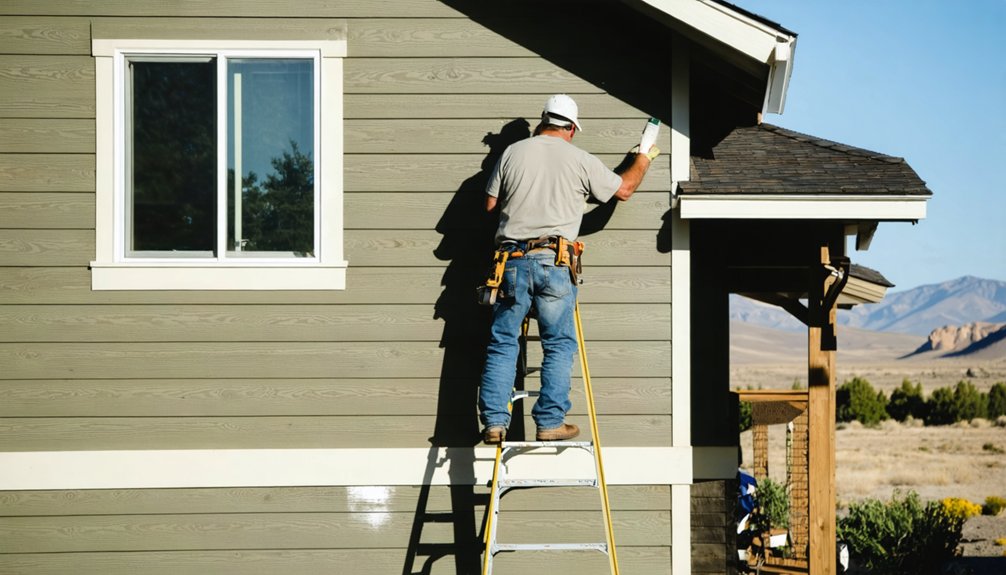
While Declo’s climate dictates when we paint, regional construction standards determine how we execute each application phase to meet Southern Idaho’s demanding durability requirements.
We maintain ideal painting temperatures between 60-85°F, with surfaces staying above 35°F for 36 hours post-application. Our spray application safeguards include comprehensive masking of windows, doors, and footings using 9-inch paper rows along edges. We employ HVLP spray guns with 65% transfer efficiency, back rolling immediately for superior adhesion.
Seasonal temperature variations demand higher-sheen paints containing increased acrylic content for weather resistance.
Essential trim finishing protocols:
- Seal exterior seams before applying paint to prevent moisture infiltration
- Remove doorbells and lighting fixtures for complete coverage
- Apply DTM bonding primer to unpainted metal gutters
- Match fascia and drip metal colors to stucco body
Frequently Asked Questions
How Long Does a Professional Exterior Paint Job Typically Last in Declo?
We’ll typically see professional exterior paint jobs last 5-10 years in Declo. Paint quality considerations and climate impact on lifespan greatly affect durability—Idaho’s UV exposure and temperature fluctuations require premium coatings with proper surface preparation for prime longevity.
What Is the Average Cost to Paint a Single-Story Home Exterior?
We’ll typically invest $1,500 to $3,500 for single-story exteriors. Paint coverage requirements average 350-400 square feet per gallon, while paint product selection—ranging from $20 budget to $70 premium options—significantly impacts your project’s final cost.
Do I Need Permits to Paint My Home’s Exterior in Declo?
No, we don’t need permits for exterior painting in Declo—it’s classified as finish work. However, we should review homeowner insurance considerations and verify paint color selection complies with any HOA covenants before proceeding with surface preparation.
Should Homeowners Stay Home During the Exterior Painting Process?
“An ounce of prevention is worth a pound of cure.” We recommend you maintain household routines while staying home to monitor job safety protocols, guarantee proper masking techniques, and address any concerns about overspray or surface protection immediately.
How Do I Choose a Reputable Painting Contractor in Southern Idaho?
We’ll verify state registration, request multiple painting quotes, check contractor references thoroughly, and confirm general liability insurance meets Idaho’s $300,000 minimum requirement. Always review the Idaho Contractors Board records for any complaints or enforcement actions first.