We’ve refined cabinet painting into a systematic process that transforms Buhl kitchens through proper surface preparation, bonding primer application, and precision finishing techniques. Local contractors like Latest Design Painting deliver professional results for $3,000-$8,000 per kitchen—60-70% less than replacement costs. The process involves hardware removal using labeled PSDR systems, 220-grit sanding for mechanical adhesion, and multiple topcoat applications. With proper maintenance including weekly cleaning and protective topcoats every 3-4 years, painted cabinets maintain pristine appearance for 8-12 years. Our thorough breakdown covers contractor selection, cost factors, and long-term preservation strategies.
Key Takeaways
- Multiple local contractors serve Buhl, including Latest Design Painting, Steves Quality Painting LLC, and Timeless Treasures for specialized cabinet services.
- Cabinet painting costs $95-$155 per piece, with full kitchen projects ranging from $3,000-$8,000 depending on complexity and configuration.
- Proper preparation includes hardware removal, degreasing, 220-grit sanding, bonding primer application, and dust-free workspace maintenance throughout the process.
- Refinishing costs approximately two-thirds less than refacing while preserving existing cabinet structure and updating appearance with paint or stain.
- Properly maintained painted cabinets last 8-12 years with weekly cleaning, protective topcoat reapplication every 3-4 years, and immediate spill treatment.
Local Cabinet Painting Services Available in Buhl
When cabinet surfaces show wear or kitchens need aesthetic updates, Buhl homeowners can access specialized cabinet painting services from multiple local contractors. We’ve identified several established providers serving our community, including Latest Design Painting (888-832-1759), Steves Quality Painting LLC ((208) 791-), and Timeless Treasures at 201 Juniper St. These cabinet contractor options maintain facilities throughout the region, offering both residential and commercial project capabilities.
Local project considerations include service area coverage, with some contractors focusing exclusively on Buhl while others serve the broader Treasure Valley. Most providers offer thorough consultation services to assess your specific requirements. We recommend evaluating contractors based on their preparation methodology, material specifications, and finishing techniques. Regional painters typically provide on-site assessments, though some maintain dedicated shop facilities for controlled finishing environments that guarantee ideal coating adhesion and curing conditions.
Understanding the Cabinet Painting Process
We’ll walk you through the complete cabinet painting process, from initial surface preparation through final reinstallation. Our systematic approach involves two critical phases: preparation and surface treatment, which includes removal, sanding, degreasing, and priming, followed by application and reinstallation steps that encompass painting, finishing, and proper curing protocols.
Comprehending these sequential operations guarantees you’ll achieve professional-grade results with ideal adhesion and longevity.
Preparation and Surface Treatment
Before any paint touches your cabinets in Buhl, we execute a systematic preparation protocol that determines the longevity of your finish. Our damage assessment identifies water-compromised areas requiring spot priming, while grease removal utilizes Dawn dish soap with Scotchbrite sponges to eliminate 95% of contaminants. We rinse over clean water buckets to prevent residue buildup.
Our thorough surface treatment includes:
- Complete hardware removal using our PSDR system with 50 hangers for contamination-free drying
- Strategic sanding creating mechanical adhesion points for primer bonding
- Aerosol bonding primer application on compromised substrates
- Caulking with Tower Accelerator for same-day painting in Idaho’s dry climate
- Dust-free workspace maintenance preventing particle contamination during primer cure
This systematic approach delivers professional-grade adhesion without shortcuts.
Application and Reinstallation Steps
With surface preparation complete, we begin the application sequence that transforms your Buhl cabinets through systematic layering. We apply specialized primers like Extreme Bond, establishing ideal adhesion to existing finishes. After 24-hour drying, our sanding techniques employ 220-grit paper to create micro-grooves for superior topcoat bonding.
Product application quality demands precision—we use angled brushes for detailed areas and mini rollers for flat surfaces, ensuring thin, even coats without brush marks. Following first coat application, we sand with 400-600 grit before applying the second layer.
The reinstallation timeline requires patience: 5-7 days before mounting doors, with full curing extending 30+ days. We label each component during removal, preventing reassembly confusion. This systematic approach delivers the durable, professional finish your kitchen deserves.
Cost Breakdown for Cabinet Painting Projects
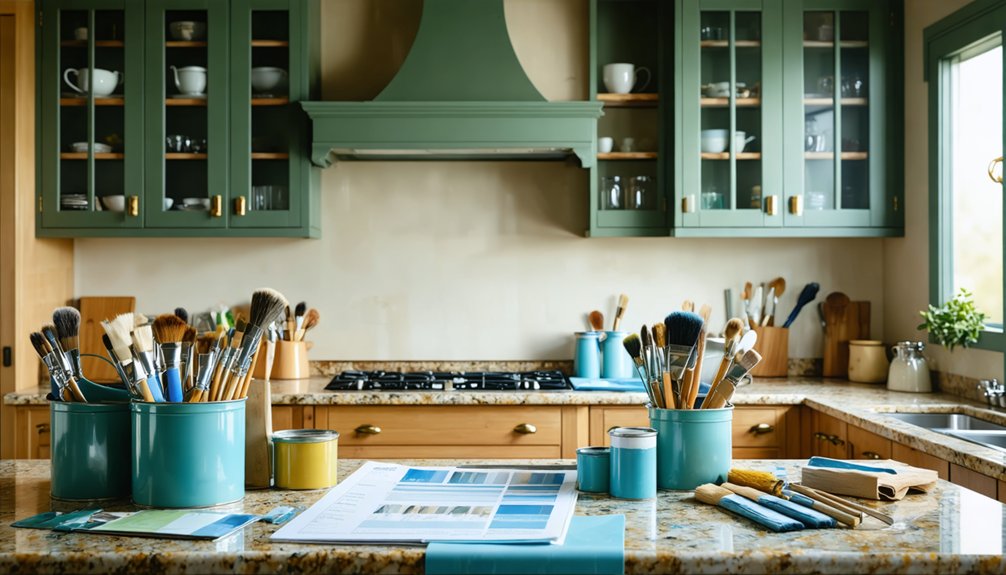
We calculate projects using industry-standard per-piece pricing—typically $95 to $155 per door, drawer, or side panel. For custom cabinet configurations, expect $135 per door and $105 per drawer as baseline rates.
Labor comprises the substantial portion at $25 to $50 per hour, covering prep, sanding, and application.
Budget considerations include:
- Full kitchen projects: $3,000 to $8,000 depending on complexity
- Bathroom vanities: $1,000 to $2,500 for 10-15 pieces
- High-quality paint: $55 per gallon covering 12 surfaces
- Grain filling: $20 per component plus face framing
- Multiple colors: $200 flat fee per additional color
Material costs run $13 to $15 per surface for premium finishes.
Cabinet Refinishing vs. Cabinet Refacing: What’s the Difference?
Although both services transform kitchen aesthetics, refinishing and refacing represent fundamentally different approaches to cabinet restoration. We’ll help you understand which method suits your project.
Refinishing strips existing finishes through sanding or chemical treatments, then applies fresh paint or stain to your current doors and boxes. This process maintains original layouts while updating color—ideal when your cabinets remain structurally sound but need visual revitalization.
Cabinet refinishing preserves your existing structure while completely refreshing appearance through professional stripping, sanding, and new finish application.
Refacing replaces doors, drawer fronts, and visible panels entirely while retaining cabinet boxes. This approach enables all-encompassing material selection and style customization, from raised panels to flat-panel designs. We’ll apply matching veneers to exposed surfaces for cohesive results.
Cost-wise, refinishing runs approximately two-thirds of refacing expenses. Choose refinishing for budget-conscious color updates; select refacing when outdated door styles require complete transformation.
Essential Preparation Steps Before Cabinet Painting
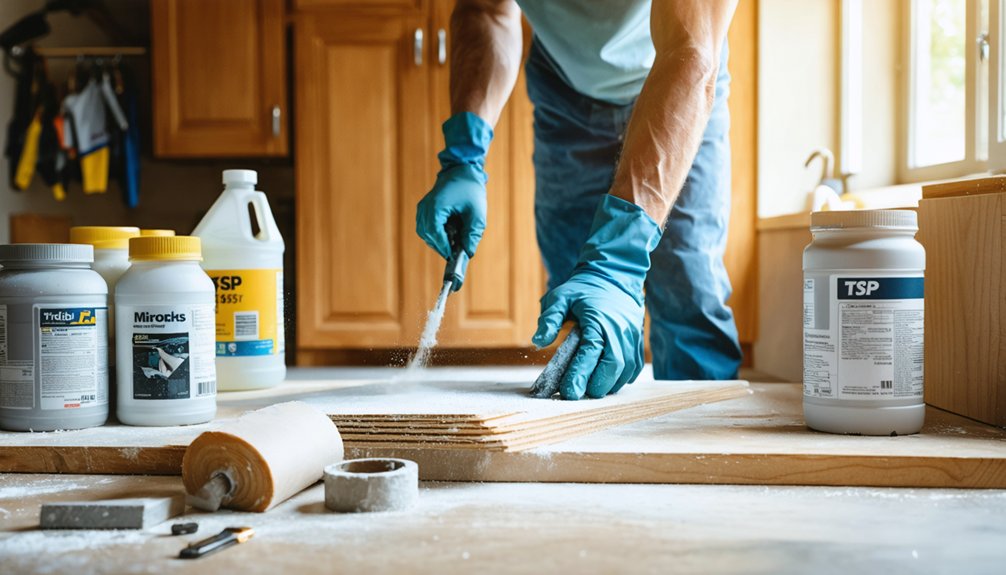
Proper preparation determines the longevity and finish quality of any cabinet painting project. We’ll guide you through essential surface pretreatment steps that professional painters in Buhl rely on for flawless results.
Critical preparation stages include:
- Emptying and protecting your space – removing everything while safeguarding appliances and floors from damage
- Detaching all doors and hardware – labeling components systematically guarantees stress-free reassembly
- Deep-cleaning with degreasers – eliminating built-up residue that compromises paint adhesion
- Sanding for mechanical bonding – creating texture that different paint types require for proper grip
- Applying bonding primer – sealing surfaces and establishing the foundation for topcoat performance
We sand using 220-grit sandpaper, following wood grain direction without exposing bare material. After vacuuming dust thoroughly, we apply high-adhesion primer and lightly sand again before introducing your selected paint types.
When to Consider Repainting Your Cabinets
While structurally sound cabinets don’t require replacement, several technical indicators signal when repainting becomes the ideal maintenance solution. We prioritize evaluating cabinet condition through systematic inspection of surface integrity—examining for varnish delamination, enamel failure, and substrate exposure that compromise protective barriers.
Determining repaint necessity involves assessing functional parameters: hinge alignment, drawer operation, and joint stability. When finish degradation manifests as yellowing, peeling, or chipping while underlying construction remains intact, we’ve identified prime repainting candidates.
Water damage beyond localized repair zones, extensive staining from oils and cleaners, or era-specific aesthetics incompatible with current design standards all trigger refinishing protocols. For Buhl homeowners maintaining functional layouts, cabinet exteriors upgrade delivers transformative results without structural modification. This approach extends service life while preserving investment-grade cabinetry.
Benefits of Cabinet Painting Over Full Replacement
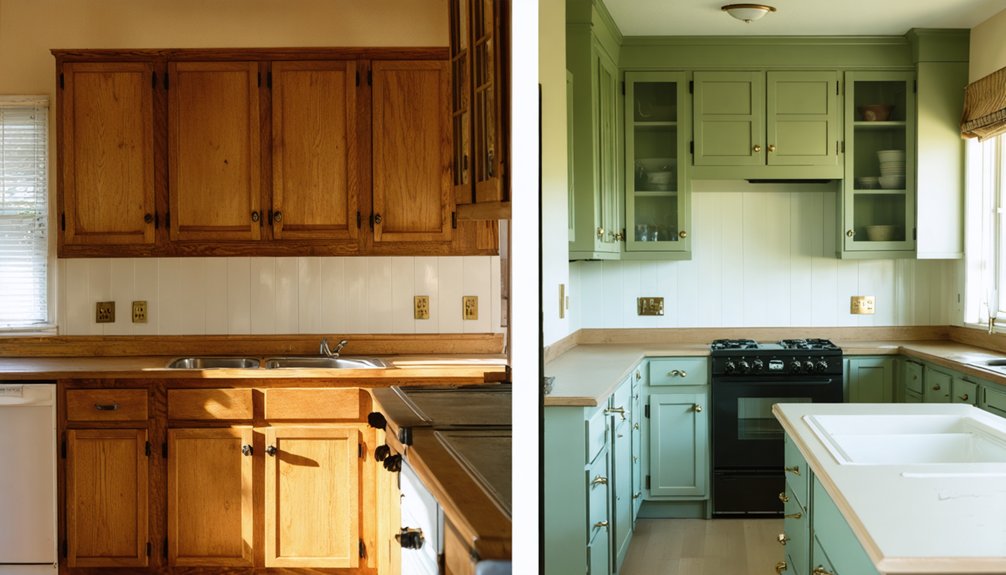
We’ve identified three compelling advantages that make cabinet painting a strategic alternative to full replacement in Buhl kitchens. Our analysis focuses on measurable cost differentials, project timeline comparisons, and environmental impact metrics that directly affect your renovation decisions.
Let’s examine how painting delivers 60-70% cost reduction, cuts project duration from weeks to days, and diverts cabinet materials from landfills.
Significant Cost Savings
Because cabinet replacement carries price tags between $12,000 and $35,000 for average-sized kitchens, homeowners in Buhl face substantial financial commitments when considering renovation options. We’ve analyzed the cost benefit analysis across multiple projects, finding painting delivers 60-85% savings while maintaining structural integrity.
Our ROI implications demonstrate clear advantages:
- $3,500–$6,500 professional painting versus $15,000–$40,000+ replacement costs
- 150-250% resale return on painting investments compared to 50-70% on replacements
- Zero demolition expenses—no disposal fees, wall repairs, or permit requirements
- $16,500 saved on typical 25-linear-foot kitchen applications
- 5-10 year lifespan with proper surface preparation and finishing techniques
Cabinet painting eliminates secondary expenses like plumbing adjustments, countertop modifications, and electrical relocations that replacement projects trigger, making it our community’s most cost-effective transformation method.
Faster Project Completion
Beyond monetary advantages, cabinet painting delivers compressed project timelines that keep Buhl households operational during renovations. We complete most painting projects in 3–5 days, while full replacements demand 2–4 weeks of installation plus potential 12-week supply chain delays. This time saving approach means you’ll regain full kitchen functionality within days rather than months.
Our process guarantees minimized disruption through off-site finishing of doors and drawers, eliminating on-site mess and construction debris. You won’t coordinate multiple trades or manage demolition phases—just straightforward surface preparation and application. We control work areas to contain materials, reducing noise levels and dust migration throughout your home.
Professional execution maintains your daily routines without temporary kitchen setups or extended periods of eating out, delivering immediate aesthetic transformation while preserving household normalcy.
Environmentally Friendly Option
When homeowners prioritize sustainability, cabinet painting emerges as the clear environmental winner against full replacement projects. We’re reducing construction waste that would otherwise occupy landfills while preserving existing sustainable materials already in your home.
Modern low-VOC formulations deliver lower emissions than traditional products, protecting indoor air quality during refinishing. The process consumes considerably less energy than manufacturing, transporting, and installing new cabinetry.
Consider these environmental advantages:
- Waste reduction: We divert usable cabinets from demolition debris streams
- Resource conservation: Existing materials serve extended lifecycles without harvesting new timber
- Energy efficiency: Refinishing requires minimal production energy compared to replacement manufacturing
- VOC mitigation: Zero-VOC paints eliminate harmful airborne contaminants
- Carbon footprint: Reduced transportation and processing demands lower overall emissions
We’re helping Buhl homeowners align renovation projects with eco-conscious values.
Choosing the Right Paint and Finish for Your Cabinets
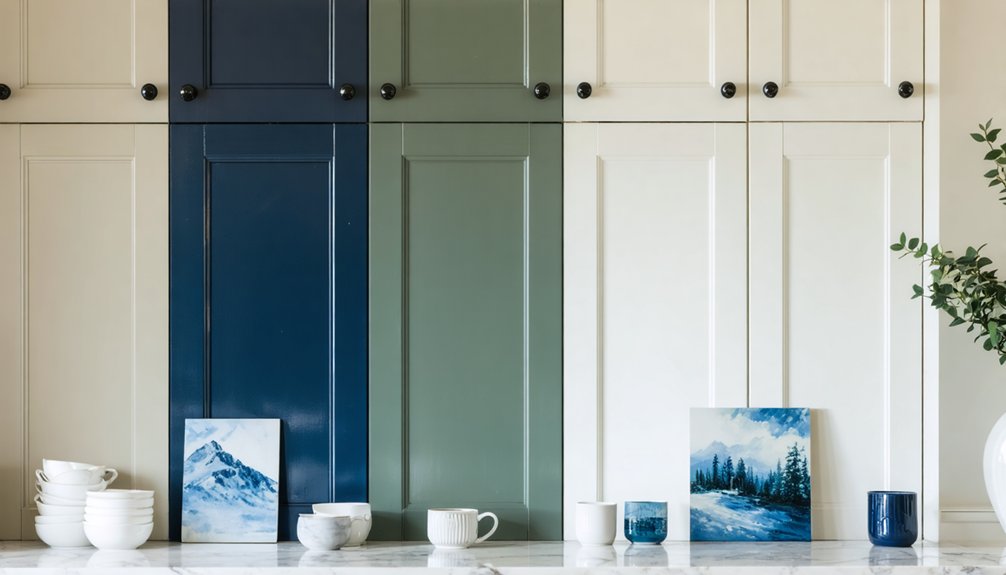
Selecting the best paint and finish for cabinet refinishing requires understanding three critical components: paint chemistry, sheen level, and protective topcoats.
When choosing right paint type, we recommend hybrid alkyd enamels like Sherwin Williams Emerald Urethane Trim Enamel, which combine oil-based durability with water-based cleanup.
For achieving desirable sheen, semi-gloss remains our go-to specification for kitchen applications—it delivers ideal cleanability while maintaining appearance retention under daily use. We’ve found that glossier finishes resist fading better than matte or satin alternatives.
Consider adding a polyurethane topcoat for enhanced thickness and scratch resistance, particularly in high-traffic kitchens. Oil-based paints provide unmatched durability and smooth application, though acrylic latex offers faster drying times and lower VOC emissions for environmentally conscious projects.
Timeline Expectations for Cabinet Painting Projects
After identifying the ideal paint products and finishes for your cabinetry, understanding the project timeline becomes the next determining factor in planning your cabinet transformation. We’ve established that professional cabinet painting requires 3-7 days of active work, with complete curing extending to 10 days.
Professional cabinet painting demands 3-7 days of active work, but complete curing requires a full 10-day commitment to achieve lasting results.
The average project timeframe breaks down into distinct phases: preparation (1-2 days), priming (1-2 days), painting (2-4 days), and reassembly (1 day).
Environmental conditions impact drying times substantially. Here’s what we’re working with:
- Preparation accounts for 70% of total effort – detail matters
- 24-48 hour drying intervals between coats test patience
- Weeks-long curing period protects your investment
- Temperature and humidity variations in Buhl affect schedules
- 10-15 year lifespan rewards proper execution
Proper timeline adherence guarantees professional-grade results.
Maintaining Your Newly Painted Cabinets
We’ve designed our cabinet painting process in Buhl to deliver a durable finish, but the longevity of your investment depends on proper maintenance protocols.
Your newly painted cabinets require specific cleaning methods, protection from common damage sources, and systematic long-term care to preserve their finish integrity.
We’ll outline the technical best practices that prevent premature wear and maintain the professional appearance of your cabinetry for years to come.
Cleaning Best Practices
Because painted cabinet surfaces require specific maintenance protocols to preserve their finish integrity, we’ve developed a systematic cleaning approach that protects your investment while maintaining ideal appearance.
Gentle cleaning precautions form the foundation of our maintenance methodology. We recommend soft microfiber cloths with warm water and mild dish soap, applied using circular motions with light pressure. Product dilution ratios matter greatly—use 50/50 vinegar-to-water solutions for routine cleaning, or one part white vinegar to two parts hot water for stubborn grease.
Our extensive maintenance protocol includes:
- Weekly surface cleaning preventing irreversible buildup accumulation
- Immediate spill treatment protecting your beautiful finish investment
- Temperature stability at 70°F preserving paint coat integrity
- Humidity control between 40-50% preventing stress-related cracking
- Testing solutions on hidden surfaces ensuring compatibility before application
We always dry surfaces immediately with lint-free cloths, preventing moisture damage while maintaining your cabinets’ professional appearance.
Avoiding Common Damage
Your freshly painted cabinets demand proactive protection strategies that address the five critical damage vectors we’ve identified through years of refinishing work in Buhl kitchens.
Impact reduction methods start with soft-close hinges that cut impact damage by 50% and cabinet door bumpers that prevent chipping from repeated slams. We’ll help you install felt pads on all contact points.
Moisture protection strategies require proper ventilation—fans and windows that allow steam escape from your sink and dishwasher. Water exposure causes wood expansion, leading to cracks and peeling.
Heat management means keeping appliances four inches from cabinet sides and using heat shields behind toasters. We recommend installing pulls rather than knobs to minimize hand contact that degrades paint through daily oil transfer.
Finally, we always apply protective topcoats—water-based polyurethane that seals against moisture, grease, and handling wear.
Long-Term Care Tips
When properly maintained, painted cabinets in Buhl homes consistently deliver 8-12 years of pristine appearance before requiring professional refinishing. We’ve developed thorough protocols addressing both DIY refinishing techniques and professional maintenance requirements that preserve your investment.
Essential Long-Term Protection Measures:
- Apply protective topcoat every 3-4 years following wood grain patterns with quality brushes
- Maintain 40-50% humidity levels and 70-degree temperatures to prevent finish cracking
- Inspect quarterly for chips and scratches, touching up immediately with matching paint
- Clean hardware seasonally through complete removal and soap-water immersion
- Install cabinet door bumpers strategically to minimize daily contact wear
We recommend keeping original paint reserves and fine-grit sandpaper for spot repairs. Test all solutions on inconspicuous areas first, and address greasy buildup weekly near cooking surfaces using vinegar-water solutions.
Frequently Asked Questions
Can I Paint Cabinets Myself or Should I Hire a Professional?
We’ll be brutally honest: you *can* DIY, but the preparation required is monumentally tedious. Our cost comparison analysis shows professionals deliver superior durability through proper surface profiling, KCMA-compliant coatings, and spray application—saving you countless headaches long-term.
Do Painted Cabinets Hold up as Well as Stained Cabinets?
We’ve found professionally painted cabinets match stained durability when applied correctly, addressing your longevity concerns. Both finishes have similar maintenance requirements with proper topcoats, though painted surfaces show chips more visibly at high-use contact points.
What Colors Are Most Popular for Kitchen Cabinets in Buhl?
We’re seeing neutral toned colors like Cloud Cover OC-25 and Simply White dominate Buhl kitchens, while vibrant accent colors—particularly navy blues and sage greens—gain momentum. Two-tone applications combining these palettes create depth that resonates with our community’s design preferences.
Will Cabinet Painting Work on Laminate or Only Wood Cabinets?
We can paint both laminate and wood cabinets, though cabinet material composition affects our approach. Laminate presents paint adherence concerns requiring specialized primers and thorough surface preparation, while wood accepts standard products more readily through its porous structure.
How Long Should I Wait Before Using Cabinets After Painting?
Patience is everything here! We’ll need to wait 24 hours before light handling, though drying time requirements vary by paint type. The complete curing process duration takes 2-4 weeks before we can resume heavy cabinet use together.