We’ve found that fall—specifically September through mid-October—offers Idaho’s most reliable exterior painting window, with controlled temperatures between 50-70°F and lower humidity preventing adhesion failures. While spring provides a narrow opportunity from mid-April through early June, and summer works with proper heat management, fall’s stable conditions allow paint to cure completely before winter’s freeze-thaw cycles begin. Idaho’s high-desert climate and dramatic temperature swings make seasonal timing critical for professional-grade results that’ll withstand the state’s harsh weather extremes.
Key Takeaways
- Fall (September-October) offers optimal conditions with controlled temperatures of 50-70°F and lower humidity for superior paint adhesion.
- Spring (mid-April through early June) provides a viable window but requires monitoring for frequent precipitation events.
- Summer painting demands strategic heat management, rotating work areas to maintain ideal 60-85°F surface temperatures.
- Northern Idaho’s best window is late June through September; southern Idaho extends from April through October.
- Modern low-temperature paint formulations allow application down to 35°F, expanding traditional seasonal painting windows.
Understanding Idaho’s Seasonal Painting Windows
Idaho’s high-desert climate and dramatic seasonal temperature swings create distinct painting windows that demand precise timing. We’ve found that freeze-thaw cycles in northern regions and humidity fluctuations across the Treasure Valley directly impact paint adhesion and longevity.
Idaho’s freeze-thaw cycles and humidity shifts make timing critical for lasting paint adhesion and professional results.
Freezing temperatures eliminate November through March as viable exterior painting months, while extreme summer heat above ideal ranges requires careful morning or evening scheduling.
Fall emerges as our preferred season, offering cooler temperatures and lower humidity levels that support controlled curing without weather-related complications. Early fall through October provides the most stable conditions before nighttime temperatures drop below 50°F.
Understanding these regional patterns helps us align project schedules with homeowner expectations while ensuring professional-grade results that withstand Idaho’s demanding climate conditions year-round.
Spring Painting: Opportunities and Challenges
We’ve found that spring offers Idaho homeowners a narrow but viable painting window, typically from mid-April through early June, when daytime temperatures stabilize between 50°F and 75°F. The extended daylight hours—reaching 15+ hours by late May—allow us to maximize application time and guarantee adequate flash-off between coats.
However, spring’s unpredictable precipitation patterns and fluctuating overnight lows require careful forecast monitoring to prevent moisture entrapment and incomplete curing cycles.
Mild Temperature Benefits
Spring’s moderate temperature range of 50°F to 70°F creates ideal conditions for exterior paint application across Idaho, positioning this season as the premier window for homeowners seeking professional-grade results.
We’ve found that these temperatures fall within the favorable 60-85°F curing window, allowing proper paint bonding quality without the accelerated drying that compromises summer projects. The mild conditions enable thorough surface preparation—we can identify and address surface imperfections while temperatures remain stable enough for proper adhesion.
Idaho’s spring climate prevents the slow-cure issues of winter and the heat-induced bubbling of summer months. Extended daylight hours give us additional working time to maintain precision, while Boise’s 52.2% average humidity supports even drying. These combined factors make spring our recommended season for exterior painting excellence.
Rain Interruption Risks
While moderate temperatures provide favorable curing conditions, frequent precipitation events throughout April, May, and June introduce considerable operational challenges that demand strategic project planning. Rain prevents proper paint adhesion as moisture interferes with the curing process, forcing immediate work cessation.
We’ve observed that unexpected showers create hazardous moisture levels on fresh coatings, resulting in water vapor contamination and compromised finish quality. These interruptions require rigorous drying time monitoring between storm systems to prevent uneven curing patterns.
Spring’s unpredictability makes it ideal only for smaller projects completable within forecast dry windows. We recommend securing multi-day clear periods before initiating work—particularly in higher-precipitation regions like eastern and northern Idaho. The Treasure Valley’s variable patterns demand flexible scheduling, as starting projects before predicted rainfall wastes materials and extends timelines immensely.
Extended Daylight Hours
However, early spring’s shorter days initially constrain us to under 9 hours, requiring adaptive phasing until mid-April’s peak daylight arrives.
We strategically align our project timelines with this seasonal progression.
Summer Painting: Peak Season for Exterior Projects
Summer establishes itself as Idaho’s prime exterior painting season because we’re working with consistent temperatures above 50°F and minimal precipitation that guarantees proper paint adhesion and curing.
While these conditions create the largest scheduling window for exterior projects, we’ll need to implement strategic heat management—rotating work areas to follow shade patterns and timing applications for early morning or evening hours when surface temperatures drop below manufacturer-specified maximums.
This seasonal advantage becomes particularly valuable for large-scale projects where we can maintain momentum across multiple elevations without weather-related delays disrupting our workflow.
Optimal Weather Conditions
Idaho’s climate demands precise temperature management during exterior painting projects, with the suitable range falling between 60-85°F for proper paint adhesion and curing. When temperatures exceed 90°F, we’ll see blisters, cracking, and premature peeling. Below 50°F, modern formulations struggle to achieve proper film formation.
We’re fortunate in Boise with average humidity at 52.2%—squarely within the ideal 40-70% range that prevents moisture entrapment. However, humidity variations across the state require regional adaptation. Eastern and northern Idaho’s increased precipitation demands moisture-resistant formulations, while southern locales need UV-resistant products.
Seasonal precipitation patterns dictate our work schedule. We wait minimum 24 hours post-rainfall for substrate drying, and morning dew must fully evaporate before application. Summer’s abundant rain-free days provide appropriate curing conditions for professional-grade results.
Heat Management Techniques
While summer presents Idaho’s longest painting window, thermal management separates professional results from failed applications. We’ll achieve ideal finishes by starting at dawn, completing sections before 10 AM when temperatures climb above the sweet spot. Maintaining wet edge becomes critical—work quickly through manageable areas to prevent lap marks as heat accelerates drying times.
Our heat-beating strategies include:
- Early morning launches: Begin at 6 AM when surfaces remain cool, allowing proper paint flow and leveling before solar gain affects viscosity
- Strategic brush techniques: Use quick, deliberate strokes in 3-4 foot sections, blending edges immediately before thermal acceleration sets the film
- Evening sessions: Resume work after 7 PM when substrate temperatures drop below 85°F, extending our productive hours during July-August peaks
We’re protecting your investment through temperature-conscious application methods.
Large Project Advantages
Beyond managing thermal challenges on individual sections, we’re leveraging summer’s compound advantages to execute complete exterior transformations. Those extended daylight hours aren’t just convenient—they’re strategic assets that let’s maintain application precision across multiple elevations without rushing critical phases.
We’re capitalizing on consecutive dry days to complete large-scale projects uninterrupted, eliminating the weather-related delays that fragment spring timelines. Enhanced color visibility during longer working periods guarantees consistent coating across complex architectural features, while rapid moisture evaporation prevents the adhesion failures that compromise durability.
For whole-house projects, summer’s stable conditions mean we’re achieving uniform curing rates from foundation to soffit. This consistency translates directly to finish longevity—the protective barrier you’re investing in performs as engineered when every square foot receives ideal application conditions.
Fall Painting: The Professional’s Preferred Choice
The technical advantages include:
Fall’s controlled temperatures and lower humidity create optimal conditions for paint adhesion and long-lasting exterior finishes.
- Controlled curing environment: Steady 50-70°F temperatures allow paint to cure completely before winter freeze-thaw cycles begin
- Reduced moisture interference: Lower humidity levels prevent blistering, bubbling, and premature failure
- Extended application windows: Mild conditions give us adequate time for proper surface preparation and multi-coat systems
We’re able to deliver meticulous attention to detail when demand decreases, ensuring your investment withstands Idaho’s harsh winter conditions.
Temperature Requirements for Successful Paint Application
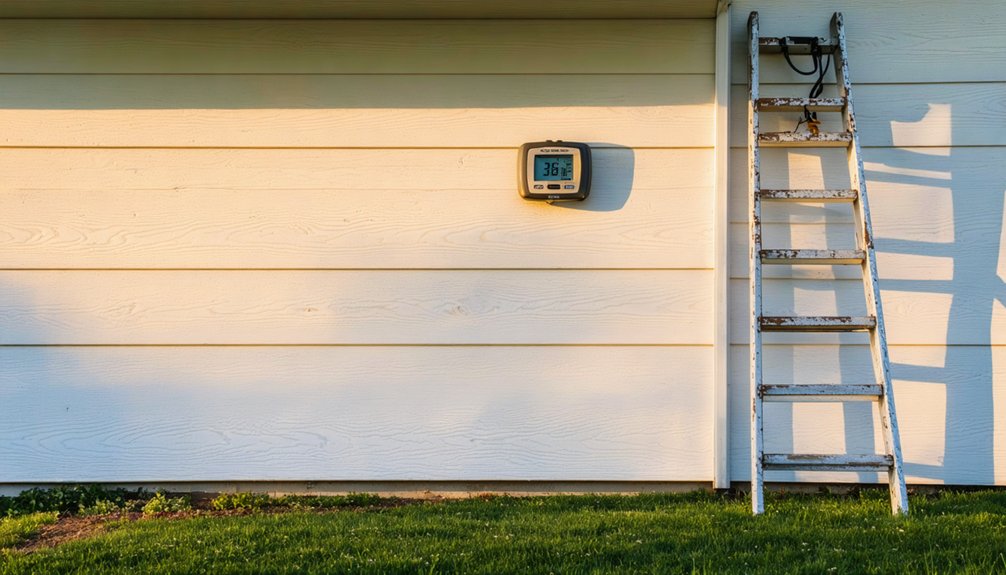
We’ve established fall as the ideal season, but success hinges on maintaining precise temperature parameters throughout the application and curing process. Industry standards require ambient temperatures between 50°F and 85°F, with surface temperatures never exceeding 90°F to prevent premature drying and adhesion failure.
Modern low-temperature formulations extend our working window down to 35°F, though we recommend staying above 45°F for guaranteed bonding in Idaho’s variable climate.
Minimum Temperature Thresholds
Understanding temperature requirements represents the single most critical factor in achieving a durable exterior paint finish in Idaho’s variable climate. We’ll need to maintain minimum air temperatures of 50°F during application, though specialized low-temperature formulations permit work down to 35-40°F. Surface temperature measurement using an infrared thermometer proves essential, as surfaces can differ dramatically from ambient conditions—particularly dark-colored siding in direct sunlight.
Critical temperature thresholds we must monitor include:
- Minimum air temperature: 50°F for standard products, 35-40°F for low-temperature formulations
- Surface-to-dew point differential: Minimum 5°F above dew point prevents condensation interference
- Post-application temperatures: Must remain above 32°F for several days during curing
These specifications aren’t suggestions—they’re requirements for proper film formation and long-term adhesion in our challenging mountain climate.
Advanced Paint Technology
While traditional latex paints required air temperatures above 50°F for successful application, today’s advanced formulations have fundamentally altered our weather-dependent scheduling constraints. Paint technology advancements from manufacturers like Sherwin-Williams and Benjamin Moore now allow application in temperatures as low as 35°F under favorable conditions.
Modern paint composition incorporates engineered polymers that cure effectively across wider temperature ranges while maintaining durability against Idaho’s expansion-contraction cycles.
We’ve seen these formulations specifically designed for cold climate environments extend our seasonal working windows considerably. Benjamin Moore’s Aura line exemplifies this evolution in exterior coatings. Each product’s Technical Data Sheet specifies exact temperature parameters—we always verify these specifications before scheduling application.
This technology grants us flexibility our predecessors never experienced, though we still prioritize the ideal 77°F application temperature when possible for superior results.
Why Late Spring and Early Fall Are Idaho’s Sweet Spots
When temperatures consistently hover between 60-85°F, exterior paint achieves ideal adhesion and curing—conditions that late spring and early fall reliably deliver across Idaho. We’ve found these windows offer more than comfortable working conditions—they’re scientifically optimal for paint chemistry.
Regional humidity patterns during these periods create the perfect environment for molecular bonding. Lower moisture levels accelerate drying while preventing common defects like bubbling or peeling. Paint formulation considerations become critical here: latex performs exceptionally between 50-70°F, while oil-based variants tolerate 45-90°F ranges.
Why we prioritize these seasons:
- Stable weather forecasts minimize rain interruptions and guarantee complete curing cycles
- Autumn’s low humidity promotes uniform film formation across all surface profiles
- Spring’s moderate conditions prevent rapid evaporation that compromises adhesion quality
These targeted timeframes maximize your investment’s longevity.
Regional Climate Differences: Northern vs. Southern Idaho
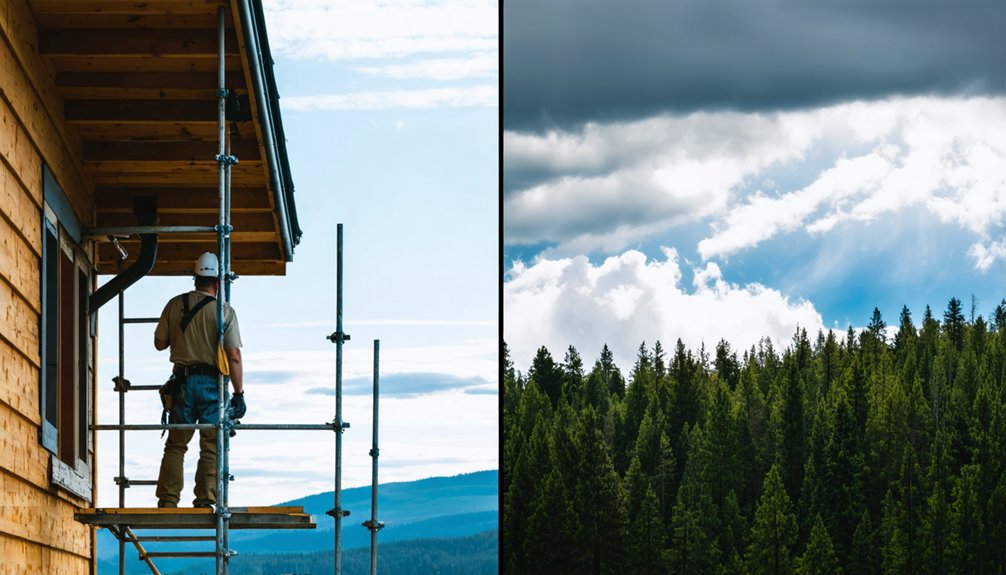
Idaho’s dramatic topography creates two distinct painting environments that demand different scheduling strategies. We’re working with significant precipitation variability between regions—northern elevations receive up to 50 inches annually while southern plateaus get less than 10. This affects our ideal painting windows considerably.
Northern Idaho benefits from temperature moderation through maritime influence via the Columbia River Gorge. Coeur d’Alene’s range of 22°F to 85°F gives us more forgiving conditions year-round.
Southern Idaho presents challenges with extreme diurnal swings exceeding 30°F and record highs reaching 111°F in Boise.
For northern projects, we’re targeting late June through September when precipitation decreases. Southern Idaho offers broader windows—April through October—thanks to drier conditions but requires careful monitoring of those extreme temperature fluctuations that can compromise paint adhesion and curing.
Choosing the Right Paint for Idaho’s Extreme Weather
Because Idaho’s temperature extremes and variable precipitation create exceptional stress on exterior coatings, we’re selecting paints with specific performance characteristics that match our regional demands. Paint durability considerations must include 100% acrylic latex formulations that flex with temperature fluctuations while maintaining structural integrity.
The moisture barrier importance can’t be overstated—we need permeable coatings that repel liquid water while allowing vapor escape, preventing trapped moisture damage.
Top-performing options for our conditions include:
- Sherwin-Williams Emerald Urethane Enamel for Coeur d’Alene’s extreme moisture and temperature swings
- BEHR DYNASTY with 60-minute rain resistance and 35°F application capability for unpredictable weather
- Dunn-Edwards Evershield featuring Paramite mildewcides and EverFlex elasticity for northern Idaho’s wet climate
These formulations demonstrate less than 5% color shift after 10 years, ensuring long-term performance under Idaho’s demanding conditions.
Color Selection Strategies for Idaho’s Sun and Climate
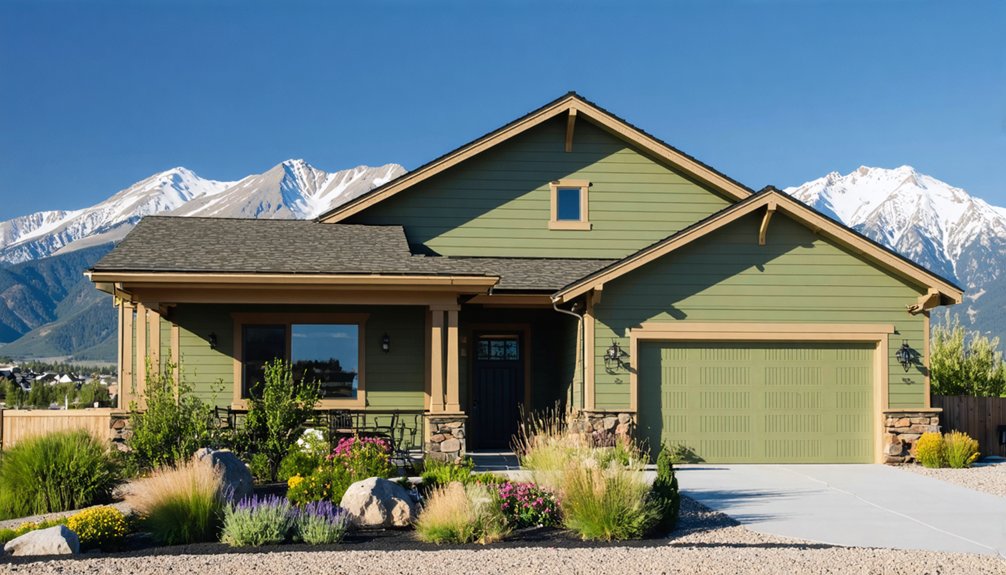
Selecting exterior colors for Idaho homes requires balancing aesthetic preferences with measurable performance criteria that directly impact paint longevity and energy efficiency. We recommend lighter earth tones and warm neutrals like Sherwin-Williams Accessible Beige or Benjamin Moore Revere Pewter because they reflect solar radiation, reducing temperature impact on both paint film and interior cooling loads. These selections maintain superior color saturation retention compared to darker alternatives under prolonged UV exposure.
For homeowners prioritizing modern aesthetics, deep charcoals like Sherwin-Williams Iron Ore or Benjamin Moore Hale Navy withstand Idaho’s intense sunshine without significant fading when formulated with high-quality resins. We’ve observed muted greens—Clary Sage, Saybrook Sage—deliver excellent performance across suburban installations, complementing regional landscapes while minimizing heat absorption. Consider your architectural style and microclimatic conditions when finalizing selections for ideal long-term results.
Timing Your Project to Avoid Weather-Related Delays
Successful exterior painting projects hinge on understanding Idaho’s seasonal weather patterns and their direct impact on paint performance. We’ve learned that pre-project preparation requires monitoring weather forecasts for dry stretches lasting several days.
Idaho’s unpredictable weather patterns make careful forecast monitoring and multi-day planning absolutely essential for exterior painting success.
Spring showers demand strategic scheduling around storms, while summer’s extreme heat necessitates morning or evening work schedules. Fall delivers ideal conditions with stable temperatures and lower humidity, making it our preferred season for large-scale projects.
Essential timing considerations include:
- Temperature monitoring: Maintain surfaces between 50°F and 85°F during application and curing
- Moisture mitigation techniques: Avoid painting within 24 hours of rain or when morning dew persists
- Surface temperature testing: Verify metal and direct-sun surfaces don’t exceed 90°F before application
These strategies prevent adhesion failures and guarantee professional-grade results.
Frequently Asked Questions
How Long Does Exterior Paint Typically Last in Idaho’s Climate?
In Idaho’s climate, we’ll see exterior paint last 5-10 years depending on quality and surface type. Paint durability in varying seasons demands we establish a proper exterior paint maintenance schedule, factoring UV exposure, freeze-thaw cycles, and moisture levels together.
Should I Hire Professionals or Paint My Idaho Home Myself?
We’d love to say DIY painting challenges build character, but Idaho’s climate demands professional painter benefits—proper surface prep, weather-resistant coatings, and application timing expertise. You’re joining homeowners who prioritize lasting results over weekend projects.
What Is the Average Cost to Paint a House Exterior in Idaho?
In Idaho, we’re looking at $4,800-$6,300 on average for exterior painting. Your geographic location and weather patterns profoundly influence final costs, with per-square-foot rates ranging $2-$4 depending on your home’s specific conditions and requirements.
Do I Need Permits to Paint My Home’s Exterior in Idaho?
exterior painting doesn’t require permits in Idaho’s jurisdictions. According to local building codes and painting regulations in Ketchum, Boise, and Franklin, we’re free to refresh our homes’ exteriors without paperwork hassles.
How Should I Prepare My Home’s Exterior Surfaces Before Painting?
We’ll clean and inspect surfaces thoroughly with pressure washing, then scrape off old paint using pull-style scrapers. After feather-sanding adhered edges and priming bare wood, we’ll caulk all seams for ideal adhesion and long-lasting results.