We’ve found that preparing Shoshone exteriors requires addressing the high-desert climate‘s unique challenges—209 sunny days create intense UV degradation, while temperature swings from 17°F to 88°F demand flexible coating systems. We start by scheduling projects during late spring or early fall when temperatures stay between 60-80°F for ideal adhesion. Our prep protocol includes thorough dust mitigation, mineral deposit removal with TSP substitute, and 48-hour drying periods before application. We’ll cover the specific surface preparation techniques and wind-management strategies that protect your investment through freeze-thaw cycles.
Key Takeaways
- Schedule painting during late spring (May-June) or early fall (September-October) when temperatures range between 60-80°F for optimal adhesion.
- Remove dust, mineral deposits, and contaminants through sweeping, wet-washing with TSP substitute, and allowing 48-hour drying periods.
- Back-prime bare wood surfaces to prevent moisture extraction in Shoshone’s semiarid climate with only 10.47 inches annual precipitation.
- Plan applications during morning hours when winds stay under 10 mph, avoiding afternoon gusts that can reach 34 mph.
- Use UV-resistant formulations designed for 209 sunny days and rapid cross-linking technology for temperature swings between 17°F and 88°F.
Understanding Shoshone’s Climate and Its Impact on Exterior Painting
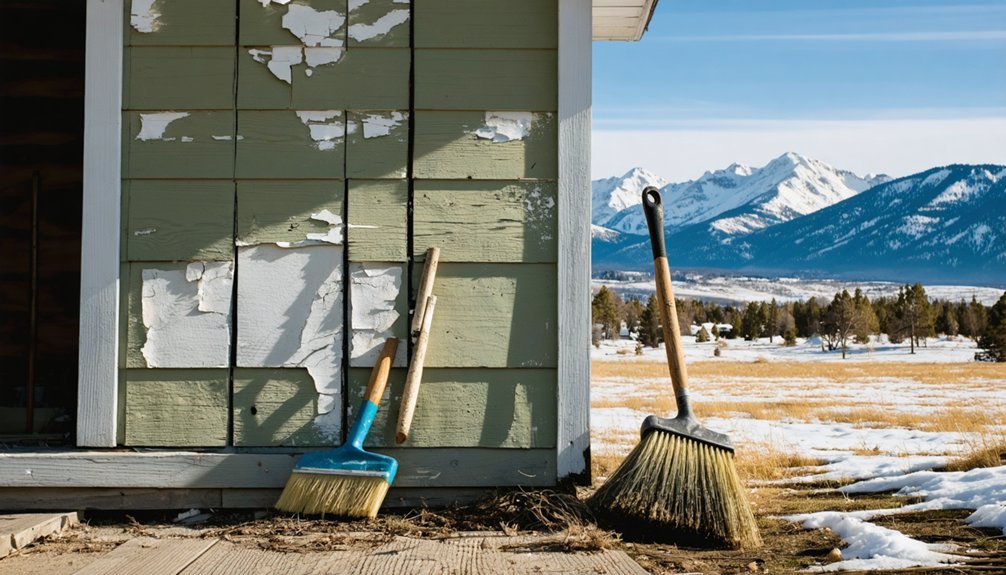
When planning exterior painting projects in Shoshone, Idaho, we must account for the region’s semiarid climate characterized by 10.47 inches of annual precipitation and 209 sunny days per year. The frequent humidity changes—from 78% in January to 59% in March—create expansion and contraction cycles that stress paint adhesion.
We’re dealing with periodic freeze thaw cycles between winter lows of 17°F and summer highs of 88°F, which can cause substrate damage and coating failure. The 100-125 annual frost days demand alkyd or acrylic latex formulations rated for zone 6b conditions.
Strong spring winds averaging 18-19 mph accelerate moisture evaporation during curing, requiring strict application timing. Understanding these environmental factors guarantees suitable paint performance and longevity for our community’s homes.
Choosing the Right Season for Your Painting Project
Because Shoshone’s semiarid climate presents distinct challenges throughout the year, we’ve identified late spring (May-June) and early fall (September-October) as the ideal windows for exterior painting projects. During these periods, we’ll benefit from suitable temperatures between 60-80°F that guarantee proper adhesion and curing.
Spring’s extended daylight hours accelerate our prep work timing, though we must monitor intermittent rain showers that could compromise moisture management protocols. Fall offers superior conditions with lower humidity reducing surface defects like bubbling and cracking. We strongly advise against summer’s extreme heat, which causes premature drying and brush marks, requiring dawn starts. Winter temperatures consistently drop below 50°F, preventing adequate curing.
Surface Preparation in Shoshone’s Dry High-Desert Environment
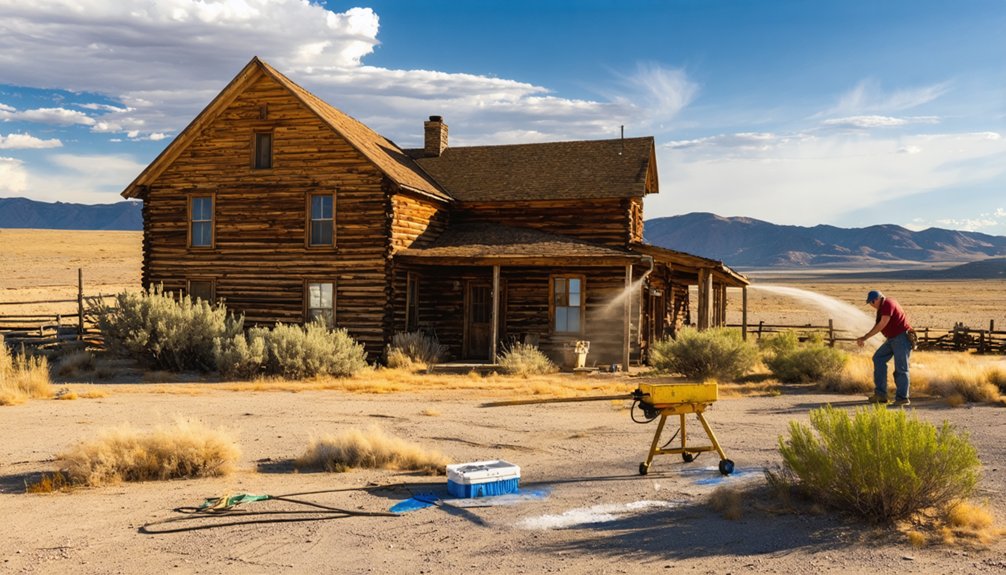
In Shoshone’s high-desert environment, we’re confronting surface preparation challenges that differ markedly from humid-climate protocols—specifically, fine airborne dust infiltration and rapid moisture evaporation that compromise coating adhesion. Our dust mitigation strategies begin with systematic sweeping and vacuuming before wet-washing, followed by tack cloth application to capture microscopic particles. We’ll increase interior humidity to 40-50% using humidifiers, preventing premature primer curing that causes microcracks.
For mineral deposit removal methods on exteriors, we’re washing with TSP substitute diluted 1:4, then thoroughly rinsing alkaline residue. Stucco surfaces require low-pressure washing at 1000 PSI maximum. We’re allowing 48-hour drying periods post-cleaning, scraping UV-degraded material to firm substrate, and applying elastomeric caulk rated for 200% elongation. Back-priming bare wood prevents moisture extraction, ensuring durable adhesion.
Working With Temperature Swings and Wind Conditions
While proper surface preparation establishes adhesion integrity, Shoshone’s atmospheric dynamics—specifically diurnal temperature fluctuations of 20-30°F and sustained westerly winds averaging 15-24 mph—directly impact coating viscosity, flash-off rates, and film formation.
We schedule applications between 50-90°F, avoiding periods when nighttime lows drop below 35°F, which compromises curing uniformity. Optimizing spray applications requires monitoring afternoon gusts that reach 34 mph, causing overspray drift and debris contamination.
We’ve found success mitigating wind disruption through strategic morning windows when speeds remain under 10 mph. For unavoidable breezy conditions between 10-20 mph, we deploy portable windscreens and shift to brush-and-roller techniques.
High-desert formulations with accelerated cross-linking agents accommodate Shoshone’s rapid evening temperature drops while maintaining film integrity throughout the cure cycle.
Protecting Your Paint Job From Weather-Related Damage
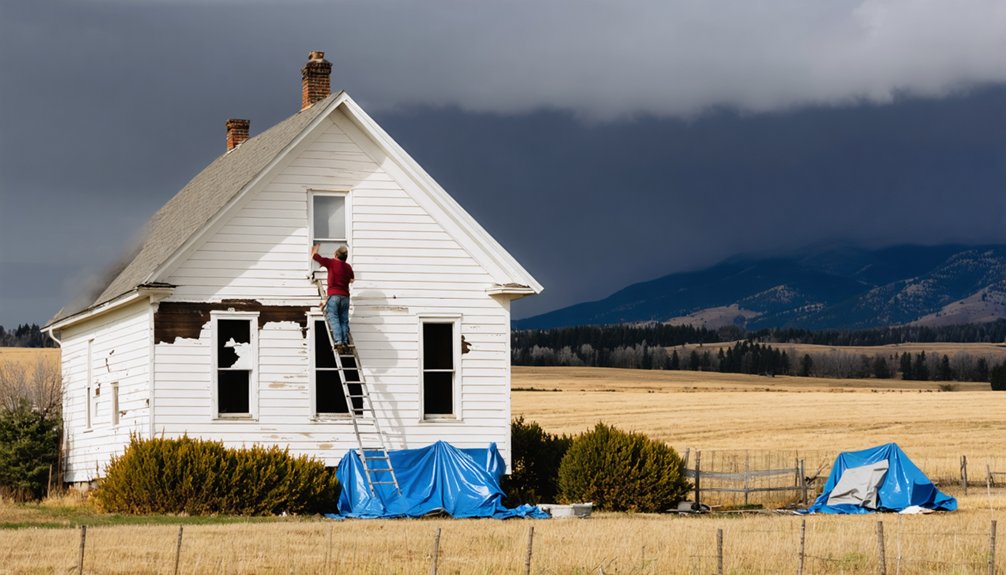
Although Shoshone’s arid climate delivers only 10.47-11 inches of annual precipitation across 54-70 days, the concentrated moisture events—particularly January’s 1.24-1.38 inch peak and 10.8 inches of snowfall—impose critical weatherproofing requirements we integrate into every exterior coating project.
Winter’s concentrated moisture and 10.8 inches of snowfall demand specialized weatherproofing protocols for every Shoshone exterior coating application.
Our moisture control protocols address the 78% January humidity and 23-24°F dew points that compromise film adhesion. We implement:
- UV protection systems designed for 209 annual sunny days that accelerate pigment degradation
- Wind-resistant application techniques countering February’s 19 mph average speeds to prevent contamination
- Protective barriers during winter months when elevated humidity and snowfall threaten curing processes
We time applications for spring’s declining humidity patterns (59% March, 52% April) and summer’s minimal precipitation, maximizing coating performance throughout exposure cycles.
Frequently Asked Questions
What Paint Brands Work Best in Shoshone’s High-Desert Climate Conditions?
We’d recommend Behr Premium Plus Ultra, Benjamin Moore Aura, Dunn-Edwards Evershield, or Sherwin-Williams Emerald for excellent paint durability in harsh conditions. These formulations specifically address sun exposure impact through advanced UV-resistant technology, ensuring long-lasting protection in high-desert environments.
How Much Does Professional Exterior Painting Typically Cost in Shoshone, Idaho?
We’ve seen exterior painting projects in Shoshone run $2,900-$5,000 for typical homes. The average hourly rate for painters in Shoshone ranges $40-$65, with a typical exterior painting project timeline spanning 3-7 days depending on square footage.
Do I Need Special Permits to Paint My Home’s Exterior?
Standard residential repainting typically doesn’t require permits in Shoshone. However, we’d recommend checking with local authorities and understanding zoning regulations, especially if you’re considering commercial use conversions or significant color changes that might affect neighborhood aesthetics.
Should I Paint the Trim and Siding at the Same Time?
We’d recommend evaluating painting siding first, then consider staining trim afterward. This sequencing prevents overspray contamination and allows precise edge work. Simultaneous application risks color bleed and compromises finish quality, especially when mixing latex and oil-based products.
How Long Will My Exterior Paint Job Last in This Climate?
Idaho’s elemental forces—freeze-thaw cycles, intense UV, and arid conditions—test paint durability factors relentlessly. We’d expect your exterior coating to last 5-7 years, though environmental conditions impact varies based on substrate type and product quality.