We recommend scheduling your Hansen exterior painting project during late spring through early fall when temperatures consistently stay above 50°F. Start by pressure washing at 1,500-2,500 PSI, then inspect your foundation, siding, and roof components for damage requiring repair before any coating application. We always sand glossy surfaces with 80-120 grit sandpaper and apply appropriate primers—rust-inhibiting for metal, oil-based for wood. Select acrylic latex paints with moisture-repellent mildewcides to withstand Hansen’s climate challenges, and our thorough preparation guide below covers advanced techniques that guarantee decades of protection.
Key Takeaways
- Clean surfaces with soap and water, pressure wash at 1,500-2,500 PSI, and sand glossy areas with 80-120 grit sandpaper.
- Inspect foundation, siding, roof, and windows for damage; repair cracks, rot, and compromised caulking before painting.
- Schedule painting during late spring or early fall when temperatures stay between 50-90°F for optimal paint curing.
- Apply appropriate primers based on surface material: rust-inhibiting for metal and oil-based for wood substrates.
- Choose acrylic latex paints with moisture-repellent formulas and mildewcides to withstand Hansen’s frequent rain and overcast conditions.
Understanding Hansen’s Climate and Its Impact on Exterior Painting
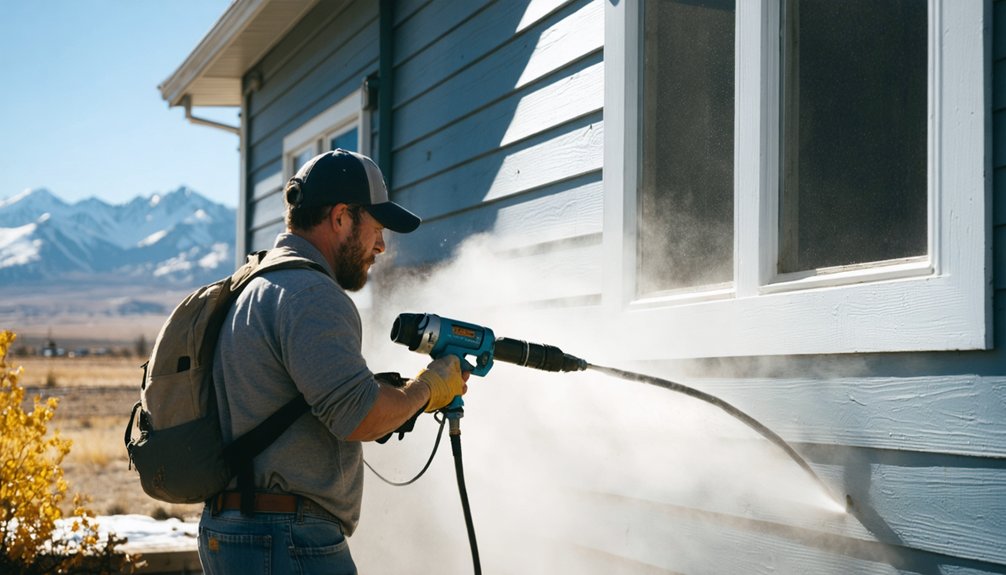
When planning exterior painting in Hansen, we must account for the area’s zone 6b climate, where temperatures swing from winter lows of 25-33°F to summer highs rarely exceeding 85°F. We’re facing 100-125 frost days annually, with the last frost occurring May 1-10, which dramatically narrows our prime painting window.
Tracking temperature fluctuations becomes critical since paint adhesion requires sustained temperatures above 50°F. We’ll need to monitor evening shifts when rain changes to snow, particularly during spring’s unpredictable 46-63°F days. Monitoring humidity levels is equally essential—our frequent rain showers and overcast conditions affect drying times and finish quality.
Southwest winds at 10-15 mph can compromise application, while our 9-hour winter daylight limits work schedules. We’re committed to timing projects when atmospheric conditions support proper curing.
Choosing the Right Season for Your Painting Project
Since Hansen’s climate presents distinct challenges across each season, selecting the best timeframe determines whether your exterior paint project succeeds or fails prematurely. We’ve found that late spring and early fall deliver ideal painting conditions, with temperatures consistently between 60-80°F and minimal weather-related challenges.
Late spring and early fall provide Hansen homeowners the most reliable conditions for exterior painting projects that endure.
Spring offers extended daylight but requires monitoring rain forecasts carefully. Summer’s dry consistency works well when we schedule applications during cooler morning hours, avoiding rapid drying that compromises adhesion.
Fall provides superior results through stable temperatures and lower humidity, though shorter days limit our working windows.
We must never apply paint below 50°F or above 90°F—both extremes compromise curing and durability. Together, we’ll identify your suitable window by evaluating local microclimates, including shade patterns and wind exposure specific to your property.
Essential Surface Preparation Steps
Though many homeowners underestimate its importance, thorough surface preparation determines paint longevity more than any other project variable. We’ll start by cleaning all surfaces with soap and warm water, applying trisodium phosphate for oil residue removal.
For Hansen’s exterior surfaces, we recommend pressure washing at 1,500-2,500 PSI, maintaining 12-18 inches distance.
Next, we’ll address sanding requirements using 80-120 grit sandpaper on glossy or rough areas, ensuring proper paint adhesion. Mitigating surface imperfections involves filling cracks and holes with patching compound, then sanding smooth after drying.
We’ll apply appropriate primers—rust-inhibiting for metal, oil-based for wood—to seal repairs and create uniform coverage. Finally, we’ll mask trim, windows, and fixtures with painter’s tape while protecting floors and landscaping with drop cloths before painting begins.
Inspecting and Repairing Your Home’s Exterior
Before applying the first coat of paint, we’ll conduct a thorough exterior inspection to identify structural issues, material defects, and moisture problems that could compromise your paint job’s longevity. We’ll examine your foundation for cracks, water damage, and settling patterns while guaranteeing no wood-to-ground contact exists.
Our team checks siding materials for rot, warping, and delamination, then assesses roof components including shingles, flashing, and soffit integrity. We’ll inspect window frames for gaps and compromised caulking that require attention. During uncovered plumbing inspections, we’ll identify exposed pipes needing protection.
Gutter downspout maintenance ensures proper water diversion from your foundation. We’ll document all deterioration before repairs begin, distinguishing pre-existing conditions from new concerns. This inclusive assessment safeguards your investment and ensures ideal paint adhesion.
Selecting Paint Types Suited for Idaho Weather Conditions
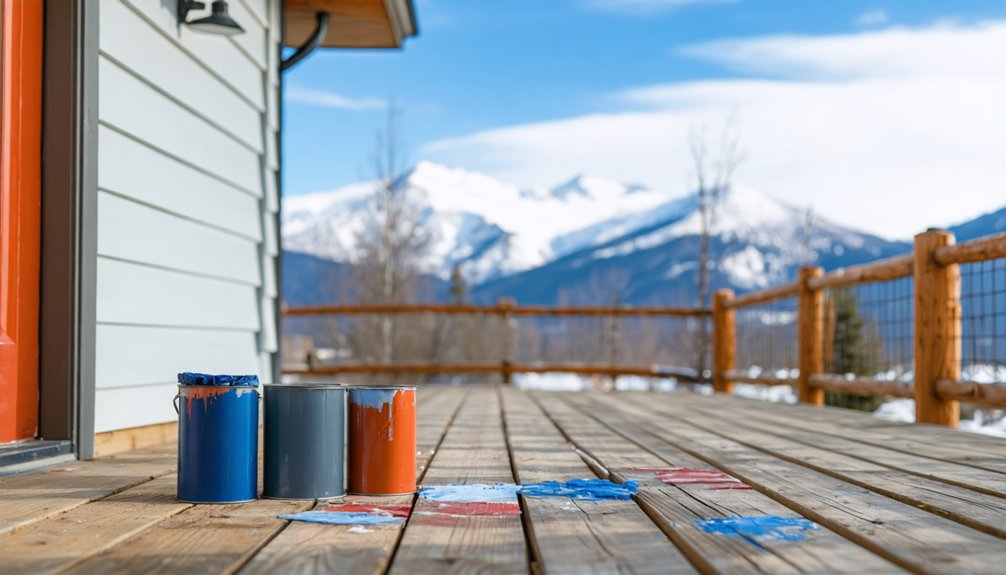
When selecting exterior paint for Idaho homes, we prioritize formulations engineered to withstand the region’s demanding climate challenges. Our region’s temperature fluctuations between freezing winters and warm summers require high-quality acrylic latex paints offering superior temperature adaptability features—these expand and contract without cracking or peeling.
We recommend moisture repellent formulas containing mildewcides to combat irrigation, rain, and snowmelt exposure. Products like Sherwin-Williams Emerald Urethane Enamel and Benjamin Moore Aura deliver proven performance across extreme conditions. For ideal UV protection, we select lighter shades—whites, grays, and pastels—which resist fading better than darker colors while reducing cooling costs.
In northern Idaho’s wetter conditions, we specify paints with enhanced mildew resistance and superior adhesion. Proper application timing matters: we schedule exterior painting during late spring through early fall when temperatures exceed 50°F.
Protecting Landscaping and Surrounding Areas
Professional exterior painting requires systematic protection of your home’s landscaping and surrounding features. We evaluate your property’s scope, identifying sensitive vegetation that needs special coverage during our work. Our team establishes access paths that avoid damaging grass and flower beds while integrating plants into the painting process seamlessly.
Before we begin, we’ll adjust sprinkler systems away from surfaces and mask ground areas with drop cloths. During powerwashing and preparation, we direct debris away from garden edges and protect mulch beds from chemical runoff. This approach guarantees we’re safeguarding delicate foliage throughout each phase.
We conduct daily cleanup protocols, removing paint chips from vegetation borders. After completion, we maintain protected zones until surfaces fully cure, preventing contamination. Our warranty verification includes thorough inspection of your surrounding areas.
Priming Techniques for Long-Lasting Results
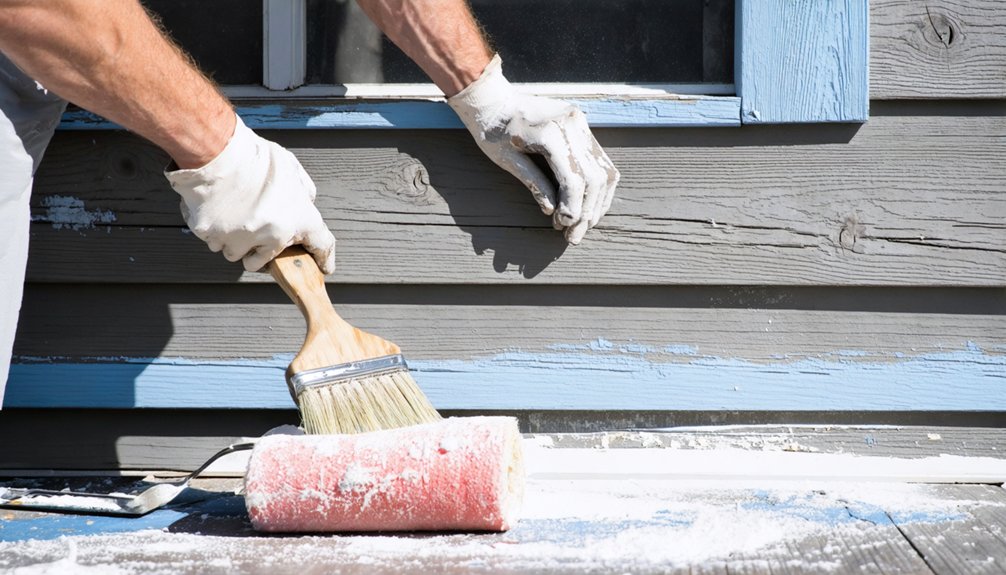
Laying down proper primer sets the foundation for paint adhesion and durability that’ll last years beyond standard applications. We’ll start by selecting the right product—water-based latex for general walls, oil-based for wood tannin blocking, and specialized formulas with stain blocking capabilities for smoke damage or water marks. High build advantages come into play on uneven older walls, smoothing minor imperfections before topcoating.
We’ll cut in first using a 2-inch brush, creating bands around corners, moldings, and ceiling lines. Then we’ll roll 3-by-3-foot sections with V-pattern strokes, maintaining proper coverage at 250-400 square feet per gallon. Always wear safety glasses during application. After three hours’ drying time, we’ll sand the surface with medium-grit blocks, ensuring ideal paint adhesion for our Hansen homes.
Final Checklist Before Application Day
With primer dried and sanded, we’re ready to tackle the systematic preparation that’ll protect our investment and verify professional results.
We’ll email our chosen paint colors to our contractor, confirming contractor timeline confirmation before application day.
Next, we’re coordinating with household members who are sensitive to paint odors, arranging their temporary relocation from the job site.
Our final walkthrough focuses on high-risk areas—we’ll validate painter’s tape adheres properly to windows, baseboards, and ceiling edges.
We’re double-checking that dropcloths cover all floors and remaining furniture completely.
Our pets need secure relocation away from work zones.
We’ll confirm our contractor will provide leftover paint and detailed color records for future touch-ups.
This systematic approach assures we’re protecting our Hansen home while achieving that professional finish we deserve.
Frequently Asked Questions
How Much Does Professional Exterior Painting Cost in Hansen, Idaho?
We’ll find professional exterior painting in Hansen typically costs $2.20 to $4.37 per square foot. This includes average hourly labor rates and cost of paint materials. For proper surface preparation and safe application, we recommend budgeting $3,000 to $8,000 for most homes.
Do I Need Permits to Paint My Home’s Exterior?
No, we don’t need permits for exterior painting—unlike barn-raising days, cosmetic work isn’t regulated. However, we’ll verify building code requirements and local regulations with Hansen’s building department to guarantee our project meets all safety standards together.
How Long Will the Paint Job Last in Hansen’s Climate?
We’ll see 5-10 years of paint longevity with proper surface preparation and quality products. Climate considerations like Hansen’s 100-125 frost days require freeze-resistant formulations and elastic coatings to prevent cracking, ensuring our work withstands Zone 6b conditions together.
Should I Paint the House Myself or Hire Professionals?
We’d recommend hiring professionals for Hansen homes. While DIY paint preparation saves money initially, professional application quality guarantees proper surface prep, even coverage, and lasting durability that safeguards your investment through Idaho’s harsh seasonal temperature swings.
What Color Restrictions Apply in Hansen Residential Areas?
We’ll need to verify your homeowner association guidelines first, as they control approved color schemes for exterior painting. If you’re not in an HOA, Twin Falls County building codes don’t restrict residential colors—safety and structural compliance matter most.