We’ve found that preparing your Declo home for exterior painting requires systematic surface inspection for structural deficiencies, followed by power washing at 1300-1500 psi to remove oxidation and biological growth. You’ll need to apply peel bond primers with adhesion promoters on compromised areas, execute proper caulking along trim gaps and settling cracks, then mask windows and features for clean paint lines. Our thorough preparation process addresses Idaho’s extreme temperature swings between freezing winters and 90°F summers, which accelerate paint failure on inadequately prepped substrates—and there’s specific techniques that maximize your paint job’s longevity.
Key Takeaways
- Inspect exterior for structural deficiencies, foundation settlement, and moisture control issues before beginning any surface preparation work.
- Power wash siding at 1300-1500 psi using biodegradable mildewcide solutions to remove oxidation, dirt, and biological growth.
- Caulk window gaps, trim joints, and settling cracks, then paint over wet caulk for maximum adhesion and moisture protection.
- Apply peel bond primer with adhesion promoters to failing paint edges and chalky surfaces for long-lasting topcoat performance.
- Mask windows, doors, and trim with properly sealed tape and protect adjacent surfaces with drop cloths before painting.
Inspecting Your Home’s Exterior for Problem Areas
Before scheduling any painting contractor in Declo, we’ll need to conduct a systematic exterior inspection to identify structural deficiencies and surface anomalies that’ll compromise paint adhesion and longevity. We’ll verify structural soundness by examining ridge lines, fascia boards, and foundation integrity—checking for cracks exceeding ¼ inch that demand professional intervention. Our assessment includes evaluating window and doorframe squareness, identifying bowed or sagging walls, and documenting foundation settlement patterns.
For proper moisture control, we’ll inspect downspout drainage trajectories, gutter seal integrity, and soil grading around the perimeter. We’re looking for water pooling indicators and foundation water damage. Surface preparation requirements include cataloging flaking paint, corrosion spots, and substrate deterioration. We’ll also examine wood trim for rot, decay, and joint seal failures requiring remediation before paint application.
Power Washing and Deep Cleaning the Surfaces
Before we apply primer and paint to your Declo home’s exterior, we must eliminate all surface contaminants through thorough power washing.
We’ll focus on removing the chalky oxidation layer that develops on aged siding and clearing debris from gutters, downspouts, and trim areas where dirt accumulation compromises paint adhesion.
This deep cleaning process establishes the clean, properly prepared substrate essential for achieving a durable, professional-grade paint finish.
Removing Dirt and Chalkiness
The pressure washing phase demands meticulous preparation to protect both the property and personnel while achieving ideal surface cleanliness. We’ll address chalky surfaces through systematic application of specialized cleaning agents that break down accumulated oxidation and biological growth.
Our proven approach includes:
- Chemical Application: We mix biodegradable solutions with mildewcide additives in manufacturer-specified ratios, targeting mold, algae, and chalking compounds that compromise paint adhesion.
- Pressure Calibration: We test equipment on inconspicuous areas matching your surface type, adjusting from 1300-1400 psi to remove contaminants without damaging substrates.
- Top-Down Technique: We work systematically from upper sections downward, preventing streaking and confirming complete dirt removal before rinsing.
This methodical process guarantees proper surface preparation, creating the perfect foundation for your home’s new protective coating.
Clearing Gutters and Debris
When preparing exterior surfaces for paint application, gutter maintenance serves as a critical preliminary step that directly impacts coating performance and longevity. We’ll address debris buildup systematically to prevent contamination during subsequent power washing phases.
Clogged gutters release leaves and twigs onto freshly cleaned surfaces, creating discoloration points that compromise aesthetic quality. Additionally, accumulated organic matter promotes algae growth, which accelerates paint degradation through moisture retention and biological activity.
Caulking and Repairing Damaged Areas
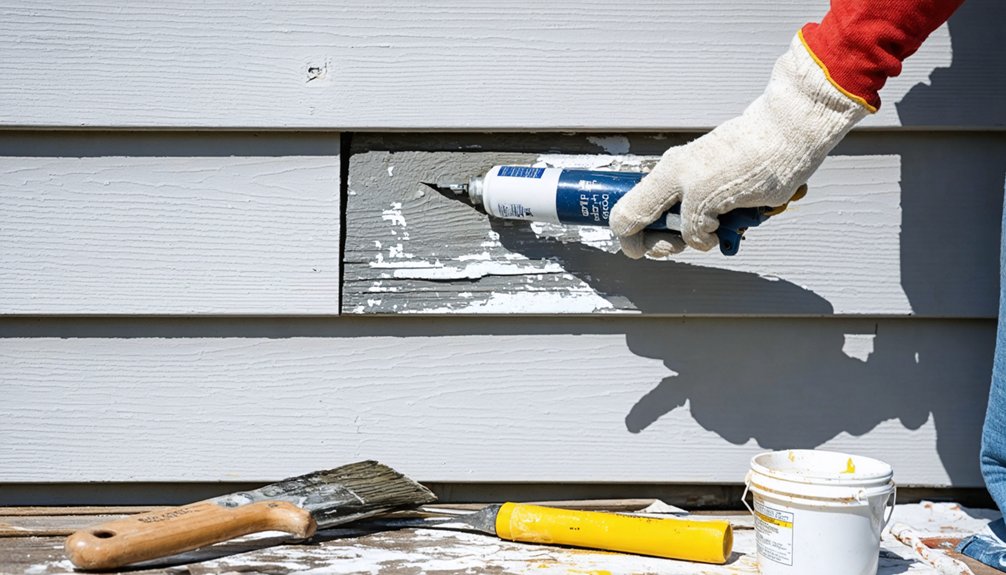
Our systematic approach includes:
- Caulk application – Apply small beads along windows, trim gaps, and settling cracks using clear or white formulations depending on substrate
- Surface preparation – Pressure wash chalky areas, then prime with adhesion promoters like Zinsser Peel Bond on compromised edges
- Timing integration – Execute proper caulk application timing by painting over wet caulk the same session, back-rolling for maximum penetration
This methodology guarantees your home’s envelope remains sealed against Idaho’s temperature fluctuations and moisture intrusion.
Applying Primer for Maximum Paint Adhesion
When we encounter peeling paint along trim edges or chalky exterior surfaces in Declo’s climate, we rely on specialized primer additives to restore proper adhesion. Peel bond primers contain adhesive promoters that chemically grip failing paint edges, creating a mechanical bridge between old and new coatings.
For chalky surfaces—common on aged siding exposed to Idaho’s intense UV radiation—we incorporate bonding additives that penetrate the degraded layer and establish substrate-level adhesion before topcoat application.
Peel Bond for Edges
Before topcoating begins, we apply peel bond primer to stabilize compromised paint edges and create a high-performance foundation that prevents future coating failures. This specialized primer penetrates three times thicker than standard products, filling alligatored areas while maintaining flexibility to prevent cracking over time.
Our application process guarantees optimal performance:
- Brush coverage targets worn paint edges, working product deep into cracks and cavities where peeling typically originates
- Uneven substrate repair occurs through high-build application up to 20 mils wet, bridging surface irregularities that compromise adhesion
- Back-brushing technique after spraying forces primer into pores and gaps, creating mechanical bonds on hard-to-paint surfaces
The formula goes on milky and dries clear, allowing us to track progress efficiently. Within two hours, we’re ready for latex topcoating.
Chalky Surface Bond Additives
Chalky exterior surfaces in Declo’s high-desert climate demand specialized bonding treatments that standard primers can’t provide. We recommend stir-in additives like Owatrol Easy-Bond or EB Emulsa-Bond, which integrate directly into your first water-based paint coat at a 10% ratio. These solutions offer superior penetration enhancement, binding residual chalk particles that washing alone can’t eliminate.
For severe chalking on stucco or concrete, we’ll apply Chalk-Force epoxy-acrylic primer as a surface conditioner before topcoating. Chalky Wall Sealer works exceptionally well as a flood coat via airless sprayer, stabilizing powdery masonry while maintaining color stabilization between coats. These treatments increase coverage up to 20% and provide alkali resistance—critical for our region’s mineral-rich soils.
Always hand-wash surfaces first; additives won’t perform over unwashed powder accumulation.
Masking and Protecting Key Features
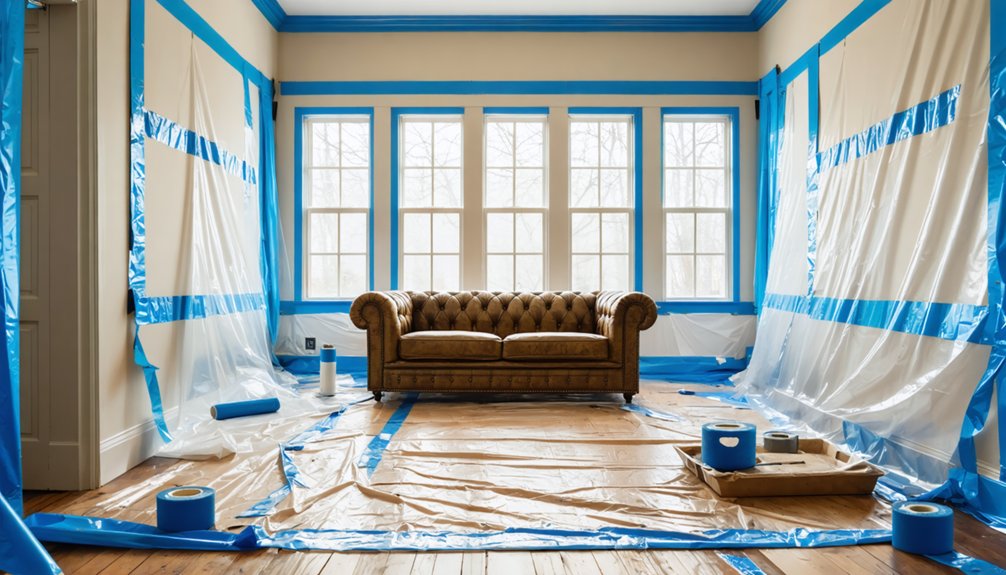
Proper masking separates professional-grade paint applications from amateur attempts. We’ll demonstrate efficient masking techniques that protect your Declo home’s key features while ensuring crisp, clean lines.
Mastering proper masking techniques is the difference between a flawless, professional finish and a disappointing amateur job.
Our systematic approach includes:
- Window Protection – We apply tape slightly wider than frames, starting at edges and smoothing outward to eliminate bubbles. Our hand maskers dispense 9-inch paper and 1-inch tape simultaneously for faster coverage on new construction.
- Door and Trim Masking – We use narrower tape for intricate panel designs, overlapping at corners with firm pressure to prevent seepage. Ideal tape placement on baseboards, window sills, and ceiling lines creates professional boundaries.
- Surface Coverage – We layer drop cloths over masking paper, protecting floors, fixtures, and adjacent surfaces like decks and concrete from overspray.
Choosing the Right Application Method for Long-Lasting Results
After securing your Declo home’s features with quality masking materials, selecting the best paint application method directly impacts both initial coverage and long-term durability. We’ll examine options that optimize paint transfer efficiency while ensuring superior results.
Spray application dominates professional work due to its versatility. HVLP systems deliver exceptional paint transfer efficiency through low-pressure atomization, reducing material waste while achieving uniform film thickness. Electrostatic techniques charge particles to wrap around contoured surfaces, providing remarkable surface smoothness and coverage on complex architectural details.
For smaller projects, we recognize brush application as viable, though rollers create pattern uniformity issues affecting hiding performance. Air-atomized spraying requires adequate ventilation but suffers from poor transfer efficiency. We recommend airless or HVLP systems for residential exteriors, balancing material conservation with professional-grade surface smoothness and coverage.
Frequently Asked Questions
How Often Should I Repaint My Declo Home’s Exterior?
We’d recommend repainting every 7-10 years, though it’s no coincidence that proper surface preparation importance and professional paint application techniques directly impact longevity—especially given Declo’s freeze-thaw cycles and UV exposure affecting your home’s exterior durability.
What Time of Year Is Best for Exterior Painting in Idaho?
We’ve found late spring and early fall deliver ideal painting conditions in Idaho. These seasons provide stable weather patterns with moderate temperatures between 60-80°F and low humidity, ensuring proper paint adhesion and curing for your home’s exterior.
How Long Does Exterior Paint Typically Last in Declo’s Climate?
We typically see exterior paint lasting 5-7 years in Declo’s climate. Your home’s exposure levels to UV radiation and significant temperature variations between seasons accelerate paint degradation, requiring more frequent maintenance cycles than milder regions experience.
Should I Hire a Professional or Paint My Home Myself?
Like choosing between field plowing and hiring equipment, we’ll weigh DIY painting considerations against professional painter qualifications. We recommend evaluating your technical skills, surface preparation requirements, and desired warranty coverage before committing to either approach.
What Type of Paint Finish Is Recommended for Exterior Walls?
We recommend a satin paint finish for your exterior walls due to its superior durability and moisture resistance in Declo’s climate. Reserve semi-gloss paint finish for trim work and high-moisture areas where enhanced protection’s needed.