We’ve found that successful exterior painting in Burley requires timing your project between late spring and early fall when temperatures stay within the critical 45-85°F application window. You’ll need to address freeze-thaw damage from winter’s -30°F lows, manage rapid solvent evaporation from consistent winds averaging 5-10 mph, and apply flexible 100% acrylic latex systems that accommodate the region’s extreme 137°F annual temperature swing. Our thorough surface preparation protocols account for Burley’s unique semi-arid conditions to guarantee coating systems survive beyond the typical five-year threshold.
Key Takeaways
- Schedule painting between late spring and early fall, targeting April through August for optimal temperature and low precipitation conditions.
- Inspect surfaces for freeze-thaw damage, cracks, and moisture infiltration, particularly around joints, trim, and areas exposed to temperature swings.
- Apply coatings during early morning or evening hours to avoid midday heat and reduce wind-related application issues.
- Select 100% acrylic latex paints with flexible formulations designed to withstand extreme temperature ranges and freeze-thaw cycles.
- Install breathable vapor barriers and seal all penetrations before winter to prevent moisture damage and ensure proper adhesion.
Understanding Burley’s Semi-Arid Climate and Paint Performance
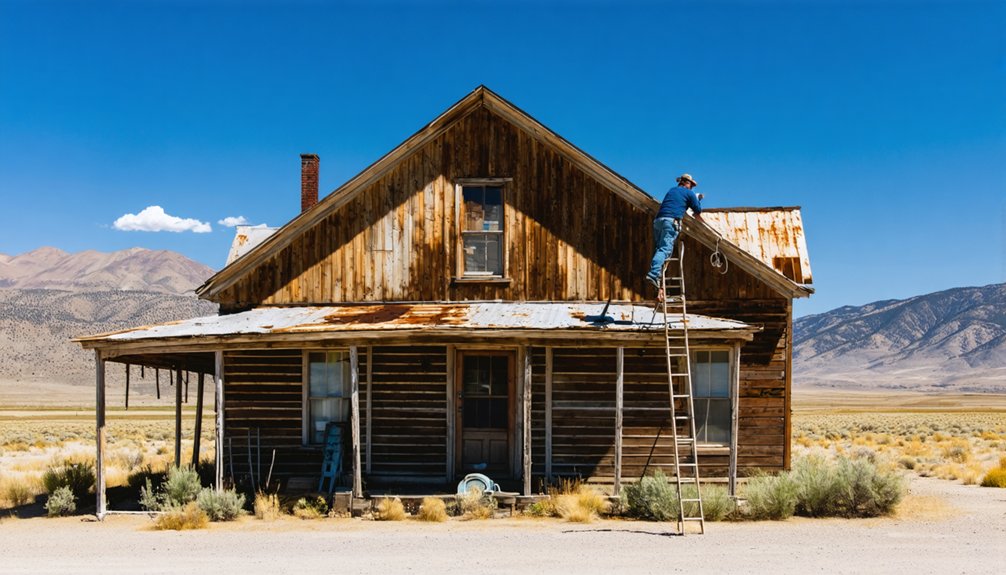
Because Burley, Idaho experiences extreme temperature swings—from record highs of 107°F to lows of −30°F—paint adhesion and film integrity face significant thermal stress cycles that most homeowners underestimate.
We’re dealing with a BSk cold semi-arid climate where low annual precipitation (10.30 inches) and consistent winds create unique surface preparation considerations. The 30°F+ diurnal temperature range during summer months accelerates coating expansion-contraction cycles, directly impacting topcoat longevity expectations.
With 100-125 frost days annually and July’s extreme dryness (0.23 inches), we’ll need substrate moisture content below 15% before application. Our community understands that combining proper surface profiling with climate-appropriate formulations isn’t optional—it’s essential for achieving the 8-10 year performance standards we expect from quality exterior coatings.
Timing Your Exterior Painting Project for Optimal Weather Conditions
When should we schedule exterior painting in Burley to maximize coating performance and minimize application failures? Planning project timelines requires targeting late spring through early fall when temperatures consistently reach 50°F–77°F.
We’ll find favorable conditions between April and June, though spring precipitation demands vigilant weather monitoring. July and August deliver Idaho’s driest stretches—ideal for large-scale applications when we’re adjusting application schedules to early morning or evening hours, avoiding midday heat that accelerates drying rates and compromises adhesion.
Early fall provides stable temperatures and reduced humidity fluctuations that prevent bubbling and cracking. Surface temperatures must exceed dew point by 5°F minimum to guarantee proper curing. Winter conditions fall below critical thresholds, making cold-season exterior work inadvisable for our regional climate parameters.
Managing Temperature Extremes During Application and Drying
Selecting ideal scheduling windows proves insufficient without controlling surface and ambient temperature parameters during active application phases. We’ll need summer temperature control protocols when Burley’s highs reach 88°F averages or exceed historical 107°F peaks. Deploy shade cloth systems and early-morning application schedules to maintain surfaces within the critical 50°F to 90°F range, preventing rapid solvent evaporation and brush mark formation.
Winter insulation strategies become essential when ambient conditions drop to 20°F lows. We’re establishing heated enclosures around application zones, using infrared panels to elevate substrate temperatures above 50°F minimums. Monitor extended cure cycles—expect 24+ hour windows during freezing periods.
March’s shifting 48°F to 56°F temperatures demand vigilant surface thermometer readings, ensuring we’re achieving proper film formation despite variable conditions.
Addressing Low Humidity and Wind Challenges in Southern Idaho
In Burley’s arid climate, we’re contending with outdoor humidity fluctuating between 25-55% and indoor levels dropping to 29%—conditions that accelerate solvent evaporation and compromise film formation. Concurrent wind speeds averaging 5-10 mph with gusts to 29 mph introduce airborne contaminants that embed in wet coatings while further increasing drying rates beyond manufacturer specifications.
We’ll implement humidity modification techniques, strategic timing around diurnal moisture cycles, and physical barriers to establish controlled microenvironments that maintain proper flash-off times and surface adhesion.
Combat Rapid Paint Drying
Southern Idaho’s high desert climate presents a critical challenge for exterior painting projects: accelerated paint drying that compromises finish quality and long-term durability. We’re combating Burley’s 52.2% average humidity levels that cause latex paints to skin over in 1-2 hours, trapping uncured layers beneath.
Our humidity regulating application methods target the ideal 40-50% range while avoiding temperatures exceeding 85°F. We schedule applications during early morning or late afternoon windows when wind velocity decreases and solar intensity diminishes. This approach maintains paint coverage consistency by preventing rapid evaporation that creates lap marks and brush strokes.
We extend manufacturer-recommended recoat intervals by 25-40% in Southern Idaho’s arid conditions, ensuring proper substrate adhesion. By controlling environmental variables—temperature, humidity, and air movement—we’re preventing blistering, wrinkling, and premature failure that plague fast-drying applications.
Minimize Wind-Blown Dust Contamination
Wind-driven contamination threatens exterior coating integrity across Burley’s high desert landscape, where sustained gusts mobilize alkaline dust particles that embed into wet paint films before proper cure cycles complete.
We implement thorough dust mitigation techniques throughout our preparation protocols—power washing removes accumulated sediment, while meticulous caulking eliminates surface irregularities where particles settle. Our on-site climate monitoring systems track wind velocity and atmospheric conditions, allowing strategic application scheduling during ideal weather windows.
We establish temporary windbreaks and protective barriers that divert air currents away from wet coatings during critical cure phases. Elastomeric systems and professional-grade formulations designed for Idaho’s arid environment resist particle adhesion better than standard products.
Multiple thin coats reduce vulnerability windows, while our coordinated phasing approach guarantees each layer achieves proper film formation before environmental exposure.
Optimal Humidity Application Windows
Atmospheric moisture levels directly determine coating performance outcomes in Burley’s high desert climate, where relative humidity frequently drops below the 40% threshold required for proper film formation. We’ll need strategic timing to guarantee proper paint curing time while optimizing application timing for lasting results.
Critical Application Parameters:
- Morning Window (7-11 AM): Target 40-50% relative humidity before afternoon wind intensifies evaporation rates
- Seasonal Priority (Late June-August): Capitalize on stable atmospheric conditions with temperatures between 50°F-85°F
- Dew Point Margin: Maintain substrate temperature minimum 5°F above dew point to prevent moisture-related adhesion failure
- Digital Monitoring: Deploy hygrometers throughout application to verify conditions stay within the 40-80% acceptable range
Semi-arid conditions demand precision—we’re managing microclimates that directly impact film integrity and long-term performance.
Preparing Surfaces for Burley’s Seasonal Temperature Swings
We’ve examined how Burley’s 51.8°F annual temperature variation creates significant expansion-contraction stresses that compromise paint adhesion and substrate integrity.
Our surface preparation protocol must address winter freeze-thaw damage where temperatures plummet to 19.7°F, then assess thermal expansion concerns during July’s 88.6°F peaks with 34°F diurnal swings.
Winter Freeze-Thaw Damage Assessment
When Burley’s winter temperatures plunge to an average January minimum of 9.99°F before climbing back above freezing during daylight hours, your home’s exterior surfaces endure a relentless assault of freeze-thaw cycles that compromise paint adhesion and substrate integrity.
We’ll conduct a systematic damage assessment to identify where persistent moisture accumulation has created structural vulnerabilities:
- Substrate Integrity Analysis: Probe wood trim for soft spots indicating rot from freeze thaw cycling patterns, particularly around joints where moisture infiltrates
- Paint Film Evaluation: Document bulging, blistering, and delamination caused by subsurface ice expansion
- Mortar Joint Inspection: Measure hairline crack propagation in masonry from cyclic thermal stress
- Caulking Assessment: Identify gaps enlarged by contraction during Burley’s 18°F night-to-day temperature differentials
This diagnostic approach guarantees thorough surface preparation.
Summer Heat Expansion Considerations
Burley’s summer temperature oscillations—swinging up to 34°F between July’s 89°F daylight peaks and 58°F nocturnal lows—generate cyclical expansion and contraction forces that’ll compromise your paint system’s structural integrity if we don’t address substrate movement during preparation.
We’ll need to examine surface expansion patterns across all exterior materials, identifying stress fractures from the annual 51.8°F temperature range that creates persistent expansion cycles.
Our approach targets temperature fluctuation effects by filling existing cracks before July’s 88.6°F highs aggravate them, then applying flexible primers during early-morning windows when surfaces maintain dimensional stability.
The region’s low 24-36% summer humidity accelerates post-expansion desiccation, making proper substrate conditioning indispensable.
Testing adhesion on heat-expanded surfaces verifies our coating system accommodates ongoing thermal movement throughout Burley’s 203 sunny days.
Seasonal Moisture Barrier Application
Because winter humidity peaks at 71.63% in January while July’s moisture content plummets to 24.43%, we’ll implement dual-function moisture barriers that accommodate Burley’s 47-percentage-point humidity variance without trapping seasonal condensation.
Our moisture condensation prevention protocol:
- Apply breathable vapor barriers during September-October when temperatures stabilize between extremes, allowing proper curing before winter’s 23-inch snowfall accumulation
- Seal all substrate penetrations before December’s 1.44-inch precipitation peak to prevent moisture infiltration at 78% humidity levels
- Install permeable membranes rated 10-12 perms to manage April’s 10.17 rainy days while releasing trapped vapor during July’s arid conditions
- Prime within 48 hours post-barrier application when surfaces reach suitable 45-65°F range, preventing adhesion failure from Burley’s -3.1°C to 25.7°C annual temperature swing
Selecting Paint Products That Withstand Local Weather Patterns
Given Burley’s semi-arid climate with temperature swings reaching 51.8°F between seasonal extremes, selecting exterior paint products demands careful analysis of thermal expansion coefficients and UV stability ratings. We recommend 100% acrylic latex formulations engineered to withstand our region’s 203 annual sunny days while maintaining flexibility during freeze-thaw cycles.
Understanding local precipitation patterns—concentrated in winter and spring across 75 days—guides us toward mildew-resistant additives and moisture-vapor transmission properties. Our humidity variations, from July’s 24.43% to January’s 71.63%, require paint systems with superior alkali resistance and bonding characteristics.
We prioritize products containing zinc oxide and titanium dioxide pigments for fade resistance, coupled with elastomeric properties rated for substrate movement. High-solids formulations guarantee film thickness adequate for our wind-exposed surfaces, particularly during February’s peak velocities.
Protecting Your Investment Through Proper Seasonal Maintenance
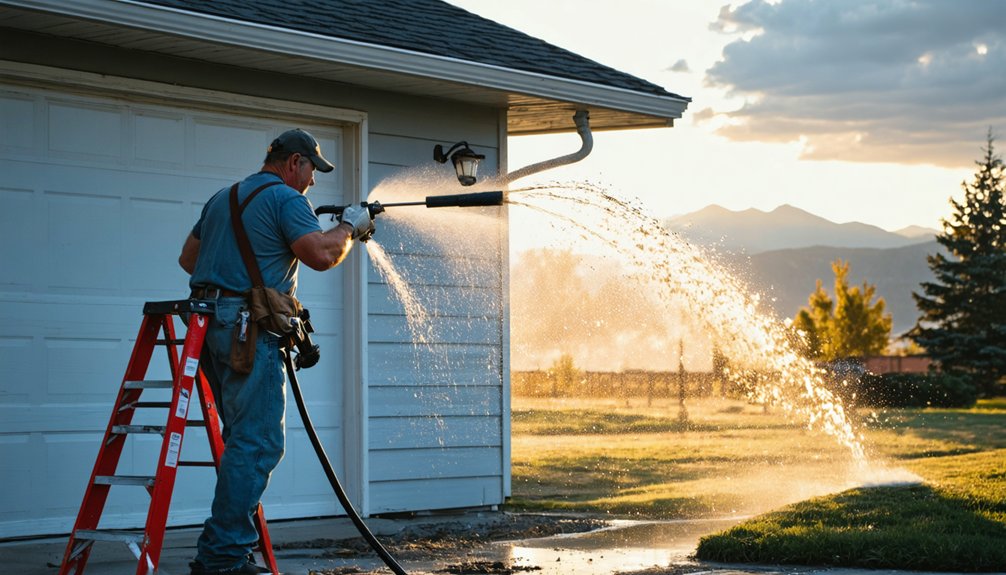
Strategic maintenance protocols extend paint system longevity by addressing substrate integrity before surface deterioration compromises adhesion. We’ve learned that regular home inspections reveal critical vulnerabilities requiring intervention. Prioritizing preventative maintenance protects your coating investment through systematic monitoring.
Essential Quarterly Inspections:
- Moisture Management – Check flashing around chimneys and vents for cracks; inspect walls for color changes indicating water infiltration that’ll compromise paint adhesion
- Substrate Integrity – Seal foundation and siding gaps; examine roof shingles for failures that lead to cascading damage
- Drainage Systems – Clean gutters and downspouts; verify proper grade directing water away from painted surfaces
- Climate Control – Maintain HVAC systems and seal air leaks around penetrations to regulate interior humidity levels affecting paint performance
We’re committed to preserving your exterior coating through disciplined maintenance cycles.
Frequently Asked Questions
How Long Should I Wait Between Applying Primer and Paint Coats?
Desire favorable outcomes? We’ll wait 1-4 hours depending on primer type before regulating paint sheen application. Suitable applying primer thickness guarantees adhesion—water-based needs 1 hour, oil-based requires 24 hours, and shellac-based just 1 hour between coats.
Do I Need Special Permits for Exterior Painting in Burley?
We don’t need painting permits required for exterior work in Burley—it’s not classified as structural alteration. However, HOA approval necessary if you’re in a covenant-controlled neighborhood. Always verify local covenants before proceeding with color changes.
Can I Paint Over Old Lead-Based Paint on My Historic Home?
We can’t safely paint over lead-based paint without professional paint testing first. If lead’s present, we’ll need proper lead paint removal or EPA-certified encapsulation by licensed contractors to protect your family and comply with RRP regulations.
What’s the Average Cost per Square Foot for Professional Painting Services?
In Burley, we’ll see professional painting averaging $3.64 per square foot for interiors. The average cost of labor runs $1-$3.50 per square foot, while cost of paint supplies typically adds $2-$4 per square foot to your project.
Should I Power Wash Siding Before Painting or Use Chemical Cleaners?
We recommend soft washing with chemical cleaners for ideal surface preparation—it eliminates contaminants without moisture damage that compromises paint selection adhesion. Power washing risks extended drying times and siding damage, delaying your project timeline unnecessarily.