We’ve found that interior painting timelines vary considerably by scope—a single 12′ x 12′ room takes 6-8 hours including prep work, while a complete 1,500-square-foot home requires 4-5 days with a professional crew. The key factor? Preparation consumes 60-70% of your timeline before you even open the paint can. Furniture protection, wall repairs, taping, and priming all extend your schedule, followed by 2-4 hour drying intervals between coats. Our breakdown below covers specific timeframes for each project phase.
Key Takeaways
- A single 12′ x 12′ bedroom requires 5-6 hours, while 10′ x 10′ spaces need 1-2 hours per coat.
- Professional crews complete 1,500-3,000 sq ft homes in 4-5 days; five-bedroom houses take 10-12 days with four-person teams.
- Preparation work consumes 60-70% of total painting time, including furniture protection, wall cleaning, and surface repairs.
- Each paint coat requires 2-4 hours drying time for latex paints and 6-8 hours for oil-based finishes.
- Additional factors like trim work, multi-color schemes, and wall repairs can add 1-2 days to the overall timeline.
Timeline for Painting Individual Rooms
A standard 12′ x 12′ bedroom demands 5-6 hours from start to finish when you factor in preparation, painting, and cleanup. We’ve found that smaller 10′ x 10′ spaces require 1-2 hours per coat, while larger 12′ x 18′ living rooms extend to 5-10 hours due to increased wall surface area.
Furniture preparation time substantially impacts your schedule—we’re talking 30 minutes to 2 hours depending on what needs moving. Room accessibility challenges like built-in shelving or tight corners add complexity to the timeline.
Most average-sized rooms fall within our 4-6 hour sweet spot. Remember, ceiling height affects total square footage, so factor that into your planning. We’ll tackle each phase systematically to maximize efficiency.
Whole House Painting Duration
Scale transforms interior painting from a manageable weekend project into a week-long commitment requiring strategic coordination. We’ll complete a 1,500–3,000 sq ft home in 4–5 days with our professional crew, while specialty projects in 12,000 sq ft estates require just 3–5 days when properly staged. Paint costs correlate directly with square footage and complexity—five-bedroom homes demand 10–12 days with four-person teams working simultaneously across multiple zones.
Surface preparation consumes approximately four hours in medium-to-large homes before we apply primer. Each coat requires 3+ hours drying time, multiplied by the number of applications needed. We strategically prep upstairs areas while painting downstairs rooms, maintaining momentum throughout your project.
Trim, baseboards, and door work add 1–2 days beyond standard wall coverage, ensuring thorough transformation of your space.
Preparation Work and Time Requirements
Understanding project timelines means recognizing that 60-70% of your painting duration occurs before we open the first paint can. For our standard 10×12 room, we’ll allocate 1-2 hours for workspace prepping duration, including furniture protection, drop cloth placement, and wall cleaning.
Most painting projects spend up to 70% of total time on preparation before the first brushstroke touches your walls.
Equipment setup time adds another 40 minutes when we’re taping edges precisely.
Wall condition dramatically impacts our schedule. Good surfaces let’s start immediately, while cracks and dents require filling and sanding that extends prep by several hours. Poor condition walls—those needing skim coating or extensive repair—can consume a full day.
We’ll add priming time for patching coverage, stain sealing, or major color shifts.
This foundational phase determines our entire project efficiency, making thorough preparation essential despite the initial time investment.
Painting Application Process and Timing
Once preparation concludes, we’ll execute the actual painting in a methodical sequence that optimizes drying time and safeguards against rework. Our team follows a proven order: ceilings first, then walls, followed by trim and doors. This systematic approach guarantees clean cut lines and forestalls accidental damage to completed surfaces.
Our standard application timeline includes:
- Days 1-3: Main wall and ceiling coverage with appropriate drying intervals between coats
- Days 2-3: Trim, baseboards, and doors receive attention after walls cure
- Coat timing: We’ll allocate proper drying periods—typically 2-4 hours for latex paints
- Days 4-5: Touch-ups and final walkthrough validate flawless results
Paint finish considerations and choosing paint colors during planning accelerate this phase. We’ll apply multiple coats as needed, ensuring even coverage without compromising efficiency or quality standards.
How Crew Size Affects Project Duration
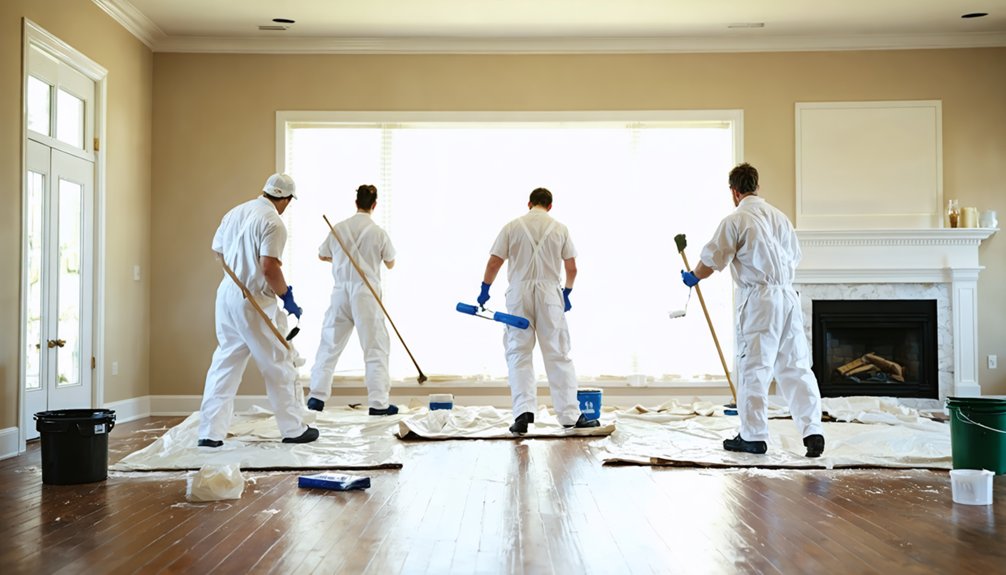
When we deploy multiple painters to your project, we fundamentally compress timelines through parallel task execution. Our standard 1-3 painter configuration adapts based on your square footage—smaller jobs need one technician, while whole-home projects require 3-4 crew members working simultaneously across zones.
Strategic crew deployment transforms your painting timeline—more technicians means parallel zone execution instead of sequential room completion.
Workflow efficiency determines our crew deployment strategy. We’ll complete your 1,000-4,000 sq ft interior in 1-7 working days, with larger teams tackling multiple rooms concurrently while smaller crews focus sequentially.
For multi-room projects spanning bedrooms, hallways, and living spaces, we typically allocate 3-5 days with proper crew scalability.
Our approach balances speed with precision—whether you need minimal household disruption with a smaller crew or rapid completion through zone-based deployment. Each configuration maintains our quality standards through coordinated preparation sequencing and methodical application techniques.
Drying Time and Curing Considerations
Your paint project timeline extends beyond the final brushstroke—drying and curing phases directly impact when you’ll regain full room functionality. We’ve tracked hundreds of projects where homeowners underestimated these critical windows, leading to premature furniture placement and surface damage.
Understanding your drying timeline requires monitoring these key factors:
- Latex formulations reach touch-dry in 1–2 hours, with recoat readiness at 3–4 hours, while oil-based alternatives demand 6–8 hours and 24-hour recoat windows respectively
- Temperature extremes influence curing—optimal range between 50°F and 85°F guarantees proper adhesion without surface complications
- Vapor barrier impacts become evident in high-humidity conditions, where moisture prevents proper evaporation and extends tackiness
- Full cure completion takes 2–4 weeks for latex, establishing maximum durability before intensive room usage
Factors That Impact Overall Painting Time
Interior painting timelines vary dramatically based on five interconnected variables that determine whether you’ll complete your project in a single afternoon or across multiple weeks.
Room dimensions directly impact labor hours—we’re looking at 1–2 days for single rooms versus 4–5 days for whole-home interiors spanning 1,500–3,000 square feet. Wall condition matters greatly; damaged surfaces requiring patching and sanding add 4–8 hours before we even apply primer quality coatings.
Multi-color schemes and decorative techniques extend timelines by one day minimum compared to single-color applications. Finish sheen selection influences drying intervals between coats—latex formulations dry in 1–2 hours while oil-based products need 6–8 hours. Environmental factors play a pivotal role; maintaining 60°F–75°F temperatures with proper ventilation guarantees consistent drying patterns and prevents timeline delays.
Touch-Ups and Final Walkthrough Schedule
We’ll schedule your final walkthrough on Day 4–5 after completing the main painting work to identify any areas requiring touch-ups before the project wraps.
During this inspection, we’ll examine all surfaces for missed spots, uneven coverage, and small imperfections that need correction—focusing on trim, doors, edges, and high-traffic zones. This systematic review guarantees we catch every detail while the paint is still within its ideal touch-up window, typically 24 hours after application.
Identifying Areas Needing Touch-Ups
Before applying any touch-up paint, we’ll conduct a systematic wall inspection to pinpoint specific areas requiring correction. We’ll examine each surface under natural and artificial lighting, checking from multiple angles to catch imperfections that might appear invisible under single light sources. This methodical approach guarantees we don’t miss critical spots that’ll become obvious later.
Our inspection targets include:
- Scuffs and marks from furniture, daily wear, or equipment contact
- Patch marks where we’ve filled holes or dents during preparation
- Uneven paint coverage showing original wall color or primer breakthrough
- Cracks or texture irregularities requiring additional surface attention
Once we’ve identified these areas, we’ll proceed with cleaning surfaces and repairing imperfections before applying matched touch-up paint for seamless results.
Final Inspection Timeline
Touch up accessibility remains ideal when our tools are still on-site, preventing rescheduling delays. We’ll address any identified issues immediately during the walkthrough—before final payment and our departure.
This efficient process keeps your project within the standard 1-5 day timeline. The inspection isn’t complete until you’re satisfied, confirming we’ve achieved uniform coverage, clean edges, and professional finish quality throughout your space.
Frequently Asked Questions
How Much Does Professional Interior Painting Typically Cost per Room or Square Foot?
We’ll typically pay $2–$6 per square foot for professional interior painting, with rooms ranging from $150–$2,000. Our labor cost considerations and paint coverage estimates directly impact final pricing, ensuring we’re maximizing efficiency throughout each project timeline.
Can I Stay in My Home While Interior Painting Work Is Underway?
We recommend staying during your project only if we’re scheduling around occupants room-by-room. For efficiency and safety, vacating 24–48 hours per space minimizes VOC exposure and accelerates drying times, ensuring you rejoin a fully cured environment.
What Type of Paint Finish Should I Choose for Different Rooms?
Like choosing armor for battle, we’ll help you select finishes based on sheen level considerations and paint durability factors. We recommend eggshell for bedrooms, satin for high-traffic areas, semi-gloss for bathrooms, and high-gloss for trim.
How Do I Prepare Furniture and Belongings Before Painters Arrive?
We’ll move smaller furniture to room centers, cover furniture surfaces with drop cloths, and secure loose items in closets. Clear all wall-mounted décor, empty shelves and countertops, then relocate breakables to protected areas before painters arrive.
When Is the Best Season or Time of Year for Interior Painting?
When should we schedule your project? We recommend fall and spring for interior painting, offering ideal weather conditions with 40-70% humidity and perfect light exposure. These seasons deliver faster curing times and superior adhesion for our efficiency-focused team.