We’ve found that successful exterior painting in Gooding requires addressing our high-desert climate’s unique challenges—intense UV exposure, 50-degree temperature swings, and sustained wind patterns that accelerate coating breakdown. Your project demands proper surface preparation through pressure washing at 1,200-2,000 PSI, strategic primer application on bare wood and weathered surfaces, and 100% acrylic latex formulations that withstand our conditions. We schedule projects during May-June or September-October when temperatures consistently stay within the 50-85°F range, ensuring ideal adhesion and curing. The thorough approach below covers everything from calculating coverage rates to understanding why three-story homes require $5,000-$10,000+ budgets.
Key Takeaways
- Complete 5-step surface preparation including pressure washing, scraping, caulking repairs, and applying Peel Bond primer to bare spots.
- Use 100% acrylic latex paint with oil-based primers on bare wood to withstand Gooding’s high-UV climate conditions.
- Schedule painting during late spring or early fall when temperatures stay consistently between 50-85°F for optimal results.
- Plan for repainting every 5-7 years due to accelerated deterioration from regional wind exposure and temperature fluctuations.
- Budget $1,500-$10,000+ depending on home stories, plus $200-$500 for caulking and preparation costs of $0.50-$1 per square foot.
Preparing Your Home’s Exterior Surfaces for Paint
Before applying the first coat of exterior paint, we’ll complete a five-step surface preparation sequence that directly impacts coating performance and longevity.
Our pressure washing steps begin with a 1,200–2,000 PSI washer, removing Idaho’s pollen, dust, and mildew from top to bottom. We’ll allow 24 hours for complete drying before proceeding.
Next, we’ll scrape peeling paint and sand rough edges using orbital sanders or paint eaters on damaged sections. Proper paint surface preparation requires feathering chipped areas and creating tooth on glossy trim.
We’ll repair cracks with exterior caulking and replace rotted wood trim. Peel Bond primer gets applied to bare spots, nail heads, and scraped areas—offering UV protection against temperature shifts.
Finally, we’ll remove fixtures, deploy drop cloths on concrete surfaces, and mask adjacent materials to protect your property.
Understanding Wood Siding Repainting Schedules
Wood siding repainting intervals span 3–7 years depending on material composition, climate exposure, and coating quality. In Gooding’s high-UV environment with intense summer heat and temperature fluctuations, we’re looking at the shorter end—typically 5–7 years for real wood and stained finishes. The impact of regional climate accelerates deterioration through wind exposure and seasonal extremes that cause paint failure faster than in milder zones.
We recommend annual inspections to catch peeling, fading, or moisture infiltration early. Proper paint material selection matters greatly here—100% acrylic latex formulations withstand Idaho’s harsh conditions better than standard coatings. Homes with minimal eaves or heavy sun exposure need more frequent attention, while engineered wood extends cycles to 7–10 years. Schedule repaints during late spring or early fall when stable temperatures optimize adhesion and curing.
When to Use Primer on Your Gooding Home
Primer application separates successful exterior paint projects from premature failures in Gooding’s demanding climate. After preparing pressure washed surfaces, we determine primer necessity based on your siding’s condition. Bare wood always requires primer—no exceptions.
In Gooding’s harsh climate, proper primer application on prepared surfaces makes the difference between paint longevity and early failure.
Choosing proper primer type depends on specific situations:
- Oil-based primers ($35-$55/gallon) penetrate deep into weathered wood, cedar, redwood, and Douglas fir, blocking tannins effectively
- Bonding primers like Zinsser Peel Stop handle chalking surfaces and high-UV damage on south- and west-facing walls
- Stain-blocking primers prevent bleed-through on stained wood and tannin-rich species
Previously painted surfaces in excellent condition—no peeling, chalking, or exposed wood—don’t need primer when using self-priming paints. However, any degradation, water damage, or exposed areas from scraping absolutely require priming for proper adhesion and longevity.
Best Times of Year to Paint in Idaho’s Climate
Idaho’s extreme temperature fluctuations and regional microclimates demand strategic timing for exterior painting projects in Gooding. We’ve identified late spring (May-June) and early fall (September-October) as ideal windows when weather patterns align with proper paint curing requirements. During these periods, temperatures consistently remain within the critical 50–85°F range, ensuring reliable adhesion and uniform drying.
Summer’s heat requires strategic scheduling—we paint during cooler morning or evening hours to prevent rapid solvent evaporation. Regional temperature fluctuations between northern and southern Idaho mean Gooding’s Treasure Valley location benefits from extended dry periods, though we must avoid late-day heat exposure.
Fall provides the most stable conditions: steady temperatures, reduced humidity, and minimal precipitation. We’ll always monitor nighttime lows, discontinuing work when temperatures approach the 35–40°F threshold that compromises modern paint formulations.
Calculating Paint Quantities for Your Project
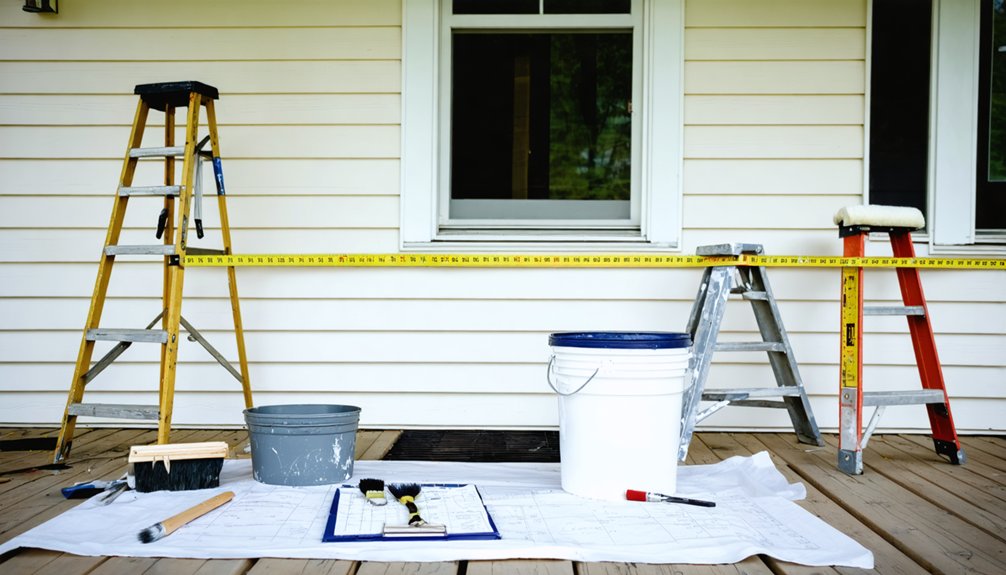
Accurate paint quantity calculations prevent costly mid-project material shortages while eliminating unnecessary expense from overordering. We’ll measure each exterior wall’s length and height, multiplying for total square footage, then subtracting openings like doors and windows. For Gooding’s varied home exteriors, we’re determining coating thickness requirements based on surface porosity and condition.
Our calculation methodology includes:
- Dividing total surface area by coverage rate (typically 300-350 sq.ft. per gallon for exterior applications)
- Accounting for two coats minimum on weathered surfaces
- Adding primer requirements at 200-250 sq.ft. coverage for bare wood
When calculating cost per gallon, we’ll verify manufacturer specifications since coverage varies by brand and formulation. Textured surfaces like stucco require approximately 300 sq.ft. per gallon, while smooth siding achieves 350 sq.ft. coverage. We always round up to guarantee adequate material availability.
Applying Two Coats for Long-Lasting Results
We recommend applying two coats of exterior paint on Gooding homes to achieve the mil thickness necessary for withstanding Idaho’s intense UV exposure and temperature fluctuations.
The first coat establishes adhesion and seals porous substrates like stucco and masonry, while the second coat delivers the protective barrier that extends your paint system’s service life.
Proper coverage calculation, systematic application techniques, and respecting cure times between coats determine whether your exterior finish will last five years or fifteen.
Why Two Coats Matter
When coating exterior surfaces in Gooding’s climate, the decision between one and two coats fundamentally determines your project’s longevity and performance. We’ve found that applying a second coat delivers increased durability by creating a UV-resistant barrier that extends service life from 2–3 years to 6–10 years—critical protection against Idaho’s intense sun exposure.
The technical advantages we observe include:
- Complete opacity: Eliminates bleed-through and splotchiness on textured surfaces
- Enhanced adhesion: Reinforces the primer bond, preventing premature peeling
- Uniform mil thickness: Guarantees consistent protection across substrate variations
Beyond structural integrity, two coats promise higher color quality through amplified pigment depth and true sheen development. While upfront material costs increase 25–30%, we’re reducing your long-term expenditure by minimizing repainting frequency—a proven cost-effective strategy for Gooding homeowners.
Calculating Paint Coverage Needs
Before purchasing paint for your Gooding exterior project, you’ll need precise square footage calculations to prevent material shortages and costly mid-project delays. We measure each wall’s height times length, then subtract openings for doors and windows. For wood siding, we’ll get approximately 275 square feet per gallon per coat—significantly less than smooth interior surfaces. We always multiply our single-coat calculations by two, then add 15% extra for waste and touch-ups.
Paint quality considerations directly impact coverage rates, so we verify manufacturer data sheets before estimating quantities. Porous surfaces like stucco demand more material due to absorption rates. Our brush selection also affects application efficiency and final coverage. For exterior projects, we multiply totals by 1.1 to create a safety margin that prevents workflow interruptions.
Application Techniques and Timing
Proper application technique starts with understanding that two-coat systems aren’t optional—they’re fundamental to achieving the 8-10 year lifespan Gooding’s climate demands from exterior paint. We recommend spray application for exterior work, as it delivers superior paint coverage patterns compared to rolling. Your brush selection matters primarily for detail work around trim and architectural features.
Between coats, we follow these critical timing protocols:
- Allow water-based acrylics 1-2 hours minimum drying time
- Monitor humidity and temperature, as Gooding’s conditions directly affect cure rates
- Apply the second coat while maintaining consistent overlap patterns
The first coat on new pre-primed surfaces requires heavier application to build adequate film thickness. Plan logical start-stop points between architectural features—this prevents visible overlaps that telegraph through both coats on virgin surfaces.
Cost Expectations for Exterior Painting Projects
Exterior painting projects in Gooding demand careful budget planning, with Idaho homeowners typically investing between $5,000 and $10,000 for complete residential coverage. We’ll need to account for regional pricing variations and specific home characteristics when developing accurate project timeline estimations.
Single-story homes in our area average $1,500 to $3,500, while two-story structures range from $3,000 to $6,500. Three-story residences require $5,000 to $10,000+ due to specialized equipment and increased labor demands.
Essential preparation services substantially impact final costs. We’re looking at $200 to $500 for perimeter caulking, $0.50 to $1 per square foot for surface preparation, and $2 to $50 per square foot for siding repairs. Smart contractors emphasize budgeting for surprise repairs, as concealed damage often emerges during preparation phases.
How Siding Type Affects Your Painting Needs
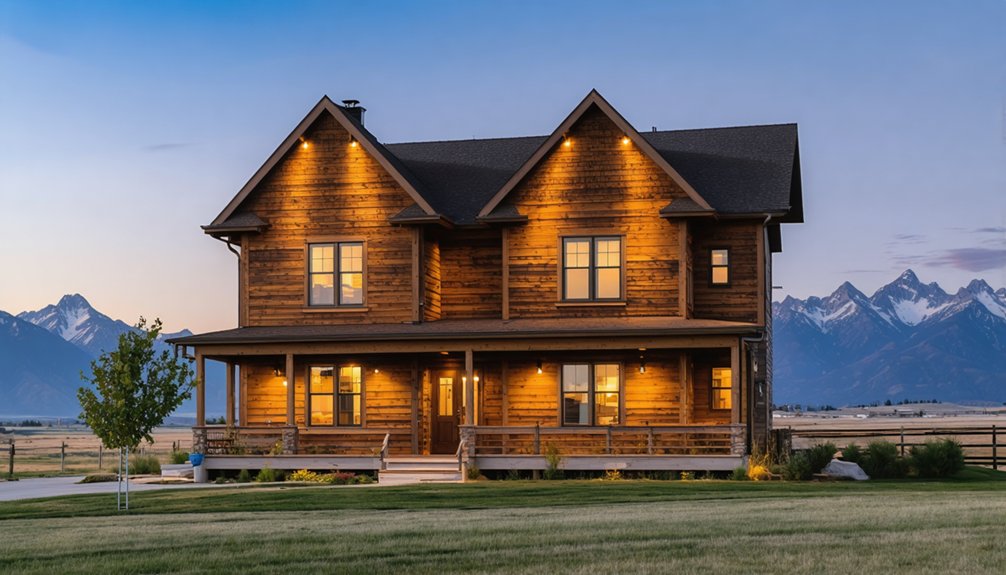
Understanding substrate composition proves critical when specifying coating systems for Gooding residential exteriors. We’ve identified five primary siding types requiring distinct paint application techniques:
Proper substrate identification ensures optimal coating performance—each Gooding siding material demands specialized preparation techniques for lasting protection.
- Vinyl: UV degradation necessitates specialized adhesion primers before choosing siding colors
- Fiber Cement: Compatible coating systems reduce labor by 40% while maintaining dimensional stability
- Wood: Moisture management protocols prevent grain raise and guarantee proper film formation
LP SmartSide demands expansion-contraction considerations during temperature fluctuations, while stucco’s porous texture requires specific product viscosity for uniform coverage. Each substrate presents unique challenges in Gooding’s climate—vinyl cracks during winter months, wood requires frequent maintenance cycles, and fiber cement offers superior longevity. We’ll help you navigate these material-specific requirements, ensuring your coating system performs ideally throughout Idaho’s seasonal extremes while achieving your desired aesthetic outcome.
Benefits of Hiring Professional Painters
While selecting appropriate coating systems for your substrate remains paramount, executing the application demands specialized skills that directly impact performance outcomes. We comprehend that professional painters bring product quality assurance through proper surface preparation protocols—cleaning, priming, and addressing underlying substrate deficiencies that compromise adhesion and longevity.
Our expertise in efficient project management means we complete installations systematically, minimizing disruption while delivering superior results. We’re equipped with commercial-grade application tools and grasp regional climate variables affecting Gooding properties. Our teams identify moisture intrusion, wood rot, and structural concerns before they escalate into costly repairs.
We handle multi-story access safely, apply consistent mil thickness, and eliminate common defects like holidays, runs, and lap marks. This technical proficiency protects your investment while delivering the aesthetic standards our community expects.
Maintaining Your Exterior Paint Between Applications
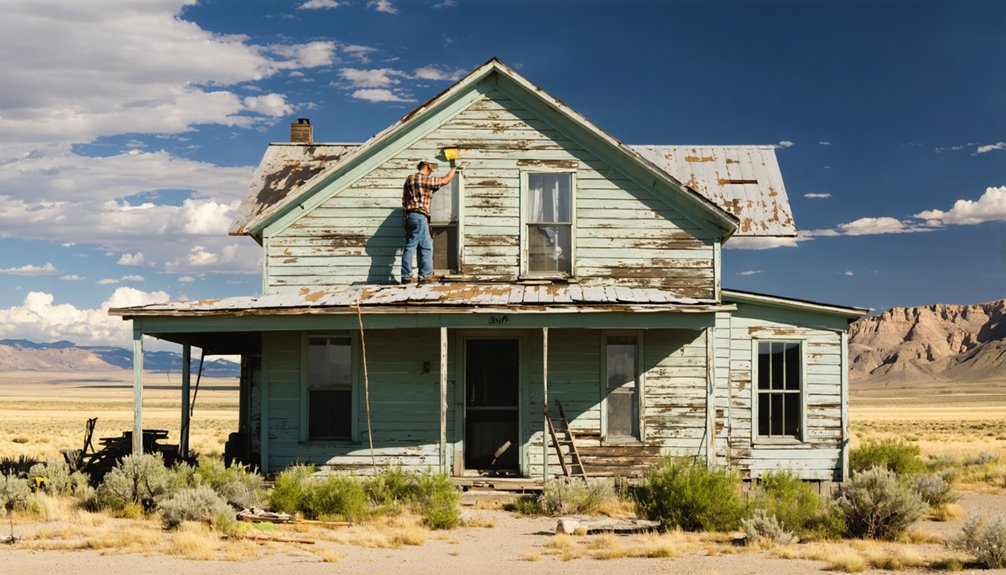
Systematic post-application care protocols directly influence coating performance duration and substrate protection integrity. We’ve established maintaining seasonal cleanings as foundational—executing biannual soft-wash procedures removes contaminants before moisture entrapment initiates film degradation.
Monitoring annual inspections enables early detection of chalking, caulk failure, and UV-induced color shifts, particularly on south/west exposures where thermal cycling accelerates breakdown.
Our extensive maintenance regimen includes:
- Spring protocols: Post-pollen deep cleaning, substrate inspection, minor repair implementation
- Fall preparation: Pre-winter caulk verification, gutter clearance, vegetation management
- Winter assessment: Infrared moisture detection, storm damage evaluation
We maintain labeled leftover paint reserves for 3-5 years, facilitating precise touch-up matching. Prompt caulk renewal around penetrations prevents moisture intrusion, while keeping vegetation clearance minimizes mechanical abrasion. These disciplined interventions extend repaint cycles to 7-10 years, optimizing long-term coating investment.
Frequently Asked Questions
What Paint Colors Are Most Popular for Homes in Gooding, Idaho?
We’ve found that 68% of Gooding homeowners prefer warm beiges and greiges. Neutral color palettes dominate here, with traditional color schemes like Accessible Beige and Revere Pewter leading our exterior coating specifications for ideal substrate adhesion and longevity.
Do I Need a Permit to Paint My Home’s Exterior?
No permit’s required for exterior painting in Gooding—it’s classified as routine maintenance statewide. However, we’ll need to verify approval from your homeowners association if applicable, and check lead paint compliance for pre-1978 homes.
How Long Should I Wait Between Applying Primer and Paint Coats?
We’ll tell you straight—proper paint curing time isn’t negotiable! Wait 1-4 hours between primer and paint, depending on your primer type. Factors affecting paint drying like humidity and temperature dramatically impact our timeline together.
Can I Paint Over Lead-Based Paint on Older Gooding Homes?
We can’t simply paint over lead-based paint hazards on your older Gooding home. Proper lead paint removal techniques require certified abatement contractors who’ll safely remove, seal, or enclose the hazardous surfaces before we proceed with painting.
What Sheen Level Works Best for Exterior Siding and Trim?
We’ll paint your siding with a matte finish to hide imperfections, then step up the sheen game with a semi-gloss finish on trim. This time-tested approach creates dimensional contrast while maximizing durability where you need it most.