We’ve seen DIY pressure washing turn into expensive nightmares when homeowners exceed safe PSI thresholds—damaging vinyl siding above 1,500 PSI, stripping asphalt shingles beyond 500 PSI, and forcing water behind panels that creates hidden mold growth. Mixing incompatible chemicals produces toxic gases, while improper spray angles drive moisture deep into wall cavities where it causes structural deterioration that won’t surface for 6-12 months. Understanding the precise techniques and pressure limits we’ll outline below protects your investment from these preventable catastrophes.
Key Takeaways
- Using excessive water pressure above 500-800 PSI can strip protective coatings, damage siding, and tear window seals.
- Spraying upward forces water behind panels, creating moisture infiltration that causes hidden mold growth and structural rot.
- Pressure washing roofs strips protective granules and damages shingle seals, accelerating deterioration and voiding manufacturer warranties.
- Mixing chemicals incorrectly can produce toxic gases, cause surface discoloration, and create corrosive runoff damaging landscapes.
- Water infiltration through cracks and seams leads to delayed structural damage appearing months later as warping and staining.
Using Excessive Water Pressure on Delicate Surfaces
While pressure washers offer remarkable cleaning power, misapplying that force transforms a useful tool into a destructive weapon against your home’s exterior. We’ve seen vinyl siding lose protective coatings at high PSI, leaving it vulnerable to fading and cracks.
Misapplied pressure washing transforms a valuable cleaning tool into a destructive force that damages your home’s exterior surfaces.
Asphalt shingles suffer granule loss above 500 PSI, reducing lifespan by 20-30%. Wood decks splinter when pressures exceed 500 PSI, while painted surfaces peel rapidly beyond 1900 PSI.
Window seals break down when water’s forced into frames, and screen meshes tear above 800 PSI. Focusing too closely on delicate materials magnifies damage exponentially. Even proper pressure settings fail without insufficient rinsing—trapped cleaning agents continue degrading surfaces long after we’ve finished.
Understanding material-specific PSI limits protects our investment and prevents costly repairs.
Forcing Water Behind Siding and Exterior Panels
One of the most damaging mistakes we see involves directing spray upward or into panel seams, which creates direct pathways for water to penetrate behind your siding. When moisture bypasses the exterior barrier, it infiltrates wall cavities, insulation, and framing where it becomes trapped and invisible.
We’ve observed that this hidden saturation consistently leads to mold colonization and structural rot—problems that often go undetected until significant damage has occurred.
Upward Spray Technique Errors
The most destructive mistake in DIY pressure washing occurs when homeowners angle the spray nozzle upward against their siding. This technique forces water directly behind panels through seams and edges, creating trapped moisture consequences that lead to rot, mold growth, and structural deterioration. We’ve observed spray pressure effects that crack vinyl, warp fiber cement, and strip protective finishes when applied at upward angles.
Professional protocols require maintaining a consistent 45-degree downward angle that follows the natural panel direction. This approach prevents water intrusion while effectively removing dirt and mildew. We avoid upward spraying entirely, using wide fan patterns instead of narrow jets. For vulnerable materials like James Hardie boards or oxidized vinyl, we recommend soft washing techniques that eliminate high-pressure risks while preserving manufacturer warranties.
Water Infiltration Pathways Created
Pressure washers operating between 1500 and 3300 psi generate sufficient force to penetrate solid materials like asphalt, concrete, and hardwood—a capability that becomes dangerous when directed at residential siding systems. When we apply excessive pressure or improper spray angles, we create pathways that drive water deep into wall cavities, compromising structural integrity.
Understanding how infiltration occurs helps us prevent costly damage:
- Panel displacement from direct pressure jets loosens overlapping sections, creating permanent entry points
- Expansion joint deterioration allows concentrated water flow into vulnerable seams and junctures
- Upward spray angles force moisture behind vinyl and fiber cement panels, saturating insulation and framing
- Close nozzle proximity compromises siding integrity, enabling water to reach electrical wiring and interior walls
We’re protecting our homes by recognizing these infiltration risks before they escalate.
Hidden Mold Growth Consequences
When moisture penetrates behind exterior panels through improper pressure washing, we’re creating ideal conditions for aggressive mold colonization that threatens both structural integrity and occupant health. Trapped water between siding and walls fosters rapid fungal proliferation in areas we can’t inspect or clean.
This hidden growth weakens wooden beams through rot and decay while dispersing spores throughout our living spaces. The mold spore exposure health effects we face include respiratory complications, persistent headaches, and worsening allergies. Meanwhile, structural integrity compromise risks escalate as moisture degrades insulation, causing visible cracks and accelerated deterioration.
These concealed colonies evade surface-level treatments, requiring costly remediation and potentially complete siding replacement. Without addressing root moisture sources, we’re facing recurring contamination cycles that diminish property value and occupant well-being.
Stripping Shingles and Compromising Roof Integrity
Among roofing materials, asphalt shingles remain particularly vulnerable to high-pressure washing damage due to their granule-coated surface design. When we apply 1,500–3,000 PSI directly to shingles, we’re stripping away the protective granules that shield against UV rays and fire, creating irreversible damage that manifests as bald spots within weeks.
This #PrematureRoofFailure occurs through four critical mechanisms:
- Granule stripping thins the shingle surface, accelerating deterioration
- Seal damage lifts adhesive strips, increasing wind uplift vulnerability
- Water intrusion drives moisture beneath shingles, causing wood rot and mold
- Warranty violations void manufacturer coverage through prohibited washing methods
We’ve documented holes and gashes appearing in 6-year-old shingles post-washing. These #VoidedWarrantyProtections leave us financially exposed when professional soft washing preserves both integrity and coverage.
Mixing Chemicals Without Proper Knowledge
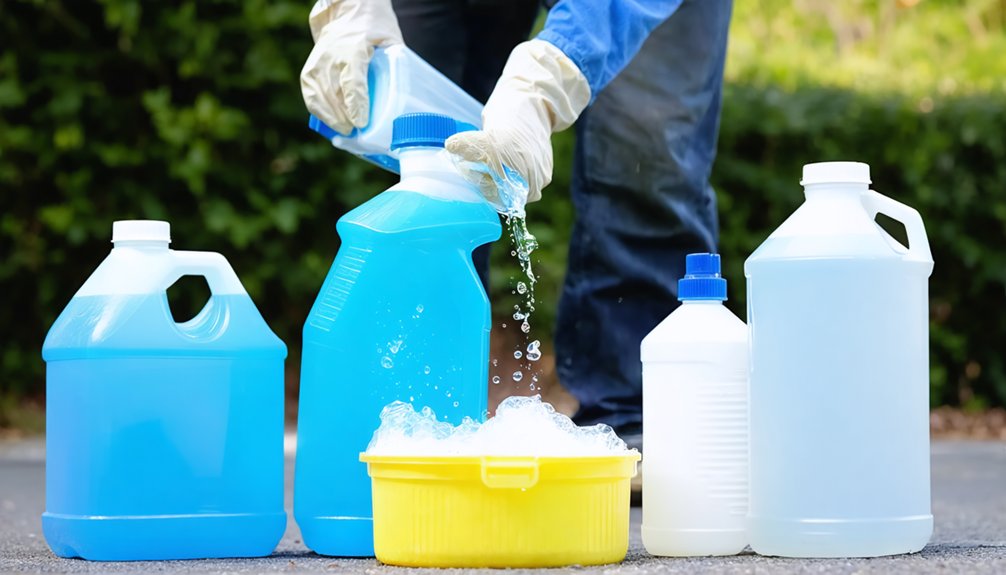
We’ve seen DIY pressure washers create dangerous situations by mixing cleaning chemicals in incorrect ratios, resulting in surface discoloration, vegetation kill-off, and toxic fume generation.
The concentrated solutions you’re creating can strip protective coatings from siding, bleach surrounding landscaping, and produce respiratory hazards when acidic and alkaline products interact.
These ratio miscalculations transform routine cleaning tasks into costly property damage and potential medical emergencies requiring immediate intervention.
Incorrect Ratios Cause Discoloration
Mixing chemicals without proper knowledge creates one of the most visible and damaging mistakes in DIY pressure washing: discoloration that undermines the entire cleaning process. We’ve all seen the frustrating streaks and uneven patches that result from over concentration issues and residue accumulation when ratios aren’t calculated correctly.
Common ratio mistakes we encounter include:
- Reversed proportions from misunderstanding notation—applying 10:1 instead of 1:10 delivers ten times the intended concentration
- Surface-specific errors like using roof cleaning ratios (4-6% SH) on house siding that requires only 0.5-2.5%
- Surfactant imbalance exceeding one cap per gallon, creating visible streaking and buildup
- Mathematical miscalculations when determining final percentages using (Concentrated % × Amount) ÷ Total Volume
These errors leave permanent marks requiring expensive corrective treatment.
Landscape and Health Hazards
When DIY pressure washers combine incompatible chemicals, they create immediate dangers that extend far beyond surface discoloration—toxic gas production threatens human health while corrosive runoff destroys landscapes. We’ve documented 2,284 accidental chlorine gas exposures from bleach-acid combinations in 2017 alone, with symptoms ranging from throat burning to permanent respiratory injury.
The risks intensify with improper chemical storage in sealed containers, where heat and gas buildup can rupture equipment. Beyond personal safety, we’re seeing widespread ecosystem contamination when unneutralized mixtures leach into soil and waterways.
Mixing bleach with ammonia produces lung-damaging chloramines, while bleach-vinegar reactions create peracetic acid that harms both respiratory systems and vegetation. That’s why we always consult Safety Data Sheets before combining any products—our community prioritizes protection over shortcuts.
Ignoring the Risks of Water Infiltration
Water infiltration stands as one of the most insidious consequences of improper pressure washing—a threat that’s invisible in the moment but devastating over time. When we’re underestimating water force, we create entry points where moisture penetrates your home’s protective barriers.
Improper pressure regulation drives water behind surfaces designed only to shed downward flow.
Critical infiltration points we must protect:
- Roof systems – High-velocity water forces beneath shingles, compromising weather-sealing and accelerating replacement needs
- Siding installations – Upward or sideways spray penetrates behind panels, causing hidden mold growth appearing months later
- Window and door seals – Pressurized jets breach weatherstripping, resulting in frame warping and interior damage
- Structural cracks – Water enters wall cavities through minor openings, promoting long-term weakening
We’re facing delayed consequences that void warranties and demand extensive remediation.
Removing Paint and Protective Finishes
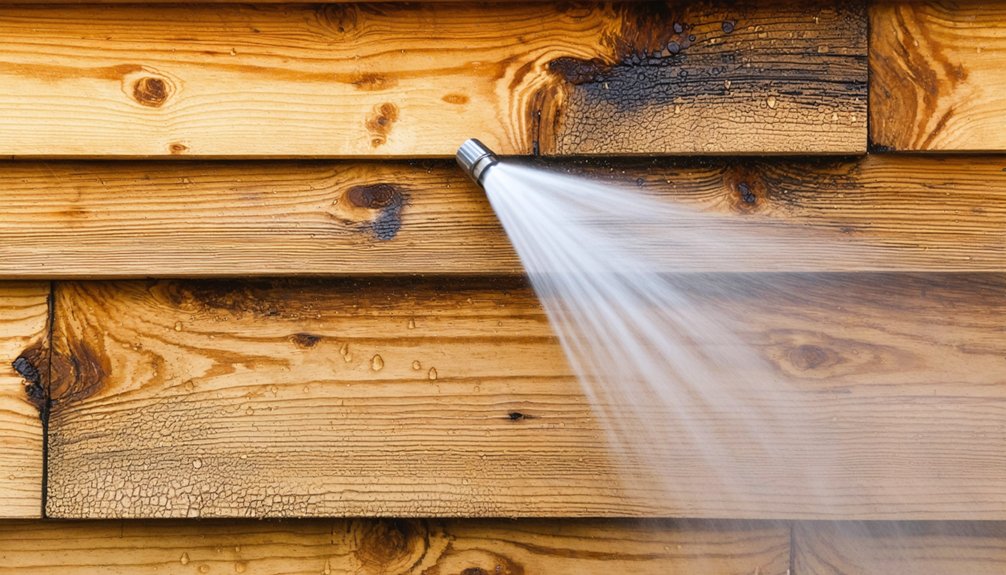
Among the costliest pressure washing mistakes we encounter, irreversible paint and finish removal tops the list—damage that transforms a routine cleaning into a complete refinishing project. When we exceed 1500-3000 psi on painted surfaces, we’re fundamentally stripping instead of cleaning.
Improper nozzle selection—choosing narrow tips over wider patterns—concentrates force into paint-destroying jets that gouge substrates and expose bare wood. Holding our spray nozzle within inches forces water under paint edges, while wrong angles drive moisture beneath finishes, causing premature failure.
Excessive pass overs on surfaces compound the damage, particularly on deteriorating or lead-based paint where repeated strokes blast loose sections into surrounding soil. Pre-existing cracks or peeling amplify our errors, turning manageable touch-ups into full exterior refinishing jobs that cost thousands.
Operating Equipment Without Safety Precautions
Since pressure washers generate forces that puncture human skin at just 100 PSI—while residential units reach 4,000 PSI and commercial equipment peaks at 50,000 PSI—we’re operating machinery capable of inflicting devastating injuries that range from lacerations requiring immediate surgical intervention to permanent vision loss and severed tendons.
Neglecting necessary training and underestimating personal vulnerability leads to preventable accidents. We must adopt thorough safety protocols:
- Wear proper protective equipment: safety goggles or face shields, closed-toe steel-toe boots with slip-resistant soles, thick rubber gloves, and waterproof clothing
- Inspect all components before operation: examine hoses, nozzles, trigger guns, and connections for leaks or damage
- Never point the nozzle at people, animals, electrical components, or ourselves
- Maintain firm two-handed grip without overreaching or locking the trigger in “on” position
Our safety depends on rigorous adherence to equipment protocols.
Causing Hidden Damage That Appears Months Later
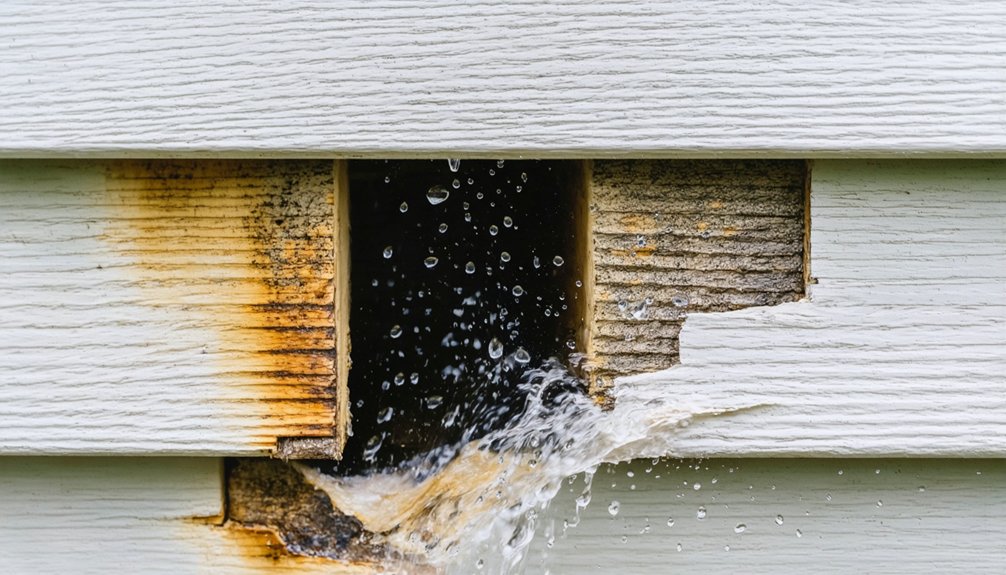
One of pressure washing’s most insidious consequences manifests long after we’ve coiled the hoses and stored the equipment—hidden damage that silently compromises structural integrity while remaining invisible for months. High-pressure water forces moisture deep into cracks, behind siding, and under shingles where it saturates materials we can’t inspect. This infiltration leads to moisture barrier failure, creating perfect conditions for mold growth and wood rot within wall cavities.
We won’t notice the deterioration until paint bubbles, ceilings stain, or floors warp—symptoms appearing six to twelve months post-cleaning. The challenge we face together is that surface drying masks subsurface saturation. Water trapped in roofing layers, behind flashing, or within structural components steadily degrades materials, threatening our homes’ long term structural integrity while repair costs multiply exponentially.
Frequently Asked Questions
What PSI Is Safe for Cleaning Different Home Exterior Materials?
We recommend appropriate pressure settings of 1,200-1,600 PSI for most siding materials, maintaining a recommended nozzle distance of 12-18 inches. Vinyl and fiber cement tolerate higher ranges, while brick and wood require gentler approaches to prevent damage together.
How Long Does It Take for Hidden Water Damage to Appear?
Hidden moisture detection reveals damage within 24–48 hours as mold starts, though structural issues can take weeks to surface. Understanding the water damage timeline helps us protect your home—we’ll catch problems before they escalate into costly repairs.
Can Homeowner’s Insurance Cover Pressure Washing Damage?
Standard homeowner’s insurance typically won’t cover pressure washing damage since it’s considered preventable. We’ve seen improper coverage claims denied regularly. However, water damage liability from contractor negligence requires their business policy—that’s why we always verify insurance before hiring professionals.
Should I Rent or Hire Professionals for Two-Story Homes?
We strongly recommend hiring professionals for two-story homes. The proper technique importance and extensive DIY safety precautions required—including ladder work, pressure adjustments, and water infiltration risks—make professional expertise essential for protecting your investment and personal safety.
What Protective Equipment Is Essential When Pressure Washing?
Think of safety gear as your armor against pressure washing’s hidden dangers. We’ll need eye protection like safety glasses, waterproof gloves for hand safety, complete skin coverage through long sleeves and pants, plus sturdy steel-toe boots for protection.