We’re seeing kitchen cabinet colors pivot toward organic sophistication in 2026, with soft neutrals like Cloud Dancer and mushroom taupe creating airy foundations that diffuse natural light beautifully. Earth tones—particularly terracotta, clay, and olive—dominate as they anchor biophilic design principles while delivering Mediterranean warmth. Moody hues like midnight navy and charcoal add architectural gravitas through high-contrast layering with reflective surfaces. These palettes work best when paired with textural finishes like lime plaster and carefully selected hardware that balances visual weight throughout your space.
Key Takeaways
- Soft neutrals like Cloud Dancer and mushroom taupe replace stark white, creating timeless elegance with textural finishes.
- Earth tones including terracotta, clay, and olive emerge as defining trends, supporting biophilic design and natural warmth.
- Moody dark hues like midnight navy and espresso add architectural depth when balanced with reflective surfaces.
- Terracotta and clay shades offer versatile warmth, working across styles from modern farmhouse to Scandinavian minimalism.
- Olive and muted greens continue dominating with deeper formulations, pairing beautifully with terrazzo and natural stone.
Soft Neutrals That Create Timeless Elegance
While minimalist white kitchens dominated the past decade, 2026’s design language pivots decisively toward soft neutrals that deliver warmth without sacrificing versatility. We’re embracing Pantone’s Cloud Dancer—the Color of the Year—alongside mushroom taupes and sandy beiges that function as the new “not-white” baseline. These timeless neutral colors create an open, airy feel while allowing architectural details and hardware to command attention.
What makes these sophisticated soft hues particularly compelling is their technical performance in challenging spaces. They diffuse natural light without glare, making them ideal for open-plan homes and low-light rooms. We’re pairing plaster off-whites with textural finishes like lime plaster and microcement, achieving that quietly luxurious, lived-in aesthetic. The shift reflects our collective move toward welcoming spaces that balance contemporary minimalism with genuine warmth.
Earth Tones for Natural Warmth and Rustic Appeal
We’re seeing earth tones emerge as the defining cabinet trend for 2026, moving design away from cool grays toward warmer, nature-inspired palettes that ground residential spaces. Terracotta and clay shades—from baked orangey-reds to warm clay taupe—deliver Mediterranean charm while pairing exceptionally well with mixed metals and natural stone surfaces.
Olive and muted greens, particularly smoky jade tones that paint brands now classify as neutrals, bring organic elegance that shifts subtly with natural light throughout the day.
Terracotta and Clay Shades
As whites and grays step aside, terracotta and clay tones emerge as 2026’s most expressive cabinet trend, bringing the sun-soaked warmth of Tuscany directly into contemporary kitchens. We’re seeing multifaceted color combinations that range from baked clay’s orangey-red rustic charm to mushroom’s refined gray-brown neutrality. These shades deliver organic warmth without the sterility of traditional neutrals.
The palette works brilliantly across design styles—from modern farmhouse to Scandinavian minimalism. We pair these hues with cream countertops and brass hardware for lived-in sophistication, while mixed metals enhance their moody undertones and atmosphere. Soft coral adds playful dimension, rust brings bohemian edge, and clay-inspired browns create quiet luxury.
What makes this trend compelling is its versatility: it grounds contemporary spaces while maintaining Mediterranean charm and enduring style that feels both confident and welcoming.
Complementary Metal and Material
Because earthy cabinet tones demand equally grounded accompaniments, we’re specifying hardware and material pairings with unprecedented precision in 2026. Oil rubbed bronze hardware anchors deep forest greens and tobacco caramels with authenticity, while brushed nickel fixtures elevate warm grays and misty sage palettes through refined contrast.
Strategic material selections for earthy cabinets:
- Soapstone and mineral surfaces ground powdery terracotta and olive tones while introducing natural veining that reinforces organic design principles
- Walnut and maple accents create dimensional warmth alongside bold cabinet colors, preventing visual flatness in monochromatic schemes
- Matte ceramic tile backsplashes add tactile depth without competing visually with statement cabinet selections
- Brass hardware complements sage and deep green cabinetry through inherent warmth that cool metals can’t replicate
We’re pairing materials intentionally to create cohesive, grounded kitchens that feel simultaneously contemporary and timeless.
Olive and Muted Greens
Green cabinet selections continue their dominance through 2026, but we’ve witnessed a decisive shift from early sage popularity toward deeper, more complex olive and muted green formulations that ground kitchens in natural warmth. With 76% of professionals selecting green as the premier cabinet color, we’re embracing olive’s clay and rust undertones that deliver organic materiality alongside terracotta, warm timber, and natural stone elements.
These sophisticated earth tones create a calming atmosphere while supporting biophilic design principles that connect our spaces to the natural world. We’re specifying matte finishes on white oak veneers and premium Italian Tabu stock to achieve consistent olive saturation. The pairing possibilities—terrazzo countertops, handmade tiles, minimalist hardware—transform functional kitchens into personality-filled environments that balance modern sophistication with grounded, rustic appeal.
Moody Dark Hues That Add Depth and Drama
We’re seeing a decisive shift toward saturated dark cabinet palettes that anchor kitchens with architectural gravitas. Midnight navy and charcoal tones deliver high-contrast sophistication when balanced with reflective surfaces and strategic lighting placement, while espresso and deep browns introduce warmth through their red-violet undertones.
These moody hues require careful consideration of adjacent materials—think unlacquered brass hardware against aubergine cabinets or creamy marble counters softening charcoal bases—to prevent visual weight from overwhelming the space.
While classic white kitchens maintain their appeal, midnight navy and charcoal are redefining sophisticated kitchen design with their ability to anchor modern spaces in rich, dimensional color.
These cabinet color palettes deliver the confidence of near-black tones while maintaining warmth that pure black lacks. Midnight navy’s inky depth creates statement-worthy islands, while charcoal’s soft black undertones bring drama to lower cabinetry without overwhelming your space.
Strategic Applications for Maximum Impact:
- Layer lighting extensively to prevent these hues from reading too dark in closed layouts
- Specify creative finishes like hybrid treatments mixing paint with natural wood grain
- Pair with light stone countertops and brass hardware for dimensional contrast
- Balance moody cabinetry with light oak perimeters in two-tone configurations
Both colors complement Shaker and Scandinavian profiles while supporting diverse kitchen layouts.
Espresso and Deep Browns
Deep browns and espresso tones are emerging as 2026’s boldest luxury cabinet trend, delivering layered sophistication that neither stark white nor flat black can achieve. We’re seeing a 15% increase in these hues on perimeter cabinetry, with NKBA rankings placing brown just behind green in kitchen color preferences.
Shades like Benjamin Moore’s Char Brown—featuring moss green undertones—create depth that shifts beautifully in changing light. This layered luxury extends from walnut to chestnut espressos, often retaining wood’s natural grain texture.
When we pair matte espresso finishes with leathered stone surfaces and antique bronze hardware, we establish a balanced theme that grounds open-concept spaces. The earthy palette works seamlessly across contemporary, migrating, and modern traditional kitchens, offering tactile visual interest that signals bespoke craftsmanship.
Greens and Jades Leading Kitchen Color Trends
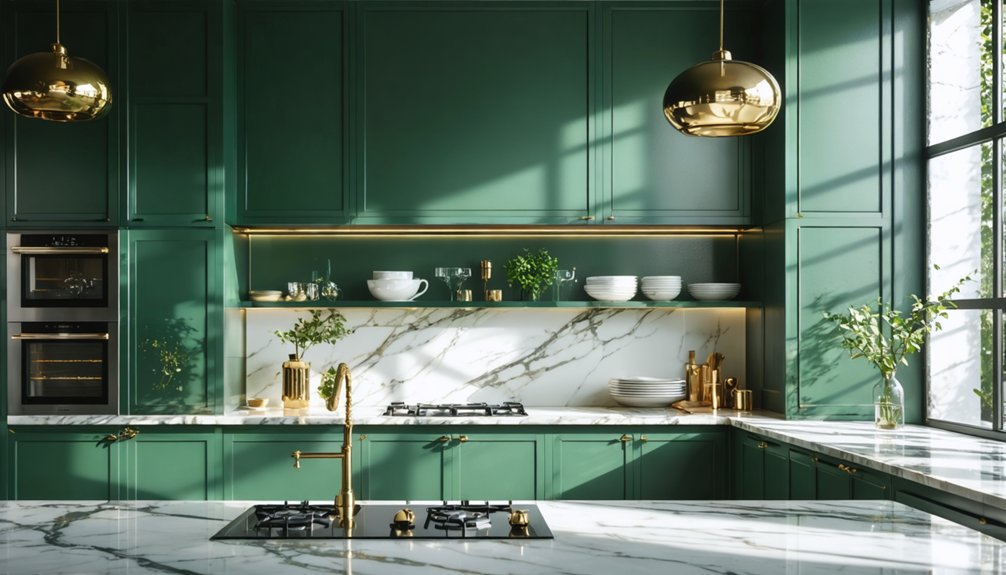
As the design world shifts toward biophilic interiors, green cabinet palettes have secured their position as the dominant trend for 2026 kitchens. We’re seeing sophisticated nature inspired greens dominate specifications, with 86% of NKBA designers reporting green-led palettes.
Veiled jade tones like ROC Cabinetry’s signature finish pair beautifully with smoke oak and brushed gold hardware, while celadon’s ancient pottery roots bring calming sophistication to contemporary spaces.
Key 2026 green cabinet applications:
- Jade and celadon blend with light quartz, brass accents, and ivory tones for refined layering
- Sage palettes anchor farmhouse and coastal schemes with natural wood and antique brass
- Smoky jade hybrids balance warm and cool undertones through strategic hardware selection
- Deep emerald and moss elevate luxury kitchens alongside marble countertops and matte black fixtures
Blues and Jewel Tones for Sophisticated Spaces
Blue cabinetry has claimed its position as the sophisticated alternative to green’s organic dominance, with rich navy and midnight tones driving 66% of kitchen specifications in 2025—a significant jump from 50% the previous year.
We’re seeing two distinct trajectories emerge: richly saturated shades like navy anchor larger kitchens with jewel-tone depth, while icy glacial blues—up 147% on Pinterest—deliver restorative calm through sleek monochromatic palettes. The beauty lies in blue’s anchoring versatility: deeper hues ground multi-functional spaces emotionally, while lighter sky tones expand smaller footprints visually.
Counter cool undertones strategically—brushed brass and antiqued bronze introduce essential warmth. Navy paired with white creates timeless sophistication, while two-tone applications layer dimensional interest. This shift toward nature-inspired blues reflects our collective need for cocooning intimacy without sacrificing contemporary edge.
Warm Yellows and Ochres to Brighten Your Kitchen
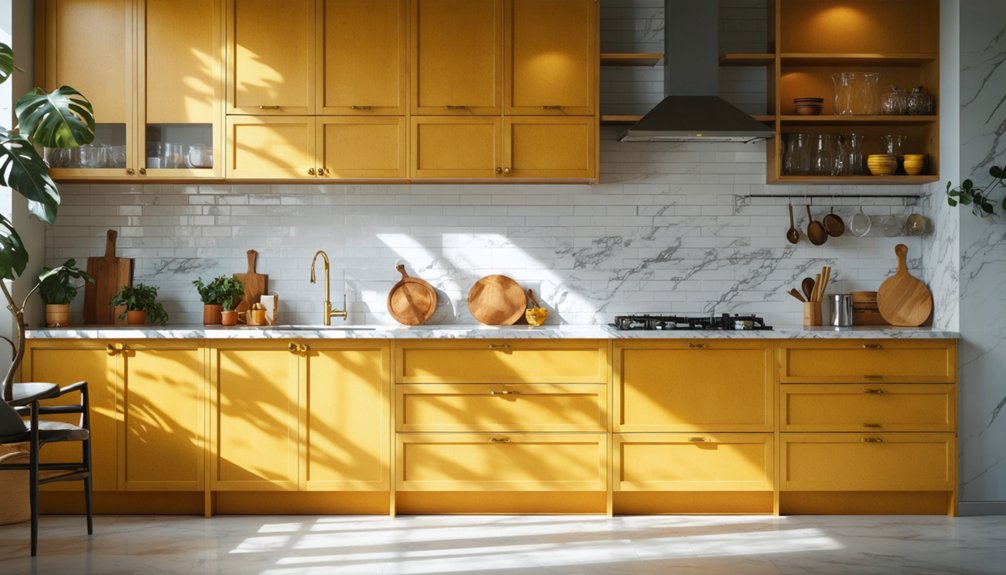
While cool-toned palettes dominated 2025’s kitchen specifications, warm yellows are staging 2026’s most unexpected comeback—butter creams through golden ochres now capture 34% of designer specifications, marking a decisive pivot toward comfort-driven chromatics.
We’re specifying three distinct yellow applications for effective spatial impact:
- Butter Yellow foundations (Benjamin Moore’s Pale Moon) expand compact galley kitchens through light-reflective properties while establishing timeless warmth
- Golden Ochre lower cabinets anchor two-tone designs against nature inspired neutrals, particularly with reclaimed oak flooring
- Mustard island statements transform functional workstations into vibrant accents that read simultaneously grounded and energizing
Biophilic pairings balance saturated yellows with botanical greens, terracotta hex tiles, and brass hardware for cohesive warmth.
Pair these pigments with cream-toned perimeter walls and white quartz countertops for maximum chromatic impact without overwhelming spatial boundaries.
Choosing the Right Cabinet Color for Your Kitchen Style
Zeroing in on the ideal cabinet color demands systematic evaluation of your kitchen’s architectural framework, natural light patterns, and stylistic vocabulary. Traditional spaces thrive with warm neutrals like Cloud Dancer or deeper brown stains that honor classic proportions. Contemporary kitchens benefit from soft whites and grays paired with nature-inspired greens—mid-tone sage or Fernwood Green maintain timeless appeal across architectural styles.
Modern farmhouse aesthetics welcome two-tone combinations featuring light-stained wood on perimeters with bold pops of accent colors on islands. For shift kitchens, we’re seeing smoky jade or dusty sage greens bridge traditional warmth with contemporary restraint. Moody palettes—deep plum, burgundy, or espresso—ground eclectic designs while making visual statements.
Consider countertop materials and hardware finishes as these elements become focal points when neutrals dominate cabinetry selections.
Frequently Asked Questions
What Paint Finish Works Best for Kitchen Cabinets in 2026?
Think of your cabinets as kitchen armor—we’re championing semi-gloss sheen for 2026’s most resilient surfaces. While eggshell finishes suit low-traffic spaces, semi-gloss delivers superior moisture resistance and cleanability that today’s design-savvy homeowners demand.
How Do I Prepare Kitchen Cabinets Before Painting Them?
We’ll start by degreasing cabinet surfaces with TSP or quality degreaser, then scuff-sand for suitable adhesion. After cleaning thoroughly, we’re applying appropriate primer like KILZ or Zinsser—it’s essential for achieving that 2026-ready, professional finish we’re all after.
Should Upper and Lower Cabinets Be Painted Different Colors?
Want visual depth? We recommend two-toning! Contrasting color combinations—like smoky jade lowers with creamy uppers—create dimensional interest. Complementary color schemes ground your space while maintaining cohesion. This layered approach defines zones and elevates your kitchen’s design sophistication beautifully.
How Long Does Cabinet Paint Typically Last Before Needing Refresh?
Professional cabinet paint lasts 8–15 years with proper cleaning methods and adequate surface preparation. We’re seeing the longest-lasting finishes come from spray-applied professional-grade formulations that create that factory-quality aesthetic you’ll love for years.
Which Paint Brands Offer the Most Durable Cabinet Finishes?
Like armor for your cabinetry, we’ve found Benjamin Moore Advance and Sherwin-Williams Emerald Urethane deliver unmatched cabinet paint durability. These long lasting cabinet coatings create professional-grade, scratch-resistant finishes that transform kitchens into enduring design statements.