When we’re selecting the best house painter in Murtaugh, we’ll verify they’re registered with Idaho’s contractor oversight system for projects exceeding $2,000 and carry the state-mandated $300,000 general liability coverage. We’ll confirm their familiarity with Twin Falls County’s 2018 International Building Codes and ask for documentation of workers’ compensation insurance if they employ staff. We’ll also request references from recent rural Idaho projects to assess their workmanship quality. The following sections explain how to evaluate credentials, interpret insurance certificates, and establish detailed project agreements.
Key Takeaways
- Verify the painter holds Idaho contractor registration with $300,000 general liability insurance for projects exceeding $2,000.
- Confirm workers’ compensation coverage if the contractor employs three or more workers to protect against workplace injuries.
- Check compliance with Twin Falls County’s 2018 International Building Codes and local zoning regulations before starting work.
- Ensure the painter follows lead-based paint protocols for pre-1978 properties, including visual assessments and clearance testing.
- Look for additional coverage like commercial auto and inland marine insurance, demonstrating professionalism and financial responsibility.
Understanding Idaho’s Painter Licensing Requirements for Your Project
While Idaho doesn’t mandate state-level licensing for painting contractors, we’ll need to navigate a registration framework that becomes mandatory once project values reach $2,000. Comprehending this threshold is critical for our community when evaluating painters for residential projects.
The scope of projects determines registration compliance requirements. Any painter undertaking work valued at $2,000 or above must register locally and provide proof of general liability insurance with minimum $300,000 coverage. If they employ workers, they’ll also need workers’ compensation documentation.
We should verify that our chosen contractor has completed the registration process through Idaho’s oversight system. This includes confirming their business structure documentation, insurance certificates, and payment of the $50 registration fee. Registration compliance safeguards us from liability and guarantees professional accountability.
Local Murtaugh and Twin Falls County Regulations You Need to Know
We’ll now examine the specific regulatory framework governing painting projects in Twin Falls County, where Murtaugh falls under local jurisdiction. Understanding permit exemptions is critical—while interior remodeling typically requires permits, exterior painting work that doesn’t alter structural elements or exceed 100 square feet of surface preparation generally qualifies as maintenance exempt from formal permitting.
As homeowners, you’re legally permitted to paint your own residence without contractor licensing, though professional painters must verify compliance with county building codes and zoning regulations before commencing work.
Twin Falls County Requirements
Before scheduling any painting project in Murtaugh, you’ll need to understand Twin Falls County‘s building permit framework—even though interior painting typically won’t trigger permit requirements. We’ve found that Twin Falls County adopted the 2018 International Building Codes with Idaho Amendments, establishing clear standards for residential zoning and construction activities.
While interior wall paint doesn’t require permits, understanding these building code requirements protects your investment.
Here’s what matters for your painting project:
- Interior painting projects are permit-exempt under section 105.2 of the 2018 IRC
- Exterior work involving structural alterations requires proper permitting
- Contact Twin Falls County Building Department at 1-800-955-3044 for specific questions
- Property setbacks and easements must be verified before any structural modifications
- Final inspections and Occupancy Permits are mandatory for remodeling projects
Murtaugh Permit Exemptions Explained
Most painting projects in Murtaugh won’t trigger permit requirements, but you’ll need to understand the specific exemptions that apply under Twin Falls County’s building code framework.
Interior painting on single-family residences qualifies as exempt work when it’s performed as routine maintenance without structural modifications. We’re part of a community that values proper code compliance—even exempt work must align with International Residential Code standards and painting safety regulations.
Your project maintains exemption status when it involves standard finish work in living spaces, bedrooms, and kitchens without plumbing alterations. However, exterior projects incorporating EIFS systems or new veneer applications require full permits. Exempt project oversight still demands adherence to fire safety and ventilation standards. Work in sensitive areas or involving structural changes loses automatic exemption, requiring Development Services review before proceeding.
Homeowner Self-Paint Rules
Homeowners can take on their own painting projects in Murtaugh without traversing Twin Falls County’s permit system, provided the work remains strictly cosmetic and doesn’t involve structural modifications. DIY painting techniques fall squarely within permit requirement exceptions for finish work, joining papering, tiling, and cabinet installations. We’ll want to understand these regulatory boundaries:
- Lead-based paint protocols: Properties built after January 1, 1978, bypass EPA/HUD disclosure requirements entirely
- Visual assessment standards: HUD requires professional evaluation only when deteriorated paint surfaces exist
- Clearance testing mandates: Post-lead hazard reduction work necessitates certified inspection verification
- Non-structural classification: Interior painting qualifies as minor alteration exempt from building code plan examinations
- Rental property constraints: Tenant-occupied units demand written landlord authorization before implementing color modifications
These exemptions preserve homeowner autonomy while maintaining safety compliance.
Insurance Coverage: Protecting Your Home and Investment
When selecting a house painter in Murtaugh, Idaho, extensive insurance coverage stands as the primary safeguard between your property investment and potential financial liability.
We recommend verifying minimum General Liability coverage of $300,000 single limit—protecting against bodily injury and property damage through authorized Idaho carriers. Workers’ Compensation proves essential for contractors employing three or more workers, covering medical expenses and lost wages from on-site injuries.
Commercial Auto Insurance addresses vehicle-related incidents during material transport, while Inland Marine coverage protects specialized equipment like paint sprayers and compressors from theft or damage. These quality assurances reflect industry specialization and professional commitment.
Request certificates of insurance directly from carriers before project commencement. Umbrella policies and professional liability coverage demonstrate contractors who prioritize thorough protection—signaling established professionals within Idaho’s painting community.
Verifying a Painter’s Credentials and Registration Status
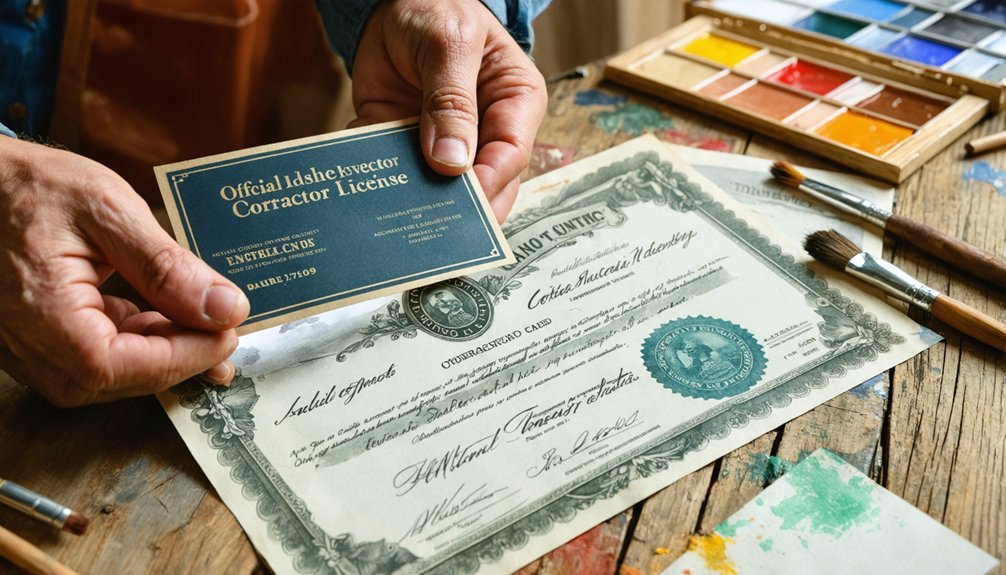
We’ll show you how to confirm your painter maintains proper Idaho Contractors Board registration and carries adequate insurance coverage. Every contractor performing work over $2,000 in Murtaugh must register with the state and display their registration number on all contracts and advertising materials.
You can verify active registration status through the Idaho Division of Occupational and Professional Licenses at (208) 334-3233 or CON@dopl.idaho.gov, while insurance documentation should include current certificates for both general liability and workers’ compensation coverage.
Idaho Contractors Board Registration
Although Idaho doesn’t require state-level licensing for painting contractors, every painter operating in Murtaugh must register with the Idaho Contractors Board through the Division of Occupational and Professional Licenses. This state level oversight guarantees painters meet basic operational standards. We can verify a contractor’s registration status through the public lookup tool at dopl.idaho.gov/con/, which provides transparency for homeowners like us.
Registration requirements include:
- Individual Contractor Registration Application with personal identification per I.C. § 73-122
- Registration fees of $50 for individual contractors
- Certificate of general liability insurance with minimum $300,000 single limit coverage
- Business structure documentation or assumed name certificate when applicable
- Active compliance with Idaho Contractor Registration Act regulations
Operating without registration constitutes a crime under state law, making verification critical before hiring.
Insurance Documentation and Verification
Registration with the Idaho Contractors Board represents just the foundation of proper credentialing—we must also validate extensive insurance documentation before engaging any painting contractor in Murtaugh. General liability coverage demands minimum $300,000 single limits, explicitly including products and completed operations protection. We’ll request certificates directly from the painter’s authorized insurer, confirming active policies that meet these insurance limits for our project scope.
Workers’ compensation proves essential when contractors employ crews—we’re entitled to verify either coverage certificates or valid exemption statements. For painters utilizing vehicles during our project, commercial auto insurance requires $25,000 bodily injury per person, $50,000 per accident, and $15,000 property damage minimums. Thorough policy validation safeguards our investment and guarantees comprehensive coverage throughout project completion, establishing the professional standards our community expects.
Experience Matters: What to Ask Before Hiring
When you’re investing in professional painting services, verifying a contractor’s credentials separates legitimate professionals from underqualified operators. We’ve established that our hiring process demands proven expertise—minimum four years for commercial projects, with multifamily and custom home experience essential. Quality assurance starts with asking the right questions.
Critical verification points to cover:
- Request detailed project portfolio showcasing similar scope work
- Confirm proficiency in HVLP and airless spray techniques
- Verify high school diploma or GED completion
- Ask about caulking and surface preparation methods
- Inquire whether they provide equipment or require client-supplied tools
Experience directly correlates with your project outcome. Contractors offering clean, professional application understand industry standards. Don’t settle for vague answers—our community deserves painters who demonstrate technical competency through verifiable credentials and specialized skills.
Signs of a Professional and Reliable House Painter
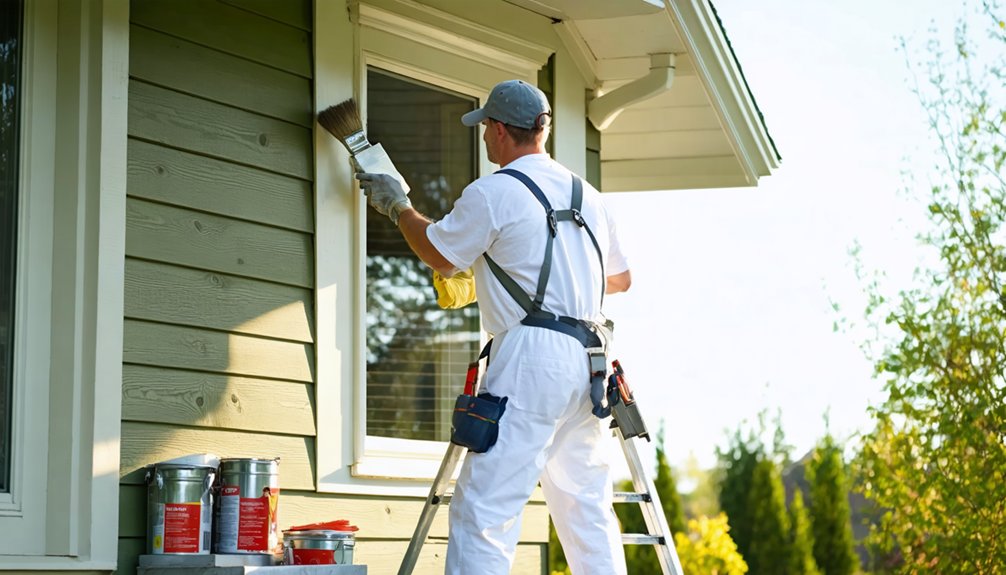
Professional house painters distinguish themselves through measurable competencies that separate contractors from amateurs. We’ve identified attention to detail as the primary indicator—look for clean edges without paint bleeding, even coats without brush strokes, and precision work around trim and molding.
Professional preparation reveals itself through thorough surface cleaning, sanding, priming, and imperfection repair before application begins. Quality contractors implement dustless prep systems, protect your property with drop cloths, and verify product compatibility with your home materials.
Communication responsiveness matters equally—prompt replies to inquiries, transparent timeline discussions, and regular project updates demonstrate commitment. We recommend verifying their three-stage completion process: prep work, application, and punch-out inspection.
Professional-grade tools, quality materials, and craftsmanship warranties further confirm you’re working with seasoned specialists.
Creating Clear Contracts and Project Expectations
A detailed contract transforms verbal promises into enforceable protections for both parties. We guarantee every painting agreement includes thorough scope specifications and payment structures that meet Idaho’s statutory requirements.
A comprehensive painting contract converts verbal commitments into legally binding protections that safeguard both homeowner and contractor interests.
For projects exceeding $2,000, mandatory disclosure statements protect your investment while establishing professional accountability.
Essential contract elements include:
- Detailed cost breakdowns itemizing materials, labor, and timeline milestones
- Project timeline updates with specific completion dates and change order provisions
- Insurance verification showing $300,000 general liability coverage minimum
- Scope specifications defining surface preparation, paint quality, and finish standards
- Payment terms aligned with project phases and lien waiver procedures
Professional contractors provide these protections automatically, demonstrating their commitment to transparency and regulatory compliance throughout your painting project.
Checking References and Past Work in Rural Idaho Communities
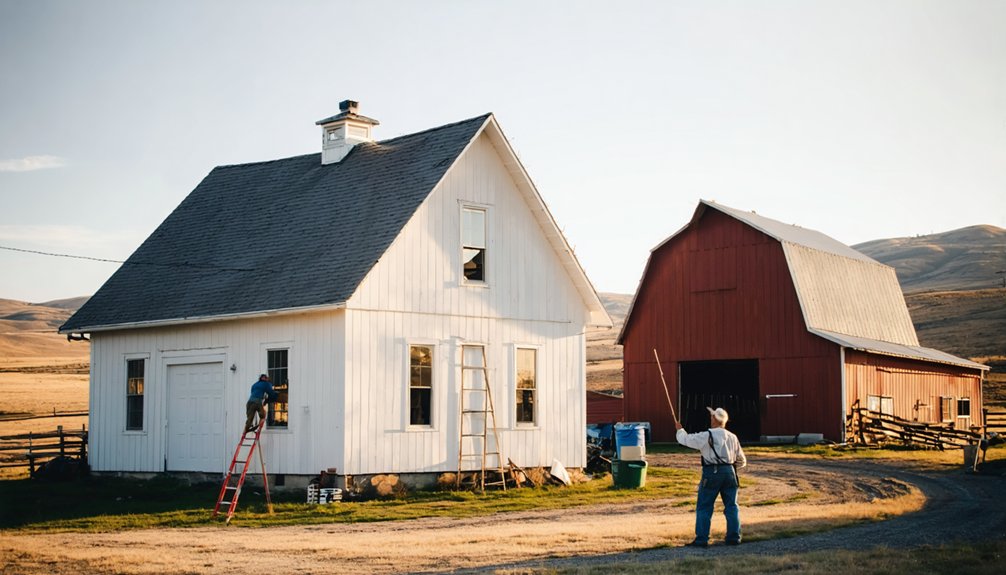
Thorough reference verification establishes performance patterns that marketing materials can’t reveal. We recommend requesting at least three client contacts from rural Idaho areas—specifically Murtaugh, Twin Falls, and surrounding counties. These references from small communities should demonstrate consistent quality workmanship on projects matching your scope, whether residential exteriors or commercial applications.
When contacting references, we’ll inquire about reliability during Idaho’s variable weather conditions and ask for photo documentation or site addresses. Visiting completed projects lets us assess coating durability against regional weathering. We cross-check testimonials for patterns highlighting attention to detail, timely completion, and professionalism specific to southern Idaho’s small-town environments.
BBB ratings and accredited directory listings provide third-party validation of local service history, ensuring our chosen contractor understands rural project requirements and regional aesthetic preferences.
Frequently Asked Questions
What Paint Brands Do Top Murtaugh House Painters Typically Recommend?
We recommend Sherwin-Williams Duration and Benjamin Moore Regal Select for their superior paint quality characteristics. These brands offer exceptional coverage, durability, and application techniques that guarantee professional results you’ll appreciate for years to come.
How Long Does Exterior House Painting Take in Idaho’s Climate?
We’ll typically complete your exterior paint job in 3-7 days, factoring paint preparation time and weather considerations. Idaho’s climate demands we monitor temperatures, humidity, and seasonal timing to guarantee your home receives professional-grade, long-lasting results.
Should I Repaint My Home’s Interior or Exterior First?
We’d recommend tackling exterior painting first during Idaho’s ideal summer weather. Interior projects aren’t weather-dependent, allowing winter completion. Before DIY painting considerations begin, we’ll help you evaluate paint sheen choices that maximize durability for both applications.
Do Professional Painters in Murtaugh Offer Color Consultation Services?
Yes, we’ve found that professional painters in Murtaugh do offer color consultation services. They provide professional color advice and paint color matching expertise, ensuring you’ll achieve cohesive results that reflect current industry standards and your vision perfectly.
What’s the Average Cost per Square Foot for House Painting?
Like telegraphing rates in olden days, we’ll break it down: average paint cost runs $2–$6 per square foot. Regional painting factors in Murtaugh affect pricing, but we’re committed to transparent, quality-driven estimates for our community.